Table of Contents >> Show >> Hide
- Meet Antarctica’s New “Gross” Fish Celebrity
- Why Antarctica Is a Factory for Strange Fish
- Is It Really “Gross,” or Just Misunderstood?
- How Scientists Decide Something Is a New Species
- Why Discovering a “Gross” Fish Actually Matters
- From Viral Clip to Conservation Reminder
- What It’s Like to Encounter a “Gross” Antarctic Fish: Field Experiences
- Conclusion: The Beauty of the Bizarre
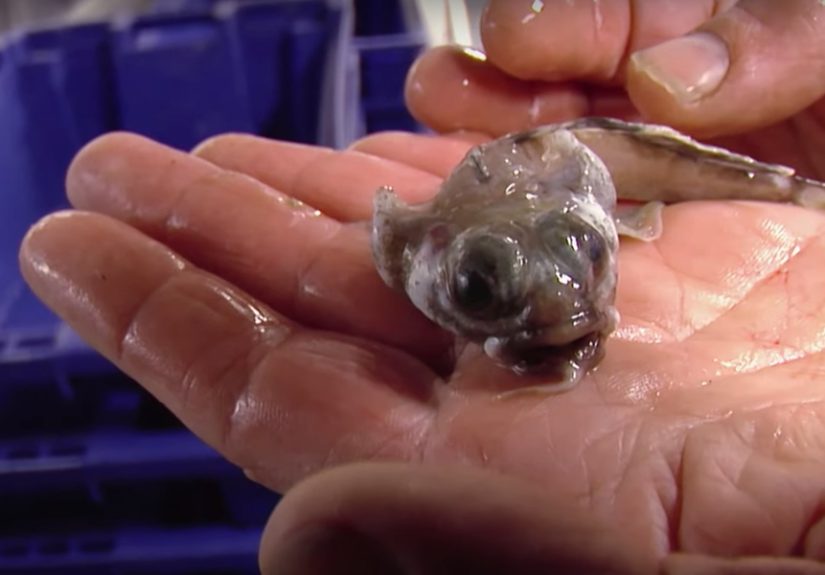
If you think horror movies have some wild creature design, wait until you meet the real-life casting director: Antarctica. Recently, researchers working in the icy Southern Ocean hauled up a pink, slimy, googly-eyed fish so bizarre that even the scientists called it “gross” at first glance. It quickly went viral after appearing in the documentary Expedition Antarctica, where viewers watched a stunned biologist cradle the squishy newcomer like a confused, slimy baby alien.
But behind the clickbait headline “gross new species of fish found in Antarctica” is a seriously cool scientific story about evolution, survival, and why the bottom of the world keeps surprising us with creatures that look like they escaped from a B-movie casting call.
Meet Antarctica’s New “Gross” Fish Celebrity
The now-famous fish turned up during a research expedition in the Southern Ocean, when scientists used trawl nets to sample life from frigid waters and deep seafloor habitats. Among the more familiar Antarctic species, this pink oddball stood out instantly: soft, gelatinous skin, oversized eyes, a weirdly expressive face, and a body that looked like it might melt if the room got too warm.
Early footage shows the fish gently wobbling in a scientist’s hands, its skin glistening with slime. Imagine a cross between a cartoon tadpole, a jellybean, and something your sink drain coughed up, and you’re in the neighborhood. It’s no wonder headlines branded it “gross.”
Yet to the researchers on board, this animal was anything but disgusting. It represented a likely new species from one of the least explored marine frontiers on Earth. In Antarctica, “gross” often just means “extremely well adapted to a place humans would absolutely not survive.”
Why Antarctica Is a Factory for Strange Fish
To understand why this fish and so many of its neighbors look so strange, you have to appreciate how hostile Antarctic waters are. Sea temperatures can hover around −1.8°C (that’s below the freezing point of freshwater), light can be limited for months at a time, and deep basins plunge hundreds to thousands of feet below the surface.
Antifreeze in the Bloodstream
Many Antarctic fishes, especially those in the notothenioid group, survive thanks to special antifreeze proteins circulating in their blood. These molecules latch onto microscopic ice crystals and stop them from growing, preventing the fish from freezing solid. Some relatives, such as Antarctic icefishes, famously have colorless blood and reduced or absent hemoglobin their circulation looks more like clear slush than what we’d think of as “blood.”
Our “gross” newcomer likely belongs to a group that has taken similar biochemical shortcuts to stay alive where water is literally trying to turn into ice around them. Squishy bodies and slimy skin may help them cope with pressure, temperature, and life on the seafloor.
Deep, Dark, and Undersampled
Antarctic fish discoveries are not rare; they’re almost routine whenever scientists manage to sample poorly explored regions. For example, researchers have described new species from the Bellingshausen Sea at depths of hundreds of meters, and others have found strange plunderfish and dragonfish in the Ross Sea that live nearly a mile down. Each expedition uncovers new pieces of a puzzle that has been largely ignored because it’s difficult, expensive, and occasionally dangerous to work there.
Combine extreme conditions with limited sampling and lots of evolutionary time, and you end up with a fish population full of oddballs: transparent-blooded icefish, chin-barbeled plunderfish, and now this pink, wobbling star of the “gross” show.
Is It Really “Gross,” or Just Misunderstood?
Let’s be honest: humans tend to judge animals by a harsh beauty standard. We love sleek dolphins and colorful reef fish, but once something has bulging eyes and gelatinous skin, we slap on words like “gross,” “creepy,” or “nightmare fuel.”
From a biological perspective, though, this new Antarctic fish is gorgeous in its own deeply weird way. Its big eyes likely help it see in dim light; its soft body may conserve energy and cope with pressure; and its slime layer can protect against infection and damage in cold, abrasive environments. Every “gross” feature is really an adaptation with a job to do.
In fact, scientists on the expedition quickly shifted from “whoa, that’s disgusting” to “wow, that’s incredible.” One researcher famously remarked that this was exactly the kind of discovery that made the grueling trip to Antarctica worthwhile.
How Scientists Decide Something Is a New Species
Identifying a new species is a lot more involved than posting a viral video. Once an unusual fish is collected, taxonomists get to work. They measure body proportions, count fin rays, and examine structures like scales, teeth, and sensory pores. They also compare the specimen to museum collections to make sure it isn’t just a weird-looking member of a known species.
Today, DNA sequencing is a critical part of the process. Researchers extract genetic material, compare it with databases, and look for clear differences that support the idea that this is, in fact, a new species. Only after all this comparison and peer-reviewed publication does the fish get an official scientific name.
The pink Antarctic “gross fish” entered this process as part of a broader trend: in recent years, scientists have described multiple new Antarctic species, including small dragonfish with distinctive body stripes and deep-sea fishes from underexplored basins. Together, they show just how incomplete our ocean field guide still is.
Why Discovering a “Gross” Fish Actually Matters
Aside from giving the internet something to gasp at, discoveries like this have real scientific value. Each new species acts like a data point in the larger story of how life adapts to extreme cold, high pressure, and long periods of darkness.
Clues About Climate Change
Antarctica is warming faster in some regions than many other parts of the planet. Newly discovered fishes help scientists understand which species are narrowly specialized and which are more flexible. If a fish can only survive in a narrow temperature range or relies on sea ice for part of its life cycle, it may be especially vulnerable as conditions change.
When researchers discover a new species with slow reproduction or limited range as is the case for some newly described Antarctic dragonfish it raises red flags about how fishing, shifting sea ice, or changing currents might affect them.
Hidden Connections in the Food Web
Even the “grossest” fish still has a job in the ecosystem. It might prey on small crustaceans, worms, or other invertebrates living on or in the seafloor. In turn, it could be eaten by larger fishes, seals, or penguins. Understanding who eats whom is crucial for managing Antarctic ecosystems responsibly, especially as krill fisheries expand and tourism grows.
Every time a new Antarctic fish species is cataloged, ecologists gain another piece of the food-web map and regulators get better tools to design marine protected areas and sustainable fishing policies.
From Viral Clip to Conservation Reminder
The “gross new species of fish found in Antarctica” is a perfect example of how viral moments can lead to meaningful conversations. People may click for the slime and the shock value, but if they stick around, they learn about antifreeze proteins, deep-sea exploration, and the surprising fragility of polar ecosystems.
For scientists, the discovery is a reminder that even in the age of satellites and global datasets, the ocean still hides many residents we have never seen before. For the rest of us, it’s a gentle nudge to expand our definition of “beautiful” and to recognize that strange, squishy fish play a role in keeping the planet’s coldest waters alive and functioning.
What It’s Like to Encounter a “Gross” Antarctic Fish: Field Experiences
So what is it actually like to meet one of these creatures in person? Let’s step into the boots of a researcher on an Antarctic research vessel.
It’s the middle of the night because, let’s face it, Antarctic science doesn’t care about your circadian rhythm. The deck is slick with freezing seawater, the wind is howling, and everyone is bundled up like multicolored marshmallows. After hours of towing a net through icy water, the crew finally winches it back on deck, dripping with mud, ice chunks, and a grab bag of bewildered sea life.
At first, you see the usual suspects: starfish, brittle stars, a few fish you’ve already met in field guides, and enough krill to make a penguin cry with joy. Then someone shouts, “Hey, what on Earth is that?”
There it is: a pale pink blob with big eyes, wobbling gently in a tray. Up close, the fish looks even stranger. Its skin feels almost gelatinous under a gloved fingertip, like a cross between firm tofu and unset jelly. The slime coating is so thick you can see it string when the animal is gently moved from one container to another.
The smell? Surprisingly not that bad more “cold, oceany funk” than full-on fish market. Still, the combination of texture, facial expression, and the fact that this animal just came from a world of perpetual darkness is enough to make your brain say, “Nope, that’s weird,” before your scientific curiosity kicks in.
In the lab, the atmosphere changes from “ew” to “wow” very quickly. Cameras come out. Someone starts taking careful measurements while another checks reference books and digital catalogs. The more you compare it with known species, the clearer it becomes that this fish simply doesn’t match anything you’ve seen.
Over the next days and weeks, you watch as this single “gross” fish turns into a full-blown research project. Tissue samples go off for genetic analysis. Photos and videos get shared with colleagues around the world. Graduate students start using phrases like “morphological character states” while mainlining instant coffee.
Back home, friends and family mostly just want to know if you were scared to touch it and whether it bit you (it didn’t). You find yourself explaining, over and over, that yes, it looked strange, but that’s exactly what made it so exciting. In a world where we scroll past hundreds of images a day, very few things genuinely surprise us and this fish did.
For many polar researchers, that’s the magic of Antarctica. The harsh environment means every living thing there has to be a specialist, tuned to conditions that would kill most other animals. When you meet a creature that looks “wrong” by everyday standards, what you’re actually seeing is the end result of millions of years of clever evolutionary problem-solving.
And once you look at the fish through that lens, the word “gross” starts to feel a bit unfair. Maybe “spectacularly odd,” “evolutionary masterpiece,” or “gelatinous overachiever” would be better. But, admittedly, none of those look quite as good in a headline.
Either way, the next time you see a picture of a pink, slimy Antarctic fish making the rounds online, remember that behind the memes and shocked emojis is a real animal doing its best to survive in one of the planet’s toughest neighborhoods and a team of scientists who were probably just as amazed as you are when they first met it.
Conclusion: The Beauty of the Bizarre
The gross new species of fish found in Antarctica taps into something deep in us: our fascination with the unknown. It’s an animal that looks wrong by our everyday standards but is perfectly right for its home beneath the ice. Its weirdness isn’t an accident; it’s a survival strategy.
As we keep exploring Antarctic waters, we’ll almost certainly meet more creatures that challenge our idea of what a fish “should” look like. Some will be delicate and translucent, others bristling with spines or dripping with slime. The real question isn’t whether they’re gross or cute it’s whether we can learn from them and protect the ecosystems that shaped them.
SEO Summary
meta_title: Gross New Species of Fish Found in Antarctica
meta_description: Discover the strange new fish found in Antarctica, why it looks so gross, and what it reveals about life in the icy Southern Ocean.
sapo: A pink, slimy, googly-eyed fish pulled from the icy waters of Antarctica has been branded “gross” by the internet but to scientists, it’s a rare peek into how life adapts to one of the harshest environments on Earth. In this in-depth guide, we’ll introduce you to Antarctica’s newest deep-sea weirdo, explain how it survives in subzero water, explore what makes so many polar fish look bizarre, and share what it actually feels like to encounter a creature this strange on the deck of a research ship.
keywords: gross new species of fish, Antarctic fish discovery, weird deep sea creatures, Antarctica marine life, new species found in Antarctica, strange pink fish, Antarctic ocean exploration