Table of Contents >> Show >> Hide
- Why embroidered pet portraits feel more personal than regular wall art
- 1. The senior golden retriever with the powdered-sugar muzzle
- 2. The tuxedo cat with the dramatic white whiskers
- 3. The Doberman with the rust-colored eyebrows
- 4. The Abyssinian cat with the glowing ticked coat
- 5. The fluffy white Samoyed who looked like a sentient cloud
- 6. The Scottish Deerhound with the wiry beard
- 7. The odd-eyed Oriental cat with outrageous ears
- What these seven portraits taught me about thread painting pets
- Final thoughts
- SEO Tags
There are hobbies, and then there are hobbies that quietly take over your dining table, your camera roll, and your emotional stability. Embroidered pet portraits are very much in the second category. Somewhere between choosing thread colors and trying to stitch one perfect eyebrow hair, I realized this craft is equal parts art, observation, and loving obsession.
What makes pet portrait embroidery so addictive is that it sits right at the intersection of personality and texture. Fur is not just fur. A tabby’s forehead marking, a Doberman’s rust points, a senior dog’s silver muzzle, or a cat’s impossible side-eye can change the entire mood of the finished piece. That is why custom pet embroidery never works when it is rushed. You are not simply filling shapes with thread. You are translating expression, posture, and attitude into stitches.
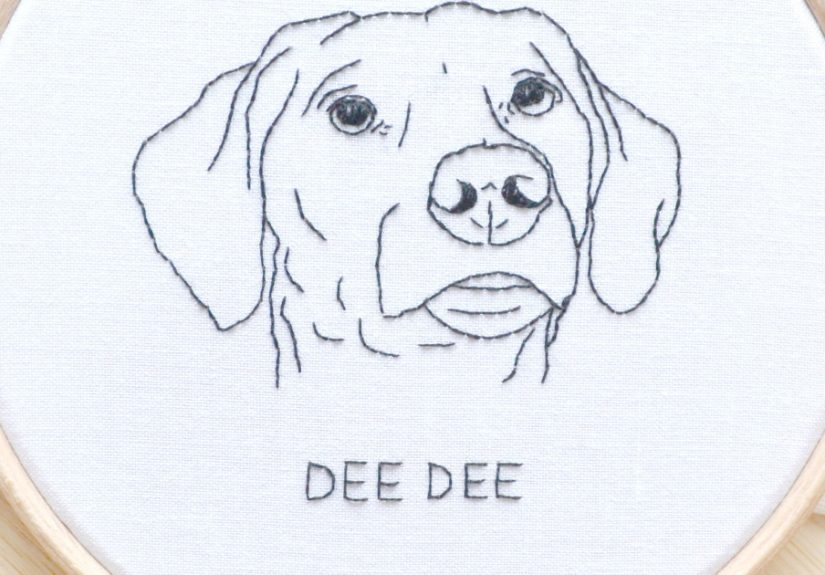
Recently, I finished seven hand-stitched pet portraits that reminded me why I keep coming back to embroidery hoop art. Each one taught me something different about thread painting, color layering, and how weirdly powerful a tiny stitched nose can be. Here is the lineup.
Why embroidered pet portraits feel more personal than regular wall art
Before I get into the seven portraits, it helps to explain why this kind of work lands so hard emotionally. Unlike a generic print or mass-produced decor piece, a hand-stitched pet portrait records the details people actually remember: the one ear that never sat quite right, the whiskers that went rogue, the tiny pink spot on the nose, the “I know you opened a snack without me” expression. Those are the things that make pet portrait embroidery memorable.
On the technical side, the craft rewards patience. A taut hoop matters because fabric that shifts can pucker and throw off the whole face. Woven fabrics like linen, muslin, and canvas tend to behave well under stitching. Floss choice matters too. Six-strand cotton embroidery floss is useful because you can separate strands to control texture and thickness, which is especially helpful when you are stitching fur, whiskers, and highlights around the eyes. Long-and-short stitch is the hero for realistic coats, while backstitch and straight stitch are lifesavers when you need crisp edges, outlines, and directional fur. In other words, yes, art is magical, but also yes, embroidery is a tiny engineering project with feelings.
1. The senior golden retriever with the powdered-sugar muzzle
This portrait was a warm-up in the best possible way. The dog had that classic older-golden face: deep brown eyes, soft caramel ears, and a muzzle so dusted with white that it looked like it had been dipped in confectioners’ sugar. I stitched this one on natural linen because I wanted the background to stay quiet and let the fur do the talking.
The challenge was age. Young dog portraits usually rely on contrast and bounce, but senior pets need gentler transitions. I used layered cream, beige, warm gray, and pale gold threads to keep the white muzzle from looking flat. Instead of a hard outline, I built the face with short directional stitches that followed the way the fur actually grew. That gave the portrait softness without turning it into a fuzzy beige cloud.
What I loved most was the expression. Older dogs often have a calm, steady gaze that looks wise and faintly judgmental, like they have seen every bad decision you have ever made and forgiven most of them. I added tiny highlights around the eyes and nose to keep the face alive. The finished piece felt less like a craft project and more like a visual sigh. Quiet, loyal, and deeply lovable.
2. The tuxedo cat with the dramatic white whiskers
Black cats are where confidence goes to get tested. This tuxedo cat had glossy dark fur, a bright white bib, and whiskers that looked like they had their own opinions. On paper, black fur sounds easy. Just grab black thread and get moving, right? Absolutely not. Black thread is not a single color. It is a full-blown identity crisis.
To keep the fur dimensional, I mixed charcoal, soft black, dark brown, and even a hint of deep navy. That let me create shadow without losing the structure of the face. The white chest was stitched with fewer strands so it stayed airy, while the dark fur got denser coverage. I used backstitch very sparingly around the nose and mouth, then switched to split and straight stitches to suggest directional fur.
The best part was the whiskers. I always save whiskers for late in the process because they can completely change the portrait. Too thick, and the cat looks cartoonish. Too straight, and it loses attitude. Too perfect, and frankly, it stops looking like a cat. This one needed whiskers that felt slightly chaotic but elegant. Mission accomplished. The portrait ended up looking like the feline equivalent of a celebrity in a tux who also bites ankles at 3 a.m.
3. The Doberman with the rust-colored eyebrows
This was one of the boldest recent pieces I made. Dobermans have such unmistakable markings that they almost look pre-designed for portrait art. The rust-colored points above the eyes, along the muzzle, chest, and legs create natural contrast, and that contrast makes embroidery sing.
What interested me most here was structure. The face had clean lines, a sleek coat, and alert ears, so I did not want fluffy, painterly stitching. I used tighter, smoother stitches to mirror the short coat and keep the silhouette sharp. The eyebrows got extra attention because they are one of those features that instantly communicate breed and mood. On a Doberman, those markings can make the expression look serious, curious, or mildly offended by your existence.
I also paid close attention to the nose and eye placement. In pet portrait work, if the eyes are even slightly off, the whole piece starts giving “mysterious cousin in a school yearbook” instead of beloved companion. Once the symmetry was locked in, the portrait came together quickly. It ended up feeling elegant, athletic, and just a little intimidating, which honestly is the ideal Doberman vibe.
4. The Abyssinian cat with the glowing ticked coat
This portrait nearly made me question my life choices, which is how I know it turned out well. Abyssinians are gorgeous because their coats have that ticked, banded look that gives the fur a kind of shimmer rather than obvious stripes. Beautiful in real life, slightly rude in embroidery.
I could not rely on broad color blocks here. Instead, I had to suggest the coat with lots of subtle shifts: warm brown, cinnamon, muted gold, and smoky undertones. Long-and-short stitch did most of the heavy lifting, but I kept the stitches small and directional so the coat looked lively rather than stiff. The forehead “M” and those large almond-shaped eyes gave me helpful landmarks, which I happily accepted because the rest of the fur was acting like it wanted to be painted by moonlight.
In the end, this was one of the most satisfying portraits because it forced restraint. Not every pet portrait needs hyper-detail in every inch. Sometimes the trick is letting the eye finish the story. Once I stopped trying to embroider every single hair and focused instead on texture, light, and expression, the piece finally clicked.
5. The fluffy white Samoyed who looked like a sentient cloud
White fur is sneaky. People assume it will be easy because the palette seems minimal, but white coats are all about shadow, temperature, and shape. This dog had a thick, happy coat and that famous smiling expression, so the danger was making the portrait look like a marshmallow with eyes.
To avoid that fate, I stitched the coat with layers of off-white, pale gray, cream, and the faintest cool blue in the shadowed areas. I used a mix of longer and shorter stitches to create volume around the cheeks and neck ruff. The smile line mattered a lot too. In fluffy breeds, the mouth can get visually buried unless the surrounding fur is placed just right.
What I enjoyed most was the contrast between chaos and order. Samoyed fur is glorious fluff, but the portrait still needed a readable face. So I treated the eyes, nose, and mouth like anchors and let the coat radiate around them in textured waves. It was one of those pieces where halfway through I thought, “This may become an abstract snowstorm,” and then suddenly the dog appeared. Embroidery does that sometimes. It makes you earn the reveal.
6. The Scottish Deerhound with the wiry beard
Of all seven recent portraits, this one felt the most like drawing with thread. Deerhounds have that crisp, rough coat and long, elegant face that instantly creates character. They look noble, slightly ancient, and as if they might know where a treasure is buried but will never tell you.
I leaned into the wiry texture by keeping the stitches visible rather than blending everything smooth. A polished satin effect would have made no sense for this coat. Instead, I layered grays, taupes, and weathered brown tones with directional stitches that broke the surface just enough to suggest roughness. The beard and brows were the stars. If those details failed, the dog would lose half its charm.
This portrait also reminded me that negative space matters. I did not overfill the outer edges of the coat. Leaving some looseness around the silhouette made the fur feel airy and natural. The finished piece looked dignified but not stiff, which is exactly what I wanted. Slightly scruffy, highly regal, and one windy walk away from starring in a period drama.
7. The odd-eyed Oriental cat with outrageous ears
I saved one of the trickiest portraits for last. This cat had a sleek face, huge ears, and two different eye colors. In other words, subtle was not the assignment. Oriental-type cats often have very angular features, so I knew the stitching needed to be cleaner and more graphic than fluffy.
The ears were nearly comical in scale, which made them perfect. I emphasized the long triangular lines with smooth stitched edges, then softened the interior with lighter thread to suggest the thin skin and fine fur. The face itself was simple, but the eyes were everything. Because the eye colors were different, balance became more important than ever. One eye could not dominate the other, or the portrait would feel lopsided.
Once the eyes were in place, the whole piece came alive. This portrait had attitude from the start. It did not ask politely to be admired. It assumed you would do so immediately. Honestly, fair enough. By the time I finished, it felt like the embroidery hoop contained a tiny fashion editor who happened to enjoy knocking pens off desks.
What these seven portraits taught me about thread painting pets
After finishing these seven embroidered pet portraits, I noticed a few patterns. First, good reference photos are everything. If the photo misses the catchlight in the eye, flattens the muzzle, or turns a black coat into a featureless blob, the embroidery will have to work twice as hard. The best pet photos for stitching show clear eyes, readable fur direction, and enough contrast to separate the face from the body. I have become much pickier about my references, and honestly, my hoop thanks me for it.
Second, the most convincing portraits are not always the most crowded with stitches. That lesson has saved me from overworking so many pieces. When I first started doing pet embroidery, I wanted to describe every hair, every transition, every whisker base, every tiny shadow. Now I know that selective detail is smarter. The eyes, nose, mouth, and signature markings usually carry the portrait. Once those are strong, the rest can breathe. That breathing room is what keeps embroidery from looking heavy.
Third, thread color decisions matter more than people think. Fur rarely behaves like a coloring book. White pets are never just white. Black pets are never just black. Brown coats can have honey, copper, gray, and even cool shadow tones hidden inside them. Splitting floss strands and layering them gradually gives you a better chance of mimicking what real coats do in light. It is slower, yes, but it is the kind of slow that pays rent emotionally.
Fourth, personality beats perfection. I can forgive a slightly imperfect edge if the expression is dead-on. I can ignore a stitch that wanders if the portrait captures that exact look a pet gives when it hears the treat bag. People connect with recognition before they connect with technical purity. That does not mean craftsmanship is optional. It means craftsmanship should serve feeling, not bully it.
Finally, these portraits reminded me that pet art is never just decor. Sometimes it is funny. Sometimes it is celebratory. Sometimes it is quietly sentimental. Even when the project is not a formal pet memorial embroidery piece, it still preserves something fragile: a look, a mood, a physical detail that will change over time. Pets age. Coats gray. Expressions soften. Ears do mysterious things. Stitching them feels a little like hitting pause on a very beloved moment.
That is why I keep making them. Not because I enjoy rethreading a needle for the seventeenth time in an hour, although apparently I do now. Not because I enjoy squinting at tan thread against slightly different tan thread like a tiny textile detective. But because when a portrait finally clicks, it feels personal in a way few handmade objects do. It says, “I saw this animal clearly.” And really, that is the whole point.
Final thoughts
If these seven pieces proved anything, it is that embroidered pet portraits are part observation, part technique, and part affectionate madness. The real fun is not in making a perfect animal. It is in making that animal: the one with the noble stare, the dramatic whiskers, the wiry beard, the silver muzzle, or the ears large enough to pick up satellite radio. A good hand-stitched pet portrait does more than resemble a pet. It makes people grin and say, “Yep, that is absolutely him.”
And for a needle, some floss, and a hoop, that is a pretty great trick.