Table of Contents >> Show >> Hide
- Why Chevy Chase’s Claim Matters More Than It Sounds
- What Actually Aired on October 11, 1975
- The Chaos Myth: Why It Exists (and Why It Persists)
- Chevy Chase, Weekend Update, and the Architecture of Control
- Memory, Ego, and the “I Was There” Problem
- What Modern Creators Should Steal from the First SNL Episode
- Bottom Line: Chaos Is a Camera Angle
- Experience Section (Extended): What “Not Remotely Chaotic” Feels Like from the Ground Level
If you have watched the movie Saturday Night, you probably came away convinced that the first episode of
Saturday Night Live in 1975 was basically a live-wire circus: panic in the hallways, bosses hovering over
the “cancel” button, and creative people sprinting through Studio 8H like caffeinated raccoons.
Then Chevy Chase tossed a polite grenade into that myth and said the premiere was “not pandemonium at all.”
So who’s right: Team Chaos or Team Calm-But-Sweaty? The short answer is both. The long answer is way more funand
way more useful if you care about how live comedy actually gets made. This article unpacks what happened on that
legendary October night, why Chase’s claim makes sense, how memory and myth distort the same event, and what modern
creators can learn from the first SNL broadcast that launched fifty years of cultural mischief.
We’re diving into the episode itself, the backstage process, the origin story of Weekend Update, and the
bigger question: when people call early SNL “chaos,” do they mean true disorderor high-pressure craftsmanship
that simply looked unruly from the outside?
Why Chevy Chase’s Claim Matters More Than It Sounds
Chase’s quote landed because it challenges a story people love: genius born from disaster. It is a great movie
premise. It is also emotionally satisfying. We like to believe cultural milestones happen because everyone almost
crashed the ship and then somehow nailed it at the last second.
But Chase’s version reframes the first SNL episode as prepared improvisation rather than blind panic.
In other words: yes, pressure was high, but no, the cast and producers were not stumbling around clueless.
There were run-throughs. There was planning. There was a team that knew how live TV worked, even if the format
was new and the stakes were absurdly high.
That distinction is important for anyone in media, marketing, writing, or production. Calling it “chaos” can make
great work seem accidental. Calling it “prepared risk” gives credit to process, repetition, editing, and timing.
Comedy may feel spontaneous, but most of it is engineered down to the breath.
What Actually Aired on October 11, 1975
The Basic Facts of the Premiere
The first episode of what began as NBC’s Saturday Night aired on October 11, 1975. George Carlin hosted,
while Billy Preston and Janis Ian appeared as musical guests. That lineup alone told viewers this was not a rerun
machine for sleepy weekend TV. It was young, weird, musical, political, and willing to mix stand-up with sketches
and short films.
The episode did not look like the tightly familiar modern SNL format. Carlin delivered multiple stand-up
sets instead of a single monologue and did not appear in sketches. The show also featured contributions outside
the core cast, including bits from Andy Kaufman and Albert Brooks, plus Jim Henson’s Muppets in “Land of Gorch.”
If today’s SNL is a recognizable house style, this was the original pilot neighborhoodzany zoning laws included.
What “Not Chaotic” Might Mean in Context
When Chase says it was not chaos, he likely means the on-air machine held together. Cues were hit.
Segments aired. The episode had shape. That’s not a minor achievement on live television, especially for a brand-new
show that many people expected to fail.
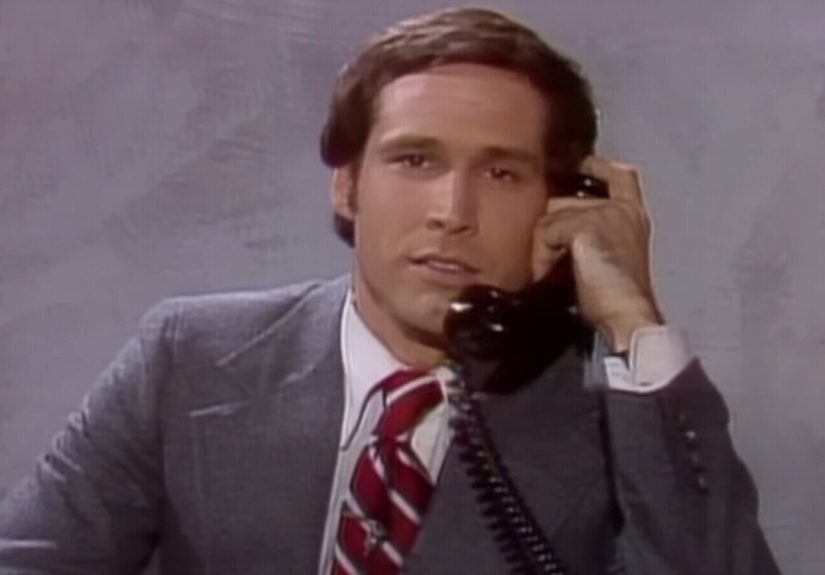
The premiere also introduced something that became foundational: Chase as the first major face of
Weekend Update. He was hired primarily as a writer and stepped into an on-camera role that would become one
of the most durable comedy formats in American TV. You can draw a direct line from that desk to modern satirical
news shows and half your social feed’s political punchlines.
The Chaos Myth: Why It Exists (and Why It Persists)
Film Logic vs. TV Reality
The movie Saturday Night dramatizes roughly ninety minutes before airtime and leans into mounting panic:
conflict, frayed nerves, looming network pressure, and the constant threat that this experiment might never make
it to viewers. Great cinema? Yes. Perfect documentary transcript? Not exactly.
Multiple fact-checks and retrospective pieces agree that some events were compressed, moved in time, or heightened
for narrative momentum. That does not make the film dishonest; it makes it a movie. Real production trouble tends
to unfold in uneven waves across days or weeks. Movies prefer all storms to hit one roof at once.
There Was PressureJust Not Random Disorder
Oral histories and retrospective reporting repeatedly describe the first-era SNL workflow as intense,
sleep-deprived, and brutally competitive. But “stressful” is not the same as “directionless.” The writers’ week
evolved into a known cycle: Monday pitches, Tuesday all-nighters, Wednesday read-through, then rewrites, blocking,
and rehearsal before going live.
That process explains the paradox: from the audience perspective, it can look like beautiful mayhem; from inside,
it can feel like disciplined triage. Everyone is sprinting, yesbut often through lanes they’ve run a hundred times.
Chevy Chase, Weekend Update, and the Architecture of Control
If you want evidence that the first show was not pure disorder, look at Weekend Update.
The segment did not survive for decades by accident. It worked because it used a simple, repeatable structure:
straight-faced anchor, deadpan rhythm, satirical reversal, quick pivots to correspondents, and topical cadence.
Chase’s delivery style mattered. He looked polished enough to mimic authority while sounding mischievous enough
to undermine it. That contrast is the whole joke. Later anchors refined the formula, but the original mechanism
was already there: present fake certainty, then flip the premise at speed.
Even the origin story hints at method over madness. Chase entered as a writer, then moved into performance as the
show found its center. The early staff was experimenting, but experimentation itself had rules. Nobody builds a
recurring national format without repeatable beats, timing discipline, and ruthless editing.
Memory, Ego, and the “I Was There” Problem
So why do accounts differ? Because memory is a sketch writer with a rewrite pass.
People remember what felt largest emotionally: fear, breakthrough, humiliation, triumph, rivalry, luck. Over time,
those feelings become narrative gravity. Everyone’s story is true to their experience, not always to the timeline.
In ensemble comedy, this gets amplified. One person remembers disaster; another remembers control; a third remembers
one brilliant bit and nothing else. Add fifty years of interviews, retrospectives, documentaries, and biopics, and
you get layered mythology: a stack of true fragments told in different emotional keys.
Chase’s statement does not cancel stories about tension. It challenges the totalizing version of them.
His point seems to be: “Don’t confuse high stakes with incompetence.” That may be the most producer-brained sentence
in the whole conversation.
What Modern Creators Should Steal from the First SNL Episode
1) Build a format sturdy enough to survive bad nights
The first episode was experimental, but it still had recurring anchors: host segments, musical breaks, sketch rhythm,
desk satire. If your content pipeline depends on one perfect take, it’s fragile. If it has modular structure, it can
absorb chaos and keep going.
2) Rehearse until spontaneity looks effortless
“Natural” performance is often aggressively practiced. Chase’s “not chaotic” read supports a simple truth:
run-throughs are creativity insurance. The audience sees confidence; backstage sees version 11.
3) Treat tension as fuel, not identity
Creative teams can romanticize panic. Don’t. Pressure can sharpen choices, but panic as a brand eventually burns
talent. The early SNL machine worked because it converted pressure into output, week after week.
4) Let myth serve marketing, not management
Myth is useful for audience excitement. It is terrible as an operating model. If your team starts believing that
every good result requires disaster, your process is already broken. Tell compelling stories publicly; run boringly
reliable systems privately.
Bottom Line: Chaos Is a Camera Angle
Chevy Chase’s claim that the first SNL episode was not remotely chaotic is less denial than correction.
Yes, the stakes were wild. Yes, personalities clashed. Yes, the show was an enormous risk. But risk is not the same
thing as randomness.
The premiere worked because preparation met nerve at exactly the right hour. That combinationstructure plus boldness
is why the episode still gets dissected decades later. People remember the nerves, the legends, the characters, the
lightning. But underneath the myth sits a practical engine: write, test, cut, rehearse, go live, repeat.
And if that sounds less romantic than “everything was on fire and then comedy magic happened,” well… maybe.
But it is a lot more useful if you want to build anything that lasts fifty years.
Experience Section (Extended): What “Not Remotely Chaotic” Feels Like from the Ground Level
Imagine you are standing in the wings five minutes before a live show. Your palms are sweaty, someone is still
arguing about a line, and a stage manager is calling cues with the emotional warmth of an air-traffic controller.
If you freeze that frame and post it online, it looks like pandemonium. If you zoom out, it is just a system doing
exactly what it was built to do under pressure.
That is the feeling Chevy Chase’s comment captures. People often confuse visible urgency with hidden disorder.
In live production, urgency is normal. Urgency means everyone knows time is real. What matters is whether the team
can translate urgency into coordinated motion. One person swaps cards, one tightens a bit, one trims ten seconds,
one confirms the musical cue, one patches a mic, one quietly kills a joke that worked at rehearsal but died in front
of a test audience. From the outside, all that movement looks frantic. From the inside, it feels like practiced chess
played at sprinting speed.
Anyone who has worked near a launchTV, theater, podcasts, newsletters, product dropsknows this paradox.
The clean final product is usually built in rooms that look slightly messy and sound mildly alarming. Not because
nobody knows what they are doing, but because everyone is solving micro-problems in real time. You do not eliminate
all surprises. You build teams that metabolize surprises faster than the clock.
In that sense, the first SNL episode was a master class in creative operations. The cast was young and bold,
the writing voice was anti-establishment, and the format was still discovering itself. Yet the show shipped.
That word matters: shipped. It aired. It connected. It created recurring structures that still work today.
You can call that luck, but luck rarely sustains fifty seasons.
There is another layer here: memory tends to preserve drama better than routine competence. If you ask ten veterans
what happened on a big night, nine will tell you their scariest moment first. Nobody opens with, “We executed the cue
stack perfectly for forty minutes.” But that boring sentence is often the true reason audiences remember the show as a
success. Fear is memorable; execution is durable.
This is why the “chaos vs. control” debate around SNL is so fascinating. Both stories can be emotionally true.
One person remembers panic spikes. Another remembers a prepared team. One remembers yelling. Another remembers the
checklist. The most honest reconstruction is usually hybrid: stress at the edges, competence at the core.
For creators today, that hybrid model is liberating. You do not need a fake calm to produce strong work. You need
shared standards, quick feedback loops, and people who can make decisions without melodrama. You can be nervous and
professional at the same time. You can be improvisational and system-driven in the same hour.
So when Chase says the first episode was not remotely chaotic, read it as a backstage truth: the crew did not drift;
they steered. They may have steered through crosswinds, but they steered. And if you are building your own weekly
publishing rhythmwhether that is sketches, videos, podcasts, or SEO contentthe lesson is clear: don’t worship
chaos. Design for repeatable brilliance, then leave enough room for the spark.