Table of Contents >> Show >> Hide
- Why This Memorial Tattoo Story Hit Such a Big Nerve
- Memorial Tattoos Are Not Just Ink, They Are Emotional Landmarks
- Is the Boyfriend Allowed to Feel Weird About It?
- Where His Reaction Crosses the Line
- Grief and New Love Can Exist at the Same Time
- What a Healthy Conversation Would Actually Sound Like
- Could This Relationship Still Work?
- The Bigger Lesson Behind the Viral Drama
- Experiences Related to This Story That Many Couples Quietly Recognize
- Conclusion
Love can be messy. Grief can be messier. Put the two in the same room, add one wrist tattoo and one insecure boyfriend, and suddenly everyone is acting like a tiny bit of ink is a full-blown relationship apocalypse. It is not. It is a tattoo. A meaningful one, yes. A dramatic emergency worthy of a Victorian fainting couch, absolutely not.
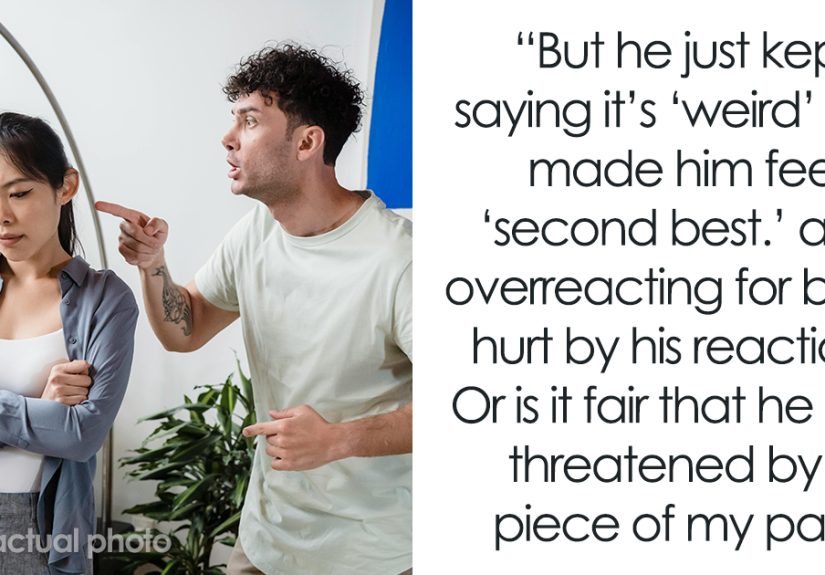
Still, the story struck a nerve for a reason. A young woman who lost her longtime boyfriend got a memorial tattoo on her wrist with his name and the date he died. Later, when she began a new relationship, her current boyfriend saw the tattoo more closely, got upset, and said it made him feel disrespected and second best. From there, the conflict became less about body art and more about grief, memory, insecurity, and whether a new partner gets to edit the past to feel more comfortable in the present.
This is why the story spread so fast: it is not really about a tattoo. It is about what people think love is supposed to look like after loss. Some believe moving on means wiping the slate clean. Others understand that grief does not work like a chalkboard. You do not erase a person just because life keeps going.
Why This Memorial Tattoo Story Hit Such a Big Nerve
The boyfriend's complaint sounds simple on the surface. He sees another man's name on his girlfriend's body and feels threatened. That reaction is human. Jealousy is not some rare emotional glitch reserved for reality TV contestants and people who check their partner's phone at 2 a.m. It can show up when someone feels insecure, unchosen, or afraid of being compared to someone else.
But the context matters. This was not a random ex from a situationship that ended because somebody got bored and started posting thirst traps. This was a partner who died. That changes the emotional math in a huge way. When someone dies, the relationship does not simply become irrelevant. The future ends, but the bond does not. That is exactly why memorial tattoos, anniversary rituals, photos, saved voicemails, jewelry, and other keepsakes matter so much to grieving people.
In cases like this, a new partner is not competing with a living ex. They are reacting to a memory, a wound, and a continuing bond. That can feel intimidating, especially if they do not understand grief well. But misunderstanding grief does not make controlling behavior okay.
Memorial Tattoos Are Not Just Ink, They Are Emotional Landmarks
Memorial tattoos often serve a purpose that outsiders miss. They are not always about being stuck in the past. More often, they are about carrying the past with honesty. The tattoo becomes a private memorial and a public acknowledgment that someone mattered. For many grieving people, that permanence is the point. A tattoo says, in a quiet and lasting way, this person was real, this loss was real, and I am not pretending otherwise.
That is also why telling someone to remove or cover a memorial tattoo can feel deeply offensive. It is not just a request about appearance. It can land like a request to minimize grief so another person feels less uncomfortable. And that is a terrible trade. Healthy relationships do not ask one partner to amputate meaningful parts of their story just to make the other partner feel like the main character.
Memorial tattoos can also help people process loss. They can become symbols of continuing love, survival, remembrance, and identity. After a death, many people fear forgetting details over time. The voice fades. The routines disappear. The texture of daily life changes. A tattoo can act like an anchor in that emotional storm. It does not stop grief, but it gives grief somewhere to rest.
That does not mean every memorial tattoo is easy for a future partner to see. It means the right response is conversation, not demands.
Is the Boyfriend Allowed to Feel Weird About It?
Yes. Feelings are not crimes. He is allowed to feel unsettled, insecure, confused, or even a little jealous. A lot of people would pause when they realize their partner carries such a visible tribute to someone they once loved deeply. Emotional discomfort is normal. The problem is not the feeling. The problem is what he does with it.
There is a massive difference between saying, "I want to be honest, this brings up some insecurity in me and I want to understand it better," and saying, "That tattoo disrespects me, so you should hide it, remove it, or change your body for my comfort." One is vulnerability. The other is control dressed up in wounded language.
His use of the word disrespected is especially telling. It shifts the issue away from his own insecurity and tries to turn her memorial into an offense against him. That is a neat rhetorical trick, but it does not hold up. Her tattoo was not created to insult a future boyfriend who did not even exist in that chapter of her life. It was created to honor someone she lost.
So yes, he can have feelings. But once he frames her grief as disrespect toward him, the conversation stops being emotionally honest and starts becoming unfair.
Where His Reaction Crosses the Line
He crosses the line when he treats her remembrance as a threat that must be managed. That matters because grief does not respond well to emotional ultimatums. Telling a grieving partner to cover up a memorial is often less about healing and more about ownership. It sends a message that love should be rearranged to reduce someone else's discomfort.
That approach usually backfires. Instead of building intimacy, it creates shame. The grieving partner feels misunderstood, policed, or forced to defend a wound they never should have had to justify. The insecure partner, meanwhile, does not actually become safer. Insecurity is rarely cured by deleting symbols. It tends to grow back, because the real issue was fear all along.
There is also a deeper problem with trying to compete with a deceased partner. You cannot win a rivalry that should not exist in the first place. The goal in a healthy relationship is not to replace the dead. It is to build something living. New love and old grief can coexist. In mature relationships, they often do.
Grief and New Love Can Exist at the Same Time
One of the biggest myths about bereavement is that moving forward means moving on in a clean, linear, movie-friendly way. Real life is not that tidy. Many people continue to love the person who died while also making room for a new relationship. That is not betrayal. It is human capacity. Hearts are not studio apartments with a strict occupancy limit.
That idea can be hard for a new partner to accept, especially if they are secretly asking, "Would I be here if that person had lived?" The honest answer might be no. But that truth is not an insult. It is simply reality. A death changed the shape of someone's life. The new relationship exists because life continued after loss, not because the old love meant nothing.
Once people understand that, the tattoo looks different. It is no longer evidence that she is failing the new relationship. It becomes evidence that she has survived something painful and is still trying to love again. That is not disrespectful. That is brave.
What a Healthy Conversation Would Actually Sound Like
If the boyfriend wanted to handle this well, he had options. He could ask what the tattoo means to her now. He could ask whether talking about her late partner feels comforting or painful. He could admit that he feels insecure without making her responsible for fixing it with laser removal. He could say, "I know this mattered deeply to you, and I want to understand how to be a good partner without asking you to erase your history."
Now that is a grown-up sentence. It may not be glamorous, but neither is emotional maturity in general. It tends to wear sensible shoes and ask follow-up questions.
Healthy conversations about grief and dating usually include a few essentials:
- Curiosity instead of accusation.
- Honesty instead of passive-aggressive sulking.
- Boundaries instead of body control.
- Reassurance instead of competition.
- Patience instead of deadlines for healing.
That does not mean the grieving partner has no responsibility. They still need to communicate clearly, make space for the new relationship, and avoid using grief as a shield against every difficult conversation. But in this case, the issue is not that she has a memorial tattoo. The issue is that he interpreted her grief as a ranking system.
Could This Relationship Still Work?
Maybe, but only if the boyfriend stops treating the tattoo like a rival and starts treating it like part of her story. If he can own his insecurity, apologize for making her grief about himself, and learn to separate remembrance from rejection, there is room for growth. Plenty of couples navigate photos, anniversaries, keepsakes, old messages, and other reminders of a partner who died. It is not always easy, but it is possible.
If he doubles down, though, the tattoo may become a symbol of something bigger: a mismatch in emotional maturity. Relationships after loss require empathy, nuance, and the ability to tolerate complicated feelings without trying to bulldoze them. If one person needs grief to be invisible in order to feel secure, that relationship will struggle.
Sometimes the healthiest outcome is not convincing the insecure partner harder. Sometimes it is recognizing that not everyone is equipped to date someone whose heart has already survived a funeral.
The Bigger Lesson Behind the Viral Drama
The internet loves a dramatic relationship headline, but the lasting lesson here is surprisingly simple. A memorial is not a betrayal. A tattoo is not a declaration that new love is impossible. And discomfort does not automatically make someone right.
The boyfriend is not a villain for having feelings. He becomes the problem when he turns those feelings into demands. The woman is not clinging to the past by keeping a memorial tattoo. She is honoring a chapter of her life that ended in tragedy. Those are not the same thing, and treating them as identical leads to hurt, resentment, and deeply unnecessary chaos.
Real love does not insist on being the only story a person has ever carried. It asks whether there is enough trust, compassion, and emotional steadiness to help write the next one.
Experiences Related to This Story That Many Couples Quietly Recognize
If this story feels oddly familiar, that is because versions of it happen all the time. Not always with a tattoo, but with the emotional leftovers of loss. One woman keeps a necklace that belonged to her late fiance and wears it on hard days. Her new boyfriend says he understands until he notices she wears it on date nights too, and suddenly he starts wondering whether he is sharing emotional space with a ghost. Another man saves the voicemails from his late wife because hearing her laugh steadies him on anniversaries and birthdays. His new partner says she supports him, but later asks whether he plans to "keep living in the past." The wording changes. The tension does not.
Sometimes it shows up through photos. A framed picture on a bookshelf becomes an emotional Rorschach test. The grieving person sees love, memory, and continuity. The insecure partner sees competition. Sometimes it is a social media post on the anniversary of the death. Sometimes it is visiting a grave, keeping an old sweatshirt, or refusing to get rid of letters. In families with children, it can be even more layered. Photos, stories, and rituals are not optional sentimental extras. They are part of preserving family history.
There are also reverse situations that feel just as complicated. Some people become uncomfortable not because their partner remembers a late love, but because the remembrance feels sudden, performative, or unclear. That is where nuance matters. A small memorial tattoo tied to a deeply significant relationship is very different from a giant tribute to someone barely known, sprung on a partner as a surprise. Intent, context, and emotional honesty matter more than the object itself.
What most of these experiences reveal is that the real conflict is rarely the item. It is the meaning assigned to it. A tattoo can mean "I still love the person who died and I always will." It can also mean, "I am still capable of loving you now." Those statements are not mutually exclusive, even if insecure partners sometimes act like they are.
People who handle these situations well usually do a few things right. They ask before assuming. They do not treat grief reminders like evidence in a courtroom. They understand that remembrance is not infidelity. They also speak up honestly when something hurts, but they do it without issuing commands about what another person should hide, erase, or destroy. That is what makes the difference between a hard conversation and a relationship land mine.
In the end, most people are not asking their new partner to compete with the dead. They are asking for enough emotional maturity to understand that love leaves marks. Some are visible, like a wrist tattoo. Some are quieter, like a song that still makes someone cry in the car. Healthy partners learn not to fear every trace of that history. They learn how to stand beside it.
Conclusion
The man in this viral story may have felt disrespected, but feelings are not always facts. The tattoo on his girlfriend's wrist was not a swipe at him. It was a memorial to someone she loved and lost. There is a world of difference between honoring a dead partner and refusing to invest in a living one.
If this relationship has a future, it will not be because she covers the tattoo. It will be because he learns to stop confusing grief with disloyalty. Love after loss requires empathy, patience, and enough self-awareness to admit when jealousy is really fear in a fancier outfit. Without that, a tiny bit of ink can expose a very large emotional problem.