Table of Contents >> Show >> Hide
- Why Composting Is Worth It
- Step 1: Pick a Simple Compost Setup
- Step 2: Learn Browns and Greens Without Overthinking It
- Step 3: Build the Pile in Layers
- Step 4: Maintain the Pile, Fix Problems, and Know When It’s Ready
- How Long Does Compost Take?
- How to Use Finished Compost
- Common Beginner Mistakes to Avoid
- Final Thoughts
- Beginner Composting Experience: What It Really Feels Like
Composting sounds a little intimidating at first. There is dirt. There are food scraps. There are mysterious words like “browns,” “greens,” and “aeration,” which can make a beginner feel like they accidentally enrolled in a soil science class. The good news is that composting is much simpler than it sounds. At its core, composting is just the controlled breakdown of organic matter into a rich, dark material that helps your garden grow better.
If you have ever looked at a pile of banana peels, coffee grounds, dry leaves, and grass clippings and thought, “Surely there is a nobler destiny for this stuff than the trash can,” you are absolutely right. Composting turns everyday kitchen scraps and yard waste into something useful. It cuts down on household waste, feeds the soil, and gives gardeners that smug, deeply satisfying feeling of making something valuable from leftovers. It is recycling, but with more worms and fewer plastic bins.
This beginner-friendly guide breaks the process into four simple steps. No complicated formulas. No backyard engineering degree required. Just a practical, realistic way to start composting at home without creating a soggy science experiment or a raccoon buffet.
Why Composting Is Worth It
Before we get into the how-to, let’s talk about why composting matters. Compost improves soil structure, helps sandy soil hold water better, loosens heavy clay soil, and adds organic matter that supports healthier plant growth. It can also reduce the amount of food scraps and yard debris that end up in the trash. In plain English, composting is good for your plants, good for your yard, and pretty darn good for your conscience.
For beginners, the biggest benefit is this: compost makes gardening more forgiving. Soil enriched with compost tends to hold moisture more evenly, drain better, and support stronger roots. That means your flowers, vegetables, herbs, and shrubs get a better shot at thriving, even if you are not exactly the type of person who remembers to water things on a strict schedule.
Step 1: Pick a Simple Compost Setup
You do not need a fancy three-bin system that looks like it belongs in a botanical garden. For most beginners, a basic compost setup is enough. Your best option depends on your space, your patience, and how tidy you want things to look.
Easy composting options for beginners
- Open pile: The simplest choice. Just create a pile in a corner of the yard. It is cheap, easy, and effective, though not the prettiest option.
- Wire or wooden bin: A good middle ground. It keeps the pile contained and usually looks more organized.
- Tumbler: Great for people who like things neat and easy to turn. It costs more, but it can make composting feel less messy.
- Small kitchen scrap collector: Not a compost system by itself, but very handy for collecting food scraps indoors before taking them outside.
Choose a spot that is easy to reach year-round, drains well, and has access to water. If your pile is too far from the house, you may stop using it the first time it rains or the first time you are carrying a dripping bowl of vegetable scraps in your nice shoes. Composting succeeds when it is convenient.
For open piles or bins that sit on the ground, bare soil is usually ideal because it allows drainage and helps beneficial organisms access the pile. If you are using a tumbler, that concern matters less because the structure is self-contained.
A modest setup is often best for beginners. Start with one bin or one pile. You are making compost, not opening a municipal waste facility.
Step 2: Learn Browns and Greens Without Overthinking It
This is the part that scares people, but it is actually easy once you stop imagining a spreadsheet. Compost piles need two main kinds of materials: browns and greens.
Browns are carbon-rich, dry materials. Think fall leaves, straw, shredded paper, cardboard, small twigs, and dry plant trimmings. Browns add structure, help air move through the pile, and keep the whole thing from turning into a wet, smelly blob.
Greens are nitrogen-rich, usually fresher materials. Think fruit and vegetable scraps, coffee grounds, tea bags, fresh grass clippings, and plant trimmings. Greens help feed the microbes that do the real work of decomposition.
A beginner-friendly rule is to use roughly two to three parts browns for every one part greens by volume. You do not need to measure with scientific precision. Composting is more casserole than chemistry lab. Eyeballing it is fine. If the pile seems too wet or smelly, add more browns. If it looks dry and inactive, add a few greens and a little water.
What you can compost
- Fruit and vegetable scraps
- Coffee grounds and paper filters
- Tea leaves and many paper tea bags
- Eggshells
- Dry leaves
- Shredded newspaper and plain cardboard
- Grass clippings in small amounts
- Small twigs and garden trimmings
- Dead flowers and spent annuals
What beginners should leave out
- Meat and bones
- Dairy products
- Grease, oil, and fatty foods
- Pet waste
- Diseased plants
- Weeds gone to seed
- Yard waste treated with persistent chemicals
- Glossy or heavily coated paper
Those “do not compost” items are not there to ruin your fun. They can attract pests, create bad odors, or introduce pathogens and unwanted chemicals. Your compost pile should smell earthy, not like a fridge that lost power during a holiday weekend.
Step 3: Build the Pile in Layers
Now that you have your materials, it is time to build the compost pile. The easiest method is layering. Think lasagna, but less delicious and much better for tomatoes.
How to build a beginner compost pile
- Start with a loose layer of bulky browns, such as twigs, wood chips, or coarse dry leaves. This helps air move through the bottom.
- Add a layer of greens, such as kitchen scraps or fresh yard waste.
- Cover that with a thicker layer of browns.
- Repeat as materials become available.
- Add a little water if the materials feel dry.
If possible, chop large items into smaller pieces before adding them. Smaller pieces break down faster because microbes have more surface area to work on. A whole corn cob may eventually compost, but it will take its sweet time. Shredded leaves and chopped stems are much more cooperative.
Each time you add kitchen scraps, cover them with browns. This one habit can prevent many beginner problems. It helps reduce odors, discourages flies, and keeps the pile looking less like a buffet tray. A scoop of dry leaves or shredded cardboard is the compost equivalent of making your bed. It takes one minute and saves you trouble later.
A simple example for your first week
Let’s say you save vegetable peels, coffee grounds, and eggshells in a kitchen container for a few days. Outside, you have a bag of dry leaves and some shredded cardboard. Start your pile with a base of leaves and a few twigs. Dump in the scraps. Add a generous layer of leaves on top. Lightly dampen it if the pile is dry. Repeat every few days. That is it. Congratulations, you are composting.
Step 4: Maintain the Pile, Fix Problems, and Know When It’s Ready
Composting does not require daily babysitting, but it does need occasional attention. The four things to monitor are moisture, air, balance, and smell.
Moisture
Your pile should feel like a wrung-out sponge: damp but not soggy. If it is bone dry, decomposition slows down. If it is soaking wet, air cannot move through the pile and bad smells may show up. Add water during dry spells, and add browns if the pile gets too wet.
Air
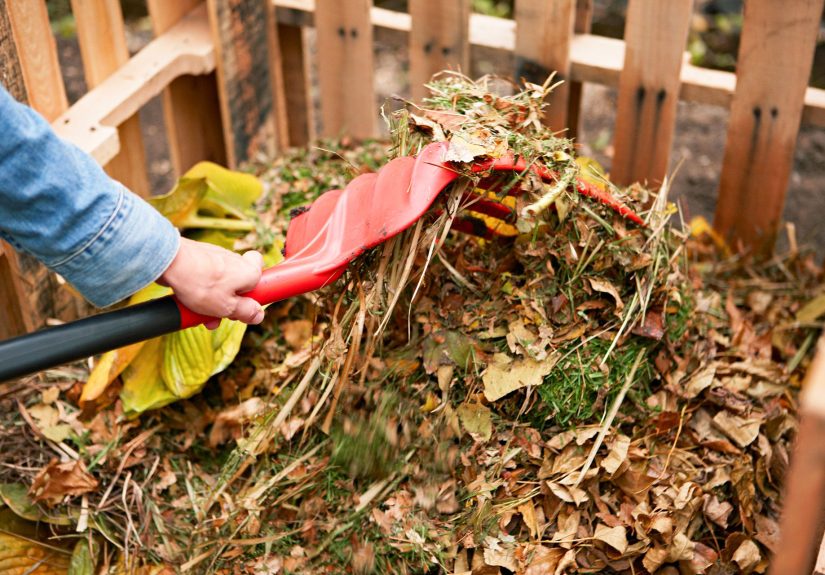
Compost is an aerobic process, which is a fancy way of saying the helpful microbes need oxygen. Turn the pile every so often with a garden fork or shovel. You do not need to flip it like a restaurant omelet. Just move outer materials inward and loosen compacted sections.
Balance
If the pile is not breaking down, it may need more greens. If it smells sour or rotten, it probably needs more browns and better airflow. Composting has a learning curve, but the fixes are usually simple.
Smell
A healthy compost pile should smell earthy, like a forest floor after rain. Bad odors usually mean the pile is too wet, too compacted, or overloaded with greens. In other words, your pile is not haunted. It just needs browns and a little fresh air.
Beginner compost troubleshooting
| Problem | Likely Cause | Easy Fix |
|---|---|---|
| Bad smell | Too wet or too many greens | Add dry leaves, shredded cardboard, and turn the pile |
| Nothing is happening | Too dry or not enough greens | Add water and a small amount of fresh green material |
| Fruit flies or pests | Food scraps exposed | Bury scraps and cover with browns |
| Pile is slimy | Poor airflow and excess moisture | Add coarse browns and loosen the pile |
| Pile dries out fast | Too much sun or too many dry materials | Water lightly and top with a cover layer of browns |
How Long Does Compost Take?
This depends on how active you are. A well-managed compost pile with a good balance of materials, steady moisture, and occasional turning can produce finished compost in a few months. A slower, less-managed pile may take much longer. Both methods work. One is faster. The other is for people who prefer the “set it and forget it” school of yard care.
You will know the compost is ready when it looks dark and crumbly, smells earthy, and most of the original ingredients are no longer recognizable. You might still see the occasional twig or avocado pit, which is normal. Compost is not auditioning for perfection.
How to Use Finished Compost
Once your compost is ready, you have garden gold. Mix it into vegetable beds before planting. Spread it around flowers, shrubs, and trees as a top dressing. Blend it into potting mixes in moderation. Use it as mulch around landscape plants. Finished compost can help improve soil texture, moisture retention, and overall plant health.
Just remember that compost is a soil amendment, not magic dust from a fantasy novel. It improves the soil over time. Its best work happens quietly and steadily.
Common Beginner Mistakes to Avoid
- Adding only kitchen scraps: This often leads to a wet, smelly pile. Browns matter.
- Ignoring the pile completely: Even low-effort composting benefits from occasional checks.
- Adding huge chunks: Whole branches and giant stems break down slowly.
- Using too much grass at once: Fresh clippings can mat together and become slimy.
- Expecting instant compost: Composting is natural, not microwaveable.
- Overcomplicating everything: The microbes are doing most of the work. You are more of a host than a hero.
Final Thoughts
If you are new to composting, the best advice is simple: start small and stay consistent. Choose an easy setup, balance your browns and greens, keep the pile damp but not soggy, and give it some air now and then. That is the core of beginner composting. You do not need a perfect system. You need a workable one.
Once you get the hang of it, composting becomes one of those satisfying habits that makes everyday life feel just a little smarter. Your trash gets lighter, your garden gets happier, and your banana peels get a respectable second act. Not bad for something that used to be dinner scraps and dead leaves.
Beginner Composting Experience: What It Really Feels Like
The first time many beginners try composting, there is a strange mix of enthusiasm and suspicion. You toss in carrot peels, coffee grounds, and a handful of dry leaves, then stare at the pile as if it should immediately burst into productive, earthy greatness. It will not. Composting teaches patience in a very humble way. At the beginning, it can feel like you are just creating a polite little heap of leftovers.
Then something shifts. After a week or two, you start noticing that the pile is warming up a bit in the middle. The onion skins are softening. The leaves are collapsing. The coffee grounds have blended into the mix. Suddenly the whole process feels less like “saving scraps” and more like participating in a tiny ecosystem you built yourself.
One of the most common beginner experiences is making the pile too wet. It happens because kitchen scraps seem innocent enough, but they contain a lot of moisture. Add too many at once without enough dry leaves or cardboard, and the pile can get heavy, compacted, and smelly. This is usually the exact moment when a beginner learns the deep wisdom of browns. Dry leaves stop being yard clutter and start looking like compost superheroes in crunchy disguises.
Another common experience is overthinking. People worry about whether one eggshell is too much, whether a tea bag counts as green or brown, or whether the compost pile is “correct.” In reality, beginner composting gets easier once you accept that compost is forgiving. You do not need perfection. You need a decent mix, some moisture, some oxygen, and a willingness to adjust when the pile gives you feedback. Compost is surprisingly communicative. If it smells bad, it is asking for help. If it looks dry and lifeless, it is asking for water or greens. If it smells like fresh soil, it is basically complimenting you.
There is also a special satisfaction in using finished compost for the first time. You reach into the bin expecting grossness and instead pull out something dark, crumbly, and oddly pleasant. It looks nothing like the scraps that went in. Spreading that compost around tomatoes, herbs, roses, or houseplants feels like closing a loop. Your kitchen waste did not disappear into a trash bag. It came back as something useful.
For many beginners, composting also changes the way they look at waste. A pile of fall leaves becomes future mulch. Coffee grounds become future soil improvement. Vegetable peels stop looking like garbage and start looking like ingredients. It is a small mindset shift, but a meaningful one. Composting makes the home feel a little more resourceful and the garden feel a little more connected to everyday life.
And yes, there are moments of comedy. You may excitedly explain your compost ratio to someone who absolutely did not ask. You may become weirdly protective of dry leaves. You may feel genuine triumph when your pile stops smelling suspicious and starts smelling earthy. That is part of the charm. Composting is practical, but it is also oddly delightful. Once beginners get through the first few weeks, many discover that composting is not just a garden chore. It is a satisfying little ritual that makes home life greener, tidier, and a bit more grounded.