Table of Contents >> Show >> Hide
- Before You Decorate: A 2-Minute Meaning Check
- 13 Hanukkah Table Decor Ideas (That Don’t Feel Like “Too Much”)
- 1) Let the Hanukkiah be the centerpiecethen give it a “stage”
- 2) Build a blue-and-white foundation, then add one “grown-up” metallic
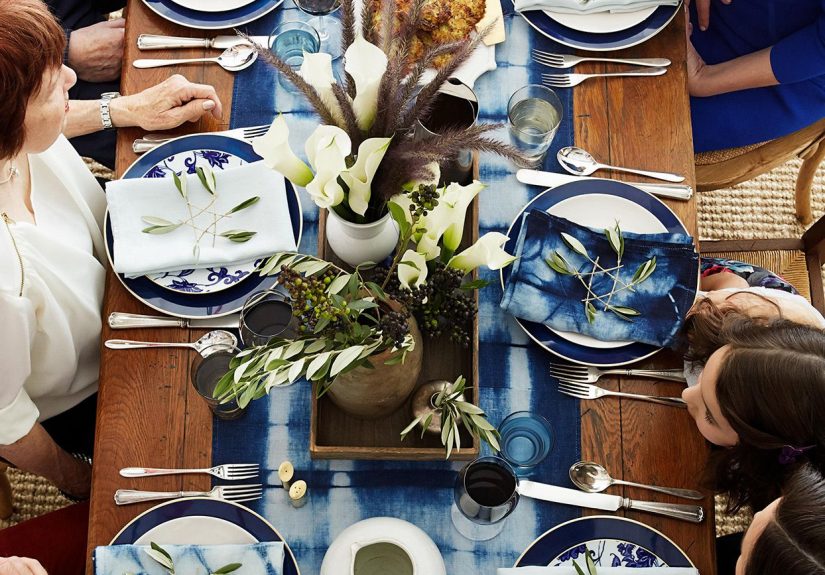
- 3) Use a runner that tells a story (tie-dye, linen, or even wrapping paper)
- 4) Make Star-of-David place settings with natural greens
- 5) Place cards that double as a dreidel moment
- 6) Sprinkle chocolate gelt like confettiintentionally
- 7) Create a glow layer with candles + reflection (without turning it into a fire drill)
- 8) Napkin styling that feels special (even if you’re tired)
- 9) Turn everyday serveware into Hanukkah-worthy pieces with simple banding
- 10) Make the food part of the tablescape: a latke board + topping “flight”
- 11) A “light + learning” centerpiece: one meaningful card per night
- 12) Party favors that aren’t random: rugelach, babka, or gelt pouches
- 13) Go minimalist: white dishes, one bold hanukkiah, and negative space
- How to Pull It All Together: 3 Easy “Looks”
- Quick Safety Notes (So the Only Thing “Lit” Is the Holiday)
- of Real-Life Hosting Experiences (and the Lessons They Teach)
- Conclusion
Hanukkah is already doing the most: eight nights, glowing candles, fried foods that somehow taste better when eaten near a menorah, and the kind of
family stories that start with “Remember when…” and end with “Please never tell anyone this.”
If you’re hosting (or just trying to make Tuesday dinner feel like a holiday), the table is where the magic actually happens. Not the “Pinterest-perfect”
kind of magicmore like the “everyone lingers for dessert and nobody’s glued to their phone” kind. These Hanukkah table decor ideas are designed to look
beautiful, feel meaningful, and stay practical enough for real life (read: kids, pets, and someone inevitably reaching across the table during candle-lighting).
Before You Decorate: A 2-Minute Meaning Check
Hanukkah (also spelled Chanukah) is the Jewish Festival of Lights, celebrated over eight nights. Each night, one additional candle is lit on a nine-branched
hanukkiah (often called a Hanukkah menorah), using the shamash (helper candle) to light the others. Your table decor doesn’t need to “teach a class,” but it
can quietly point back to the themes that make the holiday special: light in darkness, resilience, gratitude, and togetherness.
A simple formula that never fails
- Start with function: Where will the hanukkiah go? Where will food land? Where will elbows accidentally travel?
- Add meaning: Choose 1–2 symbolic elements (light, oil, stars, family notes, or tradition-friendly colors).
- Make it welcoming: Soft textures, warm light, and a place setting that says, “Stay awhile.”
Now let’s get to the fun part: making your Hanukkah tablescape feel intentionalwithout looking like a craft store sneezed glitter.
13 Hanukkah Table Decor Ideas (That Don’t Feel Like “Too Much”)
1) Let the Hanukkiah be the centerpiecethen give it a “stage”
The most meaningful centerpiece is also the most obvious one: the hanukkiah. Instead of crowding it with a million accessories, give it a clean, sturdy base:
a stone or metal tray, a wide ceramic platter, or a sleek board that visually frames it. This instantly signals: this is the heart of the table.
Style tip: place the hanukkiah slightly off-center so it doesn’t block sightlines. You want guests to see each other’s faces, not just your candle game.
2) Build a blue-and-white foundation, then add one “grown-up” metallic
Blue and white are popular Hanukkah colors (and instantly read “Festival of Lights”), but the trick is to keep it modern. Start with a calm basewhite plates,
blue napkins, or a blue runnerand then choose one metallic accent: silver or gold. Not both, unless you enjoy living on the edge.
Specific example: white dinner plates + mismatched blue salad plates + simple silver flatware + a single gold ribbon detail on place cards. It’s balanced,
festive, and not visually exhausting.
3) Use a runner that tells a story (tie-dye, linen, or even wrapping paper)
A table runner is the easiest “big impact” move, and it’s also where you can sneak in personality. If you like a craft moment, try a bold tie-dye look in deep
blue tones. If you want timeless, go linen (bonus: it gets better with age, like a good family joke).
Budget-friendly option: use a roll of wrapping paper as a temporary runnerespecially if kids are involved and cleanup needs to be fast. Just keep it away from
open flames and place the hanukkiah on a non-flammable surface.
4) Make Star-of-David place settings with natural greens
Natural elements soften a table and make it feel “hosted” rather than “staged.” Arrange small sprigs of rosemary, olive branches, or eucalyptus into subtle
Star-of-David shapes at each place setting. You can do this with two overlapping triangles (keep it simple), then tuck a name card into the greenery.
Pro move: keep greens low and flat so they don’t compete with platesor catch fire. Meaningful and safe is the vibe.
5) Place cards that double as a dreidel moment
If you want a table detail that sparks conversation (and makes guests smile), use dreidels as place-card holders. Write names on small tent cards and lean them
against a dreidel, or tie a tiny tag to the dreidel with ribbon.
For families: put a small bowl of dreidels at the center of the table and invite guests to spin one before dinner. It’s interactive decoraka the best kind.
6) Sprinkle chocolate gelt like confettiintentionally
Chocolate coins are festive, kid-approved, and surprisingly chic when used with restraint. Instead of scattering them randomly, group them in a few purposeful
spots: a small dish by each place setting, a shallow bowl near the center, or tucked beside a napkin fold.
Bonus: it becomes dessert “pre-gaming,” which is a perfectly valid holiday strategy.
7) Create a glow layer with candles + reflection (without turning it into a fire drill)
Hanukkah is about light, so lean into it. Add a line of low votives or tea lights in glass holders down the center of the table, then place them on a reflective
surface (a mirrored tray, polished metal, or glossy ceramic) to amplify the glow.
If your crowd includes toddlers, cats, or an uncle who gestures wildly during stories, consider flameless candles for the extra glow and save open flames for the
hanukkiah.
8) Napkin styling that feels special (even if you’re tired)
Napkins are where “everyday dinner” becomes “holiday.” Keep it simple:
- The knot: tie a cloth napkin loosely and slide it onto the plate.
- The pocket fold: tuck silverware into the fold for a clean, hosted look.
- The ribbon wrap: wrap a napkin with blue ribbon and add a tiny star charm or name tag.
You don’t need complicated folds. You need consistency. Uniform napkins are the table equivalent of a well-tailored blazer: instantly pulled together.
9) Turn everyday serveware into Hanukkah-worthy pieces with simple banding
Before you buy new platters, “upgrade” what you already have. A thin metallic band (food-safe tape on the underside or around a non-food-contact edge), a blue
ribbon tied around a serving bowl, or even a coordinated set of serving spoons can make standard dishes feel holiday-ready.
This works especially well if your menu is classiclatkes, brisket, salad, something sweetbecause the serveware becomes part of the visual rhythm.
10) Make the food part of the tablescape: a latke board + topping “flight”
If you want a table that feels abundant (but not chaotic), create one central food moment that doubles as decor:
- Latke board: stack latkes on a wooden board or cake stand.
- Topping flight: small bowls of applesauce, sour cream, smoked salmon, chives, and pickled onions.
- Little labels: simple tags so guests can build their perfect bite.
It looks gorgeous, encourages sharing, and keeps people moving and minglingwhich is the secret to a lively holiday table.
11) A “light + learning” centerpiece: one meaningful card per night
For a table that feels heartfelt, add a small stack of cards (or a mini stand) with a prompt for each night. Keep it light and inviting:
- Night 1: “What’s one thing you want more light in this year?”
- Night 3: “Name a person who helped you when things were hard.”
- Night 6: “What tradition do you want to pass on?”
Guests can answer during dinner, after candle-lighting, or whenever conversation naturally opens up. The table becomes more than decorit becomes a memory-maker.
12) Party favors that aren’t random: rugelach, babka, or gelt pouches
Send guests home with something they’ll actually use (and eat). Wrap a slice of babka, a couple of rugelach, or a small pouch of gelt in clear bags, then tie
with blue ribbon and a simple note like “Thanks for bringing light.”
This is the kind of detail people rememberbecause it’s thoughtful, not clutter.
13) Go minimalist: white dishes, one bold hanukkiah, and negative space
Minimalist Hanukkah table decorations can be stunning. Start with white plates, clear glassware, and a single statement hanukkiah. Then leave space. Negative
space is what makes candlelight feel dramatic. It’s also what prevents a table from becoming an obstacle course.
If you want one accent: add a single deep-blue runner or a cluster of pomegranates (symbolic, beautiful, and very hard to mess up).
How to Pull It All Together: 3 Easy “Looks”
Look 1: Classic Blue + Silver
- White tablecloth + blue napkins
- Silver accents (flatware, napkin rings, or a metallic runner)
- Hanukkiah on a simple tray, plus a few low glass votives
Look 2: Natural + Modern
- Linen runner + greenery at each place setting
- Stoneware plates or simple white dishes
- Modern hanukkiah (ceramic, metal, or concrete-style), minimal extra decor
Look 3: Family-Friendly Sparkle
- Dreidel place cards + small gelt bowls
- Flameless candles for extra glow (especially with little kids)
- One “activity bowl” of dreidels so the table doubles as entertainment
Quick Safety Notes (So the Only Thing “Lit” Is the Holiday)
- Stability first: Place the hanukkiah on a sturdy, non-flammable surface where it won’t tip if the table gets bumped.
- Give flames space: Keep candles away from anything that can burn (napkins, runners, greenery, curtains, gift wrap).
- Never leave it unattended: If you leave the room or go to sleep, put candles out.
- Consider flameless helpers: Use LED candles for extra ambiance when safety is a concern.
of Real-Life Hosting Experiences (and the Lessons They Teach)
A meaningful Hanukkah table isn’t just about what it looks like at 6:00 p.m. It’s about what it survives by 8:30 p.m.and still feels warm and inviting.
In many homes, the “tablescape” begins as a calm, glowing scene and ends as a joyful collage of crumbs, napkin knots, and that one rogue jelly doughnut
that somehow migrated to the living room. That’s not failure. That’s proof your table was actually used.
One of the most common hosting wins is also the simplest: keeping the center of the table low. When the hanukkiah is positioned so everyone can still see
each other, the conversation flows more easily. People linger longer. Kids chime in. Someone asks a grandparent to tell “the story of that winter in 1987”
again. And suddenly the table isn’t just decoratedit’s doing its job.
Another real-life lesson: interactive decor beats delicate decor every time. Dreidels and gelt aren’t just cute symbols; they’re social tools. A bowl of
dreidels invites a quick spin while food is being plated. A small pile of gelt at each seat makes adults grin (yes, adults) and gives kids something festive
that doesn’t involve climbing the furniture. Even the place cards become conversation starters: “Wait, yours is on a dreidel? That’s adorable.”
Then there’s the “food-as-decor” effect, which is honestly the most reliable shortcut to a beautiful table. A latke board stacked high, a trio of toppings in
little bowls, and a cake stand of sufganiyot will look intentional no matter what your napkins are doing. It also solves a hosting problem you didn’t know you
had: it gives guests a natural place to gather, chat, and snack without hovering awkwardly near the kitchen like it’s a museum exhibit.
Safety becomes part of the experience, tooespecially in homes with curious kids, energetic pets, or guests who tell stories with their hands. The most
“experienced host” move is separating open flames from flammable decor. That might mean placing the hanukkiah on a stone tray and keeping greenery flat and
away from the candle area. It might mean using flameless candles to add extra glow so you’re not juggling multiple real flames at once. When safety is handled
quietly, everyone relaxesand the holiday feels more joyful.
Finally, the biggest lesson is that meaning doesn’t require perfection. The most memorable tables usually have one intentional detail: a thoughtful note at each
seat, a simple blessing card, a favorite family hanukkiah, or a small tradition that repeats every year. Those are the pieces people carry with themlong after
the tablecloth is in the wash and the last bit of gelt has mysteriously vanished.