Table of Contents >> Show >> Hide
- 1. King was in Memphis because of labor rights, not just civil rights
- 2. The strike itself was sparked by tragedy
- 3. The Lorraine Motel was not a random stop on the map
- 4. Room 306 became part of the story for a reason
- 5. His last full day included one of the most famous speeches in American history
- 6. King’s final hours were surprisingly ordinary
- 7. The assassination happened in a very narrow window of time
- 8. James Earl Ray had been living under aliases
- 9. The alleged shooting position was across from the motel
- 10. A dropped bundle became a major piece of evidence
- 11. The manhunt went international
- 12. Ray pleaded guilty, then almost immediately began trying to undo that decision
- 13. Official investigations did not all sound exactly the same
- 14. The King family’s views kept public debate alive
- 15. King’s assassination did not end his unfinished agenda
- Why These Details Matter
- Experiences That Still Bring This History Uncomfortably Close
- Conclusion
- SEO Tags
Some history arrives with a date stamp. Other history arrives with a bruise. The assassination of Dr. Martin Luther King, Jr. on April 4, 1968, belongs to the second category. People remember the broad outline: Memphis, the Lorraine Motel, James Earl Ray, national grief. But the closer you look, the more the story turns out to be not just a headline, but a chain of human detailsworkers on strike, a motel with its own civil rights history, a speech that sounded almost prophetic, and an investigation that never quite stopped stirring debate.
This is not a list built for trivia-night bragging rights. It is a deeper look at fifteen details that help explain why Martin Luther King, Jr.’s assassination remains one of the most studied, argued-over, and emotionally charged moments in American history. If you want the short version, King’s death shocked the nation. If you want the fuller version, keep reading. History rarely reveals its most important details in the first paragraph.
1. King was in Memphis because of labor rights, not just civil rights
One of the most important details about Martin Luther King, Jr.’s assassination is also one of the easiest to overlook: he was in Memphis to support striking sanitation workers. These workers were demanding safer conditions, fairer wages, and dignity on the job after years of mistreatment. Their protest was not a side quest in King’s career. It was central to where his thinking had gone in the late 1960s. He was increasingly focused on economic justice, not only desegregation. In other words, King was in Memphis because he believed civil rights without economic rights was only half a victory.
2. The strike itself was sparked by tragedy
The Memphis sanitation strike did not appear out of thin air. It gained urgency after two Black sanitation workers, Echol Cole and Robert Walker, were killed in a gruesome workplace accident in February 1968. Their deaths exposed the dangerous conditions that Black municipal workers faced and sharpened public anger in Memphis. King understood that supporting the strike meant supporting a broader principle: that dignity belongs not only in voting booths and courtrooms, but in garbage trucks, paychecks, and city payroll offices too.
3. The Lorraine Motel was not a random stop on the map
The Lorraine Motel is now frozen in the American imagination, but before it became a historic site, it was a meaningful place for Black travelers in a segregated South. It had welcomed prominent Black entertainers, athletes, and activists at a time when mainstream hotels routinely shut their doors to them. That matters. King was not staying at some anonymous roadside motel plucked from nowhere. He was staying at a place that already carried the story of Black mobility, Black dignity, and Black community in the Jim Crow era.
4. Room 306 became part of the story for a reason
King was staying in Room 306, a room that became almost instantly symbolic after his death. It was a favored room for King and his inner circle when they stayed at the Lorraine. Room 306 has since become one of the most recognized spaces in American public memory, not because it was grand, but because history often chooses ordinary settings for extraordinary heartbreak. A motel balcony does not sound like a place where the course of a nation turnsuntil it does.
5. His last full day included one of the most famous speeches in American history
On April 3, 1968, the night before he was killed, King delivered his “I’ve Been to the Mountaintop” speech in Memphis. It remains one of the most haunting speeches ever given by an American public figure. He spoke about struggle, uncertainty, and the long road ahead. He also said he had “some difficult days ahead” and reflected in a way that later generations would hear as eerily prophetic. The speech was not a farewell in any formal sense, but history has treated it like one ever since.
6. King’s final hours were surprisingly ordinary
History books can make major events look theatrical, but the final hours before the assassination were strikingly everyday. King and his colleagues were preparing to go to dinner at the home of Rev. Billy Kyles. He was talking with friends, moving between rooms, and getting ready for the evening. That normal rhythm is part of what makes the event so devastating. The nation did not lose him in the middle of a grand ceremony. It lost him in the middle of a regular evening plan, with dinner waiting.
7. The assassination happened in a very narrow window of time
At about 6:01 p.m. on April 4, King was shot while standing on the second-floor balcony outside his room at the Lorraine Motel. He was rushed to St. Joseph’s Hospital, where doctors tried to save him, but he was pronounced dead at 7:05 p.m. He was only 39 years old. That compressed timeline matters because it reminds us how quickly history can split into a before and an after. One moment, a movement still had its central voice. Roughly an hour later, the country was entering a different era.
8. James Earl Ray had been living under aliases
Another detail people often miss is just how much disguise and drift shaped the path to the crime. James Earl Ray was an escaped convict who had been on the run before King’s assassination. He moved through multiple cities and used aliases while trying to avoid capture. In Memphis, he rented space under a false name near the Lorraine Motel. This was not the story of a man who stumbled into history by accident. It was the story of a fugitive moving through the cracks and shadows of the country.
9. The alleged shooting position was across from the motel
Investigators concluded that the fatal shot was fired from a rooming house near the Lorraine Motel, from a vantage point that gave a direct line toward the balcony area. That physical geography became crucial to the investigation and later arguments about the case. Even today, part of the power of visiting the National Civil Rights Museum comes from seeing how close everything was. The distance is not cinematic. It is chillingly small. You do not need imagination to feel the nearness of it.
10. A dropped bundle became a major piece of evidence
Shortly after the shooting, authorities recovered a bundle abandoned near the rooming house. It included a rifle and other items that became central to the case against Ray. Investigators said fingerprints linked him to the evidence. That discovery helped shape the official story of the assassination and the manhunt that followed. In historical cases, evidence sometimes appears only after a maze of delay and confusion. Here, one abandoned bundle became one of the most important physical clues in one of the most consequential criminal investigations in the United States.
11. The manhunt went international
The pursuit of James Earl Ray did not end in Tennessee or even in the United States. After more than two months on the run, Ray was arrested on June 8, 1968, at London’s Heathrow Airport while traveling with a false Canadian passport. That international dimension gave the case an almost spy-thriller feel, except this was no thriller and no fiction. It was a global chase connected to a national wound. Ray’s capture closed one chapter of the story, but it did not end public suspicion or grief.
12. Ray pleaded guilty, then almost immediately began trying to undo that decision
In March 1969, Ray pleaded guilty to King’s murder and received a 99-year sentence, avoiding a trial and the possibility of the death penalty. Then came one of the most discussed twists in the case: within days, he began recanting and trying to withdraw his plea. That reversal helped fuel decades of controversy. A full trial might not have settled every question, but because it never happened, the case remained unusually vulnerable to competing narratives, speculation, and public distrust.
13. Official investigations did not all sound exactly the same
This is where the history gets especially complicated. The House Select Committee on Assassinations concluded in 1979 that James Earl Ray was the assassin, while also saying there was a likelihood that a conspiracy existed. Later, the U.S. Department of Justice reviewed allegations related to the assassination and said it did not find enough evidence to support claims of a broad conspiracy or a basis to reopen the case. So if you have ever heard people say, “The official story is simple,” that is not quite right. The official record has never been entirely simple.
14. The King family’s views kept public debate alive
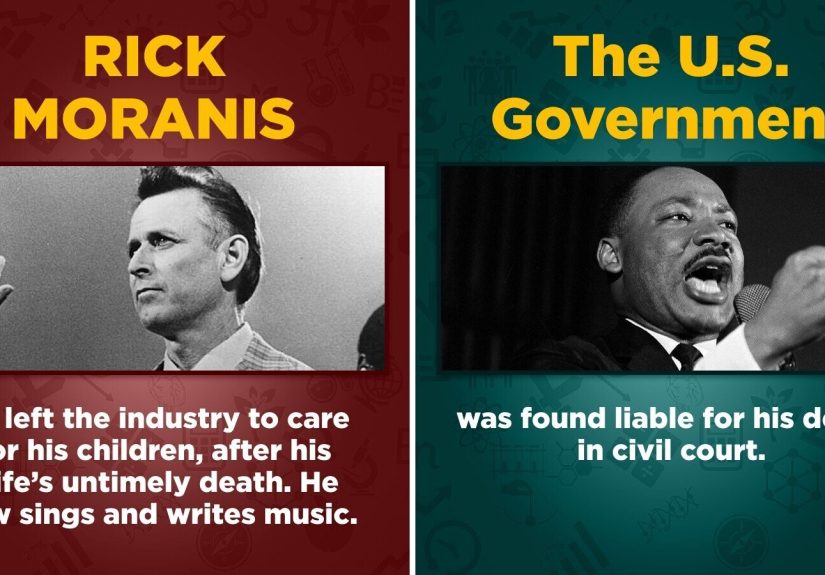
Another reason the assassination has never faded into tidy textbook certainty is that members of the King family publicly questioned whether Ray acted alone, or even whether he was the actual shooter. Their skepticism helped keep the case in public conversation for decades. A 1999 civil trial involving Loyd Jowers produced a jury verdict that supported the idea of a broader conspiracy, but that outcome did not settle the matter nationally, and later federal review did not endorse that conclusion. The result is a rare historical case in which legal outcomes, family conviction, and federal findings all sit in uneasy tension.
15. King’s assassination did not end his unfinished agenda
It changed it, sharpened it, and made it harderbut it did not erase it. King had been preparing the Poor People’s Campaign, a national push aimed at confronting poverty and economic inequality. After his assassination, the Southern Christian Leadership Conference continued the campaign under Ralph Abernathy. At the same time, King’s death triggered grief, anger, and unrest in more than 100 American cities. His assassination was not only the loss of a leader. It was a violent interruption in a larger argument about race, poverty, democracy, labor, and the moral direction of the country.
Why These Details Matter
If you only know the headline version of Martin Luther King, Jr.’s assassination, you know the event but not the texture of it. The texture matters. It tells us that King died while supporting workers. It tells us the Lorraine Motel was already part of Black American history before it became a memorial. It tells us that the nation responded not with one emotion, but with mourning, fury, fear, and disbelief. And it tells us that the investigation, rather than neatly closing the case in public memory, became part of the story itself.
These details also rescue King from being flattened into a quotation machine. He was not in Memphis simply to symbolize hope. He was there to organize, to pressure, to speak, and to insist that economic injustice belonged at the center of the American moral crisis. That may be one of the most important now-you-know details of all. King was not killed while looking backward at the victories of the movement. He was killed while pushing forward into one of its hardest unfinished fights.
Experiences That Still Bring This History Uncomfortably Close
There is a particular kind of silence that falls over people when they encounter this history up close. You can see it when students first learn that King was in Memphis for sanitation workers and suddenly realize this was a labor story as much as a civil rights story. You can see it when museum visitors stand before the preserved Lorraine Motel balcony and stop speaking, not because someone told them to be quiet, but because the space itself seems to ask for it. Even people who know the date, the city, and the name James Earl Ray often seem startled by how intimate the setting was. They expect history to feel distant. Instead, it feels almost physically near.
Teachers, historians, clergy members, and civil rights guides often describe the same experience from different angles: King’s assassination refuses to stay in the past. For some, the moment becomes real when they hear excerpts from the Mountaintop speech and realize he was talking about uncertainty, danger, and endurance less than twenty-four hours before he died. For others, it becomes real when they connect Memphis in 1968 to current debates about wages, workplace safety, racial inequality, and public protest. The story stops being a framed portrait and starts sounding like an argument the country is still having.
Family trips to the National Civil Rights Museum often become unexpectedly emotional because adults arrive thinking they are offering children a history lesson, then discover they are being confronted by their own gaps in understanding. Many people know King as the man from the “I Have a Dream” speech. Fewer know him as the organizer who died while backing striking workers. That shift in perspective can feel almost like meeting a more complicated version of a famous person you thought you already understood. It is sobering, humbling, and sometimes a little embarrassing in the most productive way.
There is also the experience of reading the case history itself. The further you gointo the manhunt, the guilty plea, the recantation, the later investigations, the civil trial, the federal reviewthe less this looks like a sealed chapter and the more it looks like a national wound that never fully scarred over. Readers often come away with two reactions at once: certainty about some core facts and discomfort about the arguments that continued around them. That combination is part of why the assassination still provokes so much study. It offers no easy emotional exit ramp.
And then there is the simplest experience of all: hearing King’s name in a classroom, a church, a documentary, or a public memorial and realizing that the loss was not only personal or symbolic, but strategic. A movement lost one of its central thinkers at a moment when he was broadening his focus from civil rights to human rights, from legal equality to economic justice. That realization can hit with surprising force. It leaves many people with the same thought: not only what happened, but what might have happened next if he had lived. That question lingers because history, unlike a museum display, never shows the road not taken.
Conclusion
Martin Luther King, Jr.’s assassination was not just a shocking act of violence against a beloved leader. It was a turning point that exposed the unfinished business of American democracy. The details matter because they reveal a fuller story: King in Memphis for workers’ rights, the Lorraine Motel as a place already rooted in Black history, the Mountaintop speech as a final thunderclap, the manhunt for James Earl Ray, the guilty plea that did not quiet suspicion, and the investigations that kept the debate alive. The more closely you study the event, the clearer it becomes that King’s death was not the end of the questions he raised. In many ways, it made those questions impossible to ignore.