Table of Contents >> Show >> Hide
- Quick reality check: “Deer-resistant” doesn’t mean “deer-proof”
- Shade 101: know what kind of shade you actually have
- 17 deer-resistant shade plants that bring the color
- 1) Hellebore (Helleborus spp.)
- 2) Barrenwort (Epimedium spp.)
- 3) Lungwort (Pulmonaria spp.)
- 4) Siberian bugloss (Brunnera macrophylla)
- 5) Astilbe (Astilbe spp.)
- 6) Bleeding heart (Lamprocapnos spectabilis)
- 7) Columbine (Aquilegia spp.)
- 8) Foamflower (Tiarella cordifolia)
- 9) Coral bells (Heuchera spp.)
- 10) Leopard plant (Ligularia spp.)
- 11) Spotted deadnettle (Lamium maculatum)
- 12) Sweet woodruff (Galium odoratum)
- 13) Wild ginger (Asarum canadense)
- 14) Lilyturf / monkey grass (Liriope muscari or Liriope spicata)
- 15) Japanese painted fern (Athyrium niponicum var. pictum)
- 16) Autumn fern (Dryopteris erythrosora)
- 17) Oregon grape holly (Mahonia aquifolium / Berberis aquifolium)
- Design recipes for a brighter shade bed
- How to improve your odds when deer are persistent
- Real-world experiences: what actually happens in shade gardens with deer (and what works anyway)
- Conclusion
- SEO Tags
Deer have two hobbies: (1) looking innocent and (2) turning your shade garden into an all-you-can-eat salad bar.
If you’re tired of watching hostas get “audited” down to the stems, you’re in the right place.
Below are 17 shade-loving plants that are generally deer-resistantmeaning they’re less likely to be eaten,
thanks to fuzzy leaves, strong scents, tough textures, or (sometimes) mild toxicity. Bonus: these picks don’t just survive in shade;
they add color, texture, and that “wow, I meant to do this” look.
Quick reality check: “Deer-resistant” doesn’t mean “deer-proof”
No plant is 100% safe if deer are hungry enough, the population is high, or winter is long.
Think of “deer-resistant” as “not usually their first choice”like a plain rice cake at a donut convention.
Your local deer may have opinions, and they rarely submit them politely.
The trick is to stack the odds in your favor: choose plants deer tend to avoid, plant in drifts (so a nibble doesn’t ruin the whole show),
and protect new plantings while they establish.
Shade 101: know what kind of shade you actually have
Light shade
Bright, filtered light (often under high tree canopies). Many flowering perennials do well here.
Part shade
About 3–6 hours of sun (often morning sun, afternoon shade). This is “Goldilocks shade” for lots of plants.
Full shade
Less than ~3 hours of sun, or mostly indirect light. Foliage stars and woodland plants shine here.
Dry shade vs. damp shade
Dry shade (under mature trees) is the hardest: roots compete for water. Damp shade (near downspouts or low spots) favors moisture lovers.
Matching plants to this one detail saves you a season of frustrationand a small fortune in replacement plants.
17 deer-resistant shade plants that bring the color
1) Hellebore (Helleborus spp.)
- Best for: Part shade to full shade; early-season color
- Looks like: Nodding, rose-like blooms in late winter/early spring; evergreen-ish foliage in many climates
- Deer note: Typically avoided (tough, unappetizing leaves; toxic if eaten)
Hellebores are the overachievers of shade: they bloom when the rest of the garden is still hitting the snooze button.
They’re especially handy near walkways, where you’ll actually see those early flowers instead of discovering them in April like a time capsule.
Brighten-it-up idea: Pair with spring bulbs (in the brighter edges of shade) and silver foliage plants for a “moonlight garden” effect.
2) Barrenwort (Epimedium spp.)
- Best for: Dry shade, under trees, tricky spots
- Looks like: Delicate spring flowers; heart-shaped leaves that can blush red/bronze
- Deer note: Often one of the most reliable deer-tolerant shade perennials
If you have dry shade, Epimedium is the friend who helps you move and doesn’t complain.
It spreads slowly into a polite groundcover, handles root competition, and still manages to look charming.
Brighten-it-up idea: Use it as a living “mulch” beneath shrubs, then pop brighter bloomers at the bed’s front edge.
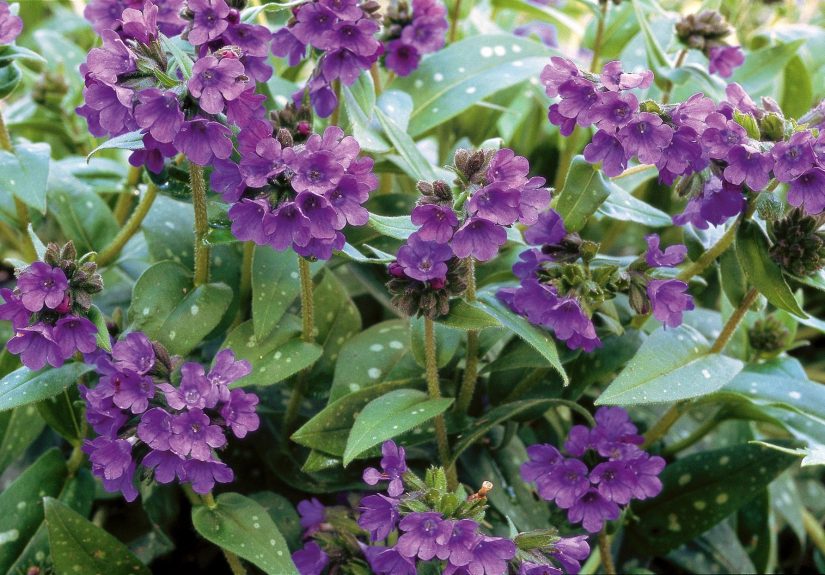
3) Lungwort (Pulmonaria spp.)
- Best for: Part shade; cooler climates; moist, well-drained soil
- Looks like: Speckled or silver-washed leaves; early spring flowers (often pink-to-blue)
- Deer note: Commonly avoided, especially fuzzy-leaved varieties
Lungwort is what happens when a shade plant decides it deserves sequins. The foliage alone brightens dark corners,
and the early blooms are a bonuslike finding money in last season’s jacket pocket.
Brighten-it-up idea: Plant near darker evergreens so the silver foliage pops from ten feet away.
4) Siberian bugloss (Brunnera macrophylla)
- Best for: Part shade; moist soil; “I want a hosta vibe without the hosta buffet”
- Looks like: Heart-shaped leaves (often silver-variegated); tiny blue spring flowers
- Deer note: Frequently used as a deer-resistant substitute for hostas
Brunnera delivers big-leaf drama with fewer deer problems. Variegated cultivars can make shade look brighter
even when the sky is doing its best “gray winter sweatshirt” impression.
Brighten-it-up idea: Repeat Brunnera in 3s or 5s for a cohesive ribbon of silver through the bed.
5) Astilbe (Astilbe spp.)
- Best for: Part shade; consistently moist soil
- Looks like: Feathery flower plumes in summer; ferny foliage
- Deer note: Often avoided, though young plants may need protection in high-pressure areas
Astilbe is the confetti cannon of shade gardenssoft, colorful plumes that look great in drifts.
Give it moisture and it will reward you; let it dry out and it will sulk like it’s been left on “read.”
Brighten-it-up idea: Combine pink or red plumes with chartreuse foliage plants for high contrast.
6) Bleeding heart (Lamprocapnos spectabilis)
- Best for: Part shade; spring show; cottage-garden charm
- Looks like: Arching stems with heart-shaped blooms in spring
- Deer note: Commonly listed as deer-resistant; sap can be irritating and plant is toxic if ingested
Bleeding heart brings storybook flowers and a soft, romantic shapewithout asking you to write it a love letter every morning.
It may go dormant after flowering in hotter summers, so plan companions that fill in later.
Brighten-it-up idea: Underplant with foamflower or Epimedium so the space stays full when bleeding heart rests.
7) Columbine (Aquilegia spp.)
- Best for: Light shade to part shade; pollinator gardens
- Looks like: Airy, spurred flowers in spring; delicate foliage
- Deer note: Often avoided; can self-seed gently in happy conditions
Columbine flowers look like tiny dancers mid-leapperfect for adding movement in shade.
They’re also great in “not quite full shade” spots where you want flowers but don’t have blazing sun.
Brighten-it-up idea: Mix multiple colors for a naturalized “woodland bouquet” effect.
8) Foamflower (Tiarella cordifolia)
- Best for: Shade; woodland edges; groundcover with blooms
- Looks like: Frothy spring flower spikes; often patterned leaves; good fall color in some varieties
- Deer note: Commonly rated deer-resistant
Foamflower is the “soft focus filter” of the shade border: it brightens without shouting.
It’s especially useful where you want a gentle groundcover that also flowers.
Brighten-it-up idea: Plant as a front-edge drift, then repeat it again near the back for visual rhythm.
9) Coral bells (Heuchera spp.)
- Best for: Part shade; colorful foliage year-round in many climates
- Looks like: Leaves in caramel, lime, purple, near-black; airy bloom spikes
- Deer note: Often considered deer-resistant due to tougher leaves
If you want shade color that lasts beyond “two weeks in May,” Heuchera is your plant.
Think of it as foliage paint: you can “swatch” different leaf colors to brighten dark spots all season.
Brighten-it-up idea: Use lime or caramel cultivars as “spotlights” near pathways and seating areas.
10) Leopard plant (Ligularia spp.)
- Best for: Part shade; consistently moist soil; bold texture
- Looks like: Large, dramatic leaves; yellow flower spikes or daisy-like blooms (variety-dependent)
- Deer note: Often listed as deer-tolerant; protect young plants if deer pressure is extreme
Ligularia is the statement piece: big leaves that read “lush” from across the yard.
It’s fantastic near water features or in naturally damp shadebasically anywhere the soil doesn’t dry out by lunchtime.
Brighten-it-up idea: Contrast the big leaves with fine-textured ferns for that designer “texture mix” look.
11) Spotted deadnettle (Lamium maculatum)
- Best for: Shade to part shade; quick groundcover; tough spots
- Looks like: Silver or variegated foliage; small flowers in white/pink/purple
- Deer note: Commonly labeled deer-resistant
Lamium is a fast way to brighten shade because the leaves often look dusted with silver.
It can spread, so give it a defined edge (or accept that it may attempt a slow-motion escape).
Brighten-it-up idea: Use it to “light up” under shrubs where grass refuses to cooperate.
12) Sweet woodruff (Galium odoratum)
- Best for: Shade; moist soil; fragrant groundcover
- Looks like: Starry white spring flowers; whorled leaves; sweet scent when crushed
- Deer note: Often avoided; can spread readily in ideal conditions
Sweet woodruff makes shade feel like a woodland path in a storybookminus the talking animals (usually).
It’s lovely under trees in moist soil, but keep an eye on it if you prefer plants that stay in their assigned seats.
Brighten-it-up idea: Let it weave between larger perennials to soften hard edges and fill gaps.
13) Wild ginger (Asarum canadense)
- Best for: Full shade; native-style woodland gardens; moist, humus-rich soil
- Looks like: Glossy, heart-shaped leaves that form a tidy carpet
- Deer note: Commonly reported as deer-resistant in many regions
Wild ginger is a quiet workhorse: it won’t scream for attention, but it will make shade look lush and finished.
It’s especially good where you want a low, cohesive ground layer that doesn’t rely on flowers to look good.
Brighten-it-up idea: Use it as a dark-green “backdrop” so silver foliage plants stand out more.
14) Lilyturf / monkey grass (Liriope muscari or Liriope spicata)
- Best for: Dry shade to part shade; edging; tough urban spots
- Looks like: Arching grass-like leaves; purple/blue flower spikes; some variegated forms
- Deer note: Often considered deer-resistant; check spread habit (some types run)
Liriope is a “set it and forget it” edging plant that can handle a wide range of conditions.
If you want a clean border line in shade, it’s hard to beat.
Brighten-it-up idea: Choose variegated cultivars to create a bright outline around darker beds.
15) Japanese painted fern (Athyrium niponicum var. pictum)
- Best for: Part shade to shade; moist, rich soil; color in foliage
- Looks like: Silver fronds with green and burgundy accents
- Deer note: Often listed as deer-resistant; best color in lighter shade
Japanese painted fern is basically jewelry for shade gardens. It doesn’t need flowers to be a showpiece
the fronds do the work, especially where the light is filtered and gentle.
Brighten-it-up idea: Place it where it catches morning light; the silver tones glow.
16) Autumn fern (Dryopteris erythrosora)
- Best for: Shade to part shade; reliable structure; evergreen-ish in milder regions
- Looks like: New fronds emerge coppery/bronze before turning green
- Deer note: Frequently included on deer-resistant plant lists
Autumn fern adds warm color without relying on bloomsfresh fronds emerge with a coppery glow,
which is exactly what deep shade needs to avoid looking flat.
Brighten-it-up idea: Use it behind silver groundcovers (Lamium, Brunnera) for instant contrast.
17) Oregon grape holly (Mahonia aquifolium / Berberis aquifolium)
- Best for: Part shade to full shade; evergreen structure; shrubs for woodland borders
- Looks like: Glossy, holly-like leaves; yellow spring flowers; blue-purple berries
- Deer note: Often avoided (spiny texture and bitter foliage)
Want a shade plant that looks good in January and May? Oregon grape holly brings evergreen backbone,
bright spring flowers, and berries that add seasonal interest. It’s also a great “edge plant” to discourage deer from strolling in.
Brighten-it-up idea: Use as a backdrop shrub, then layer colorful perennials in front for a woodland “tiered” look.
Design recipes for a brighter shade bed
The “Silver Ribbon” Border
Repeat Brunnera, Lamium, and Japanese painted fern along a path.
Silver foliage reflects available light and makes shade feel brighterlike turning on the garden’s overhead lamp.
The Spring-to-Summer Relay
Let hellebores, lungwort, and bleeding heart own spring,
then hand off to astilbe, coral bells, and ferns for summer texture.
(Your garden gets a second act instead of awkward silence.)
Dry Shade “Survival Squad”
For under-tree areas: lead with Epimedium and lilyturf,
then add pockets of coral bells. Keep mulch consistent and water deeply while plants establish.
How to improve your odds when deer are persistent
- Start with protection: New plants are most vulnerable. Temporary fencing or cages can help them establish.
- Plant in groups: A single “rare snack” is tempting; a drift of less-tasty plants is less interesting.
- Use texture and scent at the edges: Place tougher, less-palatable plants near the deer “entry points.”
- Avoid over-fertilizing: Extra-nitrogen lush growth can be more attractive to browsing animals.
- Accept the truth: If a deer decides something is delicious, it will not be swayed by your feelings.
Real-world experiences: what actually happens in shade gardens with deer (and what works anyway)
In real gardens, “deer-resistant” plays out less like a magic shield and more like a long-running negotiation.
Gardeners often notice that deer behavior changes by season: in spring, fresh growth is tender and tempting; in late summer,
drought can push deer to sample plants they usually ignore; and in winter (where deer browse heavily), evergreens and woody stems may get extra attention.
One consistent pattern is that new plantings get tested first. Even plants deer typically avoid can be nibbled when they’re small,
freshly transplanted, or especially lush. That’s why short-term protectionwire cages, netting, or a simple barrieroften makes the biggest difference.
Once plants mature, toughen up, and develop deeper root systems, they’re better at shrugging off occasional “quality-control bites.”
Another common lesson: texture is your best friend in shade. The plants that hold up well tend to be the ones deer don’t enjoy chewing:
leathery foliage (hellebores), fuzzy or bristly leaves (lungwort), or stiff evergreen leaflets (Oregon grape holly). Meanwhile, plants with very soft,
watery foliageespecially in consistent moisturecan become repeat targets. This is where planting for contrast helps: mixing silver foliage,
big leaves, and ferny texture not only looks intentional, it also avoids creating one uniform “easy salad patch.”
Gardeners also report that placement matters more than expected. A plant that survives near the front porch might be demolished
in the back corner near the woods. Areas that feel “safe” to deerquiet, sheltered, and close to coverinvite more browsing. Brightening shade gardens
often means working near living spaces anyway, so you can use that to your advantage: beds closer to human activity tend to see less deer pressure.
In terms of what feels most satisfying over a season, many shade gardeners fall in love with repeatable foliage color.
Flowers come and go, but a silver Brunnera, a painted fern, and a caramel Heuchera keep the bed looking lively for months.
That steady color also makes it easier to “forgive” small lossesif one flower spike gets clipped, the bed still looks full and bright.
Finally, the most practical experience-based takeaway is this: aim for a garden that looks great even with minor browsing.
Choose plants that can handle a haircut, plant in drifts so one lost plant doesn’t create a crater, and build your design around foliage and structure.
When deer do show up, you’ll be mildly annoyed instead of emotionally devastatedwhich, in garden terms, is basically inner peace.