Table of Contents >> Show >> Hide
- Before You Start: The 3 Hallway Rules That Save You From Regret
- 1) Paint With Purpose: Create a “Color Story”
- 2) Go “Color-Drenched” for a High-End Look
- 3) Add a Statement Runner That Practically Decorates for You
- 4) Make a Gallery Wall That Feels Like a Personality Test (In a Good Way)
- 5) Hang a Big Mirror to Bounce Light and Fake Extra Space
- 6) Upgrade Lighting With Flush Mounts or Semi-Flush Fixtures
- 7) Add Wall Sconces for “Boutique Hotel” Energy
- 8) Use a Slim Console Table (Or Better: A Floating One)
- 9) Create a “Landing Strip” With a Wall Shelf
- 10) Build a Mini Mudroom Moment With Hooks + a Bench
- 11) Treat Your Doors Like Decor
- 12) Add Wainscoting, Board-and-Batten, or Picture-Frame Molding
- 13) Wallpaper the Hallway (Yes, Even a Small One)
- 14) Make the Ceiling the Surprise Star
- 15) Create a Focal Point at the End of the Hall
- 16) Use Stripes or Bold Pattern to Change How the Space Feels
- 17) Add Built-In (or “Looks Built-In”) Storage
- 18) Bring in GreeneryReal or Faux, No Judgment
- 19) Upgrade the “Tiny Stuff” That Quietly Screams “Builder Grade”
- 20) Make It Personal: Rotate Art, Photos, or Collections
- Common Hallway Decor Mistakes (So You Can Avoid Them Like a Pro)
- Conclusion: Make the “In-Between” Space the Secret Star
- Extra: of Real-World Hallway Decorating “Experience” (The Stuff People Learn After Living With It)
Hallways are the in-between spaces that somehow get used all day and decorated never.
They’re basically the airport terminals of your homeeveryone passes through indicating urgency, nobody lingers,
and yet they quietly set the tone for the whole trip.
The good news: hallway decorating doesn’t require a renovation budget or a design degree.
With a few smart, style-forward moves, you can turn that “long beige tunnel” into a space that feels intentional,
welcoming, and very much you.
Below are 20 hallway decor ideassome quick, some a bit more involvedthat help you show off your style in every room
(even the ones people only see while walking to the laundry).
Before You Start: The 3 Hallway Rules That Save You From Regret
1) Keep the walkway clear
Hallways are high-traffic by definition. Treat them like a runway: sleek, uncluttered, and not the place for
“temporary” piles that become permanent roommates.
2) Think vertical, not bulky
When floor space is tight, walls do the heavy lifting. Art, mirrors, sconces, hooks, and shelves add personality
without turning your hallway into an obstacle course.
3) Make it match the vibe of nearby rooms
Your hallway doesn’t need to look identical to your living room or bedroombut it should feel connected.
Repeating a color, finish, or style cue creates flow (and makes your home feel more expensive than it has any right to).
1) Paint With Purpose: Create a “Color Story”
Paint is the fastest way to make hallway decor feel deliberate. Choose a shade that complements adjacent rooms,
then decide how bold you want to go: soft neutral, cheerful color, or dramatic and moody.
Try this
If you’re nervous, start with a warm neutral on walls and bring color in through runners and art. If you’re fearless,
go richer on the walls and keep trim crisp for contrast.
2) Go “Color-Drenched” for a High-End Look
Color-drenching (painting walls and trim the same color) makes a hallway feel designedlike it belongs in a magazine,
not just between your kitchen and your bedroom.
Try this
Pick a mid-tone shade (not too pale, not too dark) and paint doors and trim to match. Add one standout elementlike a
brass sconce or a bold runnerso it doesn’t feel flat.
3) Add a Statement Runner That Practically Decorates for You
A hallway runner is the MVP of hallway decorating: it adds color, pattern, softness, and direction.
It also helps hide scuffs and wear, which is basically a love language in a busy home.
Try this
Choose a pattern that can handle real life (translation: doesn’t show every crumb). Vintage-style prints, subtle geometrics,
and washable runners are popular for a reason.
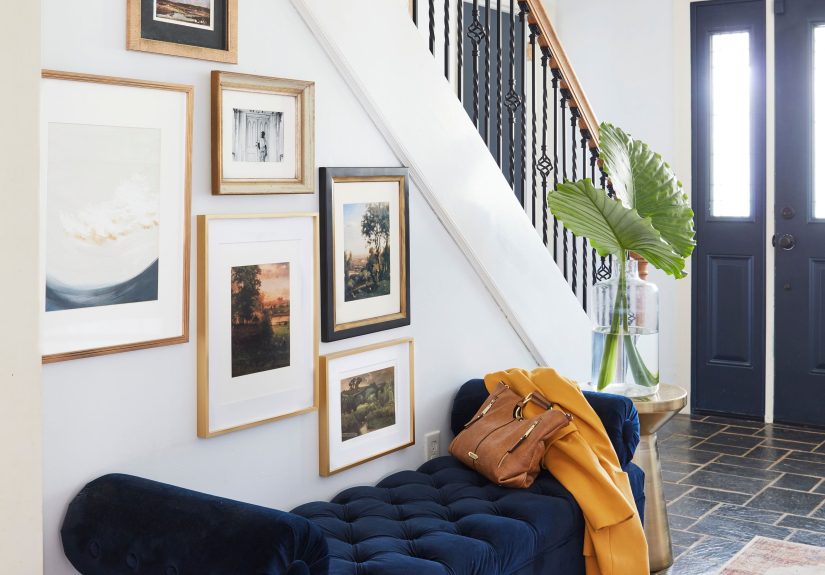
4) Make a Gallery Wall That Feels Like a Personality Test (In a Good Way)
Gallery walls are a hallway classic because they turn blank space into storytelling. Family photos, travel prints, thrifted art,
kid drawingsif it makes you smile, it belongs.
Try this
For a clean look: keep frames consistent. For an eclectic look: mix sizes and finishes but repeat one unifying element
(like black frames or warm wood tones).
5) Hang a Big Mirror to Bounce Light and Fake Extra Space
Mirrors are the oldest design trick in the bookand they still work. In narrow hallways, a mirror reflects light,
adds depth, and makes the space feel less like a passageway and more like a room.
Try this
Place a mirror across from a window or near a light source. Round mirrors soften hard hallway lines; tall mirrors add drama.
6) Upgrade Lighting With Flush Mounts or Semi-Flush Fixtures
Hallway lighting is often… tragic. (One lonely builder-grade dome light, doing its best.) Swapping in a new fixture
instantly elevates the entire area.
Try this
In tight hallways, choose a low-profile fixture that won’t bonk tall people or compete with door swings.
Bonus points for warm bulbs that make skin tones look alive.
7) Add Wall Sconces for “Boutique Hotel” Energy
Sconces feel intentional and stylishplus they free up floor space. They’re ideal for long hallways that need
layered light to avoid the “cave corridor” effect.
Try this
Place sconces evenly for rhythm. If hardwiring isn’t possible, look for plug-in sconces (or even battery-powered picture lights).
8) Use a Slim Console Table (Or Better: A Floating One)
A narrow console gives you a spot for keys, a candle, and the illusion that your life is organized.
A floating console does the same thing while keeping the floor visually open.
Try this
Style it with one taller object (lamp or vase), one stack (books), and one personal detail (photo or found object).
Keep it lighthallways don’t need a full buffet situation.
9) Create a “Landing Strip” With a Wall Shelf
No space for furniture? No problem. A slim wall shelf can hold essentials without narrowing the walkway.
Try this
Add a small tray for keys, a hook for dog leashes, and a little art above it to make it look styled, not improvised.
10) Build a Mini Mudroom Moment With Hooks + a Bench
If your hallway is near an entry, it’s begging to be functional. Hooks keep coats and bags off chairs. A bench gives
you a place to sit and wrangle shoes like an adult.
Try this
Choose a storage bench with baskets or cubbies to hide the “shoe situation.” Add a cushion for comfort and color.
11) Treat Your Doors Like Decor
Hallways often have multiple doors, which means lots of surface area. Painting doors (or even just the inside-facing side)
can add a designer-level punch without touching the whole house.
Try this
Paint doors a deeper shade than the walls for contrast, or match them to the wall color for a sleek, modern look.
12) Add Wainscoting, Board-and-Batten, or Picture-Frame Molding
Architectural detail makes a hallway feel finished. Wainscoting and molding add texture and depthespecially helpful
in spaces that are long and plain.
Try this
Keep the top half simple if your hallway is narrow. Paint the lower portion slightly darker for a grounded look.
13) Wallpaper the Hallway (Yes, Even a Small One)
Hallways are perfect for bold wallpaper because they’re transitionalyou get maximum style impact without committing
to staring at it for eight hours a day.
Try this
If you rent or fear commitment, peel-and-stick wallpaper gives you pattern without the “forever” part.
14) Make the Ceiling the Surprise Star
The “fifth wall” is often ignored. Painting or wallpapering the ceiling adds drama and makes the hallway feel custom.
It’s a smart move when wall space is broken up by doors.
Try this
Try a soft tint for subtle charm, or go bold for a maximalist twist. Keep lighting warm so it feels inviting, not intense.
15) Create a Focal Point at the End of the Hall
Long hallways can feel like a runway to nowhere. Give the eye somewhere to land: a piece of art, a mirror, a small console,
or a plant at the far end.
Try this
Hang one oversized artwork at the end, then keep side walls simpler. This creates calm and direction.
16) Use Stripes or Bold Pattern to Change How the Space Feels
Pattern can visually reshape a hallway. Stripes, for example, can create movement and energyand help a narrow hallway feel more dynamic.
Try this
Not ready to paint stripes? Use a striped runner, patterned wallpaper, or even a series of striped frames for a similar effect.
17) Add Built-In (or “Looks Built-In”) Storage
If your hallway is wide enough, shallow built-ins can be game-changingthink bookshelves, linen storage, or a niche for baskets.
Even a tall, narrow bookcase can give “library hallway” vibes.
Try this
Pick storage that’s more vertical than deep. Closed storage hides clutter; open shelves show off your style.
18) Bring in GreeneryReal or Faux, No Judgment
Plants soften hard lines and add life. If your hallway gets little light, faux greenery can still deliver that fresh,
styled look (and won’t punish you for forgetting to water it).
Try this
Use one tall plant in a corner, or small wall-mounted planters for vertical interest.
19) Upgrade the “Tiny Stuff” That Quietly Screams “Builder Grade”
Hallway decor isn’t only big-ticket items. Switching out knobs, updating switch plates, refreshing trim paint,
or adding a more stylish doormat near an entry can noticeably elevate the space.
Try this
Choose one metal finish (black, brass, nickel) and repeat it in hardware, lighting, and frames for a pulled-together look.
20) Make It Personal: Rotate Art, Photos, or Collections
The most stylish hallways feel lived-in, not staged. A hallway is a great place for a rotating “mini exhibit”:
seasonal prints, new family photos, kids’ art in matching frames, or a curated collection.
Try this
Keep a consistent frame style and swap the contents. It’s the easiest refresh that still looks intentional.
Common Hallway Decor Mistakes (So You Can Avoid Them Like a Pro)
- Too much furniture: If you have to shimmy past it, it doesn’t belong there.
- Harsh lighting: Cool, bright bulbs can make a hallway feel like a parking garage stairwell.
- Random decor with no theme: Pick a style direction (modern, coastal, farmhouse, eclectic) and stick to it.
- No anchoring element: A runner, gallery wall, or focal point helps the space feel “designed.”
Conclusion: Make the “In-Between” Space the Secret Star
Great hallway decor doesn’t happen by accident. It’s a mix of function (storage and lighting) and style (color, texture, and personality).
Start with one high-impact changepaint, a runner, or lightingthen layer in the details over time.
And remember: your hallway is the one space that connects every room. If you style it well, your whole home feels more cohesive
like you planned it that way… even if you absolutely did not.
Extra: of Real-World Hallway Decorating “Experience” (The Stuff People Learn After Living With It)
If there’s one universal hallway lesson, it’s this: the hallway you dream of and the hallway you live in are two different creatures.
In real homes, hallways collect backpacks, dog leashes, lint, and the mysterious scuff marks that appear overnight like tiny acts of sabotage.
That’s why the best hallway decor ideas are the ones that look good and behave well under pressure.
For example, the first time someone adds a gorgeous runner, they usually learn two things fast: (1) hallways instantly feel warmer and more finished,
and (2) runners need to be practical. Pattern hides life. Low pile helps doors swing. And if you can wash it, you’ll love it even more the day
someone walks in with muddy shoes like they’re auditioning for a nature documentary.
Gallery walls teach their own set of lessons. People often start with “We’ll do a few frames” and end up with a full museum wing (in the best way).
The trick is finding a system that doesn’t turn into a visual traffic jam. Many homeowners figure out that repeating one elementlike all-black frames,
all warm wood, or consistent mattingkeeps the look calm even when the art is eclectic. Another real-world win: adding one or two pieces that are
unexpectedly personal (a postcard, a kid’s doodle, a concert ticket) makes the whole wall feel less like a catalog and more like a life.
Lighting is where hallway reality hits hardest. A lot of people discover that “one ceiling light” doesn’t cut it, especially in a windowless corridor.
The moment you layer lightingsay a semi-flush fixture plus sconces or picture lightsthe hallway stops feeling like a pass-through and starts feeling
like a place. Warm bulbs matter, too. Nobody wants to walk from a cozy living room into a hallway that feels like it’s lit by cafeteria vibes.
Small entry hallways often become command centers, whether you asked them to or not. The most common “experience-based” upgrade is adding a landing strip:
a shelf, hooks, and a tray. It’s not glamorous, but it’s transformative. Suddenly keys have a home. Bags have a hook. Shoes have a bench.
And the hallway becomes less of a clutter negotiation and more of a smooth daily routine.
Finally, people learn that hallways don’t need to be perfect all at once. The most stylish ones evolve. Maybe you start with paint and a runner.
Then you add sconces later. Then you build the gallery wall slowly, frame by frame. The payoff is big: every room feels more connected,
and your home’s style shows up everywhereeven in the spaces that used to be ignored.