Table of Contents >> Show >> Hide
- What Counts as a “Wasted Premise”?
- 20 Terrible Movies That Completely Wasted a Great Premise
- 1. Downsizing (2017)
- 2. In Time (2011)
- 3. Hancock (2008)
- 4. The Purge (2013)
- 5. Bright (2017)
- 6. Jupiter Ascending (2015)
- 7. Valerian and the City of a Thousand Planets (2017)
- 8. Cowboys & Aliens (2011)
- 9. The Island (2005)
- 10. Tomorrowland (2015)
- 11. The League of Extraordinary Gentlemen (2003)
- 12. Wild Wild West (1999)
- 13. After Earth (2013)
- 14. The Happening (2008)
- 15. Passengers (2016)
- 16. The Dark Tower (2017)
- 17. Mortal Engines (2018)
- 18. Terminator Genisys (2015)
- 19. Batman v Superman: Dawn of Justice (2016)
- 20. Suicide Squad (2016)
- Why These Movies Hurt So Much: The Moviegoer Experience
- Final Take
Every movie starts as a promise. Sometimes it’s a tiny promise (“What if a shark ate people?”) and sometimes it’s a
jumbo-sized, trailer-friendly, “Shut up and take my money” promise (“What if you could buy time and it worked like currency?”).
And then… the movie happens. The characters make decisions no living human would make. The script forgets its own rules.
The third act arrives like a group text nobody asked for. Suddenly, that brilliant idea is sitting there like a gourmet burger
someone dropped face-down in a parking lot.
This isn’t a list of the “worst movies ever made” (that’s a whole different kind of party). This is the specific heartbreak category:
films with a great premise that, through baffling choices, limp storytelling, or tonal chaos, end up feeling like squandered potential.
If you’ve ever walked out of a theater thinking, “Wait… that’s all they did with that idea?”welcome home.
What Counts as a “Wasted Premise”?
A wasted premise usually isn’t just “the movie was bad.” It’s “the movie had a killer concept and still managed to fumble it.”
These are the common ways it happens:
- Tonal whiplash: The movie can’t decide if it’s satire, drama, or a two-hour energy drink commercial.
- Worldbuilding with no payoff: The film introduces fascinating rules… and then ignores them.
- Characters who act like plot furniture: People exist only to move the story, not to feel real.
- A third act that panics: The ending tries to “save” the movie by yelling louder instead of making sense.
- Studio-committee syndrome: You can practically hear the notes: “Can we add a joke… and also make it darker… and also sell toys?”
20 Terrible Movies That Completely Wasted a Great Premise
Let’s pour one out for the ideas that deserved better. Here are 20 movies that started with gold and somehow ended up with glitter in the carpet.
1. Downsizing (2017)
The premise is instantly intriguing: shrink humans to solve overpopulation and reduce resource use. That’s a whole buffet of satire and sci-fi problem-solving.
Instead, the movie keeps wandering off into a different film every 20 minutes, trading clever social commentary for a meandering story that can’t decide what it’s about.
By the end, you’re less impressed by the concept and more amazed nobody called a meeting to pick a lane.
2. In Time (2011)
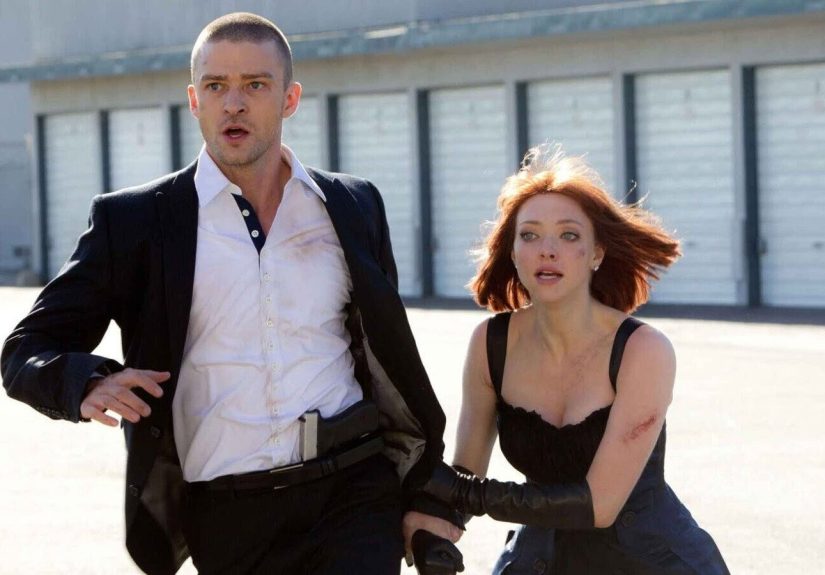
Time as literal currencyyour lifespan stored on your arm, rich people living forever, the poor dying on schedule. That’s a sharp, dystopian idea begging for a tight thriller.
The movie does have moments of style, but it coasts on its concept and leans into chase scenes and romantic tropes instead of digging into the system it created.
It’s like inventing a fascinating board game and then using it as a coaster.
3. Hancock (2008)
An alcoholic, messy superhero with terrible PR is a genuinely fun angleespecially before superhero stories became a factory setting.
The first half sets up a smart character-driven comedy about redemption and responsibility. Then the movie swerves into a secret mythology and romance twist that feels bolted on,
like a completely different script wandered into the editing room and refused to leave.
4. The Purge (2013)
One night a year, all crime is legal. That’s a terrifying social concept with endless directionspolitical satire, class horror, moral drama, you name it.
The film mostly shrinks the idea into a home-invasion story, limiting the scope and leaving viewers hungry for the bigger exploration the premise teases.
You can practically see the larger movie hiding behind the curtains.
5. Bright (2017)
A modern world where humans live alongside orcs, elves, and magic could be a rich fantasy-noir playground.
The setup practically begs for thoughtful worldbuilding, social commentary, and rules that feel lived-in.
Instead, the movie rushes through its own setting, leaning on familiar buddy-cop beats and messy mythology.
It’s not that the world isn’t coolit’s that the story treats it like background wallpaper.
6. Jupiter Ascending (2015)
Space royalty, reincarnated genetics, a cosmic “inheritance” that reshapes a regular person’s lifethere’s a bold, operatic sci-fi epic hiding in there.
What we got was a loud swirl of exposition, uneven tone, and plot that feels like it was assembled from six different dream journals.
You can admire the ambition while still wondering how the script got lost in its own palace hallways.
7. Valerian and the City of a Thousand Planets (2017)
A massive space station where countless species coexist is a visual and narrative playground.
The movie is packed with imaginative designs and glimpses of stories you’d gladly watch instead.
Unfortunately, the central characters and their chemistry don’t carry the weight of the world, and the plot often feels like a guided tour with a weak tour guide.
The setting deserved a film that loved its own characters as much as it loved its own CGI.
8. Cowboys & Aliens (2011)
That title alone is a pitch meeting victory lap. Western grit meets sci-fi invasion? You could do pulpy fun, serious genre fusion, or both.
Instead, the movie plays it strangely safe, with long stretches that feel less like “wild collision of genres” and more like “two genres politely sharing a waiting room.”
When a movie has that title, “polite” should not be the main vibe.
9. The Island (2005)
Clones raised as “organ donors” for wealthy clients is classic ethical sci-fi, the kind that can haunt you if it’s handled with care.
The film starts with mystery and dread, then shifts into a loud action blockbuster that treats its own moral horror like a speed bump.
You can practically hear the premise begging, “Please stop exploding long enough to think about me.”
10. Tomorrowland (2015)
A hidden futuristic city fueled by imagination and optimism sounds like the antidote to cynical sci-fi.
The movie has a sincere heart and big ideas, but it gets tangled in exposition and muddled messaging, spending too much time explaining its hope instead of making you feel it.
For a film about wonder, it often feels weirdly homework-y.
11. The League of Extraordinary Gentlemen (2003)
A team-up of classic literary icons is basically a Victorian-era cinematic universe before that was a normal sentence.
There’s fun to be had in the concept, but the execution is clunky, the pacing is rough, and the characters don’t get the sparkling chemistry the premise promises.
It’s like assembling an all-star band and then having them rehearse in separate rooms.
12. Wild Wild West (1999)
A steampunk western with gadgets, weird villains, and a buddy dynamic could have been a breezy, inventive romp.
Instead, it leans on forced jokes, chaotic tone, and set pieces that often feel louder than they are clever.
The movie acts like being wacky is the same thing as being fun, which is like assuming a clown horn automatically tells a good joke.
13. After Earth (2013)
A survival story on a reclaimed Earthwhere nature has evolved past humanitycould be tense, beautiful, and genuinely scary.
The film’s world has potential, but the story feels flat and the emotional beats don’t land.
A premise that should feel primal and urgent ends up oddly distant, like watching a thrilling idea through a foggy window.
14. The Happening (2008)
An unseen force causing mass panic and self-destruction is a nightmare concept.
The movie aims for mysterious and chilling, but the tone veers into unintentional comedy, and the characters often react like they’re in a different genre.
Suspense depends on trustonce the audience stops taking the threat seriously, the premise loses its teeth.
15. Passengers (2016)
Two people alone on a spaceship, waking up decades early, facing isolation and mortalitythis could be a haunting psychological drama.
The film has glossy production and a strong setup, but it struggles with the ethics baked into its central conflict and tries to smooth over thorny questions instead of confronting them.
It’s the kind of premise that demands uncomfortable honesty, not a romance shortcut.
16. The Dark Tower (2017)
A sprawling fantasy-western universe linking multiple stories is an enormous, distinctive sandbox.
Condensing that scale into a single, streamlined movie turns the mythology into a rushed highlight reel.
Instead of feeling epic, it feels compressedlike reading the back cover of a long novel and being told, “That’s basically it.”
17. Mortal Engines (2018)
Cities on wheels hunting other cities is a deliciously bonkers premisein the best way.
The visuals deliver on the spectacle, but the story leans on familiar YA-style beats and doesn’t fully earn the emotional investment.
When the hook is that strong, the narrative has to match the confidence of the concept, not just admire it from afar.
18. Terminator Genisys (2015)
The idea of remixing a classic timeline and recontextualizing familiar moments could have been a clever resetif it respected what made the originals work.
Instead, the plot becomes a knot of twists and reboots that undercut the emotional clarity of the franchise.
Time travel is tricky, but this feels less like a paradox and more like a group project where nobody read the instructions.
19. Batman v Superman: Dawn of Justice (2016)
On paper, a clash between two iconic heroes is instant drama: ideology, power, fear, responsibility.
The movie aims for mythic scale but often feels crowded by setup obligations and tonal heaviness, with big moments that don’t always feel earned.
When the premise is “the biggest superhero argument ever,” the story can’t afford to feel like it’s multitasking.
20. Suicide Squad (2016)
A team of dangerous criminals forced into black-ops missions is a premise built for tension, dark humor, and moral messiness.
The film has sparksvisual flair, some memorable character introductionsbut it struggles with pacing and coherence, and it often feels like it’s assembling a vibe instead of telling a story.
A great premise needs structure, not just a loud soundtrack and a neon sign that says “edgy.”
Why These Movies Hurt So Much: The Moviegoer Experience
There’s a special kind of disappointment that only comes from a wasted premise. If a movie looks bad from the start, you can enjoy it the way you enjoy a weird snack:
curiosity, low expectations, and maybe a little regret. But a great premise sets your brain on fire in the best way.
It invites you to do the fun part of storytelling before the film even beginsimagining possibilities.
That’s why trailers are so powerful (and sometimes so dangerous). A strong concept trailer can make you feel like you already love the movie.
You’re not just excited about what’s on screenyou’re excited about what the movie could be. You start pitching alternate scenes to yourself.
You think, “They’re going to explore the implications of this idea, right?” You picture the moral dilemmas, the clever rules, the gut-punch ending.
Your imagination becomes the movie’s unpaid co-writer.
Then the film arrives and reveals it’s not interested in the same things you are. The cool world becomes a set dressing.
The sharp hook becomes a slogan. The story makes choices that feel like it’s actively avoiding the most interesting version of itself.
Viewers often describe the sensation like watching someone buy top-shelf ingredients and then microwave them in the plastic packaging.
And because it’s a wasted premise, you can’t even fully enjoy the badness. It’s not purely hilarious; it’s frustrating.
You keep seeing the better movie in your head, hovering over the screen like a ghost. Sometimes that ghost is just a small rewrite:
a clearer motivation, a tighter third act, a villain with an actual plan. Other times it’s a whole different genre:
Passengers as a psychological thriller, In Time as a sharp class-war drama, The Purge as a sprawling social satire.
You’re not only reacting to what you’re watchingyou’re reacting to what you’re missing.
The bright side is that wasted premises can be oddly bonding. People love trading “movie could-have-beens.”
It’s a low-stakes creative outlet: you get to play director, screenwriter, and editor without the pressure of a budget or studio notes.
A friend says, “They should’ve made it about the ethics,” and suddenly you’re both outlining a better version over fries.
In a weird way, the film still delivers entertainmentjust not the kind it promised.
If you make movies (or write stories), this category is also a master class. These films show how fragile a great idea can be.
A premise is only the door. The real job is building a house behind it: characters worth following, stakes that escalate honestly,
rules that stay consistent, and an ending that pays off the question the premise asked. A great hook gets attentionexecution earns trust.
Final Take
A great premise is a gift, but it’s also a responsibility. The movies on this list prove that “cool idea” isn’t enoughespecially when that idea practically begs
for sharper writing, bolder choices, and characters who behave like actual people.
Still, there’s a reason we keep showing up: every now and then, a film takes a wild concept and sticks the landing.
And when it does, it reminds us why we fell in love with movies in the first placebecause the right idea, done well, can feel like magic.