Table of Contents >> Show >> Hide
- What’s driving cabinet decisions right now?
- 22 kitchen cabinetry trends designers keep specifying
- 1) Warm wood tones (yes, even “retro” ones)
- 2) Two-tone cabinetry (upper and lower with different finishes)
- 3) “Dual-finish” packages (wood + paint in the same run)
- 4) Creamy whites instead of stark white
- 5) Earthy greens (sage, olive, gray-green)
- 6) Warm neutrals (greige, taupe, mushroom)
- 7) Moody hues (charcoal, deep navy, oxblood accents)
- 8) Flat-panel (slab) doors for cleaner lines
- 9) Inset cabinetry for a tailored, furniture-like feel
- 10) Skinny Shaker (a slimmer, updated Shaker profile)
- 11) Fluted or reeded cabinet fronts
- 12) Curved cabinetry and rounded corners
- 13) Furniture-style moments (hutches, freestanding looks, leg details)
- 14) Panel-ready appliances (the “disappear, toaster” approach)
- 15) Appliance garages and hidden countertop zones
- 16) The hardworking pantry wall
- 17) Butler’s pantry / prep kitchen cabinetry
- 18) Glass-front uppers (strategically, not everywhere)
- 19) Open shelving paired with strong base cabinetry
- 20) “Everything has a home” drawer and cabinet interiors
- 21) Integrated cabinet lighting (inside, under, and even in drawers)
- 22) Hardware as jewelry (mixed finishes, statement shapes, warm metals)
- How to choose a cabinet trend you won’t regret
- Real-world experiences: what people learn after the cabinets go in
- Conclusion
Cabinets are having a main-character moment. Not because they suddenly learned to do your dishes (rude),
but because designers are using cabinetry to solve the two biggest kitchen problems: visual chaos
and daily-life chaos. The result? Kitchens that feel warmer, smarter, and more personalwithout
looking like a showroom where nobody’s allowed to toast a bagel.
Below are the kitchen cabinetry trends showing up again and again in designer projectssome are
bold and expressive, some are quietly genius, and a few are basically “hide the air fryer like it’s in witness
protection.” (No judgment. We’ve all been there.)
What’s driving cabinet decisions right now?
- Warmth over sterile: creamy whites, wood tones, earthy hues, and richer finishes.
- Clutter reduction: hidden storage, appliance garages, organized interiors, and fewer countertop “collections.”
- Personalization: mixed finishes, furniture-style moments, and hardware that reads like jewelry.
- Lighting as a feature: not just “see the onion,” but “make the kitchen glow like a boutique hotel.”
- Longevity: designers are choosing details that age well and can evolve with easy swaps (paint, hardware, styling).
22 kitchen cabinetry trends designers keep specifying
1) Warm wood tones (yes, even “retro” ones)
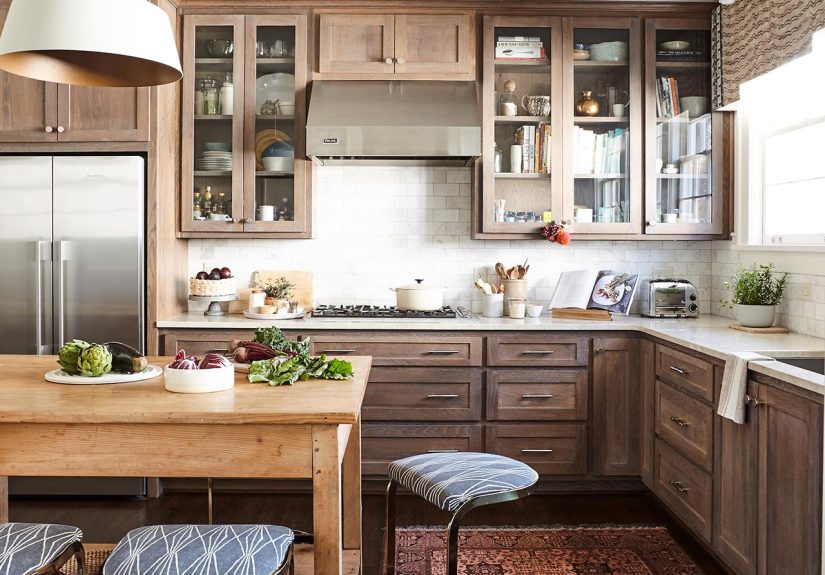
Wood is back because it makes kitchens feel alive. White oak, walnut, and refreshed “honey oak” tones add warmth
without the orange gloss throwback. Designers often balance wood cabinetry with modern silhouettes and matte finishes
so it reads intentionalnot like you time-traveled to 1996.
- Try it: wood lowers + light uppers, or a wood island as the “warm centerpiece.”
2) Two-tone cabinetry (upper and lower with different finishes)
Two-tone cabinets keep a kitchen from feeling heavy while adding depth. Designers love light uppers for airiness
and darker or wood lowers for grounding. It’s one of the easiest ways to make a standard layout feel custom.
- Try it: creamy uppers + deep green lowers, or painted perimeter + wood island.
3) “Dual-finish” packages (wood + paint in the same run)
Similar to two-tone, but more intentional: wood bases, painted uppers, or one wall in wood as an accent. This trend
shows up in designer kitchens because it feels layered and collectedlike the cabinetry has a story.
- Try it: wood base cabinets paired with painted tall pantry units.
4) Creamy whites instead of stark white
Designers aren’t abandoning white; they’re warming it up. Creamy whites and soft off-whites feel inviting, play
better with wood, and don’t scream “I disinfect for fun.” Bonus: they hide daily life better than bright white.
- Try it: pair creamy cabinets with warm metals and natural stone.
5) Earthy greens (sage, olive, gray-green)
Green cabinets keep trending because they feel natural and calmwhile still being a color choice with personality.
Designers use green for lowers, islands, or full cabinetry when the space has good light and warm materials to balance it.
- Try it: green island + neutral perimeter for a “statement, but polite” look.
6) Warm neutrals (greige, taupe, mushroom)
Warm neutrals are the “quiet luxury” of cabinetrysoft, grounded, and easier to live with than cool gray. Designers
like them because they bridge modern and traditional, and they don’t fight with wood floors or stone veining.
- Try it: taupe cabinets with brushed brass or aged bronze hardware.
7) Moody hues (charcoal, deep navy, oxblood accents)
Dark cabinets aren’t dead; they’re getting smarter. Designers often reserve moody colors for islands, bases, or
pantry wallsthen add texture (wood, glass, lighting) so the kitchen feels rich instead of cave-like.
- Try it: a deep color on the island with lighter perimeter cabinets.
8) Flat-panel (slab) doors for cleaner lines
Slab doors keep popping up because they feel modern, reduce visual “busy-ness,” and work beautifully with wood grain.
Designers also like that slab doors can swing minimalist or luxe depending on the finish and hardware.
- Try it: slab walnut cabinets + simple pulls (or edge pulls) for a sleek look.
9) Inset cabinetry for a tailored, furniture-like feel
Inset doors sit inside the frame, creating crisp reveals. Designers love inset for traditional, transitional, and
“quietly expensive” kitchensespecially when paired with classic hardware and thoughtful proportions.
- Try it: inset on perimeter cabinets; overlay on the island to manage cost.
10) Skinny Shaker (a slimmer, updated Shaker profile)
Shaker isn’t going anywhereit’s just going on a diet. Skinny Shaker trims down the frame so cabinets feel more
current and less farmhouse. Designers reach for it when they want “timeless” without “trend fatigue.”
- Try it: skinny Shaker in a warm neutral for a fresh, flexible base.
11) Fluted or reeded cabinet fronts
Texture is the new backsplash (okay, not literallyplease don’t put marinara on your cabinets). Fluting adds shadow
and depth, making a kitchen feel designed even in a simple color. Designers often use it on islands, bars, or tall pantry doors.
- Try it: a fluted island in a solid color to add interest without chaos.
12) Curved cabinetry and rounded corners
Curves soften kitchens visually and make traffic flow friendlierespecially around islands. Designers use rounded
end panels, curved islands, or radius corners to reduce the “box store grid” feeling and add a custom vibe.
- Try it: a rounded island corner where people naturally pass through.
13) Furniture-style moments (hutches, freestanding looks, leg details)
Designers are making kitchens feel less like laboratories and more like rooms. Think cabinet “hutches” that look
like furniture, islands with legs, or pantry units styled like built-ins. It adds charm and helps open-plan kitchens feel homey.
- Try it: a hutch-style cabinet wall for serving pieces and display.
14) Panel-ready appliances (the “disappear, toaster” approach)
Integrated appliances let cabinetry be the star. Designers use panel-ready fridges and dishwashers to simplify the
visual fieldespecially in open layouts where the kitchen is always on display (even when the cook is not).
- Try it: panel the dishwasher first; it’s a smaller commitment with big impact.
15) Appliance garages and hidden countertop zones
This is the trend for people who own exactly one countertopand 47 countertop appliances. Designers build cabinet
“pockets” for coffee stations, mixers, and air fryers so the kitchen stays clean-looking while still being functional.
- Try it: a roll-up, pocket-door, or retractable-door cabinet for the daily-use lineup.
16) The hardworking pantry wall
Big pantry cabinets (sometimes floor-to-ceiling) are replacing some upper cabinets. Designers love pantry walls
because they store more, reduce clutter, and can hide less-pretty necessities. It’s a clean look that’s also genuinely useful.
- Try it: tall pantry cabinets with pull-out shelves for visibility and easy access.
17) Butler’s pantry / prep kitchen cabinetry
Secondary kitchen zonesprep pantries, sculleries, or butler’s pantriesare rising in popularity where space allows.
Designers treat these like “utility cabinetry” that supports the main kitchen as a social, showpiece space.
- Try it: even a small pass-through pantry cabinet run can act like a mini prep zone.
18) Glass-front uppers (strategically, not everywhere)
Glass doors lighten the visual weight of upper cabinets and create display opportunities. Designers typically use
glass on a small sectionlike flanking a hood or at the end of a runso it feels curated instead of cluttery.
- Try it: ribbed or seeded glass for a forgiving, texture-rich look.
19) Open shelving paired with strong base cabinetry
Open shelves are no longer the entire plan; they’re the accent. Designers often swap a few uppers for shelves to
keep kitchens airythen rely on drawers and pantry cabinets to do the heavy storage lifting.
- Try it: one or two shelf spans near a window or coffee station.
20) “Everything has a home” drawer and cabinet interiors
Designers are specifying storage like it’s a kitchen’s operating system: deep drawers, vertical tray storage, pull-outs,
spice drawers, recycling centers, and yesoddly specific paper towel solutions. It’s all about reducing friction in daily routines.
- Try it: prioritize drawers over doors for base cabinets whenever possible.
21) Integrated cabinet lighting (inside, under, and even in drawers)
Lighting is moving from “extra” to “expected.” Designers add under-cabinet task lighting, interior cabinet lighting,
and toe-kick glow for nighttime navigation. It elevates the kitchen and makes it feel more premiumwithout changing the footprint.
- Try it: under-cabinet LEDs on a dimmer, plus a lit pantry interior for real-life usefulness.
22) Hardware as jewelry (mixed finishes, statement shapes, warm metals)
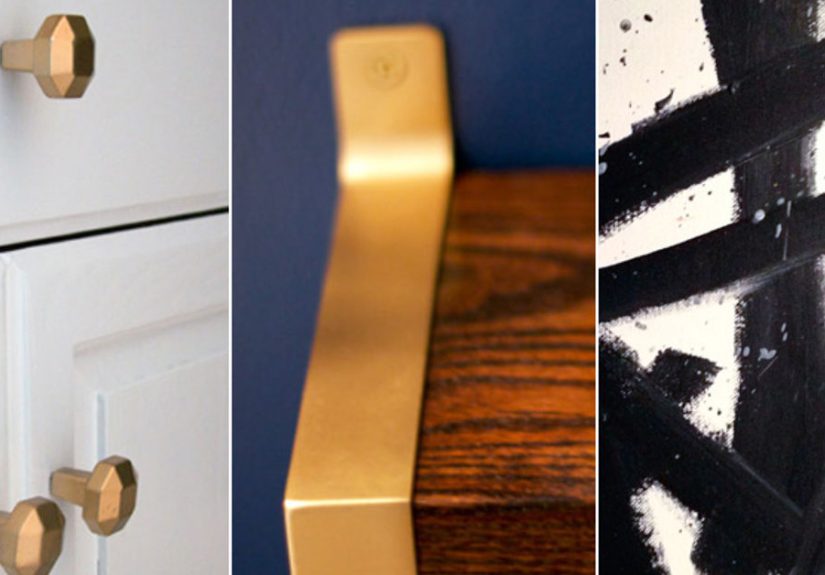
Designers treat hardware like the final outfit accessory: it can sharpen a minimalist kitchen or glam up a classic one.
Trends include warm brushed metals, mixing finishes, rounded shapes, wooden knobs, and oversized pulls that are as practical as they are pretty.
- Try it: keep faucets and lighting in one finish, then let cabinet hardware be the playful layer.
How to choose a cabinet trend you won’t regret
A smart rule designers use: make the hard-to-change decisions feel timeless (layout, cabinet quality,
door style), then let the easy-to-change decisions carry the trend energy (paint, hardware, lighting).
That way, if you ever fall out of love with your moody green island, you’re repaintingnot refinancing.
- Timeless anchors: great drawer storage, solid construction, good proportions, cohesive layout.
- Trend-friendly swaps: cabinet color, pulls/knobs, interior organizers, lighting layers.
Real-world experiences: what people learn after the cabinets go in
Designers can predict a lot, but cabinets have a way of teaching lessons the minute real life moves back ingroceries,
kids, pets, the mysterious drawer that becomes home to 38 rubber bands, and the one spatula you actually like.
Here are the “experience-based” takeaways that come up again and again once a kitchen is no longer a rendering.
1) Storage beats style… until you can have both. Homeowners often start a remodel thinking color is
the big decision, then discover the daily win is layout: wide drawers for pans, a pull-out trash, vertical dividers
for baking sheets, and a pantry cabinet that doesn’t require spelunking gear. Many people say their biggest
post-installation relief is simply knowing where things gobecause the kitchen stops feeling like a scavenger hunt.
2) Two-tone cabinets aren’t just pretty; they’re forgiving. Designers love two-tone for looks, but
homeowners love it for maintenance. Darker lowers (or wood lowers) hide scuffs and the inevitable “I bumped it with
the vacuum” marks better than bright paint. Meanwhile, lighter uppers make the room feel bigger and brighter.
In family kitchens, that balance can feel like a cheat code.
3) Texture is gorgeousuntil you have to clean it. Fluted fronts and detailed profiles are stunning,
and they photograph like a dream. But real kitchens produce real grime, and grooves can collect dust and splatter.
People who are happiest long-term usually apply texture strategically (often on an island or a small zone) and keep
most cabinetry smoother for easy wiping. The “best of both worlds” approach is common: one textured statement, the rest simple.
4) Handle choices affect everyday comfort more than you think. Hardware looks like a small detail
until you open a drawer 30 times a day. Oversized pulls and comfortable shapes can be a surprisingly big quality-of-life
upgradeespecially for busy households or anyone thinking about aging in place. Many homeowners report that once they
try “easy grab” hardware, they can’t go back to tiny knobs that require fingertip precision like you’re cracking a safe.
5) Appliance garages are life-changing… if you design them honestly. People love the idea of hiding
countertop appliances, but the best experiences happen when the cabinet is planned for real usage. That means:
outlets inside, enough depth for plugs, doors that don’t smack into your morning routine, and ventilation considerations
if anything generates heat. When done right, the kitchen looks calmer and functions better. When done wrong,
the garage becomes a “close the door and pretend” closetlike a teenager’s bedroom, but for blenders.
6) Lighting is the unsung hero. Under-cabinet lighting gets rave reviews because it improves both
cooking and ambiance. Homeowners often say it’s the upgrade they “didn’t know they needed” until they had it.
A dimmer turns the kitchen from task mode to hangout mode instantly. Interior pantry lighting also earns surprisingly
emotional praisebecause nobody likes rummaging for snacks in the shadows.
7) The happiest kitchens feel personal, not perfect. After the new-cabinet honeymoon, the kitchens
people love most aren’t the ones that look untouchedthey’re the ones that support the household. That might mean a
coffee station that keeps mornings smoother, a “drop zone” drawer for mail and keys, or a pantry that finally stops
the cereal boxes from toppling like dominoes. Designers can bring the trends, but the best experience comes from
tailoring the cabinetry to the way the home actually runs.
Conclusion
The best cabinetry trends aren’t just about what looks cool this yearthey’re about creating a kitchen that feels
warm, organized, and easy to live in. If you take one idea from today’s designer playbook, let it be this:
invest in storage that reduces daily friction, then choose finishes and details that make you smile every time you
walk in. Cabinets don’t have to be loud to be interestingsometimes they just need to be smart, soulful, and built for real life.