Table of Contents >> Show >> Hide
- Why Staying In Hits Different
- The 25 Memes
- “I love going out!” (Narrator: They did not love going out.)
- The “Canceled Plans” Calendar Holiday
- “I’ll just have one episode” (Famous last words)
- Group chat: “We’re all going out tonight!”
- The “Outside Clothes” Betrayal
- When someone says, “It’s just a quick stop”
- “Come on, it’ll be fun!”
- “We should totally do something soon!”
- The Doorbell Panic Sprint
- Plans at 8 PM on a weekday
- When your favorite “third place” is your bed
- Social battery at 100%… then one phone call
- “Let’s go somewhere loud”
- When you finally sit down… and remember something
- The “I’ll be home by 10” lie
- Delivery tracking like it’s NASA mission control
- “Let’s do brunch!”
- When someone says “We’re doing icebreakers!”
- The “Two-day notice” hangout requirement
- Wearing headphones to avoid being perceived
- When your “going out” is… taking out the trash
- “I’ll just lie down for a second”
- When you see party photos the next day
- The “I can’t, I’m washing my hair” classic
- When someone says “Let’s make it a late one!”
- How to Be a Proud Homebody Without Becoming a Hermit
- Real-Life Homebody Moments
- Conclusion
- SEO Tags
There’s a special kind of peace that only homebodies understand: the moment you realize your couch has never once asked,
“So… what are we doing after this?” Staying in isn’t “boring.” It’s curated comfort. It’s your favorite hoodie,
your exact lighting preferences, and a snack situation you control like a responsible adult (or like a raccoon with a credit card).
And memes? Memes are the love language of the stay-in crowdtiny, perfect jokes that say, “Yes, I’m canceling plans,”
without the emotional labor of explaining why your home is a five-star resort and the outside world is… very loud.
Why Staying In Hits Different
It’s not antisocialit’s energy management
Lots of people recharge in quieter, lower-stimulation environments. That doesn’t mean they dislike friends; it means
they like friends best when their brain isn’t also processing three conversations, two playlists, and a bartender doing
interpretive dance with a cocktail shaker.
The modern world basically hands you a “Stay In” starter pack
Between streaming, delivery, remote or hybrid work, and endless digital entertainment, staying in has become easier and
more appealing than it used to be. Home is no longer just where you sleepit’s where you work, relax, eat, socialize,
and occasionally Google “is it normal to have a favorite spatula?”
JOMO is real (and frankly, it’s thriving)
If FOMO is that anxious feeling that something fun is happening without you, JOMO is the confident realization that you’re
missing out on chaosand enjoying it. Staying in can be a choice rooted in contentment, not deprivation.
The 25 Memes
Below are 25 meme scenarios tailor-made for people who prefer staying in. Each one includes a “caption you’d post”
and a “why it’s funny” explanationbecause homebodies don’t just enjoy jokes; we analyze them from the comfort of a blanket burrito.
-
“I love going out!” (Narrator: They did not love going out.)
Caption idea: “Me at 6 PM: ‘Let’s do something!’ Me at 6:07 PM: ‘Let’s do nothing, but intensely.’”
Why it works: The optimism-to-indoors pipeline is short, efficient, and paved with pajamas.
-
The “Canceled Plans” Calendar Holiday
Caption idea: “Someone cancels and suddenly I’m free… to do exactly what I was going to do anyway.”
Why it works: A canceled plan feels like found money, except the currency is time and the purchase is peace.
-
“I’ll just have one episode” (Famous last words)
Caption idea: “One episode turned into a whole new personality and a snack budget crisis.”
Why it works: Staying in makes time elastic. One minute you’re starting a show; the next it’s 1:43 AM.
-
Group chat: “We’re all going out tonight!”
Caption idea: “Me reading the message like it’s a summons.”
Why it works: You don’t want to disappoint anyone. You also don’t want to put on shoes. The struggle is ancient.
-
The “Outside Clothes” Betrayal
Caption idea: “I changed into comfy clothes. That’s legally binding.”
Why it works: Once sweatpants are on, leaving the house requires paperwork and possibly a witness.
-
When someone says, “It’s just a quick stop”
Caption idea: “Quick stop = two hours + three errands + meeting someone’s cousin.”
Why it works: Homebodies fear vague timelines the way campers fear bears.
-
“Come on, it’ll be fun!”
Caption idea: “Fun is subjective. My fun is soup, silence, and a show I’ve watched seven times.”
Why it works: Staying in isn’t a lack of funit’s personalized fun with fewer surprises.
-
“We should totally do something soon!”
Caption idea: “Yes. Soon. Like… in a month. During daylight. With an exit strategy.”
Why it works: You’re not avoiding peopleyou’re scheduling your sanity.
-
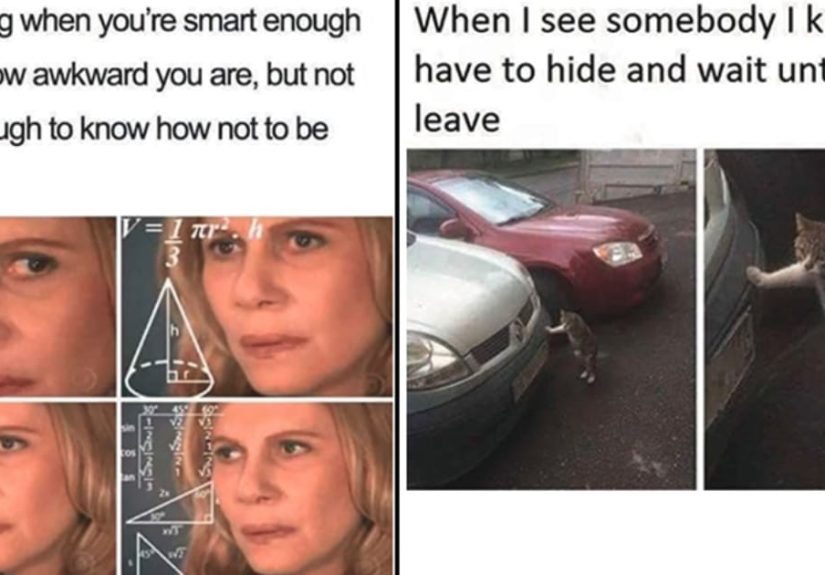
The Doorbell Panic Sprint
Caption idea: “If I don’t move, they can’t see me. (This is science.)”
Why it works: Unexpected visitors activate a primal instinct: become furniture.
-
Plans at 8 PM on a weekday
Caption idea: “At 8 PM I’m not a person, I’m a soft concept.”
Why it works: Nighttime plans feel like someone scheduled a meeting during your hibernation.
-
When your favorite “third place” is your bed
Caption idea: “My hobby is returning to my bed after every activity.”
Why it works: The bed is a lifestyle, not a location.
-
Social battery at 100%… then one phone call
Caption idea: “My social battery is solar-powered and it’s cloudy.”
Why it works: The right people recharge you. Random obligations? Not so much.
-
“Let’s go somewhere loud”
Caption idea: “I can’t hear you over my desire to be in a quiet room.”
Why it works: Some people love stimulation; others love not feeling like their eardrums are in a drumline.
-
When you finally sit down… and remember something
Caption idea: “Me: ‘I’m done for the day.’ Life: ‘You forgot the laundry.’”
Why it works: The couch is a contract. Standing up breaks the agreement.
-
The “I’ll be home by 10” lie
Caption idea: “I said 10 because I wanted to believe in myself.”
Why it works: Homebodies plan for escape. Reality negotiates.
-
Delivery tracking like it’s NASA mission control
Caption idea: “Driver is 7 stops away. I have time to emotionally prepare.”
Why it works: Staying in means your biggest adventure is watching a tiny car icon approach.
-
“Let’s do brunch!”
Caption idea: “Brunch is great. The leaving the house part is where you lose me.”
Why it works: Your ideal brunch includes a blanket and zero parking.
-
When someone says “We’re doing icebreakers!”
Caption idea: “My fun fact is I want to go home.”
Why it works: Forced social games feel like group projects for your personality.
-
The “Two-day notice” hangout requirement
Caption idea: “Same-day plans? I’m booked. With nothing. But it’s important.”
Why it works: Homebodies don’t hate spontaneity. We just prefer it in small doses, like hot sauce.
-
Wearing headphones to avoid being perceived
Caption idea: “If I look busy, nobody will ask me to do… people things.”
Why it works: Headphones are both an accessory and a boundary-setting tool.
-
When your “going out” is… taking out the trash
Caption idea: “Big night tonight. Might even check the mail.”
Why it works: Tiny errands become victories when your default state is cozy.
-
“I’ll just lie down for a second”
Caption idea: “That second was three hours and a full dream storyline.”
Why it works: Home is where naps happen accidentally and unapologetically.
-
When you see party photos the next day
Caption idea: “Looks fun. I personally had a great time with my blanket and zero ringing in my ears.”
Why it works: You can be happy for others and still be thrilled you weren’t there.
-
The “I can’t, I’m washing my hair” classic
Caption idea: “My hair: not being washed. Me: being at peace.”
Why it works: The excuse is tradition. The truth is self-care.
-
When someone says “Let’s make it a late one!”
Caption idea: “My bedtime heard that and filed a complaint.”
Why it works: Staying in isn’t just a preferenceit’s a relationship with sleep you refuse to betray.
How to Be a Proud Homebody Without Becoming a Hermit
Use the “small and meaningful” rule
If you do go out, pick the version that actually feels good: smaller groups, quieter settings, earlier start times,
and a clear end point. You’re not “less social”you’re more selective. That’s not a flaw; that’s taste.
Schedule recovery time like it’s part of the plan
One reason staying in feels so good is that it gives you control over stimulation. If you’re doing a social thing,
build in a buffer: a calm morning, a lazy afternoon, or a “no obligations” day after. It’s not dramaticit’s maintenance.
Keep your comfort rituals intentional
Staying in can be a real reset when it includes things that genuinely refill your tank: reading, cooking, gaming,
a workout at home, a long shower, journaling, or a show you love. The goal isn’t just hiding from plansit’s choosing
what restores you.
Real-Life Homebody Moments
The funniest part about “staying in” culture is how relatable the micro-experiences are. Like how you can be excited
for plans at noon and then, by 5 PM, feel as if you’ve lived three emotional lifetimes and deserve a quiet award.
There’s often a specific moment when the homebody instinct activates: you take a deep breath, look at the outside world,
and think, “That seems like a lot of situations.”
One classic experience is the “shower decision.” If you haven’t showered yet, your brain treats that like an open
door to canceling plans. You tell yourself you’re “just waiting to see how the day goes,” but really you’re keeping
your options as cozy as possible. The second you shower and put on real clothes, you’ve crossed a psychological border:
you are now a person who could plausibly be seen in public. That’s powerand also pressure.
Another peak homebody moment is the joy of a canceled plan notification. It’s not that you wanted the other person to
have a bad day; you’re simply delighted by the sudden appearance of unscheduled time. It feels like finding an extra
fry at the bottom of the bag. Immediately, you start redesigning your evening: maybe you’ll cook something comforting,
finally watch that episode everyone keeps referencing, or do the elite activity known as “lying horizontally while
thinking about doing tasks.”
Staying in also has its own social style. You can be deeply connected to people without being physically out with them:
texting during a show, sending memes back and forth like emotional postcards, or hopping into a group chat where the
main activity is collective commentary on life’s tiny absurdities. For many homebodies, it’s not isolationit’s
connection on low volume, with fewer logistics and more snacks.
And then there’s the “perfect night in” that becomes a whole ritual. You’ve got the lighting just right. You’ve got a
drink that feels like a treat (tea counts). You’ve got a blanket that somehow makes you feel safer than any insurance
policy ever could. You start a movie you’ve already seenbecause comfort sometimes beats noveltyand you realize the
real luxury isn’t doing something “cool.” It’s doing something that actually fits who you are right now.
The best homebody experiences usually end the same way: with the quiet satisfaction of knowing you chose your own pace.
You didn’t force yourself into a version of fun that doesn’t match your energy. You didn’t spend the night yelling
“WHAT?” over loud music. You stayed in, you recharged, and you woke up feeling like a functional human instead of a
haunted candle. Honestly? Icon behavior.
Conclusion
Memes for homebodies work because they tell the truthsweetly, hilariously, and without judgment. Staying in can be
restful, joyful, and genuinely social in its own way. If going out is a party, staying in is a well-run sanctuary:
fewer surprises, better snacks, and a dress code that respects your need to breathe.