Table of Contents >> Show >> Hide
- Before You Start: Prep Your Shells the Smart Way
- Way #1: Make a Rustic Driftwood Seashell Wind Chime
- Way #2: Create a Drilled Seashell and Bead Wind Chime
- Way #3: Build a Mobile-Style Seashell Wind Chime with a Hoop or Upcycled Frame
- How to Make Your Seashell Wind Chimes Last Longer
- FAQ: Seashell Wind Chimes for Beginners
- What Making Seashell Wind Chimes Taught Me: A Longer, Real-Life Craft Experience
- Conclusion
- SEO Tags
Some people come home from the beach with a tan. Other people come home with a tote bag full of shells, two suspiciously smooth rocks, and the absolute conviction that this time they will “make something cute.” If that sounds familiar, welcome. A DIY seashell wind chime is one of the smartest, prettiest, and most practical ways to turn vacation finds into coastal decor that actually earns its spot on the porch.
The best part is that there isn’t just one way to make a shell wind chime. You can keep it simple with twine and driftwood, go slightly fancier with beads and drilled shells, or build a round, mobile-style version that looks like it came from a breezy boutique where everything smells faintly of linen and ambition. In this guide, you’ll learn three ways to create seashell wind chimes, how to clean and prep shells without ruining them, which materials create the best sound, and how to avoid the classic “why did my beautiful chime fall apart after one thunderstorm?” problem.
Whether you want a kid-friendly beach craft, a polished coastal home accent, or a handmade gift that says, “I care about you and also enjoy hot glue,” these ideas will help you build a seashell wind chime that looks charming and lasts longer than one windy afternoon.
Before You Start: Prep Your Shells the Smart Way
Before you string a single shell, make sure the shells are clean, empty, dry, and legal to collect. If a shell still has a living creature inside, leave it where you found it. That is not a craft supply; that is someone else’s house. Also, check local beach or park rules before collecting. Some places allow limited shell collecting, while others protect natural materials more strictly.
For cleaning, use a gentle approach. Rinse shells well, scrub away sand with an old toothbrush, and let them dry thoroughly. If the shells are dingy or smelly, a brief soak in diluted bleach water or a short boil can help, followed by a full rinse and complete drying time. Avoid acidic cleaners like vinegar for shell prep, because seashells are made largely of calcium carbonate, and acids can dull or weaken the surface. In other words: if you want your shells to sparkle, don’t marinate them in chemistry class.
Basic Supplies You May Need
- Collected or store-bought seashells
- Driftwood, branches, a dowel, embroidery hoop, or a repurposed chime frame
- Twine, cotton string, fishing line, or nylon beading cord
- Scissors
- Beads, sea glass, or small driftwood pieces for extra color and sound
- Small drill bit or rotary tool for shells without holes
- Glue, if using a no-drill makeover method
Way #1: Make a Rustic Driftwood Seashell Wind Chime
If you want the easiest and most organic-looking version, start here. A driftwood seashell wind chime has that effortless “I just tossed this together after a perfect beach day” look, even if you actually made it while wearing pajama pants and negotiating with a glue gun.
Why This Method Works
This style is beginner-friendly, inexpensive, and forgiving. Twine adds a relaxed coastal texture, while driftwood gives the chime structure without looking overly polished. The sound is usually softer and more natural than metal chimes, which makes this a great option for porches, garden corners, or apartments where you would prefer “ocean whisper” over “clang festival.”
How to Make It
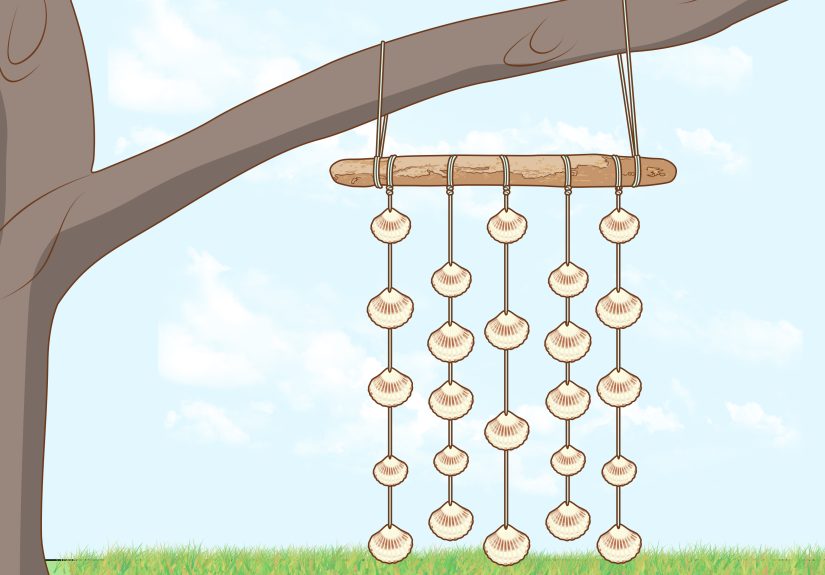
- Choose one longer piece of driftwood or a sturdy branch as the top bar.
- Cut several lengths of twine in different sizes so the strands hang at staggered heights.
- If your shells already have holes, thread them onto the twine. If not, tie the twine around the shells securely using double knots.
- Alternate shells with sea glass, beads, or tiny driftwood pieces for added movement.
- Tie each finished strand to the driftwood, spacing them evenly.
- Add a hanging loop on both ends of the driftwood or from the center.
The trick is to vary the strand lengths enough so the shells move independently. If every strand is the same length, your wind chime can look stiff and tangled. If the lengths are staggered, the whole piece feels more fluid and handmade in the best way.
Best For
This method is ideal for family beach crafts, casual coastal decor, and anyone who wants a DIY seashell wind chime without using power tools. It is especially good if your shell collection includes naturally holed shells, small pieces of sea glass, or treasures with sentimental value.
Way #2: Create a Drilled Seashell and Bead Wind Chime
If you want something a little more detailed and decorative, this is the upgrade. A seashell and bead wind chime gives you more control over spacing, color, and pattern. It also tends to look more intentional, which is handy if you want your project to feel closer to boutique coastal decor and less like “camp craft, but make it windy.”
Why This Method Works
Drilling small holes in shells gives you cleaner stringing options. You can use fishing line for an almost invisible look or nylon beading cord for more strength and easier knotting. Beads help separate the shells, keep the design balanced, and add little flashes of color that catch the light beautifully.
How to Drill Shells Without Cracking Them
Use a drill bit or rotary tool designed for delicate materials such as shells, soft stone, tile, or glass. Secure the shell first and work slowly. Start near the edge rather than the center, and let the tool do the work instead of forcing it. Translation: patience beats power every time. If you rush, your shell will become confetti.
How to Make It
- Lay out your design before stringing anything. This saves you from the classic “why is all the pretty stuff on one side?” problem.
- Cut your cord longer than you think you need so you have room for knots.
- Thread shells and beads in a pattern, tying secure knots between pieces if needed.
- Attach each finished strand to a dowel, driftwood branch, or smooth stick.
- Check the balance by lifting the top piece before you tie the final hanging loop.
A simple pattern might look like this: shell, bead, bead, shell, sea glass, bead, shell. A more polished variation uses graduated shell sizes, with larger shells near the top and smaller shells near the bottom. This creates a tapered silhouette and a more graceful overall shape.
Best For
Choose this method if you want a more finished look, a stronger outdoor chime, or the freedom to mix shell crafts with beads, sea glass, pearls, or painted accents. It is also a smart choice if you are making a gift and want the project to look extra thoughtful.
Way #3: Build a Mobile-Style Seashell Wind Chime with a Hoop or Upcycled Frame
Want your wind chime to look airy, layered, and a little artsy? Use an embroidery hoop, circular ring, or even the frame from an old bamboo or terra-cotta chime. This version creates a round silhouette that works beautifully on patios, in sunrooms, or indoors near a breezy window.
Why This Method Works
Circular wind chimes distribute weight evenly and allow shells to hang from multiple points, which creates lovely movement. This style also lets you make fuller, more dramatic designs without everything ending up in one clump. If the driftwood version is “beach cottage,” this one is “beach cottage with opinions.”
How to Make It
- Use an embroidery hoop, metal ring, or repurposed chime frame as your base.
- Wrap the frame in twine if you want a softer, coastal finish.
- Attach multiple strands of shells all the way around the ring, varying the lengths.
- Add one center strand with a slightly heavier shell, piece of sea glass, or driftwood clapper for movement.
- Create a three-point hanging system from the top so the chime hangs level.
This design looks especially good when you mix shell types. For example, use flatter shells around the outside, more sculptural shells toward the center, and a standout piece in the middle. You can also weave in pearls or translucent beads for a soft, beachy shimmer.
No-Drill Variation
If you are upcycling an existing wind chime frame, you may be able to knot or glue shells onto the original strings instead of drilling every piece. This is a great shortcut for crafters who want the look without adding power tools to the guest list.
Best For
This is the prettiest choice for decorative indoor use, covered porches, and anyone who wants a statement piece with a lighter, floating feel. It is also perfect for using mixed materials and building a more layered coastal decor project.
How to Make Your Seashell Wind Chimes Last Longer
A shell wind chime is charming, but it also lives outdoors where the weather has no respect for your weekend crafting efforts. If you want your chime to survive more than one season, use these practical tips:
- Choose stronger cord for outdoor use. Fishing line and nylon cord usually hold up better than basic cotton string.
- Hang it in a semi-protected spot. A covered porch is kinder than an exposed fence post in storm season.
- Use secure knots. Double and triple knots are not overkill; they are character building.
- Keep shells spaced apart. Tight spacing makes tangling more likely and dulls the visual effect.
- Bring it in during extreme weather. Wind chimes are decorative heroes, not action movie stunt doubles.
Common Mistakes to Avoid
The biggest mistake is overloading the top frame with too many heavy shells. The second biggest is skipping the shell prep and then wondering why your craft smells like low tide with commitment issues. Another common issue is using acidic cleaners that strip the shell’s natural finish. Keep your cleaning gentle, your design balanced, and your hanging cord strong.
Where to Hang a Seashell Wind Chime
The best spots are porches, pergolas, covered balconies, garden gates, patios, and sunrooms. Indoors, try a bright window where a fan or cross breeze can create light movement. Outdoors, aim for places with steady air flow but not constant hard gusts. You want a pleasant, beachy rattle, not a shell tornado.
FAQ: Seashell Wind Chimes for Beginners
Do seashell wind chimes actually make sound?
Yes, but the sound is softer and more delicate than metal chimes. Think clink and whisper, not church bell with a caffeine problem.
Can I make one without drilling shells?
Absolutely. Choose shells with natural holes, tie around shell shapes with twine, or attach shells to an upcycled frame using knots and selective glue.
What string works best?
Twine looks the most natural and coastal. Fishing line is less visible and often more weather-resistant. Nylon beading cord is a nice middle ground for strength and ease of use.
Can kids help with this project?
Yes, especially with sorting shells, planning patterns, and stringing larger pieces. Save drilling and heavy cutting for adults.
What Making Seashell Wind Chimes Taught Me: A Longer, Real-Life Craft Experience
The first time I made a seashell wind chime, I assumed it would be one of those breezy little beach crafts that takes twenty minutes and leaves you feeling suspiciously accomplished. It was not. It took longer. There were knots. There was re-knotting. There was a very dramatic moment when I held the driftwood up, watched all the strands slide to one side, and realized I had designed a beautiful shell chandelier for gravity, not for wind. But that first attempt taught me something important: a good seashell wind chime is less about perfection and more about rhythm.
Shell crafting has a way of slowing you down. You start by sorting shapes and colors, which feels simple enough, and then suddenly you are making serious artistic decisions about whether the cream scallop shell belongs next to the sea-glass bead or whether the tiny spiral shell deserves a solo moment near the center. It is oddly soothing. You are not just assembling decor; you are editing memories. Every shell seems to come with a little postcard attached. This one was found near the pier. That one was tucked into wet sand after the tide pulled back. Another came from a trip where nobody checked the weather and everybody got soaked but still insisted it was fun.
I also learned that each method creates a different mood. The rustic driftwood version felt nostalgic and relaxed, like something that belonged on a back porch with faded cushions and a pitcher of lemonade. The drilled shell-and-bead version felt more polished and giftable, the kind of project you could wrap up for a friend who loves beach house decor. The hoop-style version was my surprise favorite because it moved so gracefully. It did not just hang there; it floated. When a small breeze caught it, the shells shifted with a soft sound that was more calming than dramatic, which somehow made it even better.
The practical lessons were just as memorable. Fishing line looked beautiful but was slippery to knot. Twine looked warmer and more natural, but it needed larger holes and more patience. Heavier shells made stronger movement but could overwhelm a small frame. Beads were not just decoration; they helped with spacing, balance, and keeping the strands from looking flat. And perhaps the most humbling lesson of all was this: when you think you have made enough knots, make one more.
What stayed with me most, though, was the feeling of hanging the finished chime outside and hearing it for the first time. Not loud. Not theatrical. Just a gentle little shell-on-shell sound that instantly made the space feel softer. More personal. More lived in. That is what makes seashell wind chimes such a satisfying project. They are decorative, yes, but they are also memory keepers. They let you turn a pile of beach finds into something that moves, catches the light, and reminds you that handmade things often have more soul than store-bought ones.
So if your shell collection has been sitting in a jar, a drawer, or a tote bag from last summer, this is your sign. Take the shells out. Make the knots. Accept the occasional tangle. Build the version that matches your style. Then hang it where the breeze can find it. The result may not be flawless, but it will almost certainly be charming. And honestly, charm is doing a lot more for home decor these days than perfection ever did.
Conclusion
When it comes to how to make seashell wind chimes, the best design depends on the look you want and the materials you already have. Go rustic with driftwood and twine, polished with drilled shells and beads, or airy with a hoop-style frame. No matter which route you choose, the magic is the same: you transform beach finds into a handmade piece of coastal decor that looks lovely, sounds gentle, and tells a story every time the breeze rolls through.
In a world full of forgettable decorations, a handmade shell wind chime feels personal. It is part craft project, part memory display, part porch personality. And that is a pretty good return on a handful of shells and a slightly overcommitted glue gun.