Table of Contents >> Show >> Hide
- First: Know the Main Cooling System Symptoms
- Way 1: Check Coolant Level, Leaks, and System Pressure
- Way 2: Test Coolant Circulation, Thermostat Function, and Water Pump Health
- Way 3: Inspect Radiator Airflow, Cooling Fans, Hoses, and Blockages
- Quick Diagnosis Table: Symptoms and Likely Causes
- When to Stop Driving Immediately
- Extra Experience-Based Tips for Diagnosing Cooling System Problems
- Conclusion
A healthy cooling system is like a calm traffic officer for your engine: it keeps heat moving in the right direction, prevents chaos, and quietly saves you from expensive drama. When something goes wrong, however, your dashboard temperature gauge may start climbing like it has a personal fitness goal. Maybe you notice a sweet smell under the hood, a mysterious green puddle under the car, weak cabin heat, steam, or a radiator fan that seems to be taking a coffee break. Those are not “little quirks.” They are clues.
The good news is that many cooling system problems can be diagnosed logically before parts are replaced. The bad news is that guessing can get expensive fast. A new thermostat will not fix a cracked hose. A new radiator fan will not help if the coolant level is low. And pouring in random stop-leak products without understanding the problem can turn a small repair into a mechanical soup recipe no one ordered.
This guide explains 3 ways to diagnose a cooling system problem using a practical, step-by-step approach: checking coolant level and leaks, testing coolant circulation, and inspecting airflow through the radiator. Whether you are troubleshooting a car overheating at idle, a coolant leak, a stuck thermostat, a bad water pump, or a radiator fan problem, the goal is simple: find the cause before your engine becomes a very expensive toaster.
First: Know the Main Cooling System Symptoms
Before grabbing tools, pay attention to the symptoms. Your car is usually trying to tell you what hurts, although unfortunately it does not use complete sentences.
Common signs of a cooling system problem
- Temperature gauge rising: The engine is running hotter than normal.
- Coolant warning light: The system may be low on coolant or overheating.
- Sweet smell: Coolant often has a sweet odor when leaking or burning.
- Colored puddles: Green, orange, yellow, blue, or pink fluid under the vehicle may be coolant.
- Steam from the hood: Coolant may be boiling or spraying onto hot parts.
- Heater blowing cold air: Low coolant, air pockets, water pump issues, or heater core problems may be involved.
- Overheating at idle: A fan, airflow, radiator, or coolant circulation problem may be present.
- White exhaust smoke: In serious cases, coolant may be entering the combustion chamber.
Safety matters here. Never remove a radiator cap or pressurized coolant reservoir cap when the engine is hot. Hot coolant can erupt like an angry geyser and cause severe burns. Let the engine cool completely before opening the system.
Way 1: Check Coolant Level, Leaks, and System Pressure
The first and most basic way to diagnose a cooling system problem is to check whether the system has enough coolant and whether that coolant is staying where it belongs. Engines need coolant to absorb heat, carry it to the radiator, and release it into the air. If coolant is low, the remaining fluid has to work harder, heat rises quickly, and overheating can follow.
Check the coolant level when the engine is cold
Park on a level surface and wait until the engine is fully cool. Look at the coolant reservoir. Most reservoirs have “MIN” and “MAX” markings. The coolant should sit between those marks. If the reservoir is empty or far below the minimum line, do not simply top it off and declare victory. Low coolant usually means one of three things: there is a leak, coolant has been neglected, or the engine has consumed coolant internally.
If your vehicle has a radiator cap, only remove it when the engine is cold. The radiator should be full. If it is low, there may be air in the system, a leak, a faulty radiator cap, or a more serious internal issue.
Inspect for external coolant leaks
Coolant leaks can appear in several places. Start with a visual inspection using a flashlight. Look around the radiator, upper and lower radiator hoses, heater hoses, hose clamps, thermostat housing, water pump, coolant reservoir, and the area under the vehicle. Coolant may appear as wetness, crusty residue, dried streaks, or brightly colored stains. It can also leave a sticky or slippery feel.
A radiator leak may show up as discoloration, rust trails, wet fins, or coolant collecting near the lower corners. Hose leaks often appear at clamps, bends, or swollen sections. A water pump leak may leave coolant trails or crusty deposits near the pump housing or weep hole. A heater core leak may show up as a sweet smell inside the cabin, foggy windows, or damp carpet on the passenger side.
Use a cooling system pressure test
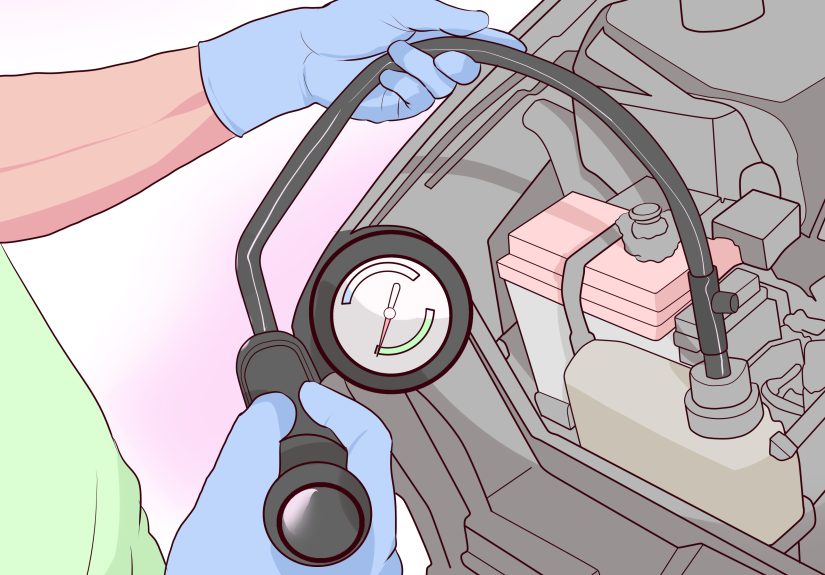
Some leaks only show themselves under pressure. That is why a cooling system pressure tester is useful. The tool attaches where the radiator cap or reservoir cap normally sits, then pumps pressure into the system to simulate operating conditions. If pressure drops, there is likely a leak. If coolant begins to seep, spray, or drip, you have found your suspect.
Pressure testing is especially helpful for small leaks that disappear when the engine is cold. It can also help reveal weak hoses, loose clamps, radiator cracks, thermostat housing leaks, and water pump seal problems. If pressure falls but there is no visible external leak, the problem may be internal, such as a head gasket leak, cracked cylinder head, or coolant entering the engine oil or combustion chamber.
Check the radiator cap
A bad radiator cap can cause overheating, coolant loss, boiling, or collapsed hoses. The cap is designed to hold system pressure. If it cannot hold pressure, coolant can boil at a lower temperature. If the vacuum valve fails, hoses may collapse as the engine cools. Many pressure test kits include adapters to test the cap. Replace it only with the correct pressure rating listed for your vehicle.
Way 2: Test Coolant Circulation, Thermostat Function, and Water Pump Health
If the coolant level is correct and there are no obvious leaks, the next question is whether the coolant is actually moving. A cooling system is not just a bucket of fluid; it is a circulation system. Coolant has to move through the engine, thermostat, radiator, heater core, hoses, and water pump. If the flow stops, heat builds up fast.
Understand what the thermostat does
The thermostat is a temperature-controlled valve. When the engine is cold, it stays closed so the engine can warm up quickly. Once the engine reaches operating temperature, the thermostat opens and allows coolant to flow to the radiator. A thermostat stuck closed can cause fast overheating. A thermostat stuck open can make the engine warm up slowly, reduce heater performance, and sometimes hurt fuel economy.
Use the upper radiator hose test carefully
Start the engine cold and let it warm up while watching the temperature gauge. Carefully monitor the upper radiator hose without putting hands near belts, fans, or hot components. As the engine warms, the hose should eventually become hot when the thermostat opens and coolant begins flowing to the radiator. If the gauge shows hot but the upper radiator hose stays relatively cool, the thermostat may not be opening, coolant may be low, air may be trapped, or the water pump may not be circulating coolant.
Be careful: hoses and surrounding parts can become hot enough to burn skin. If you are not comfortable doing this safely, let a professional technician handle it.
Look for signs of a bad thermostat
A stuck thermostat can create several patterns. If the temperature rises quickly soon after startup, the thermostat may be stuck closed. If the temperature gauge stays low for too long and the heater blows lukewarm air, the thermostat may be stuck open. If the gauge rises and falls unpredictably, the thermostat may be sticking intermittently or the system may contain air pockets.
A removed thermostat can be tested in hot water with a thermometer. It should begin opening near its rated temperature and open fully as the water gets hotter. If it does not open, opens only partly, or stays open when cold, it should be replaced. However, replacing a thermostat without checking coolant level, air pockets, and water pump function can lead to the classic DIY phrase: “Well, that did not fix it.”
Check for water pump problems
The water pump moves coolant through the system. When it fails, the engine may overheat even if the radiator is full. Common water pump clues include coolant leaking near the front of the engine, crusty deposits around the pump, a grinding or growling noise from the pump area, pulley wobble, or overheating at higher engine loads.
Some water pumps can fail internally without obvious external leaks. The impeller may erode, loosen, or break, reducing coolant circulation. In that case, the engine can overheat while the coolant level still looks normal. A technician may use temperature readings, flow checks, pressure testing, and sometimes component removal to confirm the diagnosis.
Do not ignore the cabin heater
Your heater is part of the cooling system. Hot coolant flows through the heater core, and the blower fan pushes warm air into the cabin. If the heater suddenly blows cold while the engine temperature climbs, suspect low coolant, trapped air, water pump trouble, or a restricted heater core. If the heater works only when driving but not at idle, coolant flow may be weak or the coolant level may be low.
Way 3: Inspect Radiator Airflow, Cooling Fans, Hoses, and Blockages
Coolant can be full and circulating, but the system still needs airflow to remove heat. The radiator transfers heat from coolant to air. If air cannot pass through the radiator, or if the cooling fan does not run when needed, the engine may overheat, especially in traffic, at idle, or when the air conditioner is on.
Diagnose overheating at idle or low speeds
If the car overheats while sitting in traffic but cools down once you start driving, airflow is a prime suspect. At road speed, air naturally moves through the radiator. At idle, the cooling fan must pull air through. If the fan does not turn on, the temperature can climb quickly.
With the engine warm and the air conditioner on, many vehicles command the radiator fan to run. If the fan stays off, possible causes include a blown fuse, bad relay, failed fan motor, damaged wiring, faulty coolant temperature sensor, or control module issue. A fan with broken blades, rough bearings, or a burned smell should be inspected immediately.
Check the radiator fan safely
Electric fans can start unexpectedly, even when the engine is off on some vehicles. Keep hands, sleeves, tools, and heroic curiosity away from the fan blades. A basic inspection includes checking the fuse, relay, wiring connector, and visible fan condition. More advanced testing may involve a multimeter, scan tool, or direct fan motor test. If electrical diagnosis is not your comfort zone, this is a good time to bring in a technician.
Inspect the radiator for external blockage
Leaves, bugs, plastic bags, dirt, and road debris can block airflow through the radiator or condenser. Shine a light through the front grille and inspect the radiator fins. Bent fins, heavy dirt, or debris can reduce cooling performance. Clean gently with low-pressure water or compressed air from the correct direction. Do not blast delicate fins with high pressure unless you enjoy turning radiator fins into modern art.
Consider internal radiator blockage
Old coolant can lose corrosion protection. Rust, scale, and sediment may build up inside the radiator, engine passages, or heater core. A clogged radiator cannot transfer heat properly. Symptoms may include overheating at highway speed, uneven radiator temperature, rusty coolant, or poor heater performance. An infrared thermometer can help identify cold spots in the radiator that may indicate blocked tubes.
Inspect hoses for collapse, swelling, and soft spots
Radiator and heater hoses live a hard life. They deal with heat, pressure, vibration, and age. Inspect hoses when the engine is cool. Look for cracks, bulges, oil contamination, soft areas, hard brittle sections, and loose clamps. A collapsed lower radiator hose can restrict coolant flow and cause overheating. A swollen hose may be close to failure. If a hose looks like it has been training for balloon animal duty, replace it.
Quick Diagnosis Table: Symptoms and Likely Causes
| Symptom | Possible Cooling System Cause | Best First Check |
|---|---|---|
| Engine overheats quickly after startup | Low coolant, stuck thermostat, trapped air, water pump issue | Check coolant level and upper radiator hose temperature |
| Overheats at idle but cools while driving | Bad radiator fan, fan relay, fuse, sensor, or airflow issue | Observe fan operation and inspect fan circuit |
| Coolant puddle under vehicle | Hose, radiator, water pump, reservoir, or heater hose leak | Visual inspection and pressure test |
| Sweet smell inside cabin | Heater core leak or coolant vapor entering HVAC system | Check carpet, windshield fog, and coolant level |
| Heater blows cold while engine runs hot | Low coolant, air pocket, water pump failure, restricted heater core | Check coolant level and system bleeding |
| White exhaust smoke with coolant loss | Possible head gasket or internal coolant leak | Stop driving and request professional diagnosis |
| Temperature gauge reads hot but no symptoms | Coolant temperature sensor, wiring, gauge, or air pocket | Scan tool reading and sensor inspection |
When to Stop Driving Immediately
Some cooling system problems allow careful troubleshooting in the driveway. Others require an immediate stop. Pull over safely and shut off the engine if the temperature gauge enters the red zone, a warning light appears, steam comes from under the hood, coolant is pouring out, the engine knocks, or the car loses power. Continuing to drive an overheating engine can damage the head gasket, cylinder head, pistons, bearings, seals, and other expensive parts.
If you must wait for help, turn the engine off and let it cool. Do not open the radiator cap while hot. Do not pour cold water into a severely overheated engine unless instructed in an emergency situation by a qualified professional, because sudden temperature changes can damage components. When in doubt, tow it. A tow bill is much cheaper than an engine replacement.
Extra Experience-Based Tips for Diagnosing Cooling System Problems
One of the most useful experiences related to cooling system diagnosis is learning not to chase the loudest symptom first. Overheating is dramatic, but the cause is often quiet. A driver may notice the temperature gauge climbing and immediately blame the thermostat. That is understandable because thermostats are famous little troublemakers. But the real issue might be a loose hose clamp that lets coolant escape only when the system is hot and pressurized. The clamp cools, the leak disappears, and the driveway stays dry. This is why pressure testing is so valuable. It makes the system reveal leaks without waiting for the engine to overheat on the road.
Another common experience is the “it only overheats in traffic” problem. Many drivers assume the radiator is bad, but the pattern points strongly toward airflow. If the car runs cool on the highway and hot at stoplights, the radiator may be capable of cooling when natural airflow is present. The missing piece may be the electric fan. A simple observation can save time: does the fan come on when the engine warms up or when the air conditioner is switched on? If not, the problem may be electrical rather than mechanical. This is where checking fuses, relays, connectors, and fan motor operation becomes smarter than buying a radiator on pure suspicion.
A third lesson is that the cabin heater can act like a diagnostic assistant. If the heater blows cold and the temperature gauge rises, coolant may not be reaching the heater core. That can happen because the coolant level is low, air is trapped in the system, the water pump is weak, or the heater core is restricted. In real-world troubleshooting, this clue is easy to overlook because people think of the heater as a comfort feature. In truth, it is a small heat exchanger connected to the cooling system. When it misbehaves at the same time the engine temperature changes, it deserves attention.
Coolant color and condition also tell a story. Clean coolant is usually bright and consistent in color, depending on the formula. Rusty, muddy, oily, or gritty coolant suggests neglect, corrosion, contamination, or internal engine trouble. If the coolant looks like chocolate milk, stop treating the problem as a simple top-off. Coolant and oil may be mixing, which can point to a head gasket, oil cooler, intake gasket, or internal water pump issue on certain engines. That kind of diagnosis should move beyond driveway guessing and into professional testing.
Finally, experience teaches patience. Cooling system problems can stack together. A leaking hose may cause low coolant. Low coolant may create air pockets. Air pockets may cause false temperature readings or poor heater output. Overheating may damage the thermostat. Replacing only one obvious part may not fully solve the problem if the system is not refilled and bled correctly. The best approach is to diagnose in order: verify coolant level, find leaks, confirm circulation, check airflow, test pressure, and only then replace parts. That method is less exciting than throwing parts at the car, but your wallet will find it deeply inspiring.
Conclusion
Diagnosing a cooling system problem does not require panic, guesswork, or a dramatic speech beside the open hood. It requires a method. First, check coolant level, leaks, and pressure. Second, verify coolant circulation by considering thermostat behavior, water pump health, and heater performance. Third, inspect airflow through the radiator, including fan operation, radiator condition, hose health, and possible blockages.
The most important rule is simple: never ignore overheating. A small coolant leak, weak fan relay, stuck thermostat, or worn hose can become major engine damage if the vehicle keeps running hot. If the symptoms are severe, stop driving and get help. If the symptoms are mild and the engine is cool, use a careful diagnostic process. Your cooling system may not be glamorous, but when it works properly, it quietly protects one of the most expensive parts of your vehicle. That deserves a little respectand maybe a flashlight that actually has batteries.
Note: This article is written as a ready-to-publish HTML body section in standard American English. It is based on established automotive repair and maintenance guidance and does not include raw source links or content reference markers.