Table of Contents >> Show >> Hide
- 1. Spider-Man: The Parker Luck Also Applies to Romance
- 2. She-Hulk: Dating, Superhuman Law, and Cosmic Red Flags
- 3. Superman: The Man of Steel, the Woman of Tomorrow, and 80 Years of Weird Courtship
- 4. Wonder Woman: Mythology, Steve Trevor, and Romantic Continuity on Mount Olympus
- 5. Deadpool: Marriage, Death, Monsters, and the World’s Least Stable Love Triangle
- Why Superhero Romance Gets So Strange
- Reader Experience: What Makes These Stories So Addictive?
- Conclusion
Editorial note: This article discusses adult comic-book relationships in a non-explicit, pop-culture analysis style. The focus is on romance, continuity, retcons, alien biology, cosmic drama, and the wonderfully strange storytelling choices that make superhero comics feel like a soap opera wearing a cape.
Superheroes save cities, punch robots, dodge laser beams, and somehow still find time to maintain dating lives that would make a relationship therapist quietly close the file and move to a cabin. In comic books, romance is rarely just romance. It is a radioactive science experiment, a demonic bargain, a cosmic court case, a multiverse problem, or a wedding issue with twelve guest stars and one villain waiting behind the cake.
That is why the phrase “superhero sex lives in comics” is less about shock value and more about storytelling chaos. These characters live in worlds where death is temporary, clones are common, memory wipes count as relationship counseling, and an ex might be from another planet, another timeline, or the literal realm of the undead. Normal dating problems include “we communicate poorly.” Superhero dating problems include “a cosmic entity may be involved.”
Below are five superheroes whose romantic histories have stayed consistently bizarre across decades of comics. The article keeps things tasteful, but make no mistake: comic book continuity has been doing backflips in a leather cape for a very long time.
1. Spider-Man: The Parker Luck Also Applies to Romance
Peter Parker may be Marvel’s king of relatable problems, but his romantic continuity is anything but normal. Spider-Man’s love life has involved clone complications, secret identities, weddings, erased marriages, alternate futures, and enough emotional whiplash to qualify as a separate superpower.
At the center of the web is Mary Jane Watson, one of superhero comics’ most iconic love interests. Peter and MJ’s relationship became a major part of Spider-Man history, especially after their famous wedding in The Amazing Spider-Man Annual #21. For many fans, that marriage represented growth: Peter was not just the unlucky kid from Queens anymore. He was an adult hero trying to balance responsibility, grief, danger, and love.
Then came the kind of twist only superhero comics can deliver with a straight face: the marriage was undone through a supernatural bargain involving Mephisto. In everyday terms, that is like having a rough patch and then discovering the customer service department is run by a demon. The result was one of Marvel’s most debated relationship resets, because it changed not only Peter’s personal life but also the emotional architecture of the Spider-Man mythos.
Why Spider-Man’s romantic life stays weird
Spider-Man stories thrive on tension between ordinary life and superhero duty. Peter wants normal happiness, but the universe seems determined to throw goblin bombs, symbiotes, clones, and cosmic editorial decisions at him. Even when a version of Peter gets domestic peace, another version is usually suffering somewhere else in the multiverse.
Then there is the infamous alternate-future story Spider-Man: Reign, which suggested that Peter’s powers made intimacy tragically dangerous for Mary Jane. It is one of the darkest and strangest ideas ever attached to Spider-Man’s private life, and it remains controversial because it turns a romantic bond into a biological horror premise. In a PG-rated summary: the story asks what happens if a superhero’s powers are not something he can simply take off with the mask.
Spider-Man’s love life is bizarre because it keeps asking the same painful question in increasingly wild forms: can someone with extraordinary responsibility ever have an ordinary relationship? The answer changes depending on the era, the writer, and whether Mephisto has wandered into the room holding a contract.
2. She-Hulk: Dating, Superhuman Law, and Cosmic Red Flags
Jennifer Walters, better known as She-Hulk, has one of the most entertaining romantic histories in Marvel Comics because her stories often understand the joke. She is a lawyer, an Avenger, a fourth-wall-aware icon, and one of the few superheroes who can turn a dating disaster into both a punchline and a legal argument.
Unlike many superheroes whose romantic lives are treated as tragic burdens, She-Hulk’s dating history often leans into confidence, comedy, and self-possession. Jennifer has been linked to heroes, adventurers, and cosmic figures, and Marvel has openly treated her love life as part of her larger character identity. She is not written as someone waiting politely in the background. She is the main event, the cross-examiner, and sometimes the person throwing the bad decision through a wall.
The Starfox problem
One of the strangest and most uncomfortable corners of She-Hulk’s romantic history involves Starfox, also known as Eros. Starfox has powers connected to pleasure and emotion, which means stories involving him often raise major questions about consent and manipulation. She-Hulk comics have explored those questions more directly than many superhero titles would have dared in earlier decades.
That is where Jennifer becomes especially compelling. Because she is a lawyer, her stories can transform superhero weirdness into courtroom weirdness. A normal comic might say, “Here is a charming cosmic hero.” A She-Hulk comic can ask, “Great, now explain his powers under oath.” That shift gives the character’s bizarre romantic life a sharper edge. It is funny, but it is also built around agency, accountability, and the fact that superpowers can make personal boundaries very complicated.
She-Hulk’s private life remains bizarre because it refuses to separate dating from the legal, social, and ethical consequences of living in a superhuman world. When your social circle includes Avengers, gods, mutants, aliens, and clients who may or may not be androids, romance is not a subplot. It is a liability issue with abs.
3. Superman: The Man of Steel, the Woman of Tomorrow, and 80 Years of Weird Courtship
Superman and Lois Lane are the blueprint for superhero romance. They met in 1938, helped define the superhero love triangle, and became one of the most recognizable couples in pop culture. Yet their relationship history is also deeply strange, especially when you look beyond the clean modern image of Clark and Lois as journalism’s most indestructible power couple.
For decades, the classic setup was built around an identity triangle: Lois loved Superman, Clark loved Lois, and Clark was Superman. On paper, that sounds simple. In practice, it produced years of secret-identity comedy, emotional misdirection, imaginary weddings, fake-outs, reversals, and Silver Age scenarios that feel like romantic logic built by a committee of caffeinated magicians.
When Superman romance gets bizarre
Superman’s dating history has included alternate timelines, memory loss, magic interference, alien customs, and old stories where the plot seems to ask, “What if love, but with more deception and robots?” Lois and Clark eventually reached a healthier, more emotionally grounded version of their bond, especially in post-Crisis continuity and later modern stories. But the road there was paved with enough weirdness to fill the Fortress of Solitude’s most embarrassing archive.
The bizarre part is not simply that Superman is an alien. It is that his romantic stories often turn ordinary relationship questions into mythic problems. Can Lois love Clark if she does not know his secret? Can Clark be honest without putting her in danger? Can a godlike hero be emotionally available? Can journalism survive dating the headline?
Superman’s private life is consistently bizarre because it magnifies the oldest romance trope in superhero comics: the mask. With Clark, the mask is not just a costume. It is a moral puzzle, a relationship barrier, and sometimes a plot machine that prints awkwardness at super-speed.
4. Wonder Woman: Mythology, Steve Trevor, and Romantic Continuity on Mount Olympus
Wonder Woman’s romantic history is bizarre in a different way from Spider-Man’s or Superman’s. Diana’s love life is not merely tangled in secret identities. It is tangled in Greek mythology, Amazon culture, divine politics, memory manipulation, shifting origins, and Steve Trevor’s impressive ability to be rewritten, revived, replaced, or reinterpreted depending on the era.
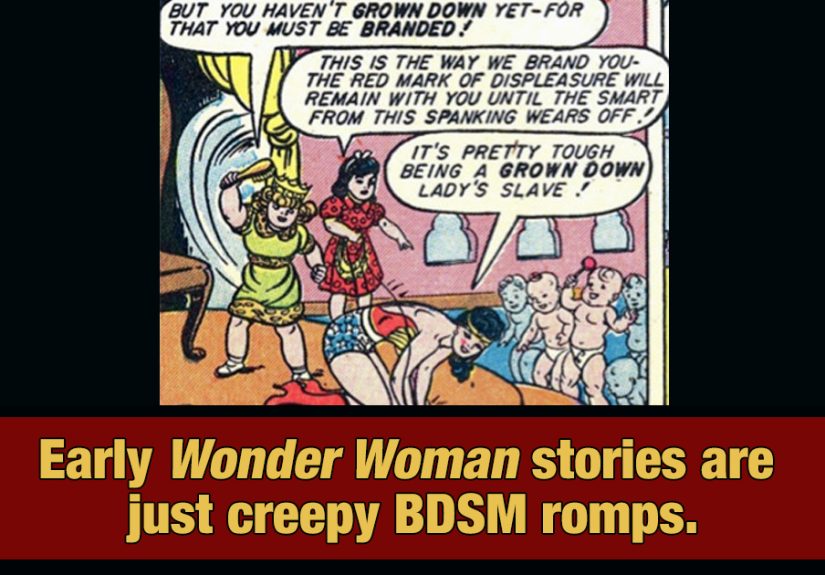
Diana was created by psychologist William Moulton Marston, and her early stories were shaped by ideas about feminism, power, truth, and social reform. That origin matters because Wonder Woman has always carried more symbolic weight than the average costumed hero. Her romances are rarely just about whether two characters like each other. They often reflect what a given era thinks about gender, independence, power, and partnership.
Steve Trevor: love interest, symbol, and continuity yo-yo
Steve Trevor is one of the great recurring figures in Wonder Woman’s romantic world, but his role has changed wildly across continuity. Sometimes he is the classic man who crashes into Diana’s hidden world and becomes her bridge to humanity. Sometimes his relationship with Diana becomes more complicated, especially when stories rewrite his history or alter what Diana remembers.
DC has repeatedly revisited Steve’s deaths, returns, and reinventions. That alone makes the relationship feel mythic, but also faintly like the universe keeps misplacing his paperwork. When your romantic partner can be reintroduced through divine meddling, altered memories, or a rebooted timeline, date night becomes less “dinner and a movie” and more “consult the oracle and check the publication history.”
Wonder Woman’s romantic life remains bizarre because Diana is not only a superhero. She is an Amazon princess, a mythological figure, a warrior, a diplomat, and a cultural symbol. Writers have used her relationships to explore whether love strengthens her mission, distracts from it, complicates it, or reveals something essential about the world she is trying to protect.
5. Deadpool: Marriage, Death, Monsters, and the World’s Least Stable Love Triangle
Deadpool’s romantic history is so bizarre that calling it “bizarre” feels like calling a hurricane “a bit breezy.” Wade Wilson has been married, cursed, emotionally attached to impossible beings, and involved in cosmic romantic situations that sound like they were written during a dare.
One of the most famous examples is his marriage to Shiklah, Queen of the Undead. That relationship came with monsters, politics, supernatural conflict, and the kind of wedding issue that makes normal superhero ceremonies look undercooked. Deadpool marrying into Monster Metropolis is exactly the sort of thing that only feels surprising for three seconds before readers remember, “Right, this is Deadpool.”
Deadpool and Death
Then there is Death. Not death as a concept. Death as a Marvel cosmic entity. Wade’s connection to Death has been one of the most unusual running elements in his mythology, made even stranger by the fact that Thanos has also been famously tied to Death. The result is less a love triangle and more a cosmic group chat nobody should have joined.
Deadpool’s healing factor already makes his body and mortality strange. His relationship with death turns that strangeness into emotional absurdity. He can survive situations that would end almost anyone else, which means intimacy, loss, and longing all become filtered through his inability to stay gone. For a character built on jokes, that is surprisingly tragic.
Deadpool’s romantic life stays bizarre because he exists where parody and sincerity overlap. He can marry a supernatural queen, joke through heartbreak, and still reveal genuine loneliness underneath the mask. The weirdness is not random. It is part of the character’s engine. Wade wants connection, but his world keeps answering with monsters, immortality problems, and cosmic irony.
Why Superhero Romance Gets So Strange
Superhero comics are built to continue forever. That creates a unique problem for romance. If a character settles down permanently, the publisher may worry that the status quo becomes too stable. If the relationship never changes, readers get bored. The compromise is often controlled chaos: weddings, breakups, resurrections, clones, alternate timelines, memory changes, and the occasional supernatural contract.
Another reason superhero intimacy gets weird is that powers complicate everything. Spider-Man’s radioactive origin, Superman’s alien biology, She-Hulk’s transformation, Wonder Woman’s divine background, and Deadpool’s healing factor all raise questions normal romance stories never need to answer. Comics often handle those questions with melodrama, comedy, tragedy, or all three in the same issue.
There is also the soap-opera factor. Superhero comics have always borrowed from romance comics, adventure serials, mythology, horror, and daytime drama. The result is a genre where saving the universe and surviving a breakup can happen in the same month. Sometimes the villain attacks the city. Sometimes the villain attacks the relationship. Sometimes the villain is the relationship, wearing a cape and smiling too much.
Reader Experience: What Makes These Stories So Addictive?
For many readers, the appeal of bizarre superhero romance is not the scandal. It is the emotional unpredictability. These stories create a strange kind of comfort: no matter how messy your dating history may be, at least you probably did not have your marriage erased by a demon, fall for a cosmic entity, or discover that your boyfriend’s ex is from another timeline.
Reading these comics also teaches you how elastic long-running fiction can be. A relationship can be iconic and unstable at the same time. Peter and Mary Jane can be soulmates in one continuity, separated in another, and happily raising a family somewhere else in the multiverse. Clark and Lois can spend decades circling each other before becoming the emotional center of Superman’s world. Diana and Steve can be rewritten repeatedly, yet still return to the same core idea: an extraordinary woman and the human world she chooses to protect.
There is a fun experience in watching writers try to solve problems created by earlier writers. One era introduces a strange romantic twist. Another era tries to explain it. A later era ignores it. Then a nostalgic writer brings it back with a dramatic caption box and a thunderstorm. Comic book fans become part reader, part historian, part detective, and part exhausted relationship counselor.
These stories are also memorable because they make character flaws visible. Spider-Man’s guilt shows up in his relationships. Superman’s secrecy creates emotional distance. She-Hulk’s confidence challenges outdated expectations about female heroes. Wonder Woman’s romances reveal how each era understands power and independence. Deadpool’s absurd love life exposes the sadness beneath his jokes.
From a storytelling perspective, bizarre superhero romance works best when it reveals something human underneath the impossible premise. The weirdness is the wrapper; the emotion is the candy inside. A demon bargain matters because Peter and MJ’s love mattered first. Deadpool’s cosmic romance matters because Wade is lonely. Lois and Clark’s identity drama matters because trust matters. Diana and Steve matter because love is one of the ways Wonder Woman connects myth to humanity.
That is why fans keep returning to these chaotic love stories. They are not realistic in the literal sense, but they are emotionally recognizable. People hide parts of themselves. People fear hurting those they love. People want independence and intimacy at the same time. People make choices they regret. Superhero comics simply express those truths through clones, gods, monsters, alien biology, and the occasional wedding interrupted by doom.
Conclusion
The strangest superhero sex lives in comics are really strange relationship mythologies. Spider-Man turns romance into responsibility and regret. She-Hulk turns dating into a courtroom of power, consent, and comedy. Superman turns love into a question of identity and trust. Wonder Woman turns romance into myth, feminism, and divine continuity. Deadpool turns intimacy into a cosmic joke with a broken heart underneath.
That combination is why superhero romance remains endlessly readable. It is dramatic, ridiculous, symbolic, and occasionally so weird you have to put the comic down and stare at the wall. But when it works, it reminds us that even characters who can lift buildings, dodge bullets, or heal from almost anything still struggle with the most human challenge of all: figuring out how to love someone without letting the entire universe get in the way.