Table of Contents >> Show >> Hide
- 1) Identify the Bug (and Confirm It’s Actually the Villain)
- 2) Make Your Garden Less Bug-Friendly (Without Making It Plant-Unfriendly)
- 3) Use Physical Removal: Handpick, Prune, and “Blast Off” with Water
- 4) Block Access with Barriers and Row Covers (The “No Entry” Strategy)
- 5) Recruit the Good Bugs (and Create a Garden They Want to Work In)
- 6) Use Least-Toxic, Targeted Treatments Only When You Truly Need Them
- Putting It All Together: A Simple Safe-Bug-Control Routine
- Conclusion
- Garden Bug Battles: Real-World Experiences and What They Teach You (Extra Notes)
Garden bugs have one universal talent: showing up exactly when you’re feeling proud of your plants. One minute you’re a capable backyard farmer.
The next, you’re staring at a leaf that looks like it lost a bar fight.
The good news? You can handle most common garden pests without turning your yard into a chemistry experiment or accidentally evicting the butterflies.
The safest approach is “least risky first”: start with simple, non-toxic tactics (like barriers and a strong spray of water), then move up only if the
problem is serious and persistent. This is basically the gardening version of “try turning it off and back on.”
Below are six smart, practical things you can do to get rid of garden bugs safelyusing methods that protect your plants, your soil, helpful insects,
and the humans/pets who live near the snack bar (a.k.a. your garden).
1) Identify the Bug (and Confirm It’s Actually the Villain)
Before you declare war, make sure you’re fighting the right opponent. Many “bugs” in the garden are either harmless or actively helpful. Some are
just passing through like tourists who take one photo and leave.
Scout like a pro (no magnifying glass required, but it’s fun)
- Check the undersides of leavesthat’s where aphids, mites, and whiteflies love to hang out.
- Look for patterns: holes (chewers), curled leaves (sap-suckers), silvery stippling (mites), sticky residue (aphids/scale).
- Watch the timing: Some pests show up at dusk, others after rain, and some right when you’re leaving for a weekend trip.
Know your “damage threshold”
Not every nibble needs an intervention. A few holes on kale might be annoying, but if the plant is still growing fast, you can often tolerate minor
damage while you try gentle controls. Overreacting is how you end up harming beneficial insects more than the pest.
Example: If you see one tomato hornworm, you can handpick it. If you see five and your tomato plant looks like lace, you’ll want a
stronger plan (keep reading).
2) Make Your Garden Less Bug-Friendly (Without Making It Plant-Unfriendly)
Many pest outbreaks happen when plants are stressed, overcrowded, or overfedbasically the botanical version of a messy dorm room with free pizza.
Fix the environment and you often reduce the bug pressure naturally.
Simple changes that pay off fast
- Water consistently (especially during heat spells). Stressed plants attract pests and recover slower.
- Avoid excess nitrogen. Over-fertilized plants can push out soft, tender growth that aphids adore.
- Space plants for airflow. Crowding increases humidity and creates perfect hiding spots.
- Weed wisely. Some weeds host pests (and some host beneficial insects). Remove the ones crowding crops or harboring infestations.
Rotate crops to break pest life cycles
If you plant the same crop family in the same spot every year, you’re basically sending pests a calendar invite. Rotating plant families helps disrupt
recurring problems (especially in vegetable beds).
Example: If cucumber beetles hammered your cucumbers last season, try planting cucurbits (cucumbers, squash, melons) in a different bed
this year, and use barriers early.
3) Use Physical Removal: Handpick, Prune, and “Blast Off” with Water
This is the most underrated pest-control category because it’s not glamorous. It’s also incredibly effective and doesn’t require you to own anything
scarier than a hose.
The three MVP moves
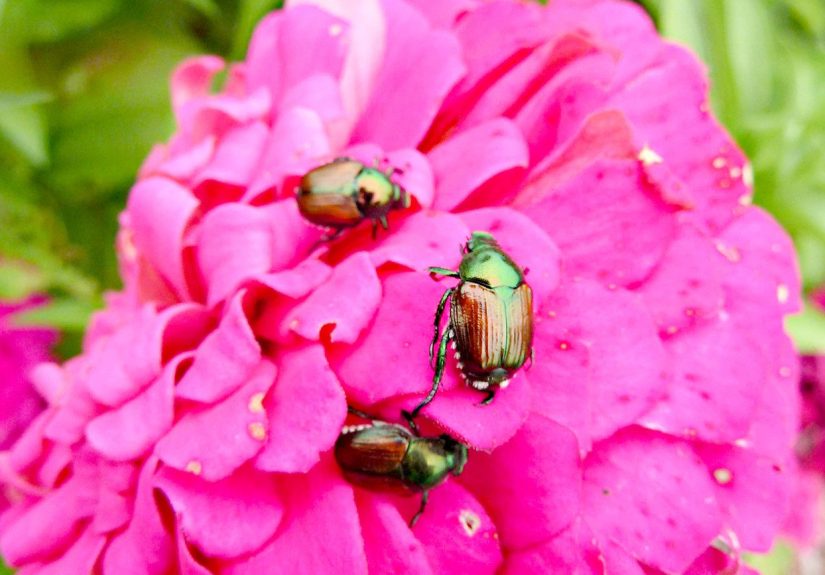
- Handpick the big offenders (hornworms, squash bugs, beetles). Drop them into a bucket of soapy water if you need a “no return” option.
- Prune infested bits. If one branch is covered in aphids or webbing caterpillars, remove it and dispose of itdon’t “rehab” it on a windowsill.
- Spray pests off with a strong stream of water, especially aphids. Repeat as neededpest control can be a series, not a movie.
Example: Aphids on roses or peppers often collapse after a few days of daily water blasts plus improved airflow. Meanwhile, you didn’t
harm lady beetles or lacewings that may show up to help.
Don’t forget the “invisible” physical controls
Many pests spread because we accidentally help them. Clean pruners, remove heavily infested leaves, and avoid touching healthy plants right after you’ve
handled an infected oneespecially if you’re also dealing with plant diseases.
4) Block Access with Barriers and Row Covers (The “No Entry” Strategy)
If you can keep pests from reaching the plant, you don’t have to fight them later. Physical exclusion is one of the safest, most effective options
especially for young plants that get overwhelmed quickly.
Row covers: light, breathable, surprisingly powerful
Floating row covers are designed to let in light, air, and water while keeping many pests out. They’re especially helpful early in the season, when
seedlings are tender and insects are feeling ambitious.
- Use on: brassicas (cabbage, kale), cucurbits, leafy greens, young peppers and eggplants.
- Helps against: flea beetles, cabbage moths, aphids, and other early invaders (varies by crop and region).
- Key tip: Seal the edges well so pests can’t crawl underneath like tiny action heroes.
Other easy barriers
- Insect netting for taller plants or beds that need long-term protection.
- Collars around stems (paper or cardboard) to reduce cutworm damage on seedlings.
- Sticky bands on supports/trunks in some settings to slow climbing pests (use carefully to avoid trapping beneficial insects).
Example: If you always get cabbage worms, put row covers on brassicas right after transplanting. You’ll prevent egg-laying and reduce the
need for any sprays later.
5) Recruit the Good Bugs (and Create a Garden They Want to Work In)
If you want fewer pests, build a garden that supports predators and parasitoidsthe “tiny security team” of the ecosystem. These beneficial insects can
reduce aphids, caterpillars, and other pests over time, especially when you stop nuking the neighborhood with broad treatments.
Plant the bug buffet (for the good guys)
Many beneficial insects need nectar and pollen as adults, even if their larvae are ruthless pest-eaters. Add small clusters of flowers near veggie beds
to keep them around.
- Great options: dill, fennel, yarrow, cosmos, coreopsis, and other small-flowered bloomers.
- Why it works: flowers provide food for natural enemies like lacewings, hover flies, and tiny parasitic wasps.
Avoid accidental friendly fire
- Skip broad-spectrum treatments unless absolutely necessary.
- Spot-treat the problem plant instead of blanket-spraying the entire garden.
- Leave a little habitatmulch, diverse plantings, and seasonal shelter can help beneficials persist.
Example: If aphids appear on milkweed, you might choose targeted removal (water spray or hand-wipe) rather than strong treatments, because
milkweed also supports monarchs and other beneficial life in the garden.
6) Use Least-Toxic, Targeted Treatments Only When You Truly Need Them
Sometimes pests reach a level where physical and cultural controls can’t keep upespecially in heat waves, during heavy infestations, or when you’re
dealing with fast-reproducing insects. If you choose a product, use the least-toxic option that targets the pestand follow the label like it’s the
rulebook for a very picky board game.
Insecticidal soap (best for soft-bodied pests)
Insecticidal soaps work by direct contact and are commonly used for aphids, whiteflies, and spider mites. Because they don’t have much residual effect,
they’re generally less disruptive than many broad pesticidesbut you still want to use them carefully.
- Works on: aphids, mealybugs, whiteflies, mites (especially when you hit leaf undersides).
- Use safely: apply when temps are cooler (early morning/evening), and avoid spraying stressed plants.
- Important: choose a labeled horticultural soap product rather than improvised “dish soap mixes,” which can damage leaves.
Horticultural oils and neem (smothering + growth disruption, used with care)
Horticultural oils can suppress certain pests by smothering them. Neem-based products may also interfere with feeding and development for some insects.
These are often considered “low-impact” when used correctlyyet timing matters, especially for pollinators and aquatic life.
- Works on: many soft-bodied pests, some scale stages, mites (varies by product and pest).
- Protect pollinators: avoid spraying open flowers; apply when bees are inactive (often evening).
- Protect plants: avoid use in hot sun or extreme heat to reduce leaf burn risk.
Bacillus thuringiensis (Bt) for caterpillars (targeted and effective)
If caterpillars are the main issue (like cabbage loopers, hornworms, or other leaf-eaters), Bt can be a precise tool. It works best on young larvae and
needs to be eaten by the caterpillar to be effective.
- Works on: specific caterpillars/larvae (product type matters).
- Use wisely: only spray plants being actively eaten by pest caterpillars. Don’t treat “just in case.”
- Pollinator note: avoid spraying host plants for butterflies unless the pest is truly causing major damage.
The non-negotiable safety checklist
- Read and follow the labelit’s the law and it’s also how you avoid turning “helpful” into “oops.”
- Use the minimum effective amount. More is not “extra effective,” it’s just extra.
- Prevent drift: avoid windy days, aim carefully, and spot-treat.
- Time it right: spray when pollinators are not active and never spray open blooms if you can avoid it.
- Protect people and pets: keep kids/pets away during application; wash hands afterward; store products securely.
Putting It All Together: A Simple Safe-Bug-Control Routine
If you want a repeatable plan (and honestly, your future self does), try this weekly rhythm:
- Scout: 5 minutes per bed, check undersides, new growth, and damage.
- Remove: handpick, prune, and water-blast pests you can see.
- Block: row cover young crops and seal edges.
- Support: keep flowers for beneficials nearby and avoid broad treatments.
- Treat (only if needed): use targeted, low-impact options and follow label directions exactly.
This approach won’t just reduce bugsit improves the whole garden system. And the best part? You’ll stop feeling like you need to “win” the garden.
You just need to manage it.
Conclusion
Getting rid of garden bugs safely isn’t about finding one magic sprayit’s about stacking smart, gentle strategies until the pests are outnumbered and
outplayed. Identify the problem first, make your garden less inviting to pests, physically remove what you can, block access with barriers, encourage
beneficial insects, and save low-impact treatments for when you truly need them.
Your garden will never be 100% bug-free (and that’s actually a sign of a living ecosystem). But with these six steps, you can keep damage low, protect
pollinators, and grow food and flowers without feeling like you’re running a tiny pesticide factory.
Garden Bug Battles: Real-World Experiences and What They Teach You (Extra Notes)
If you’ve ever walked outside, coffee in hand, ready to admire your tomatoesonly to find leaves curled like potato chipsyou already know the emotional
arc of garden pest control: optimism, confusion, mild outrage, and then a surprisingly satisfying “aha.”
One common experience is the aphid surprise. Gardeners often notice sticky leaves (honeydew), ants traveling in suspiciously organized
lines, or new growth that looks wrinkled and stunted. The first instinct is usually to spray something immediately. But the gardeners who stick with
safer methods often discover that a strong water blast every day or two knocks aphids down faster than expected. The key lesson: aphids are small, soft,
and not great at “getting back on the plant” once they’re blasted off. Pair that with better airflow and fewer nitrogen-heavy feedings, and outbreaks
shrink. It’s not dramatic, but it’s effectiveand it doesn’t wipe out the lady beetles that show up fashionably late (like helpful friends who arrive
after the crisis has started but still bring snacks).
Another frequent storyline is the caterpillar mystery. Gardeners find holes in cabbage leaves, little dark droppings, and a creeping
suspicion that something is dining nightly. Once people learn to look under leaves for eggs and tiny larvae, everything clicks. Many gardeners report
that using row covers early (before the moths can lay eggs) is a total game-changer. When they forget the cover “just for a few days,” the pests
somehow treat that as an open invitation. The lesson here is timing: prevention beats cleanup. If caterpillars do get established, gardeners tend to
have the best results when they use targeted controls (like handpicking or a caterpillar-specific product) instead of broad approaches.
A third experience shows up with squash bugs and cucumber beetles: the pests that make you question your life choices. Gardeners often
describe seeing eggs on leaf undersides (tiny, neatly arranged clusters) and realizing they missed the early window. People who succeed usually combine
several safe tacticshand removal of eggs, row covers early, and cleaning up plant debris at the end of the season. The lesson: some pests require a
layered strategy. No single tool wins, but stacking tools does.
Then there’s the beneficial insect breakthrough. A lot of gardeners start out wanting a perfectly clean, sterile garden. Over time, many
realize that a garden with a few blooms nearby and minimal broad spraying becomes more balanced. People notice hoverflies, lacewings, and tiny wasps
they never knew existed. The lesson is patience: building a “good bug” ecosystem is slower than spraying, but it tends to be more stable long-term.
Finally, many gardeners share the same big takeaway: you don’t need to eliminate every bug. You just need to protect your plants when
pest pressure gets high. Once you stop aiming for “bug-free perfection,” pest control gets calmer, safer, andoddly enoughmore successful.