Table of Contents >> Show >> Hide
- 1. Your Kitchen Is a Sea of One Color
- 2. You Have Too Much Open Shelving
- 3. Your Microwave Lives Over the Range
- 4. Your Backsplash Is Busy, Trendy, or Fighting the Countertop
- 5. Your Cabinets Feel Overly Ornate, Distressed, or Locked Into One Old Trend
- 6. Your Countertops and Finishes Feel Too Glossy or Too Heavy
- 7. Your Lighting Is an Afterthought
- How to Update an Outdated Kitchen Without Gutting It
- Final Thoughts
- Experiences Homeowners Commonly Have With an Outdated Kitchen
Your kitchen does not need to look like it was teleported straight from a futuristic design showroom to feel current. In fact, most designers are moving in the opposite direction. The kitchens that feel freshest right now are warm, practical, layered, and actually pleasant to cook in. Wild concept, I know.
That means an outdated kitchen is not always one with old cabinets or aging appliances. Sometimes the bigger giveaway is a room that feels stuck in a trend cycle: too themed, too shiny, too matchy, or too committed to a look that had a very loud moment a few years ago. If your kitchen makes you feel like you should be filming a house-flipping show from 2016, it may be time for a few smart updates.
Below are seven of the biggest signs your kitchen is outdated, according to designers, plus what to do instead if you want a space that feels more timeless, functional, and a lot less “why is the microwave staring at me from above the stove?”
1. Your Kitchen Is a Sea of One Color
For years, all-white kitchens ruled the internet. Then came all-gray kitchens. Then ultra-flat greige. The problem is not that white, gray, or neutral tones are automatically bad. The problem is when the entire room looks like it was ordered in one click under the theme “Mildly Expensive Yogurt.”
Designers increasingly say kitchens feel more current when they have some contrast, depth, or material variation. If your cabinets, walls, counters, backsplash, and even the stools all blend into one pale cloud, your kitchen can start to feel sterile instead of stylish. A monochromatic palette also tends to erase personality, which is one of the fastest ways a kitchen starts looking dated.
What to do instead
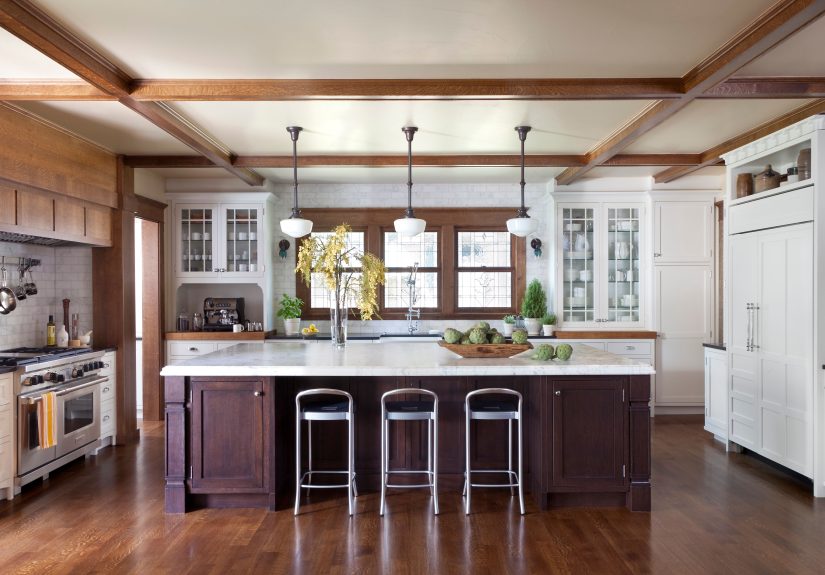
Add visual warmth and dimension. That might mean wood cabinetry, an accent island, richer paint colors, mixed metals, or natural stone with movement. Even a mostly white kitchen can feel updated if you break it up with texture, warmer undertones, or a few grounded materials. The goal is not chaos. The goal is a kitchen with a pulse.
2. You Have Too Much Open Shelving
Open shelving had a spectacular run. It looked airy in photos, it gave everyone a place to display three matching mugs and a decorative bowl of lemons, and it convinced countless homeowners that cabinets were somehow the enemy.
Then real life arrived. Dust arrived. Grease arrived. The random plastic cups from your kid’s last birthday party arrived. Designers now regularly point to excessive open shelving as one of the quickest ways a kitchen starts to feel dated and impractical. A little open display can still look charming, but walls of floating shelves often make a kitchen feel like it is trying too hard to audition for social media.
They can also create visual clutter, especially in smaller kitchens where every item is doing a lot of visual shouting. If your shelves look good only after a 45-minute styling session, that is your answer right there.
What to do instead
Use mostly closed storage and reserve open shelves for a small, intentional area. One or two shelves for cookbooks, handmade pottery, or everyday dishes can still work beautifully. The rest of the kitchen should earn its keep with cabinetry that hides the less glamorous stuff, like the air fryer manual you will never read.
3. Your Microwave Lives Over the Range
This one comes up again and again in designer advice, and for good reason. An over-the-range microwave is one of the strongest signals that a kitchen has not been updated in a while. It tends to interrupt the visual flow of the cooking wall, make the whole setup feel top-heavy, and limit your ability to install a hood that actually looks polished.
There is also the usability issue. Reaching up to grab hot food from above the stove is not exactly a luxury experience. And if you cook often, a well-designed vent hood is usually a much more attractive and functional choice than letting the microwave dominate the space.
What to do instead
Move the microwave to a lower built-in niche, an appliance garage, a pantry cabinet, or under the counter if your layout allows. This simple switch instantly makes the range wall feel more intentional and gives the kitchen a cleaner, more custom look.
4. Your Backsplash Is Busy, Trendy, or Fighting the Countertop
If your backsplash is doing acrobatics while your countertop is also trying to be the star, your kitchen may be suffering from a common outdated-kitchen condition: too many visual speeches happening at once.
Designers have been calling out heavily patterned mosaic tile, diagonal layouts, tiny glass tile, and overly fussy backsplash designs as details that can date a kitchen fast. The same goes for a backsplash that clashes with a bold granite counter in a sort of “may the loudest surface win” showdown.
In older kitchens, this mix often happened because every finish was selected as a separate statement piece. The result can feel fragmented rather than cohesive.
What to do instead
Keep the backsplash simpler and let it support the room rather than hijack it. Stacked tile, classic subway tile, zellige, slab backsplashes, and restrained stone applications tend to look fresher. If your countertop already has strong movement, the backsplash should calm things down. Not every surface needs a solo.
5. Your Cabinets Feel Overly Ornate, Distressed, or Locked Into One Old Trend
Cabinetry takes up a huge amount of visual space, so when it feels dated, the whole kitchen feels dated. One major sign is an overly themed cabinet style: heavily distressed finishes, ornate detailing, old Tuscan influences, faux antique effects, or farmhouse overload that leans more gift-shop rooster than timeless charm.
Another clue is when the cabinets feel too trend-specific. Certain warm woods, decorative trim combinations, or ultra-flat modern fronts can all start to look tired when they are not balanced by the rest of the design. It is less about banning one exact cabinet color forever and more about recognizing when the room is stuck in a past era without any flexibility.
What to do instead
Lean toward cabinetry that feels classic and clean, but not cold. Shaker styles still work when paired with the right details. So do simple slab fronts in the right home. Wood tones, painted finishes with depth, and thoughtfully chosen hardware can go a long way. If a full remodel is not in the cards, painting the cabinets, swapping hardware, and removing heavy decorative trim can make a dramatic difference.
6. Your Countertops and Finishes Feel Too Glossy or Too Heavy
Countertops can quietly age a kitchen faster than almost anything else. Dark, high-gloss granite, super-busy patterns, and surfaces that reflect every overhead bulb like a disco floor can make the room feel older than it is. The issue is usually not the material alone. It is the overall effect: shiny, heavy, and visually overwhelming.
Likewise, a kitchen with too many glossy finishes at once, from polished counters to slick cabinets to bright chrome everywhere, can feel more dated than deliberate. Designers today tend to favor finishes with more softness, texture, and natural character.
What to do instead
Choose surfaces that feel quieter and more grounded. Honed or leathered stone, warm wood accents, subtle veining, and finishes with a little texture generally age better than flashy alternatives. If you cannot replace the counters, try updating the surrounding elements, such as the backsplash, hardware, paint, or lighting, to reduce the “heavy and shiny” effect.
7. Your Lighting Is an Afterthought
An outdated kitchen often has one sad overhead fixture doing all the work while the rest of the room squints politely. Designers repeatedly say that poor lighting is one of the easiest ways to make a kitchen feel cheap, old, or unfinished.
If your space relies on a fluorescent box, a single builder-grade fixture, or lighting that casts strange shadows on every work surface, the kitchen will never feel as good as it could. And if the style of the light fixtures feels disconnected from the rest of the room, that is another clue your kitchen could use a refresh.
What to do instead
Layer the lighting. Combine ambient lighting with task lighting and decorative lighting. Add under-cabinet lights, pendants over an island, sconces where they make sense, and bulbs with a warm, flattering tone. Good lighting makes finishes look better, improves function, and instantly upgrades the feel of the room. It is one of the few kitchen updates that can be both practical and a little magical.
How to Update an Outdated Kitchen Without Gutting It
The good news is that an outdated kitchen does not always need a full demolition montage. You can modernize the room by targeting the details designers mention most often. Start with the elements that visually dominate the space: cabinet color, hardware, lighting, backsplash, and appliance placement. Even one or two smart changes can make the room feel significantly more current.
Focus on warmth, function, and restraint. Those three ideas show up constantly in modern kitchen design. Warmth keeps the room from feeling cold and generic. Function prevents trendy mistakes that become annoying after a month. Restraint saves you from choosing finishes that look exciting now and exhausting later.
If you are wondering where to begin, try this order: declutter the visible surfaces, swap dated light fixtures, update hardware, repaint cabinets if needed, and rethink any aggressively trendy features. In many kitchens, that sequence delivers a surprisingly big transformation without turning your house into a construction zone for half a year.
Final Thoughts
The most obvious sign your kitchen is outdated is not one exact material or one forbidden color. It is when the room no longer fits the way people actually live. Designers are moving away from kitchens that feel overly staged, overly themed, or overly committed to trends that prioritized looks over livability.
A current kitchen feels layered, useful, and personal. It has storage that works, lighting that flatters, finishes that cooperate, and enough warmth to make people want to stay for a second cup of coffee. So if your kitchen still has a microwave throne above the stove, a backsplash with main-character syndrome, and shelves that demand constant styling, consider that your nudge. Not a judgment. Just a loving little design intervention.
Experiences Homeowners Commonly Have With an Outdated Kitchen
One of the most common experiences people describe is that their kitchen looks “fine” in photos but feels frustrating in real life. The room may be clean, the finishes may still be in decent shape, and nothing is technically broken, yet the kitchen somehow feels tired every single day. That disconnect is often the first clue. A space can be perfectly functional on paper and still feel old because the layout, storage, lighting, or finishes no longer match how a household actually uses the room.
Another common experience is visual fatigue. Homeowners get used to a busy backsplash, dark counters, bulky cabinet details, or too much open shelving until one day they visit a friend’s home, a showroom, or even a café and suddenly realize their own kitchen feels much heavier. It is not always dramatic. Sometimes the shift is subtle. They just notice that other kitchens feel calmer, brighter, and easier to be in. That moment of comparison is often what sparks the first update.
People also talk about the daily annoyance of impractical design trends. Open shelves looked beautiful at first, but now they are full of mismatched glasses and a thin layer of cooking dust. The microwave over the range seemed like a smart space saver, until someone had to lift soup over a steaming pot. A trendy all-white palette looked crisp for a while, but now every scuff, crumb, and splash seems determined to audition for a close-up. These are small frustrations, but they add up quickly.
Lighting is another big one. Many homeowners do not realize how much bad lighting affects their experience until they replace it. Before the update, the kitchen may feel dim in the morning, harsh at night, and oddly uninviting all day long. After adding under-cabinet lighting or replacing a dated fixture with layered lighting, the space suddenly feels more expensive and more usable, even if nothing else changes. It is one of those upgrades people wish they had done much sooner.
There is also an emotional side to an outdated kitchen. Because kitchens are used so often, people feel their flaws more personally than they do in other rooms. A dated guest room can hide quietly in the background. A dated kitchen announces itself every morning while you make coffee and every evening while you unload groceries. That constant interaction can create low-level irritation, especially when the room does not reflect your taste anymore.
At the same time, many homeowners say the biggest surprise is how little it took to make the kitchen feel new again. They expected a massive renovation, then discovered that painting cabinets, replacing hardware, simplifying the backsplash, improving lighting, and reducing visible clutter changed the entire mood of the space. In other words, the experience of living with an outdated kitchen can be irritating, but the experience of updating it does not always have to be extreme. Sometimes the room is not asking for a total identity crisis. It just wants better choices and fewer design decisions from 2014 lingering in the corners.