Table of Contents >> Show >> Hide
- How We Chose the Best Iron Supplements
- Quick List: The 8 Best Iron Supplements of 2024
- 1. Thorne Iron Bisglycinate Best Overall
- 2. Nature Made Iron 65 mg Best Value High-Potency Pick
- 3. NOW Iron 18 mg Best Gentle Low-Dose Option
- 4. Slow Fe Best Slow-Release Iron Supplement
- 5. Vitron-C Best Iron Plus Vitamin C Combo
- 6. MegaFood Blood Builder Best Vegan Iron Supplement
- 7. Garden of Life Vitamin Code Healthy Blood Best Iron Complex
- 8. MaryRuth’s Liquid Iron Best Liquid Iron Supplement
- What to Know Before You Buy an Iron Supplement
- Which Iron Supplement Is Best for You?
- Real-Life Experiences With Iron Supplements: What People Commonly Notice
- Conclusion
- SEO Tags
Shopping for an iron supplement can feel a little like online dating: every option claims to be gentle, effective, and exactly what you need, but not every match is going to treat your stomach kindly. That is why this guide focuses on what actually matters: iron form, dose, absorption, tolerability, quality testing, and whether a product makes sense for your real life.
Iron is essential for making hemoglobin, the protein in red blood cells that helps move oxygen through your body. When iron runs low, people may notice fatigue, weakness, headaches, shortness of breath, poor concentration, or that vague “why do I feel like my phone battery is at 3%?” feeling. But here is the important catch: not everyone with low energy needs iron, and too much iron can be harmful. For adults, recommended intake varies widely by age and life stage, and many treatment-strength supplements go far above everyday nutrition levels because they are designed for deficiency, not casual wellness.
So instead of chasing the loudest bottle on the shelf, the smarter move is to look for the right type of iron for your needs. Ferrous sulfate is common and effective, but it can be rough on the stomach. Chelated forms like iron bisglycinate are often easier to tolerate. Carbonyl iron can be gentler for some people. Slow-release formulas may help with digestive drama, though they are not perfect for everyone. And if swallowing pills feels like a personal betrayal, liquid options exist too.
How We Chose the Best Iron Supplements
This list was built around medical guidance and 2024-style supplement selection criteria, not hype. The main filters were simple:
- Form of iron: ferrous sulfate, bisglycinate, carbonyl iron, and slow-release options all behave a little differently.
- Dose: some products are better for full replacement, while others are better for gentler maintenance.
- Absorption support: vitamin C can help, while calcium, coffee, tea, and antacids can interfere.
- Digestive comfort: constipation, nausea, and stomach upset are common reasons people quit too early.
- Quality signals: third-party verification, strong brand testing, and transparent labeling matter.
- Format: capsule, tablet, slow-release tablet, or liquid, because not everyone wants to wrestle with horse pills before breakfast.
One more reality check: “best” does not mean “best for every human with a pulse.” The best iron supplement is the one that fits your lab results, symptoms, diet, health history, and tolerance level.
Quick List: The 8 Best Iron Supplements of 2024
- Thorne Iron Bisglycinate Best overall
- Nature Made Iron 65 mg Best value high-potency pick
- NOW Iron 18 mg Best gentle low-dose option
- Slow Fe Best slow-release iron supplement
- Vitron-C Best iron plus vitamin C combo
- MegaFood Blood Builder Best vegan iron supplement
- Garden of Life Vitamin Code Healthy Blood Best iron complex
- MaryRuth’s Liquid Iron Best liquid iron supplement
1. Thorne Iron Bisglycinate Best Overall
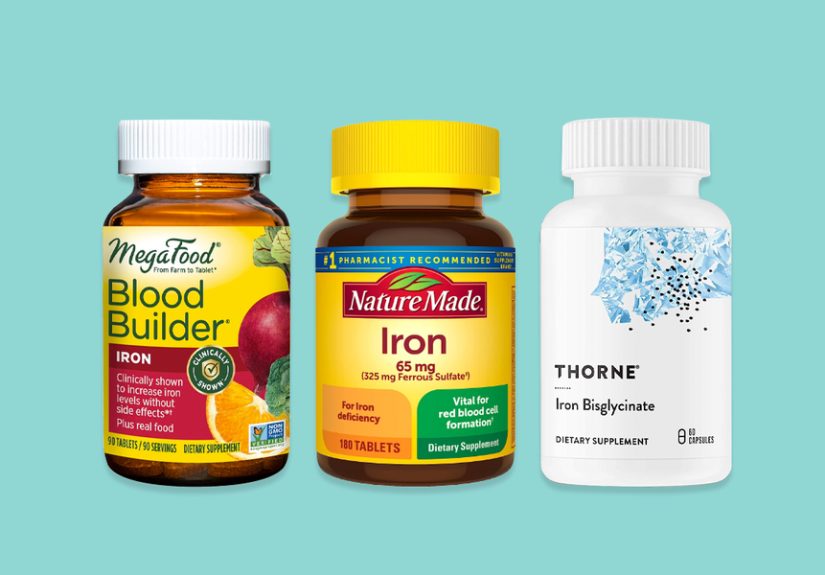
If you want the supplement most likely to satisfy both your doctor and your digestive tract, Thorne Iron Bisglycinate is a strong place to start. It delivers 25 mg of iron in a chelated bisglycinate form, which is often better tolerated than old-school ferrous sulfate. That makes it especially appealing for people who have tried iron before and quit because their stomach staged a protest.
It also earns points for being simple: one capsule daily, no kitchen-sink formula, no weird candy energy. Thorne is also an appealing choice for athletes because of its quality credentials. The downside is that it does not include vitamin C, so you may want to take it with a vitamin C-rich snack or drink. For many adults with low ferritin or mild iron deficiency who want a balanced mix of absorption and comfort, this is the cleanest all-around pick.
2. Nature Made Iron 65 mg Best Value High-Potency Pick
Nature Made Iron 65 mg is the “gets the job done without charging boutique prices” option. It uses 65 mg of iron from ferrous sulfate, a very common therapeutic form. This is a potent dose, which is one reason it often shows up in doctor-recommended routines for iron deficiency. It is also USP Verified, which gives budget-minded shoppers a nice extra layer of confidence about quality and label accuracy.
The tradeoff is predictable: ferrous sulfate is effective, but it is not always the gentlest guest at the digestive dinner party. If you know you are prone to nausea, constipation, or abdominal discomfort, this may feel a little intense. But if cost matters, your provider wants a straightforward higher-dose tablet, and you do not need extra bells and whistles, this one is a dependable value play.
3. NOW Iron 18 mg Best Gentle Low-Dose Option
Not everyone needs a heavy-duty dose. Sometimes the goal is to maintain iron status, support a borderline low level, or use a form that is less likely to start a feud with your stomach. NOW Iron 18 mg fits that lane well. It uses Ferrochel iron bisglycinate, a chelated form associated with fewer gastrointestinal issues than harsher iron salts.
This one is especially useful for people who want a more modest dose, vegetarians who need extra support, or anyone who has been scared off by constipation stories from friends, relatives, or the internet’s favorite oversharers. It is also vegan-friendly and relatively affordable. The main limitation is obvious: 18 mg may not be enough for everyone with confirmed deficiency, especially if a clinician is aiming for faster repletion. Think of it as the calmer, quieter option, not the loudest one in the room.
4. Slow Fe Best Slow-Release Iron Supplement
Slow Fe has been around for a reason. It uses ferrous sulfate in a controlled-release format designed to deliver high-potency iron more gradually, which may help reduce some of the nausea and abdominal discomfort that standard iron tablets can cause. If you need a stronger supplement but traditional tablets make your stomach feel like it lost a bar fight, Slow Fe is worth considering.
Its strength is convenience too: one daily tablet, no complicated routine, and a familiar brand that many healthcare professionals know well. The caution here is that slow-release does not guarantee zero side effects, and some clinicians still prefer immediate-release products depending on the situation. Still, for adults who need a potent iron supplement but want a gentler ride, Slow Fe remains one of the most practical middle-ground options.
5. Vitron-C Best Iron Plus Vitamin C Combo
Vitron-C is a smart choice for people who want absorption support built into the formula. It combines 65 mg of elemental iron as carbonyl iron with 125 mg of vitamin C, which helps the body absorb iron more effectively. Carbonyl iron is also often marketed as gentler on the stomach than some traditional iron salts, making this a nice hybrid of potency and practicality.
This supplement works particularly well for adults who want a once-daily tablet and do not want to think too hard about pairing iron with orange juice, berries, or other vitamin C foods. It is still a high-potency supplement, though, so it is not something to take casually just because you feel a little tired on a Tuesday. If your provider has confirmed low iron and you want a strong formula with built-in absorption backup, Vitron-C is one of the most sensible choices on the shelf.
6. MegaFood Blood Builder Best Vegan Iron Supplement
MegaFood Blood Builder has earned a loyal following because it tries to solve the iron-supplement dilemma in one sentence: effective, but not miserable. It provides 26 mg of iron along with vitamin C, folic acid, and vitamin B12, and it is designed to be gentle enough for many people to take even on an empty stomach. It is also vegan, which matters for shoppers who want plant-friendly support without sacrificing function.
What makes Blood Builder especially appealing is that it feels less like a blunt-force product and more like a thoughtfully built formula for red blood cell support. It is a strong pick for menstruating adults, vegans, vegetarians, athletes, and anyone whose low iron risk is not exactly a mystery. It is usually pricier than basic ferrous sulfate, but the gentler experience may be worth it if cheaper tablets keep ending their career in the back of your medicine cabinet.
7. Garden of Life Vitamin Code Healthy Blood Best Iron Complex
If you like the idea of iron plus extra nutritional backup, Garden of Life Vitamin Code Healthy Blood is the best iron complex on this list. It offers about 28 mg of gentle, whole-food-style iron along with vitamin C, vitamin B12, and folate to support absorption and blood health. It also includes probiotics and enzymes, which adds a digestion-support angle that some people appreciate.
This is a good fit for shoppers who want more than a plain iron pill and prefer a broader “healthy blood” formula. It also checks several lifestyle boxes, including vegan and gluten-free credentials. The main downside is that more ingredients do not automatically mean better for everyone. If you want a minimalist supplement, this may feel like a bit much. But if you want an iron-plus formula that covers several supportive nutrients in one go, this is a strong contender.
8. MaryRuth’s Liquid Iron Best Liquid Iron Supplement
For people who cannot stand swallowing pills, MaryRuth’s Liquid Iron is the escape hatch. It is a vegan liquid formula that uses a chelated form of iron and delivers a convenient liquid format that can be easier for some adults to tolerate and easier to customize than a fixed tablet. Liquid iron is also appealing for people who want flexibility, whether that means mixing it into a drink or adjusting their routine more easily.
The big appeal here is usability. A supplement that looks perfect on paper is worthless if you hate taking it. If capsules make you gag, if tablets feel like gravel, or if you simply prefer liquid supplements, this option deserves a serious look. The only catch is that liquid products can be a little less grab-and-go than a capsule bottle, and some people still prefer a formula with added vitamin C. But for sheer ease of use, this is a smart pick.
What to Know Before You Buy an Iron Supplement
1. Test first, do not guess
Low energy alone does not prove iron deficiency. Healthcare professionals often use hemoglobin and ferritin testing to evaluate iron status. If you are a man, postmenopausal adult, or someone with unexplained anemia, the cause may need more investigation than “buy supplement, hope for miracle.”
2. Dose matters more than branding
Adult iron needs vary. For example, adult men generally need less iron than menstruating women, and pregnancy needs are higher still. A trendy formula is not automatically the right formula for your situation.
3. Timing can make a big difference
Iron is often best absorbed on an empty stomach, but many people tolerate it better with a small amount of food. Vitamin C can help absorption. Coffee, tea, calcium, milk, and antacids can get in the way, so spacing matters.
4. Expect some digestive weirdness
Constipation, nausea, stomach pain, diarrhea, and dark stools are all common. Black stools can be normal with iron. If side effects are rough, a gentler form like bisglycinate or a different format may help.
5. Keep iron far away from children
This is non-negotiable. Accidental overdose of iron-containing products can be dangerous, especially in young children.
Which Iron Supplement Is Best for You?
- Choose Thorne if you want the best overall balance of absorption and stomach-friendliness.
- Choose Nature Made if you want a budget-friendly, high-potency option with USP verification.
- Choose NOW if you want a gentler, lower-dose daily option.
- Choose Slow Fe if you need potency but want a slow-release format.
- Choose Vitron-C if you want vitamin C built in for convenience.
- Choose MegaFood if you want a vegan formula with a gentle reputation.
- Choose Garden of Life if you want a broader blood-support complex.
- Choose MaryRuth’s if you need a liquid formula that is easier to take.
Real-Life Experiences With Iron Supplements: What People Commonly Notice
Let’s talk about the part supplement labels never really capture: the actual experience of taking iron. Not the glamorous fantasy version where you swallow one capsule and immediately feel like a superhero with excellent posture. The real version is slower, a little messier, and often much more ordinary.
For many people, the first week is less about “wow, my energy is back” and more about logistics. When should I take this? With food or without food? Why does my stomach suddenly have opinions? Why did nobody warn me that iron and coffee are not exactly best friends? These are normal questions. A lot of users discover pretty quickly that the right supplement is not just about the ingredient list. It is about whether the routine fits everyday life.
Some people do perfectly fine with a classic ferrous sulfate tablet. They take it, move on, and never think about it again. Other people take one dose and immediately begin negotiating with the universe. That is why gentler forms, like iron bisglycinate or carbonyl iron, get so much attention. When a supplement is easier to tolerate, people are more likely to keep taking it long enough for it to actually help. Compliance is not a glamorous word, but it matters. An “effective” supplement you stop after five days is not especially effective in real life.
Another common experience is impatience. Iron is not coffee. It is not an energy drink. It does not work by flipping a light switch. Some people start noticing improvement in how they feel after a week or two, but rebuilding iron stores usually takes longer. That means the emotional side of low iron can be frustrating. People want fast relief from fatigue, brain fog, exercise intolerance, or feeling chilled all the time. Instead, they often get gradual progress. More “slow sunrise” than “Broadway spotlight.”
Digestive side effects also shape the experience more than people expect. Constipation is the complaint that gets the most attention, but nausea, stomach cramps, and a heavy feeling in the gut are common too. Many people end up learning tiny survival tricks: taking iron later in the day, using a smaller meal, switching formulas, adding more fluids, spacing it away from calcium, or pairing it with vitamin C-rich foods. None of these tricks are especially exciting, but they are the sort of practical details that make a supplement sustainable.
Then there is the weirdly alarming but usually harmless black stool situation. It surprises people every single year, as if iron supplements and dramatic bathroom moments signed a long-term contract. It can be normal, but it still catches people off guard if no one tells them ahead of time.
One of the most relatable iron-supplement experiences is the “trial-and-error phase.” A person starts with a high-potency tablet because it is cheap. Their stomach objects. They switch to a bisglycinate capsule. That goes better, but the dose may be lower than what their clinician wants. Then they try a product with vitamin C built in. Or a liquid. Or a slow-release tablet. Eventually, they land on something they can tolerate well enough to stay consistent with. That process is not failure. It is actually pretty normal.
And once the right product clicks, the most meaningful changes are often subtle before they are dramatic. People may first notice that walking upstairs feels less rude. Afternoon energy stops falling off a cliff. Work feels less foggy. Exercise becomes less punishing. That is the encouraging part: iron support can be genuinely helpful when it is appropriate. The trick is choosing a supplement that your body, your stomach, and your daily routine will all agree to tolerate.
Conclusion
The best iron supplements of 2024 are not all trying to do the same job, and that is exactly the point. Thorne stands out as the best overall choice for many adults. Nature Made is the value-heavy workhorse. NOW is a gentle low-dose favorite. Slow Fe offers a smarter route for people who want a slow-release format. Vitron-C builds in vitamin C. MegaFood and Garden of Life appeal to shoppers who want broader support, while MaryRuth’s proves that liquid iron does not have to be an afterthought.
If you suspect low iron, start with testing and medical guidance, then choose the formula that fits your dose needs and digestive tolerance. The best supplement is not the fanciest bottle. It is the one that helps you stick with the plan long enough to actually feel like yourself again.