Table of Contents >> Show >> Hide
- 1. Clothes That No Longer Fit, Flatter, or Fit Your Life
- 2. Sentimental Keepsakes and “Someday” Pieces
- 3. Important Documents and Loose Paperwork
- 4. Cash, Jewelry, and Other Valuables
- 5. Food, Snacks, and Pet Supplies
- 6. Dirty Laundry, Damp Towels, and Sweaty Gear
- 7. Bulky Linens, Luggage, Empty Boxes, and Random Oversized Extras
- 8. Cleaning Products, Chemicals, and Flammable Materials
- How to Reset Your Closet Without Losing a Weekend
- Common Closet Experiences Organizers See Again and Again
- Conclusion
- SEO Tags
A closet is supposed to make life easier. You open the door, see what you own, grab what you need, and leave the house feeling like a functioning adult. In reality, many closets become tiny museums of bad decisions: jeans from 2017, a stack of gift boxes “too nice to throw away,” mystery paperwork, one lonely yoga mat, and enough wire hangers to start a small metal sculpture exhibit.
Professional organizers keep repeating the same message for a reason: closets work best when they store the things you actually wear and use. The more a closet turns into overflow storage, the harder it becomes to get dressed, stay tidy, and protect the items that truly matter. If your closet is packed but somehow still “has nothing in it,” there is a very good chance the problem is not size. It is storage strategy.
Below are eight things organizers say should never live in your closet, plus smarter alternatives that help you reclaim space, reduce clutter, and make your everyday routine much less dramatic.
1. Clothes That No Longer Fit, Flatter, or Fit Your Life
Let’s start with the obvious culprit: clothing you do not wear. This includes pieces that no longer fit, feel uncomfortable, need repairs you are never going to schedule, or belong to a version of your life that quietly moved out years ago.
Organizers often say your closet should support your current life, not your fantasy life. That means the “goal jeans,” the blazer for a corporate office you left three jobs ago, and the scratchy sweater you keep because it was expensive are all prime candidates for removal. These items crowd your active wardrobe and make getting dressed harder, not easier.
Why it is a problem
When your closet is packed with clothes you do not actually wear, your usable wardrobe disappears in plain sight. You waste time digging, second-guessing, and re-hanging things you do not even want. That clutter also creates guilt, which is a terrible accessory and goes with nothing.
What to do instead
Keep only what fits, feels good, and suits your life right now. Donate wearable items, recycle worn-out textiles when possible, and set a calendar reminder to review your wardrobe every season. Your closet should be a working tool, not an emotional hostage situation.
2. Sentimental Keepsakes and “Someday” Pieces
Your closet is not the ideal home for memory storage. Wedding attire, old concert T-shirts, baby keepsakes, heirloom garments, and clothing with emotional value can easily take over shelves and rods meant for everyday use.
This category also includes “someday” items: the dress you might tailor, the costume pieces you may need for an event that does not exist, or the handbag you are saving for a future version of yourself who attends more galas. Organizers are not anti-sentiment. They are anti-chaos.
Why it is a problem
Sentimental items are usually not worn often, if ever. When they sit in your main closet, they create visual noise and make storage less efficient. They also deserve better protection than being crushed between a raincoat and a cardigan you wear to the grocery store.
What to do instead
Create a separate memory bin, archival box, or labeled keepsake container stored in a safe, clean, temperature-stable space. That way you are not getting rid of meaningful items, but you are also not asking them to share rent with your work shirts.
3. Important Documents and Loose Paperwork
Closets are a common hiding place for paperwork because it feels safer than leaving papers out in the open. But stuffing tax forms, passports, warranties, medical records, school papers, and legal documents into closet bins or random shoeboxes is not an organizing system. It is just a delayed scavenger hunt.
Professional organizers regularly warn that documents get lost easily in closets, especially when mixed with clothing, accessories, and storage bins. Paper also bends, tears, and becomes difficult to retrieve quickly when you actually need it.
Why it is a problem
You do not want to be elbow-deep in winter scarves when someone asks for a birth certificate. Important documents need to be both protected and accessible. A closet is often too cluttered, too inconsistent, and too inconvenient for that job.
What to do instead
Use a labeled file drawer, portable document case, or fire-resistant file box. Group papers by category such as finance, medical, home, school, and identification. The goal is fast access, not a paper avalanche every April.
4. Cash, Jewelry, and Other Valuables
Many people treat the closet like a secret hiding place. Cash in a sweater pocket. Jewelry in a little pouch on the top shelf. A watch box behind handbags. It feels clever until it becomes a security issue or you forget where you tucked something “safe.”
Organizers frequently point out that closets are predictable hiding spots. They are also easy places for small valuables to get knocked over, buried, or misplaced during a routine clean-out. In short, your closet is excellent at hiding things from you too.
Why it is a problem
Valuables need better protection than a dark shelf and good intentions. They can also be damaged by dust, tangling, poor storage, or simple forgetfulness. If an item is financially valuable or personally irreplaceable, it deserves more than the “I think it was behind the hats” treatment.
What to do instead
Store high-value jewelry and cash in a proper safe, secure drawer, or bank safe-deposit option when appropriate. For everyday accessories, use compartmentalized trays or lined jewelry organizers in a designated area where you can actually see what you own.
5. Food, Snacks, and Pet Supplies
If your closet contains crackers, candy, protein bars, pet food, treats, or anything fragrant enough to interest a nose with four legs or six legs, it is time for a reset. Organizers consistently call out food as one of the worst closet-storage mistakes because it introduces odors, crumbs, and the possibility of pests.
Pet supplies bring similar issues. Bags of food, toys, grooming items, and litter-related supplies can create dust, smells, and clutter that do not belong near clothing and fabric accessories.
Why it is a problem
Closets are enclosed spaces. That means odors linger, crumbs hide, and spills go unnoticed longer than they should. Even if nothing dramatic happens, your clothes do not need to marinate beside jerky sticks and dog biscuits.
What to do instead
Keep food in the pantry or kitchen storage areas, and set up a dedicated pet zone in a utility space, mudroom, cabinet, or laundry area. Store pet supplies in washable bins with clear labels so they are easy to grab without taking over your wardrobe zone.
6. Dirty Laundry, Damp Towels, and Sweaty Gear
This one sneaks up on people because it feels efficient. The closet is near the clothes, so why not put the hamper in there too? The answer is simple: trapped odors. Organizers often caution against keeping dirty laundry in a closed closet, especially workout clothes, damp towels, or anything that is not fully dry.
It may look tidier to hide laundry behind a door, but the smell has other plans. Dampness and poor airflow can also lead to stale fabric, mustiness, and extra closet funk you did not order.
Why it is a problem
Closets need air circulation. Dirty or damp items create the exact opposite environment. Over time, the entire closet can start smelling tired, and clean clothes may pick up that lovely “I forgot a gym bag in the car” aroma.
What to do instead
Use a breathable hamper in a laundry room, bathroom, or open bedroom corner with better airflow. Always let damp items dry fully before tossing them into a hamper. Your clean clothes should not have to live next to their sweaty cousins.
7. Bulky Linens, Luggage, Empty Boxes, and Random Oversized Extras
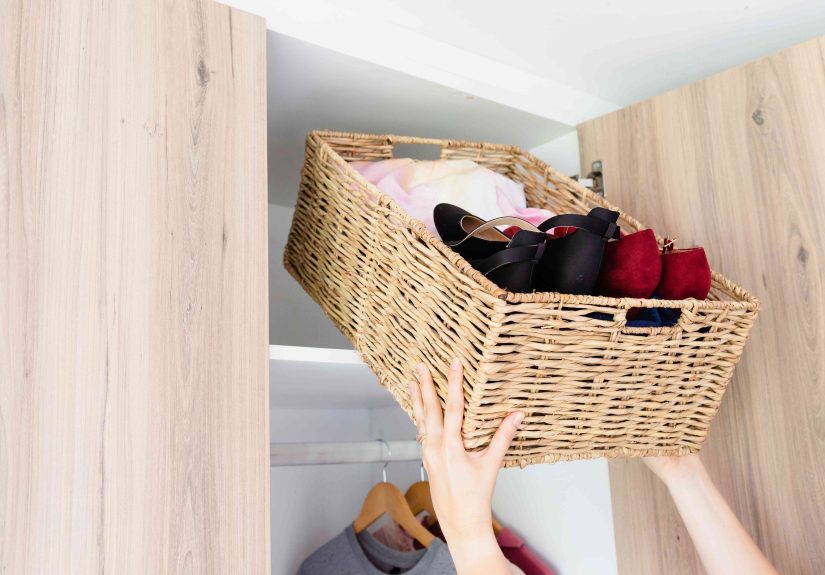
Closets often become default storage for bulky items that do not have a clear home. Extra bedding, pillows, towels, suitcases, shopping bags, gift boxes, and old packaging somehow end up stacked on the top shelf like a chaotic game of storage Tetris.
Organizers routinely say this is one of the fastest ways to make a closet feel stuffed and unusable. These items take up valuable real estate and often prevent you from seeing or reaching what belongs there. Empty boxes are particularly sneaky because they feel useful. Someday. Possibly. Maybe never.
Why it is a problem
Bulky extras waste the easiest space to reclaim. They also make closets visually stressful. A closet full of giant items is harder to maintain, harder to clean, and much more likely to become a drop zone for unrelated clutter.
What to do instead
Store linens in a linen closet or near the room where they are used. Keep luggage in a guest room, under a bed, or in a designated storage area. Recycle empty boxes you do not truly need, and limit saved packaging to a small, clearly defined amount.
8. Cleaning Products, Chemicals, and Flammable Materials
This is where clutter crosses into safety. Organizers and home experts alike warn against storing cleaning supplies, paint-related materials, solvents, aerosols, or other flammable or chemical products in bedroom or clothing closets. These items can leak, smell, stain, and create unnecessary risk.
Even mild cleaning products can transfer odor to fabrics. Stronger products bring bigger concerns, especially in enclosed spaces or homes with children and pets. Your closet should smell like fabric, not like a hardware aisle with ambition.
Why it is a problem
Chemicals and flammables do not belong next to clothing, bedding, or paper goods. Spills can ruin fabric, fumes can linger, and safety hazards are never a cute organizing choice.
What to do instead
Move these products to a locked utility cabinet, laundry room storage area, or another appropriate location that is cool, dry, and better suited to household supplies. Use original containers, close lids tightly, and keep products away from living-space fabrics whenever possible.
How to Reset Your Closet Without Losing a Weekend
If this list made you side-eye your closet door, good. That means your instincts are working. The fastest way to improve closet organization is to redefine the space. A closet should primarily hold active clothing, shoes, and accessories that support your current routine. That is the whole job description.
Start by pulling out anything that clearly belongs in one of the eight categories above. Then group what remains into simple zones: everyday hanging clothes, folded items, accessories, shoes, and seasonal overflow. Use matching hangers where possible, containers for small categories, and labels for anything stored out of sight. Keep the most-used items at eye level and the least-used items higher up or elsewhere.
The goal is not magazine perfection. It is function. You want a closet that helps you get dressed faster, protects your clothes, and does not try to double as a filing cabinet, pantry, memory box, and chemical depot all at once.
Common Closet Experiences Organizers See Again and Again
One of the most common experiences people describe is the “full closet, nothing to wear” problem. The rod is packed. Shelves are overflowing. Yet getting dressed still feels frustrating. In many cases, that is not because the person lacks clothing. It is because the closet is crowded with low-value items that do not belong there. Once people remove paperwork, random boxes, damaged clothes, and sentimental overflow, they are often shocked by how much easier mornings become. Suddenly the closet is not fighting back.
Another familiar experience is discovering that the closet has become a hiding place rather than a storage system. People tuck in things they do not want to deal with right now: shopping bags, gift wrap, spare cords, old receipts, dry-cleaning plastic, and clothes that need tailoring. None of these decisions feels dramatic in the moment. But over time, the closet turns into a holding pen for unfinished business. Organizers often say clutter grows quietly. That is exactly what happens here. A few harmless “for now” items slowly become the reason you cannot find your black pants.
There is also the emotional side. Many people feel guilt about getting rid of expensive clothing, even when it does not fit or has not been worn in years. Others hold on to sentimental garments because they are afraid that letting go of the item means letting go of the memory. In practice, the opposite is often true. When meaningful items are separated from everyday clutter and stored intentionally, they feel more respected. And when unworn clothes leave the closet, the remaining wardrobe reflects the person you are now, not every version of you that ever bought a cardigan on sale.
Closet laundry habits create another very real experience: odor creep. People often do not notice it at first because it happens gradually. A hamper hidden in the closet seems practical until clean clothes begin smelling stale or the entire space feels stuffy. The same thing happens with damp towels, gym clothes, or pet items. Enclosed spaces hold onto smells, and fabrics are extremely good at absorbing them. Moving those items elsewhere can make a closet feel cleaner almost immediately, even before any fancy bins or shelf dividers show up.
Then there is the top shelf phenomenon, where bulky bedding, empty boxes, and luggage form a leaning tower of “I might need this later.” This area tends to become storage for items people do not want to think about often. But when oversized extras live above your clothes, they make the whole closet feel heavier and more chaotic. Organizers frequently note that once the top shelf is edited down, the closet looks calmer in a way people can feel right away.
Perhaps the most encouraging experience is what happens after a proper edit. People usually expect the result to be just more space. What they do not expect is more ease. They stop rebuying items they forgot they owned. They spend less time searching. They notice the pieces they love. Their closet becomes easier to maintain because it is no longer being asked to perform six unrelated jobs. In other words, the best closet transformation is not about making your space look expensive. It is about making your daily life feel less annoying.
Conclusion
The best closets are not the biggest ones. They are the most intentional. If you stop using your closet as a universal backup storage zone and start treating it like a support system for your everyday routine, everything gets easier. Clothing is easier to see, laundry is easier to manage, important items are easier to protect, and clutter has fewer places to hide.
So the next time you open that closet door, ask one simple question: does this item help my closet do its real job? If the answer is no, it probably needs a new home. Harsh? Maybe. Effective? Absolutely.