Table of Contents >> Show >> Hide
- First, Identify What You’re Working With (Hydraulic vs. Electric)
- 1) Check the Fluid Level (and Stop the Leak That Made It Low)
- 2) Use the Correct Fluid Type (Your Steering Seals Have Opinions)
- 3) Inspect for Leaks and Worn Hoses (Because Gravity Always Wins)
- 4) Flush or Exchange Old, Contaminated Fluid (Clean Fluid = Calm Steering)
- 5) Bleed Air Out of the System (Air Bubbles Don’t Do Pressure)
- 6) Check the Serpentine Belt and Tensioner (A Slipping Belt = A Struggling Pump)
- 7) Evaluate the Pump (Noise Is Information)
- 8) Don’t Ignore the Steering Rack, Linkage, and Suspension (The “Other Half” of Steering Feel)
- 9) Improve the Inputs: Tire Pressure, Tires, and Alignment (Yes, This Counts)
- Bonus Tip: If You Have Electric Power Steering, Start With Voltage and Diagnostics
- Conclusion: Better Power Steering Is Usually Better Basics
- Experiences From the Road: What Actually Helped (and What Didn’t)
If your steering wheel suddenly feels like it’s auditioning for an arm-wrestling competition, your power steering is trying to tell you something.
The good news: most “my steering feels weird” problems have a short list of usual suspectsfluid, air, belts, tires, alignment, or an electronic system
that’s mad about voltage. The better news: you can often improve steering feel and prevent expensive failures with smart maintenance and a little
detective work (the kind that doesn’t require a magnifying glassjust eyeballs and common sense).
This guide covers nine practical ways to improve power steeringfor both traditional hydraulic systems (fluid + pump) and modern
electric power steering (EPS) systems (motors + sensors + computers). You’ll learn what to check, why it matters, and when it’s time to hand the keys
to a professional. Because steering is not the place to “wing it.” Steering is the place to “arrive alive.”
First, Identify What You’re Working With (Hydraulic vs. Electric)
Not every vehicle uses power steering fluid anymore. Many newer cars use EPS, which relies on an electric motor and sensors instead of a hydraulic pump.
If you pop the hood and can’t find a power steering fluid reservoir, that may be normal. Before you buy a bottle of “miracle fluid,” check your
owner’s manual or the under-hood label. Using the wrong fluidor adding fluid to a system that doesn’t take anycan turn a small annoyance into a big repair bill.
Also, separate “power steering feel” from “steering behavior.” A stiff wheel at parking speeds can be a power assist issue, but a car that pulls,
wanders, or feels twitchy may be tires, alignment, or suspension. We’ll cover both, because your steering system doesn’t live in isolationit lives in a world
full of potholes, curbs, and questionable life choices.
1) Check the Fluid Level (and Stop the Leak That Made It Low)
For hydraulic power steering, fluid is the lifeblood of the system. Low fluid can cause stiff steering, whining, and
inconsistent assistespecially at low speeds when you need it most. Check the reservoir level using the “MIN/MAX” marks or dipstick (some caps have one built in).
Top off only to the correct leveloverfilling can cause foaming and messy overflow.
Make it better, not just “less bad”
- If it’s low, assume there’s a leak. Fluid doesn’t evaporate like a guilty conscience.
- Check when cold vs. hot if your dipstick has separate marks.
- Don’t mix random fluids. Some cars use dedicated power steering fluid; others specify ATF or special hydraulic fluid.
If you have to add fluid repeatedly, fix the leak. Otherwise, you’re basically refilling a bathtub with the drain openonly louder.
2) Use the Correct Fluid Type (Your Steering Seals Have Opinions)
“Power steering fluid” is not always a one-size-fits-all situation. Many vehicles specify a particular type of fluid (sometimes ATF, sometimes a dedicated
power steering fluid, sometimes a manufacturer-specific hydraulic fluid). The wrong fluid can cause seal swelling, noise, sluggish assist, or long-term damage.
The quickest way to improve steering feel is often the simplest: use what the manufacturer calls for.
Quick examples of what “wrong fluid” can look like
- Steering feels fine at first, then gets noisy after a few days.
- Fluid looks foamy or the reservoir bubbles after turning.
- Seeps and leaks increase because seals don’t like the chemistry party you started.
If you’re unsure, the owner’s manual is the final boss of “what fluid do I use?” Beat the boss. Win the steering.
3) Inspect for Leaks and Worn Hoses (Because Gravity Always Wins)
If your power steering fluid is low, the system is telling you: “I’m leaking somewhere.” Common leak points include hose connections, return lines,
pump seals, and the steering rack or steering gear. Even a small seep can let air into the system, which turns your steering into a groaning, whining,
attention-seeking drama queen.
What to look for
- Wet spots around hose crimps, clamps, and fittings
- Oily grime on the pump body or rack boots
- Drips on the driveway that appear after parking
Fixing leaks improves steering feel because the system can hold steady pressureand because it stops sucking in air like a busted milkshake straw.
4) Flush or Exchange Old, Contaminated Fluid (Clean Fluid = Calm Steering)
Over time, power steering fluid can darken, collect debris, or become contaminated with moisture and wear particles. Old fluid may contribute to noisy pumps,
sticky valves, and inconsistent assist. If your fluid looks very dark, milky, or gritty, a fluid exchange or flush
can noticeably improve steering smoothness.
When a flush is more than “nice to have”
- You bought the car used and have no clue when the fluid was last changed.
- The pump whines even when the fluid level is correct.
- You replaced a steering component (pump, hose, rack) and want a clean baseline.
Important: “Flush” can mean different procedures depending on the vehicle. If you’re not comfortable, have a shop do it. Steering is a safety systemthis is not the time
for DIY improv comedy.
5) Bleed Air Out of the System (Air Bubbles Don’t Do Pressure)
Air trapped in a hydraulic power steering system can cause growling, whining, jerky assist, and a steering wheel that feels
inconsistentfine one moment, heavy the next. Air often gets introduced after a leak, a low-fluid event, or a component replacement. Bleeding removes trapped air so
the pump can move solid fluid (not foam) and build stable pressure.
Common signs you still have air
- Bubbles or foam in the reservoir
- Noise that gets worse while turning at low speeds
- Assist that “pulses” instead of feeling smooth
Bleeding methods vary by vehiclesome can be bled through controlled wheel turns; others may require special tools. If you’re unsure, use a service manual or a trusted mechanic.
6) Check the Serpentine Belt and Tensioner (A Slipping Belt = A Struggling Pump)
Many hydraulic systems rely on the engine’s serpentine belt to drive the power steering pump. If the belt slipsespecially under loadyou might hear squealing,
notice heavy steering, or experience intermittent assist. Sometimes the belt is fine, but the tensioner is weak, letting the belt slip when you turn the wheel
or run accessories.
Steering-related belt clues
- Squeal when turning at parking speeds
- Noise when the A/C kicks on (belt load changes)
- Visible cracking, glazing, or fraying on the belt
Replacing a worn belt or faulty tensioner can restore consistent pump speedand steering assist that doesn’t come and go like a flaky group chat.
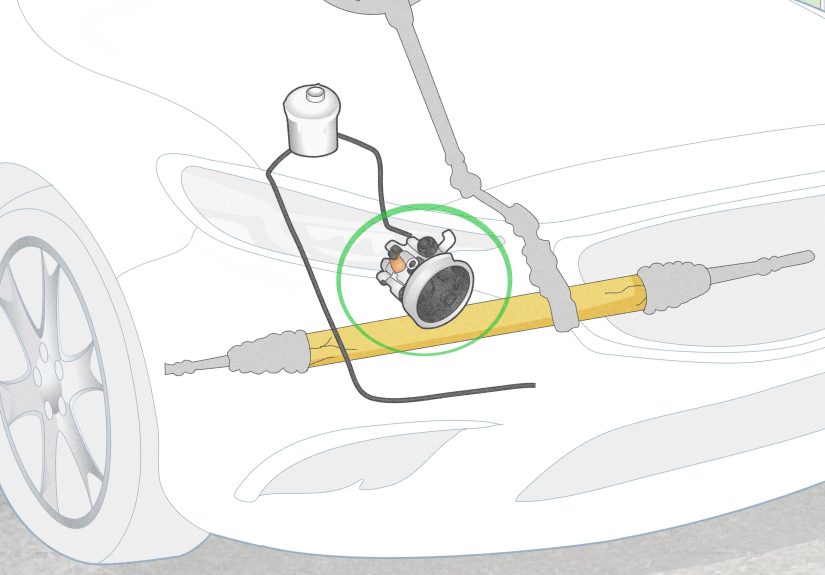
7) Evaluate the Pump (Noise Is Information)
A power steering pump can whine when it’s low on fluid, full of air, or simply worn out. If you’ve corrected the fluid level, fixed leaks, and properly bled the system
but the steering is still heavy or noisy, the pump may be weak and unable to maintain pressureespecially at idle or low speeds.
Symptoms that suggest pump trouble
- Whining or groaning that changes with engine RPM
- Heavier steering at idle that improves when you rev slightly
- Visible fluid seepage around the pump shaft seal
Pump replacement typically requires correct installation and bleeding. If done wrong, you can ruin a new pump quicklyso this is a good point to consider professional help.
8) Don’t Ignore the Steering Rack, Linkage, and Suspension (The “Other Half” of Steering Feel)
Sometimes power steering feels “bad” because the system is fighting mechanical resistance. A worn steering rack, binding joints, damaged tie rods, or suspension issues can make steering
heavy, vague, or inconsistent. Even if your power assist is working, mechanical friction can make it feel like it isn’t.
Clues it’s not just “fluid and a pump”
- Clunking or knocking when turning
- Steering wheel doesn’t return to center smoothly
- Uneven tire wear or wandering at speed
Steering components wear gradually, so the “new normal” can creep up on you. If the car suddenly changes behavior after a pothole or curb hit, get the suspension and steering inspected.
9) Improve the Inputs: Tire Pressure, Tires, and Alignment (Yes, This Counts)
Even with a perfect power steering system, underinflated tires can require more steering input and feel sluggish to respond. Misalignment can make the car drift, pull, or keep the wheel off-center,
which drivers often describe as “the steering feels wrong.” In reality, your power steering might be doing its jobit’s just compensating for tires and geometry that are not cooperating.
Easy wins that often improve steering feel immediately
- Set tire pressure to the door-jamb placard (not the tire sidewall max).
- Inspect tires for uneven wear that suggests alignment or suspension issues.
- Get an alignment if the car pulls, drifts, or the steering wheel sits off-center.
If you want your steering to feel “lighter” and more responsive, tires and alignment are the cheat codeslegal ones.
Bonus Tip: If You Have Electric Power Steering, Start With Voltage and Diagnostics
EPS systems are often sensitive to voltage drops. A weak battery, charging system issues, corroded connections, or fault codes can reduce assist and trigger warning lights.
If your vehicle has an EPS warning light or “steering assist reduced” message, treat it seriously. Some issues are software-related; others involve sensors or motor components.
Also check for recalls related to EPS components, because loss of assist increases steering effort (especially at low speed).
What usually helps EPS steering feel
- Battery and charging system testing (battery + alternator)
- Scan for diagnostic trouble codes (DTCs) and follow repair procedures
- Check for technical service bulletins and recall repairs
EPS is great when it worksand a headache when it doesn’t. But the path to improvement is often straightforward: power, codes, calibration, and repair history.
Conclusion: Better Power Steering Is Usually Better Basics
Improving power steering rarely requires magic. It usually requires the right fluid, no air, no leaks, a healthy belt drive,
and tires/alignment that aren’t sabotaging the whole operation. If you’ve corrected the basics and steering still feels heavy, noisy, or unpredictable,
step up to component inspectionpump, rack, linkages, and (for EPS) voltage and diagnostics.
One final reminder: steering is safety-critical. If the wheel becomes suddenly hard to turn, a warning light appears, or the car behaves unpredictably, get it inspected promptly.
“I’ll deal with it later” is a fine approach for laundry, not for steering.
Experiences From the Road: What Actually Helped (and What Didn’t)
Over the years, I’ve noticed that power steering problems tend to show up in a few repeat-story formatslike sequels nobody asked for. The first is the “mystery whine at low speed.”
In that situation, the driver usually says, “It only does it when I’m parking,” which is exactly when the power steering system is working the hardest. What often helped most wasn’t a fancy part
it was simply getting the fluid level right and then figuring out why it was low. A tiny seep at a hose connection can be enough to slowly drop the level. Once the leak was fixed and the system
was properly bled, the steering went from “grumpy bear” to “normal car” surprisingly fast.
The second classic story is the “everything is fine until I turn the wheel and then it squeals.” That one frequently points to belt slip under load. People love blaming the belt (sometimes correctly),
but I’ve seen plenty of cases where the belt looked okay and the real villain was the tensioner that couldn’t hold proper tension anymore. Once tension was restored, the pump stopped getting robbed of
speed, and steering assist became consistent againespecially at idle. The biggest lesson: if you fix the symptom (belt) but ignore the cause (tensioner or a binding accessory),
the squeal tends to come back like it pays rent.
Another big “aha” moment happens when someone is convinced the power steering is failing, but the car is also running on underinflated tires. Underinflation can make steering feel heavier and less responsive,
even when the steering assist is perfectly healthy. I’ve watched people chase pumps and racks when the simplest improvement was correcting tire pressure and then getting an alignment to address a pull.
After that, the steering felt lighter, straighter, and calmerwithout touching the steering system itself. It’s a humbling reminder that steering feel is a full-vehicle experience, not a single-part feature.
EPS experiences are their own category. The most common pattern is “warning light + heavy steering + it comes and goes.” In many cases, the fix started with boring electrical basics:
battery condition, alternator output, and clean connections. Low voltage can cause EPS to reduce assist, and it can feel dramatic when it happens at a stoplight or while parking.
A proper scan for codes helped avoid guessing. Sometimes the path was a known repair procedure, a calibration step, or even a recall/TSB that applied to the vehicle.
The biggest EPS lesson: don’t assume it’s “just how the car is now.” If steering assist changes noticeably or a warning message appears, diagnostics are worth it.
Finally, I’ve seen people try quick-fix additives. Sometimes they reduce noise temporarily, and sometimes they do nothing. The risk is that a “quieter” system can still be leaking, still be low,
or still have mechanical wear that needs real attention. If you use any additive at all, treat it like a short-term experimentnot a repairand keep your focus on the root cause:
fluid level, leaks, air, belt drive, and component health. When steering is involved, the goal isn’t “sounds better.” The goal is “works correctly, consistently, and safely.”