Table of Contents >> Show >> Hide
- Why Transitional Dressing Works Better Than a Full Closet Flip
- 1. Swap Lightweight Tanks for Fine-Gauge Knits and Elevated Layers
- 2. Swap Strappy Sandals for Loafers, Ballet Flats, or Sleek Closed-Toe Shoes
- 3. Swap Cutoffs and Airy Bottoms for Straight-Leg Denim, Tailored Trousers, or Midi Skirts
- 4. Swap Flowy Summer Layers for a Polished Third Piece
- How to Make These Swaps Without Rebuilding Your Entire Closet
- Experience Notes: What These Swaps Look Like in Real Life
- Final Thoughts
There is a very specific kind of wardrobe chaos that arrives when summer refuses to leave, but your brain has already started romanticizing coffee, crisp air, and jackets with pockets deep enough to hold your entire personality. One day you are in sandals and a tank top, the next you are eyeing loafers like they hold the answers to life. Transitional dressing lives in that awkward, slightly dramatic space between “beach brunch” and “I am now a mysterious person who owns knitwear.”
The good news is that easing into fall style does not require a total closet reset, a reckless shopping spree, or the emotional strength to say goodbye to every warm-weather favorite at once. The smartest way to dress for early fall is to make a few strategic swaps. Keep the ease, keep the comfort, keep the pieces you actually wear, and simply trade the most summery elements for ones that feel a little more polished, a little more grounded, and a lot more seasonally versatile.
This is where smart fashion swaps come in. Instead of overhauling your entire wardrobe, you can shift your look by changing a fabric, upgrading a silhouette, or replacing a shoe that screams July with one that whispers September. The result is a wardrobe that feels current, functional, and stylish without trying too hard. Which, frankly, is the dream.
Below are four easy, wearable fashion swaps that make the transition into fall look intentional instead of accidental. They work for real life, real closets, and real weather that cannot seem to commit.
Why Transitional Dressing Works Better Than a Full Closet Flip
Before getting into the swaps, it helps to understand why this approach works so well. Transitional dressing is not about dressing for the final form of fall. It is about dressing for the in-between. Temperatures can swing wildly from morning to evening, indoor air conditioning still means business, and you probably are not ready for wool coats unless you live inside a weather app.
A smart swap strategy solves three common problems at once. First, it makes your outfits feel seasonally appropriate. Second, it makes them more practical for uneven temperatures. Third, it keeps you from buying trendy pieces you do not need, simply because your brain got emotionally attached to the idea of “fall fashion.” We have all been there. We have all nearly bought a dramatic coat while sweating.
These swaps focus on texture, shape, and balance. In other words, they help you look like you planned your outfit, even if you got dressed while holding iced coffee in one hand and checking the forecast with the other.
1. Swap Lightweight Tanks for Fine-Gauge Knits and Elevated Layers
Why this swap works
Summer tanks are easy, breezy, and incredibly useful. They are also one gust of wind away from feeling wildly underdressed once the calendar starts flirting with fall. The smarter move is not to abandon sleeveless tops entirely, but to trade ultra-summery basics for pieces with a little more structure and texture.
Think fine-gauge knit tanks, fitted ribbed tops, lightweight short-sleeve sweaters, and slim cardigans you can wear buttoned as tops or draped over your shoulders. These pieces still breathe, but they look more polished than a basic jersey tank. They also layer beautifully under blazers, denim jackets, cropped trenches, or overshirts. Suddenly your outfit has depth. Suddenly your closet looks like it reads fashion newsletters for fun.
What to wear instead
Replace bright, beachy tanks with ribbed knit shells in cream, heather gray, chocolate brown, navy, burgundy, olive, or black. These shades immediately feel more fall-ready without being heavy. A fitted knit polo is another strong option if you want a piece that feels smart but not stuffy. If you love a sleeveless silhouette, a mock-neck shell can do a lot of heavy lifting. It gives just enough structure to make denim, trousers, and skirts feel instantly upgraded.
Outfit examples
A white fine-knit tank with straight-leg jeans, loafers, and a brown belt looks crisp and effortless. A black ribbed shell with a satin midi skirt and a lightweight cardigan feels polished enough for dinner. A camel short-sleeve sweater with cream trousers gives quiet-luxury energy without requiring a trust fund.
The secret here is texture. Fall style tends to look richer because the fabrics feel richer. Knits, ribbing, and soft structure create that effect without forcing you into heavy layers too soon.
2. Swap Strappy Sandals for Loafers, Ballet Flats, or Sleek Closed-Toe Shoes
Why this swap works
If one item can change the mood of your entire outfit in five seconds flat, it is your shoes. A breezy dress with flat sandals says summer vacation. The same dress with loafers or ballet flats says you know exactly what season it is, and yes, your tote bag probably contains lip balm, receipts, and one highly specific plan.
Closed-toe shoes anchor an outfit. They make bare legs look intentional, they balance lighter fabrics, and they help your summer clothes last longer into fall. This is especially useful when the weather is still warm, but your outfits need a seasonal nudge.
What to wear instead
Classic loafers are the obvious hero here because they are comfortable, versatile, and polished without being fussy. Penny loafers, lug-sole loafers, and slim suede styles all work depending on your taste. Ballet flats are another strong choice, especially in brown, black, or deep red tones. For a slightly sharper look, try Mary Janes or low-profile slingbacks with a closed toe.
You do not need your footwear to look aggressively autumnal. You just need it to look less like it belongs next to a pool. Leather, suede, patent finishes, and richer neutrals do that effortlessly.
Outfit examples
Take a linen shirtdress you wore all August. Add brown loafers, a structured tote, and simple gold earrings. Suddenly it feels like a transitional outfit instead of a summer leftover. Pair wide-leg jeans with ballet flats and a cardigan, and you have an easy everyday formula that works for errands, casual meetings, or lunch with friends. Slip a pair of sleek loafers under tailored shorts and a blazer, and you get a sharp early-fall look that still breathes.
This swap is especially smart because it helps you keep wearing warm-weather clothes longer. Instead of hiding your dresses and skirts the second September appears, you can make them feel new with one shoe switch. Efficient, elegant, mildly smug.
3. Swap Cutoffs and Airy Bottoms for Straight-Leg Denim, Tailored Trousers, or Midi Skirts
Why this swap works
Some summer bottoms are so obviously seasonal that they start to feel out of place the moment leaves begin threatening to change color. Frayed denim shorts, gauzy beach pants, and ultra-light linen bottoms can still be comfortable, but they often do not give you the visual weight that fall outfits need.
That is why swapping in more substantial bottoms makes such a difference. Straight-leg jeans, tailored trousers, and midi skirts add structure to your look without demanding cold weather. They also pair beautifully with the kinds of tops and shoes that dominate transitional dressing.
What to wear instead
Straight-leg jeans are the MVP because they work with nearly everything: loafers, ankle boots, ballet flats, blazers, cardigans, knit tanks, button-downs, and lightweight jackets. Choose medium or dark washes for a more autumnal feel. Tailored trousers are equally useful if you want something cleaner and a touch more refined. Meanwhile, a midi skirt in satin, denim, cotton poplin, or knit fabric can bridge seasons especially well when styled with a structured top and closed-toe shoes.
Wide-leg trousers are great for office wear. Denim midi skirts bring a little edge. Slip skirts work if you ground them with knits and loafers instead of sandals and camisoles. The goal is not to erase softness or movement; it is to add enough shape that the outfit feels balanced.
Outfit examples
Swap cutoff shorts for straight-leg jeans, then keep your white tee and add a cardigan over your shoulders. Easy. Trade beachy drawstring pants for pleated trousers, then pair them with a slim knit top and loafers. Elegant. Replace a mini skirt with a midi skirt, then style it with a fitted cardigan and flats. You still get movement, but with a more grounded silhouette.
This is also one of the easiest ways to make your wardrobe look more expensive. Structured bottoms tend to sharpen everything around them. A basic tee looks better. A simple knit looks more intentional. Even a classic button-down suddenly behaves like it has excellent manners.
4. Swap Flowy Summer Layers for a Polished Third Piece
Why this swap works
Summer layering often means oversized linen shirts, open cover-ups, or casual denim jackets tossed on without much thought. Fall asks for something with a little more point of view. That does not mean formal. It means purposeful. A polished third piece pulls an outfit together and gives it a little authority.
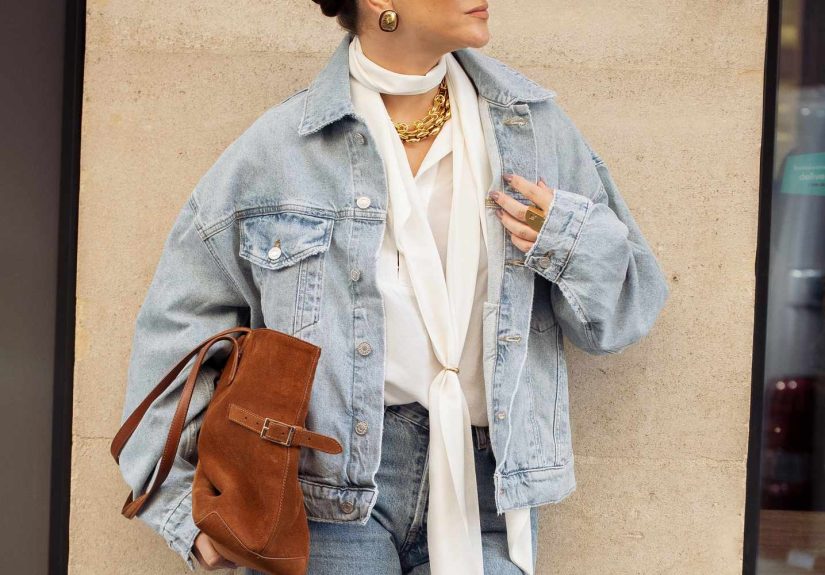
The best early-fall third pieces include blazers, cropped trenches, lady jackets, lightweight barn jackets, structured cardigans, and refined denim jackets in darker washes. These are not just layers for warmth. They are styling tools. They shape the silhouette, introduce texture, and make even simple outfits look finished.
What to wear instead
If your go-to summer move was throwing an oversized shirt over a tank and calling it a day, try swapping that shirt for a softly tailored blazer. If you lived in a slouchy beach button-down, consider a cropped trench or a polished cardigan-jacket hybrid. If you want a casual option, a dark denim jacket or clean utility jacket can do the job without looking too rugged.
The key is proportion. If your base outfit is fitted, you can go slightly boxier on top. If your bottoms are wide or fluid, a shorter jacket can create a more balanced line. Little choices like this are what make an outfit feel styled rather than assembled during a caffeine emergency.
Outfit examples
A ribbed knit tank, white jeans, and loafers become instantly smarter with a camel blazer. A black midi dress and ballet flats look more seasonally appropriate with a cropped trench. A simple tee and straight-leg denim turn into an actual look with a lady jacket and belt. The third piece does not have to be dramatic. It just has to show up and do its job.
How to Make These Swaps Without Rebuilding Your Entire Closet
The beauty of these fashion swaps is that they are more about styling than spending. Start by shopping your own closet. Pull out your summer favorites and ask one question: what would make this look feel slightly more substantial? Usually the answer is a knit instead of a tank, a loafer instead of a sandal, a jean instead of a short, or a blazer instead of a beach shirt.
Stick to a palette that naturally bridges seasons. Cream, black, navy, brown, olive, gray, burgundy, and soft denim blues all work beautifully together. Once your colors cooperate, your outfits become much easier to mix and match.
Accessories can help too. A leather belt, structured bag, richer jewelry tones, or even a pair of socks peeking out of loafers can give your outfit subtle fall energy. Not pumpkin-spice cosplay. Just enough seasonal intent.
And remember this: the goal is not to look like a catalog for peak October when it is still warm outside. The goal is to look seasonally aware, comfortable, and stylish in the weather you actually have. That is real style. Everything else is just a sweater fantasy.
Experience Notes: What These Swaps Look Like in Real Life
What makes these four swaps genuinely useful is how well they work in normal routines, not just in polished fashion photos where everyone appears to be walking through a city with perfect lighting and zero humidity. In real life, transitional dressing is less about drama and more about avoiding outfit regret by noon.
Take a typical weekday. You leave the house early and it is cool enough for a light layer, but by afternoon the sun is doing the absolute most. Wearing a thick sweater would be a mistake. Wearing a flimsy summer tank would also feel off. A fine-gauge knit or fitted ribbed top solves that problem beautifully because it looks fall-appropriate in the morning and still feels comfortable later in the day. Add a blazer for the commute, take it off by lunch, and your outfit still makes sense.
The shoe swap may be the most practical change of all. Strappy sandals can make even an otherwise polished outfit feel too summery, especially once your clothes get darker, more tailored, or more textured. A loafer or ballet flat fixes that instantly. It is the style equivalent of punctuation. The outfit suddenly has a period at the end of the sentence. It feels complete.
The same thing happens with bottoms. Many people keep wearing shorts longer than they want to simply because they are comfortable, not because they still feel stylish. Swapping in straight-leg jeans or relaxed trousers offers that same ease while making the whole outfit feel more current. It is a surprisingly powerful change. Even a plain white tee starts to look intentional when paired with structured denim, a belt, and a closed-toe flat.
The third-piece swap is where outfits really come alive. A lot of us default to practical layers that do the job but do not add much style. An old zip hoodie, a random overshirt, a worn-out denim jacket from three trend cycles ago. Useful, yes. Memorable, not exactly. Replacing that with a cropped trench, neat cardigan, or blazer can make you feel pulled together without feeling overdressed. It is a confidence trick, but in the best way.
These swaps are also helpful for travel, office dressing, casual dinners, school pickups, and weekends when you want to look like yourself, just a little sharper. They let you stretch the life of your warm-weather pieces while gently introducing the richer textures and silhouettes that make fall fashion so appealing in the first place.
Most importantly, they make getting dressed easier. And that is often the difference between a trend that looks good online and a style habit that actually improves your wardrobe. Smart fashion is not about wearing more. It is about swapping better.
Final Thoughts
If you want to ease into fall with style, do not start by chasing every trend you see the second the season changes. Start with the pieces you already wear, then upgrade the details. Swap lightweight tanks for refined knits, strappy sandals for polished closed-toe shoes, airy summer bottoms for structured denim or trousers, and casual layers for a real third piece with shape.
That is the sweet spot of transitional dressing: practical, chic, and flexible enough for real life. You still get comfort. You still get personality. You just look more in sync with the season. Which is exactly what early-fall style should do.