Table of Contents >> Show >> Hide
- Why Wall-Mounted Furniture Works So Well in Small Spaces
- 1. The Fold-Down Wall Desk That Can Also Moonlight as a Table
- 2. Floating Shelves With Real Storage Value, Not Just Decorative Ambition
- 3. The Murphy Bed: The Heavyweight Champion of Small-Space Flexibility
- 4. The Entryway Shelf-and-Hooks Combo That Tames Daily Chaos
- 5. Wall-Mounted Bedside Storage That Replaces the Nightstand
- How to Choose the Right Wall-Mounted Space-Saving Furniture
- Common Mistakes to Avoid
- Final Thoughts
- Extra Notes: Real-Life Experiences With Wall-Mounted Space-Saving Furniture
- SEO Metadata
If you have ever tried to fit a desk, dining table, storage, and a little dignity into one small room, you already know the truth: square footage is expensive, but walls are usually just standing there doing nothing. That is where wall-mounted space-saving furniture comes in. It turns blank vertical surfaces into hardworking storage, fold-out workstations, and sneaky little problem-solvers that make a room feel bigger without requiring a miracle or a second lease.
The beauty of wall-mounted furniture is not just that it saves floor space. It also saves visual space. A floating piece leaves air underneath it, which makes a room feel lighter, less crowded, and far less like you lost a fight with a furniture showroom. In small apartments, guest rooms, studios, and multipurpose homes, that sense of openness matters almost as much as the function itself.
After reviewing design guidance, product roundups, and small-space advice from major home and lifestyle publishers, five categories kept showing up again and again. These are the pieces that earn their keep, pull their weight, and, in some cases, politely disappear when the job is done. Here are the five wall-mounted favorites worth your wall space.
Why Wall-Mounted Furniture Works So Well in Small Spaces
Small-room design is not only about getting rid of stuff. It is about making every inch work smarter. Wall-mounted furniture helps by moving function upward. Instead of relying on bulky pieces that occupy precious floor area 24 hours a day, these designs use vertical space and often fold away when not in use. That is a big win in apartments, narrow rooms, combined office-guest rooms, and awkward corners that cannot handle traditional furniture.
There is also the visual trick. Furniture that floats above the floor creates negative space underneath, and that breathing room makes a cramped room feel calmer. You can see more of the floor, slide baskets or stools below, and avoid the “packed like a weekend suitcase” effect that oversized furniture tends to create.
In other words, wall-mounted furniture is not just practical. It is strategic. It helps you reclaim function without sacrificing the look and feel of the room.
1. The Fold-Down Wall Desk That Can Also Moonlight as a Table
Why It Makes the List
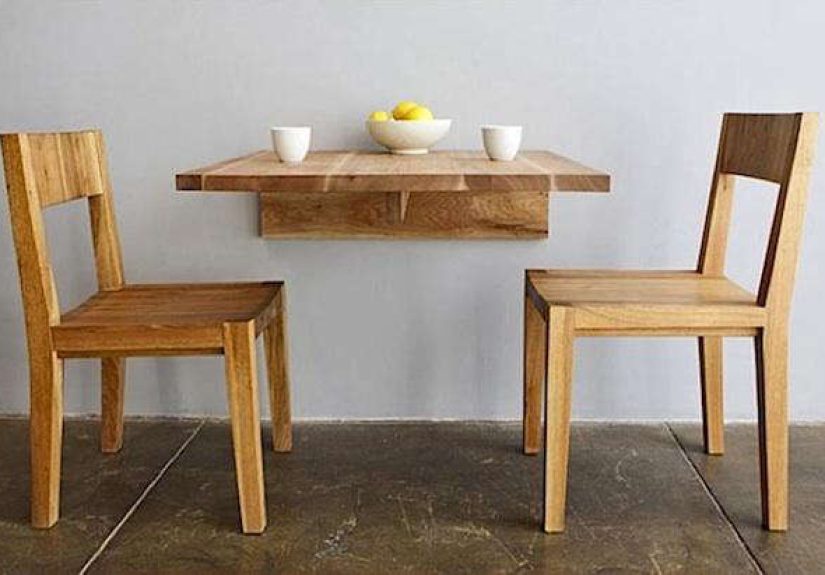
If wall-mounted furniture had a valedictorian, the fold-down desk would be giving the graduation speech. This piece is the poster child for small-space living because it offers a real work surface when you need one and folds flat when you do not. That means your home office does not have to live in your room full-time like an overstaying houseguest.
Some versions are simple floating panels. Others open into mini workstations with shelves, cubbies, and storage compartments. The best ones support a laptop, a notebook, and your daily coffee without making you feel like you are balancing life on a glorified cutting board.
Best Places to Use It
This favorite works beautifully in a studio apartment, hallway nook, kitchen corner, or bedroom that doubles as an office. It is also a strong option for families who need a homework station that can disappear after 4 p.m. In tiny homes, it can even function as a casual dining spot or craft table.
Why People Love It
It is flexible, clean-looking, and surprisingly versatile. One moment it is a desk. The next, it is tucked away and giving your room visual peace and quiet. That is the kind of emotional support furniture we like to see.
Watch-Outs Before You Buy
Pay close attention to depth, knee clearance, and the folded profile. A desk that saves space only counts as a win if it still lets you sit comfortably. Also, think about cable management, nearby outlets, and whether you want storage built in or prefer a simpler silhouette.
2. Floating Shelves With Real Storage Value, Not Just Decorative Ambition
Why They Earn Favorite Status
Floating shelves are sometimes dismissed as decorative extras for candles, tiny plants, and books nobody reads. That is unfair. In a small home, well-placed floating shelves are serious workers. They turn dead wall space into storage, keep essentials accessible, and free up surfaces that would otherwise become clutter magnets.
The trick is to think beyond styling. Yes, shelves can display framed art and ceramics. But they can also hold kitchen goods, office supplies, bedside items, baskets, and everyday objects that would otherwise eat up counters and tabletops. In some rooms, they function almost like an airy substitute for bulky cabinets or bookcases.
Best Places to Use Them
Kitchens, bathrooms, bedrooms, home offices, and entryways all benefit from floating shelves. In a bedroom, they can replace a traditional nightstand. In an office, they can sit above a compact desk and keep supplies off the work surface. In an entry, they become a mini landing pad for keys, sunglasses, and the mail you swear you are going to sort tonight.
What Makes Them Better Than Big Case Goods
Traditional storage furniture often eats up width, depth, and visual calm. Floating shelves keep the room feeling open while still adding function. They also encourage editing, which is a polite way of saying they stop you from hoarding mystery chargers and six-year-old receipts in a drawer somewhere.
How to Use Them Well
Group shelves intentionally. A pair of longer shelves often looks more tailored than several tiny ones scattered at random. Mix open display with hidden storage by using baskets or lidded boxes. And do not hang them so high that you need Olympic-level reach every time you want a phone charger.
3. The Murphy Bed: The Heavyweight Champion of Small-Space Flexibility
Why It Belongs in the Top Five
When one room has to do everything, sleep usually causes the biggest design headache. That is why the Murphy bed remains one of the smartest wall-mounted space-saving furniture solutions ever invented. It gives you a real bed at night and returns precious floor area by day. No inflatable mattress drama. No sofa-bed compromise. No pretending a futon is “actually pretty comfortable.”
Modern Murphy beds have evolved well beyond the old hideaway stereotype. Many now include shelving, cabinets, desks, sofas, or storage around the bed unit. Some vertical designs work best in rooms with generous ceiling height, while horizontal versions make more sense for lower ceilings or wider walls.
Best Places to Use It
A guest room-home office combo is the classic use case, but Murphy beds are also ideal in studios, small bedrooms, bonus rooms, and multipurpose family spaces. If you need a room to serve two full identities instead of one half-baked one, this is the piece that makes it possible.
Why It Feels So Transformative
The Murphy bed changes how a room behaves. During the day, the room can be a workspace, yoga zone, playroom, or reading den. At night, it becomes a proper bedroom. That kind of transformation is not just useful; it can make a small home feel much more livable and intentional.
Important Buying Considerations
Measure carefully for both the open and closed footprint. Think about ceiling height, mattress compatibility, surrounding clearance, and installation requirements. This is not a casual command-strip situation. A Murphy bed is a commitment piece, but when selected well, it can be one of the best commitments in the room.
4. The Entryway Shelf-and-Hooks Combo That Tames Daily Chaos
Why It Deserves a Spot
The entryway is where clutter becomes a personality trait if you are not careful. Bags, jackets, keys, dog leashes, sunglasses, and random receipts love to pile up there. A wall-mounted shelf with hooks is one of the simplest fixes because it combines vertical storage, a drop zone, and hanging space in one compact setup.
This piece is especially brilliant because it solves several problems at once. Hooks take care of coats and bags. The shelf handles keys, wallets, and decorative objects. Some versions even include a mirror, cubbies, or a ledge deep enough for baskets. It is a small intervention with a surprisingly big payoff.
Best Places to Use It
Of course it shines in the entry, but it also works in mudrooms, laundry areas, kids’ bedrooms, kitchens, or any wall where things tend to get dropped in a heap. If your household treats the nearest chair like a part-time closet, this is worth serious attention.
Why It Works Better Than a Standing Coat Rack
Freestanding coat racks can eat up floor space and visually crowd a narrow entry. A wall-mounted organizer handles the same job while staying slim and efficient. It also helps define a clear home for everyday essentials, which is a design phrase that really means “you might finally stop losing your keys.”
Style Tip
Choose one that complements your hardware finishes and overall decor. In a small entryway, even functional furniture shows. A warm wood shelf with black hooks feels modern and grounded. A lighter painted version reads softer and more casual. Either way, the best piece is one you will actually use every day.
5. Wall-Mounted Bedside Storage That Replaces the Nightstand
Why This One Is Underrated
Nightstands are useful, but in very small bedrooms they can be downright bossy. They take up floor area, crowd the bed, and often become catchalls for books, cords, glasses, and whatever else wandered in. Wall-mounted bedside storage solves that by lifting the function off the floor.
This can take several forms: a floating shelf, a mounted cubby, a shallow box shelf, or even a compact wall cabinet. The goal is the same: keep the essentials close while making the room feel more open. It is one of those smart ideas that instantly makes a tiny bedroom feel more custom and less cramped.
What It Can Hold
A lamp, book, phone, water glass, and a few bedtime essentials are usually plenty. Some mounted options include hidden compartments or a shelf below for extra storage. The point is not to recreate a giant bedside table in the air. The point is to keep only what you actually need and let the room breathe.
Where It Works Best
This favorite is perfect beside twin beds, in narrow bedrooms, in guest rooms, or anywhere the bed sits close to a wall. It also helps when you want to leave visible floor underneath, making it easier to clean and easier on the eyes.
Why It Feels So Polished
There is something inherently tailored about a floating bedside setup. It looks intentional, modern, and custom, even if the budget was not exactly “custom millwork” generous. It is proof that small-room design can still feel elevated.
How to Choose the Right Wall-Mounted Space-Saving Furniture
Measure for Both Open and Closed Positions
A fold-down desk or Murphy bed needs room to operate, not just room to exist. Measure the wall, the clearance in front of the piece, and the surrounding circulation space. Otherwise, you risk buying something clever that opens directly into a chair, a door, or your last nerve.
Match the Furniture to Real Daily Habits
Buy for your actual life, not your fantasy life. If you work from home every day, choose a wall desk with enough surface and storage to support real use. If you host overnight guests a few times a year, a Murphy bed may be worth it. If your biggest pain point is everyday clutter, start with entry hooks and shelving instead of a dramatic bedroom overhaul.
Respect Installation and Weight Needs
Wall-mounted furniture depends on proper installation. Heavier pieces need secure mounting, the right hardware, and serious attention to wall type and load. In short: the piece should be floating, not your confidence in the screws.
Keep the Style Cohesive
Because wall-mounted furniture is visible at eye level, it has a strong design presence. Match finishes to the room, keep proportions balanced, and avoid mixing too many competing wall elements in one small zone. A little editing goes a long way.
Common Mistakes to Avoid
One common mistake is choosing furniture that is technically compact but visually bulky. Thick profiles, oversized brackets, or clumsy hardware can make a small room feel heavier. Another is mounting too high or too low. Furniture should support comfort as much as space-saving goals.
A third mistake is trying to make every wall do everything. Small spaces benefit from restraint. A well-planned wall with one strong function usually works better than a wall overloaded with shelves, hooks, bins, art, and good intentions.
Finally, do not forget the room beneath the room. The space under floating furniture is part of the design. Leave it open when possible, or use it for a stool, basket, or small movable piece. That is where a lot of the visual magic happens.
Final Thoughts
The best wall-mounted space-saving furniture is not about cramming more into a room. It is about letting a room do more with less stress. A fold-down desk creates a workspace without hijacking the whole room. Floating shelves add storage without heaviness. A Murphy bed gives you a bedroom and a bonus room in the same footprint. Entry hooks restore order to daily routines, and wall-mounted bedside storage makes small bedrooms feel sharper and calmer.
If you are decorating a compact home, these five favorites are not gimmicks. They are reliable, flexible, and rooted in the reality of how small spaces actually work. And honestly, any furniture that can save floor space, reduce clutter, and make a room feel more stylish deserves at least a little applause.
Extra Notes: Real-Life Experiences With Wall-Mounted Space-Saving Furniture
Living with wall-mounted furniture changes your habits in subtle ways, and that is part of why it works so well. In a small apartment, a fold-down desk tends to make you more deliberate. You open it when you are ready to work, and when the workday ends, you close it and get your room back. That sounds like a minor detail, but it can dramatically improve how a space feels. Instead of staring at your laptop from the couch all evening, you remove the visual reminder and let the room relax with you.
Floating shelves do something similar. They force you to be choosy, which is a blessing in disguise. When you have a large dresser or oversized bookcase, it is easy to keep stuffing things inside until the piece becomes a monument to delayed decision-making. With wall shelves, you naturally edit. You keep the objects that are useful, attractive, or both. The result is not only better storage, but also a room that feels more intentional and easier to maintain.
Murphy beds create the biggest emotional difference. In a small home, a bed can dominate the entire room. When it folds away, the room suddenly feels like it has options again. People often describe that shift as freeing, and that makes sense. The same floor area can support exercise, hobbies, remote work, kids’ playtime, or simply the luxury of not having to sidestep a bedframe every ten minutes.
Entryway wall organizers also earn their praise in everyday life because they reduce friction. When hooks and a shelf are mounted at the right height, family routines become smoother. Bags land where they should. Keys become findable. Coats stop migrating to chairs. It is not glamorous, but it is the kind of practical improvement you notice every single morning.
Wall-mounted bedside storage may be the quietest hero of the bunch. In a compact bedroom, clearing the floor beside the bed makes the room feel easier to move through and easier to clean. Even vacuuming gets less annoying, which is not exactly thrilling copy, but it is a very real quality-of-life benefit. Sometimes good design is dramatic. Sometimes it just means fewer awkward corners collecting dust bunnies and charger cables.
Overall, the experience of using wall-mounted furniture is about flexibility and relief. Small spaces stop feeling like puzzles you are always losing. They start feeling tailored, efficient, and more comfortable to live in day after day. And once you get used to the freedom of seeing more floor and less clutter, it is very hard to go back to bulky furniture that just sits there taking up rent-paying space.