Table of Contents >> Show >> Hide
- What Happened Near HMAS Toowoomba?
- Why Sonar Can Injure Divers
- What Is Hull-Mounted Sonar?
- Why the Timing Was So Sensitive
- Why Fishing Nets Became Part of a Military Story
- Could Sonar Really Hurt Someone Without Touching Them?
- The Strategic Context: More Than One Bad Ping
- How the Incident Was Viewed in Australia
- China’s Denial and the Problem of Competing Narratives
- Why This Story Matters for Maritime Safety
- Experience-Based Reflections: What This Incident Teaches Beyond the Headlines
- Conclusion
At first glance, the incident sounds almost impossible: no missile, no collision, no explosion, no dramatic movie-trailer fireballyet divers were injured underwater. The alleged culprit was not a torpedo or a mine but sound. Specifically, Australia said a Chinese warship used hull-mounted sonar while Royal Australian Navy divers were in the water near HMAS Toowoomba, forcing them to surface and later undergo medical checks for minor injuries.
That is the strange and serious heart of the story. Sonar is often described as underwater radar, but that comparison is a little too neat. Radar uses radio waves in air; sonar uses sound in water, where sound travels farther and behaves with impressive stubbornness. In the ocean, a powerful acoustic pulse is not just a “ping.” At close range, it can become a physical eventsomething the body does not politely ignore.
The incident became a flashpoint in the broader debate over military professionalism, maritime rules, and the increasingly tense behavior of warships and aircraft in the Indo-Pacific. It also gave the public a rare look at a danger normally discussed in naval manuals, diving safety briefings, and environmental studies: underwater sound can hurt living things, including humans.
What Happened Near HMAS Toowoomba?
The incident took place in November 2023 while HMAS Toowoomba, an Australian frigate, was operating in international waters within Japan’s exclusive economic zone. The ship was reportedly supporting enforcement of United Nations sanctions against North Korea, a mission that often involves monitoring suspected illegal ship-to-ship transfers of fuel and other restricted goods.
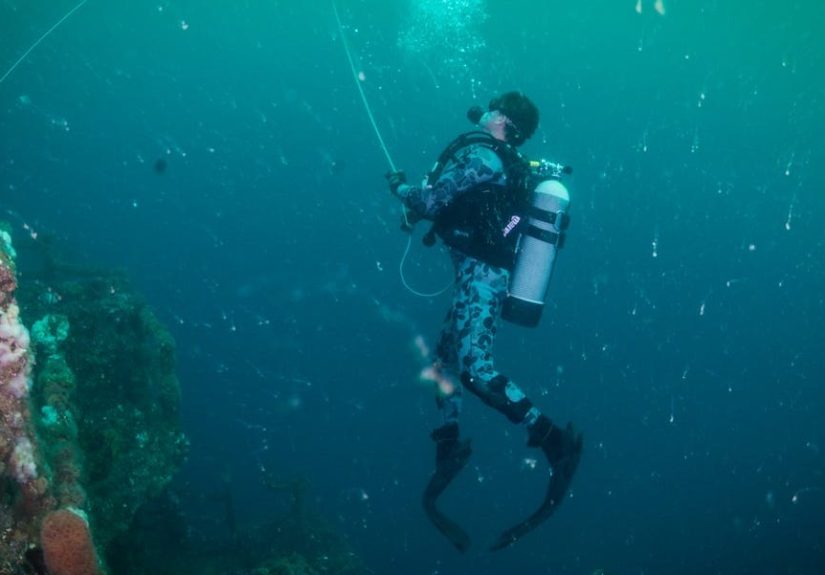
During the deployment, fishing nets became tangled in the frigate’s propellers. That may sound like a small problem, but for a warship, fouled propellers are not exactly a “shake it off and keep driving” situation. A ship depends on propulsion, maneuverability, and safe mechanical operation. So, Australian naval divers entered the water to clear the obstruction.
According to Australia’s account, the ship communicated that divers were in the water. A People’s Liberation Army Navy destroyer approached and was later detected operating its hull-mounted sonar. Australian officials described the interaction as unsafe and unprofessional, saying the sonar pulses posed a risk to the divers and forced them to exit the water. Medical assessments later found the divers had sustained minor injuries likely caused by the sonar exposure.
China denied Australia’s allegations, calling them untrue. That denial matters because incidents at sea often become diplomatic contests as much as safety investigations. One navy says, “You endangered our people.” The other says, “No, we did not.” Somewhere in the middle are the sailors, divers, bridge teams, radio logs, sensor data, and a very unforgiving ocean.
Why Sonar Can Injure Divers
To understand how sonar can injure divers, start with the basic mechanics. Active sonar sends sound pulses into the water. Those pulses travel outward, strike objects, and return echoes that help the ship detect submarines, underwater terrain, or other objects. In military use, sonar can be extremely powerful because the ocean is vast, noisy, layered by temperature, and full of things that would rather not be found.
For humans underwater, the problem is that sound is not merely something heard through the ears. Water transmits pressure efficiently. A diver’s body, equipment, air spaces, and inner ear can all be affected by intense acoustic energy. Depending on distance, frequency, duration, and intensity, underwater sound exposure may cause pain, disorientation, dizziness, hearing problems, nausea, or other symptoms. In less dramatic language: the ocean can turn a loud noise into a full-body argument.
Divers are especially vulnerable because they are immersed in the medium carrying the sound. A person standing near a loudspeaker on land can step away, cover their ears, or at least complain loudly. A diver working near a warship’s hull may have limited mobility, limited communication, equipment restrictions, and a job to finish. If a powerful sonar pulse begins nearby, there is no convenient mute button.
What Is Hull-Mounted Sonar?
Hull-mounted sonar is exactly what the name suggests: a sonar system installed in or on the hull of a ship. These systems are common on surface combatants because they help detect submarines, underwater hazards, and other contacts. In anti-submarine warfare, the ability to search beneath the surface is essential. A submarine hiding below the waterline is not going to wave politely and introduce itself.
A hull-mounted sonar system may operate passively, listening for sounds, or actively, transmitting sound pulses and listening for echoes. Passive sonar is like sitting quietly in a dark room and listening for footsteps. Active sonar is like shouting, “Anybody there?” and waiting for the echo. The second method can reveal more, but it also announces the transmitter’s presence and can create safety risks if people or animals are nearby.
That distinction matters in the Toowoomba case because the allegation was not merely that a Chinese destroyer was present. Warships observing one another is common. The issue was that active sonar was reportedly used after communications indicated divers were in the water. In naval culture, “divers down” is not a casual update; it is a safety condition that demands caution.
Why the Timing Was So Sensitive
The timing made the incident more politically charged. Australia and China had been working to stabilize relations after years of trade disputes, security tensions, and sharp diplomatic exchanges. Prime Minister Anthony Albanese had recently met Chinese leader Xi Jinping, and both sides had reasons to present the relationship as improving. Then came an incident involving injured Australian naval personnel.
For Canberra, the message was clear: dialogue is welcome, but Australian forces will continue lawful operations in international waters and airspace. For Beijing, the presence of foreign militaries near China’s maritime approaches is often framed as provocative. That disagreement is not new, and it is not limited to Australia. The United States, Canada, the Philippines, Japan, and other countries have all had tense encounters with Chinese military forces in the western Pacific.
The Toowoomba incident joined a larger pattern of close intercepts, shadowing, laser accusations, flare releases, and dangerous maneuvers. None of these incidents necessarily equals war. But each one adds friction. When heavily armed platforms operate near each other, small miscalculations can become large problems. The ocean is big, but apparently not big enough for everyone’s ego.
Why Fishing Nets Became Part of a Military Story
One odd detail in the incident is also one of the most important: fishing nets. They are ordinary, civilian, and deeply annoying when wrapped around a ship’s propulsion system. Fouled propellers can reduce speed, damage equipment, affect steering, and force a ship to stop. For a naval vessel on mission, stopping is not ideal. For divers, clearing nets is practical, physical, and risky work.
That moment placed the Australian crew in a vulnerable position. The ship was temporarily limited, divers were underwater, and safety depended on nearby vessels respecting warnings. In maritime practice, the presence of divers should change the behavior of everyone close by. Ships avoid creating suction hazards, propeller wash, wake turbulence, and acoustic danger. Sonar use becomes especially sensitive because the divers are directly exposed to underwater pressure waves.
This is why Australia’s allegation was treated so seriously. It was not simply “a Chinese ship came close.” It was “a Chinese ship came close while divers were down and used sonar after being warned.” If accurate, that is a very different level of risk.
Could Sonar Really Hurt Someone Without Touching Them?
Yes. Sound is energy moving through a medium. In water, that energy can travel efficiently and interact with the body in ways that are uncomfortable or harmful. The effect depends on many variables, including sound pressure level, distance from the source, frequency, pulse duration, and the diver’s position.
It is helpful to think of sonar not as “noise” in the everyday sense but as controlled acoustic power. Military sonar is designed to function in difficult underwater conditions, not to be pleasant background music for divers. When used correctly, it is a search tool. When used carelessly near people in the water, it can become a hazard.
Navies understand this. Diving operations normally involve strict controls, warnings, communications, and procedures. Ships do not casually energize equipment that could endanger personnel. Even civilian diving operations pay close attention to vessel movement, propellers, underwater construction noise, and other hazards. The principle is simple: if humans are underwater, the machinery above them needs manners.
The Strategic Context: More Than One Bad Ping
The sonar incident was not isolated from wider regional tensions. HMAS Toowoomba was helping enforce sanctions against North Korea, a mission supported by multiple countries. These operations often occur in waters where Chinese, Russian, North Korean, Japanese, South Korean, Australian, Canadian, and American interests overlap. That makes the region a crowded chessboard, except the pieces are expensive, armed, and floating.
China’s navy has expanded rapidly over the past two decades and now operates with greater confidence farther from its coast. Australia, meanwhile, has strengthened defense ties with the United States, Japan, and other partners. The result is more contact between forces that do not fully trust one another. Every close approach becomes a test of professionalism.
In this environment, sonar is not only a technical tool but also a signal. A ship using active sonar is saying, in effect, “I am searching, I am asserting presence, and I am willing to make noise.” In normal anti-submarine warfare, that may be routine. Near divers, it becomes something else entirely.
How the Incident Was Viewed in Australia
Australian officials reacted strongly. The government said it expressed serious concerns to China. Opposition politicians pressed the prime minister on whether the matter had been raised directly with Chinese leadership. Defense officials emphasized that Australian personnel were conducting lawful activities and that their safety had been placed at risk.
For the Australian public, the story landed differently from abstract talk about sea lanes or diplomatic notes. Injured divers are easier to understand than maritime legal theory. People may not know the fine points of exclusive economic zones, but they understand the basic rule: do not blast sound at people working underwater. That is not advanced geopolitics. That is basic human decency with a wetsuit attached.
China’s Denial and the Problem of Competing Narratives
China rejected the accusation, and that denial created the familiar problem of competing narratives. In military encounters, governments often release only limited information. They may not disclose sensor data, exact distances, classified capabilities, or communications logs. This leaves the public with official statements, media reporting, and expert interpretation.
That does not mean all claims are equal. Australia gave a specific account: divers were in the water, the Chinese vessel acknowledged communications, sonar was detected, and medical assessments found minor injuries likely linked to sonar pulses. China denied wrongdoing. Readers should understand both points while recognizing that the incident fits a broader pattern of contested military interactions in the region.
Why This Story Matters for Maritime Safety
The most important lesson is not that sonar is scary, although it certainly deserves a respectful eyebrow raise. The lesson is that professional conduct at sea protects lives. Rules, signals, warnings, and habits exist because naval operations are dangerous even on a good day. Add politics, surveillance, sanctions enforcement, and national pride, and the risk rises quickly.
Maritime safety depends on restraint. A warship captain does not need to like another country’s mission to avoid endangering divers. A navy does not need to agree with a rival’s policy to obey basic seamanship. The ocean already supplies enough hazards without humans adding avoidable ones.
Experience-Based Reflections: What This Incident Teaches Beyond the Headlines
Anyone who has spent time around diving culture, naval operations, or even ordinary boating understands one thing quickly: water makes small mistakes expensive. On land, a loose rope is annoying. At sea, it can foul a propeller. A loud noise on land may be irritating. Underwater, sound can become disorienting. A delayed message on land may cause confusion. During a dive, it can become a safety issue.
The Toowoomba incident is a reminder that diving is not just swimming with better equipment. Professional divers work in an environment where visibility can be poor, currents can shift, tools are harder to handle, and communication is limited. They may be dealing with metal, nets, moving water, hull surfaces, and time pressure. Add the presence of foreign warships nearby, and the work becomes even more demanding.
From a practical safety perspective, the most relatable part of the story is not the geopolitics but the vulnerability of the divers. Imagine trying to concentrate on a difficult repair task while knowing that huge ships are moving above and around you. You trust procedures. You trust signals. You trust that when your ship says divers are in the water, nearby vessels will behave responsibly. That trust is not decorative; it is part of the safety system.
This incident also shows how invisible hazards can be the most misunderstood. People instinctively fear explosions, fires, and collisions because they can see the danger. Sonar does not look dramatic from the surface. There may be no smoke, no splash, no obvious damage. Yet underwater, the energy can be intense enough to force a diver out of the water and send personnel for medical evaluation. It is the kind of hazard that makes experts nod grimly while everyone else says, “Wait, sound did that?”
There is also a communication lesson here. In tense environments, clarity matters. Ships need to broadcast warnings clearly. Nearby vessels need to acknowledge and respect them. Commanders need to prioritize safety even when they are shadowing, signaling, or gathering information. Military professionalism is often measured not during ceremonies, but during awkward, risky moments when nobody gets a perfect script.
For readers, the broader takeaway is simple: modern naval competition is not always about missiles and dramatic battles. Sometimes it is about pressure, proximity, and behavior just below the threshold of open conflict. A sonar pulse near divers can become an international incident because it touches several issues at once: human safety, military discipline, maritime law, national credibility, and regional trust.
The ocean may look empty on a map, but it is crowded with rules, missions, signals, and consequences. The Toowoomba sonar incident matters because it shows how quickly an invisible force can create visible diplomatic damage. In a region where countries already watch each other closely, the safest “ping” is sometimes the one never sent.
Conclusion
The reported injury of Australian divers by sonar from a Chinese warship was more than a strange naval headline. It was a case study in how underwater technology, human vulnerability, and geopolitical tension can collide without physical contact. Active sonar is a legitimate military tool, but like many powerful tools, it requires discipline. Used near divers, it can pose real risks.
The incident also underlined a bigger truth about the Indo-Pacific: close military encounters are becoming more common, and professionalism matters more than ever. Warships do not have to collide to create danger. Sometimes, all it takes is a pulse of sound in the wrong place, at the wrong time, near people who should never have been put at risk.
Note: This article is based on publicly reported information and official statements available as of May 26, 2026. It is written for informational and editorial purposes only and does not provide operational guidance on sonar systems or military tactics.