Table of Contents >> Show >> Hide
- Kitchen Cabinets by Function: Base, Wall, and Tall Cabinets
- Kitchen Cabinets by Construction: Framed vs. Frameless
- Kitchen Cabinets by Door Overlay: Partial Overlay, Full Overlay, and Inset
- Kitchen Cabinets by Budget and Flexibility: RTA, Stock, Semi-Custom, and Custom
- Kitchen Cabinets by Door Style
- Cabinet Materials and Finishes Matter Too
- How to Choose the Right Type of Kitchen Cabinets for Your Home
- Common Cabinet Mistakes to Avoid
- Final Thoughts
- Real-Life Experiences and Lessons From Choosing Kitchen Cabinets
Research basis for cabinet categories, framed vs. frameless, overlays, materials, and style definitions:
Your kitchen cabinets do a lot of heavy lifting. They hold the plates, hide the snack stash, frame the whole room, and quietly judge you when you buy one more mug you absolutely do not need. So when it’s time to choose new cabinetry, the decision can feel weirdly high-stakes. And honestly, it is. Cabinets affect your storage, your workflow, your budget, and the overall style of your kitchen more than almost anything else.
The good news is that “types of kitchen cabinets” does not have to be one giant, confusing blob of wood samples and showroom lighting. Once you break the category down into a few simple buckets, the whole picture gets much easier to understand. Kitchen cabinets can be grouped by function, construction, door overlay, customization level, and style. Learn those five ideas, and you can walk into any design center sounding like someone who knows exactly what they’re doing.
This guide covers all of it in plain English, with practical examples, budget-minded advice, and enough design insight to help you avoid a kitchen that looks great online but annoys you every day in real life.
Kitchen Cabinets by Function: Base, Wall, and Tall Cabinets
The first and easiest way to understand cabinet types is by what they actually do in the room. Think of these as the workhorses of the layout.
Base Cabinets
Base cabinets sit on the floor and support the countertop. They are the kitchen’s sturdy backbone, handling pots, pans, mixing bowls, trash pull-outs, and all the “where do I put this?” items that appear during everyday cooking. If you want drawers for cookware, deep storage for small appliances, or a corner solution that does not require yoga-level flexibility, this is where those choices happen.
Wall Cabinets
Wall cabinets are mounted above the countertop and help you use vertical space without eating up the floor. They are ideal for dishes, glassware, pantry basics, and the items you want close by but not all over the counter. In smaller kitchens, smart wall cabinetry can make the difference between “compact and functional” and “why is my toaster living on top of the microwave?”
Tall Cabinets
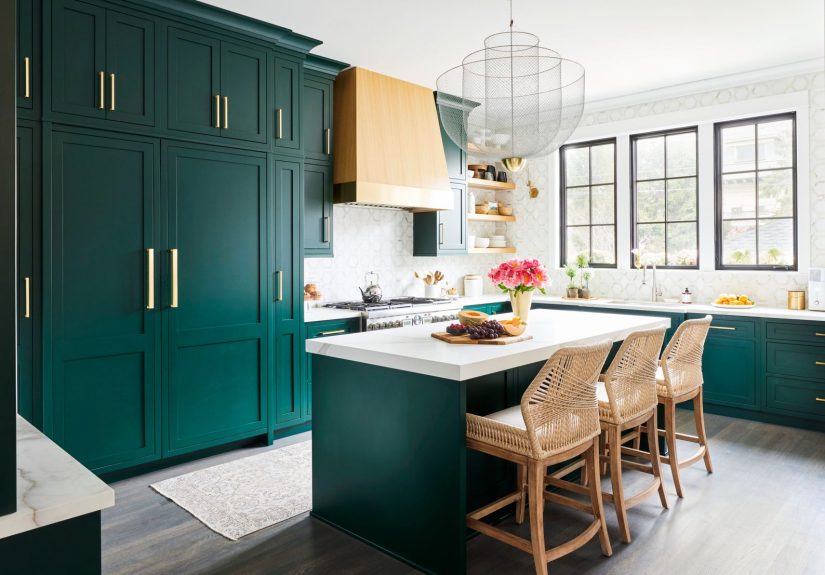
Tall cabinets, often called pantry cabinets or utility cabinets, stretch from near floor level upward and are excellent for food storage, broom storage, built-in ovens, or hiding countertop appliances behind doors. They can be incredibly efficient, but they also make a strong visual statement, so placement matters. Used well, they make a kitchen feel custom and organized. Used badly, they can make the room feel like a wall of furniture came to life and crowded everyone out.
Kitchen Cabinets by Construction: Framed vs. Frameless
This is one of the biggest decisions in cabinet design because it affects appearance, storage access, and price.
Framed Cabinets
Framed cabinets have a face frame attached to the front of the cabinet box. This style has long been common in American kitchens, and it is popular for good reason. It feels sturdy, familiar, and versatile. The face frame also works with a wide range of looks, from traditional and farmhouse to transitional and even some updated modern kitchens.
Why homeowners like framed cabinets:
- They have a classic, substantial look.
- They work well with inset, full overlay, and partial overlay doors.
- They can feel especially at home in traditional or transitional designs.
The trade-off is that the frame can slightly reduce access at the cabinet opening. That is not usually a dealbreaker, but it matters when you want maximum usable interior space.
Frameless Cabinets
Frameless cabinets, often associated with European-style kitchens, skip the face frame entirely. Doors and drawer hardware attach directly to the cabinet box, creating a sleek, clean-lined look. Many homeowners choose frameless cabinets for contemporary or minimalist kitchens, but they are no longer limited to glossy ultra-modern spaces. Today, frameless cabinets can be paired with everything from slab doors to Shaker-inspired fronts.
Why homeowners like frameless cabinets:
- They offer a streamlined appearance.
- They provide a little more accessible interior space.
- They are great for modern, contemporary, and Scandinavian-inspired kitchens.
If you love clean geometry, tighter reveals, and a kitchen that looks tailored rather than ornate, frameless is a strong contender.
Kitchen Cabinets by Door Overlay: Partial Overlay, Full Overlay, and Inset
Now we get into the detail that quietly changes the whole look of your kitchen: how the cabinet door sits on the cabinet front.
Partial Overlay Cabinets
Partial overlay doors leave more of the face frame visible. This is often the most budget-friendly option and tends to show up in more traditional or builder-grade kitchens. It is practical, familiar, and usually less expensive than the fancier alternatives. It may not scream “designer kitchen,” but it can still look warm and charming with the right finish and hardware.
Full Overlay Cabinets
Full overlay doors cover most of the cabinet frame, which creates a smoother and more custom-looking front. This style is popular because it bridges the gap between classic and current. It looks polished without being too formal and works beautifully in transitional, contemporary, and many Shaker kitchens. If you want an elevated look without drifting all the way into custom-cabinet drama, full overlay is often the sweet spot.
Inset Cabinets
Inset doors sit inside the cabinet frame and close flush with the face. They are crisp, tailored, and gorgeous. They are also typically more expensive because they require more precise construction and installation. Inset cabinetry brings a furniture-like quality to a kitchen and is often associated with high-end traditional or transitional design.
Inset cabinets are a little like a white shirt that fits perfectly: timeless, elegant, and quietly expensive. They are beautiful, but you should choose them because you truly love the look, not because the internet told you they are “the best.”
Kitchen Cabinets by Budget and Flexibility: RTA, Stock, Semi-Custom, and Custom
Cabinet shopping is not only about style. It is also about how much freedom you want and how much money you are comfortable spending to get it.
Ready-to-Assemble (RTA) Cabinets
RTA cabinets arrive flat-packed and require assembly. They appeal to DIY homeowners and budget-conscious remodelers who want to save money upfront. They can be a smart choice for rentals, quick refreshes, or secondary spaces, and some look surprisingly good once installed. That said, quality varies, and assembly requires patience, tools, and a tolerance for instructions that may test your relationship with humanity.
Stock Cabinets
Stock cabinets are pre-made in standard sizes and configurations. They are generally the fastest and most affordable route, especially for straightforward kitchen layouts. If your room is fairly standard and your priority is staying on budget, stock cabinets can absolutely get the job done. The trade-off is limited flexibility in sizes, finishes, and specialty storage.
Semi-Custom Cabinets
Semi-custom cabinets offer more sizes, more finishes, and more design options than stock. For many homeowners, this is the ideal middle ground. You get a more tailored fit, better design choices, and often improved construction without jumping all the way to fully bespoke pricing. If you have a specific vision but still want to keep at least one foot in reality, semi-custom is often where the magic happens.
Custom Cabinets
Custom cabinets are built to your kitchen’s exact dimensions and design requirements. This is the most flexible option and usually the most expensive. Custom cabinetry is worth considering when your space is unusual, your style is highly specific, or you want premium detailing, special storage, and a built-in look from top to bottom. It is the best route for getting exactly what you want, assuming your budget does not immediately sprint in the opposite direction.
Kitchen Cabinets by Door Style
This is the category most people mean when they talk about cabinet “types,” because door style has a huge impact on how the kitchen feels.
Shaker Cabinets
Shaker cabinets are beloved for a reason. Their recessed center panel and simple frame make them clean, versatile, and easy to live with. They work in farmhouse kitchens, transitional kitchens, modern kitchens, and even classic spaces depending on the color and hardware. Shaker is basically the white sneaker of kitchen design: reliable, adaptable, and hard to make look completely wrong.
Slab or Flat-Panel Cabinets
Slab cabinets have a flat front with little or no ornamentation. They are often the go-to choice for modern, minimalist, or mid-century-inspired kitchens. Their big advantages are simplicity, easy cleaning, and a smooth visual effect. Depending on the material and finish, slab cabinets can look ultra-luxury or very budget-conscious, which is honestly a weird superpower.
Raised-Panel Cabinets
Raised-panel doors feature a center panel that sits higher than the surrounding frame. They bring depth, detail, and a more traditional feel. If you want a formal, classic, or old-world look, raised-panel cabinetry is often the right lane. Just remember that extra detail also means more grooves and edges to clean.
Recessed-Panel Cabinets
Recessed-panel doors are a broad category that includes several simpler framed looks, including Shaker-inspired variations. They add depth without the heavier ornament of raised-panel styles. That makes them a strong option for homeowners who want something timeless but not fussy.
Beadboard Cabinets
Beadboard doors feature vertical grooves that mimic paneling. They are cozy, cottage-friendly, and often used in farmhouse, coastal, or vintage-inspired kitchens. A little beadboard can add character. Too much beadboard can make the room feel like it is trying very hard to win a pie contest.
Arch or Cathedral Cabinets
These doors add a curved or arched shape at the top panel, creating a more decorative and traditional look. They can be beautiful in classic homes, but they are usually less adaptable than Shaker or simple recessed styles.
Glass-Front Cabinets
Glass-front cabinets are not always a whole kitchen style, but they are an important cabinet type to consider. They break up solid runs of cabinetry, reflect light, and give the room a more open feel. They are especially effective in smaller kitchens or as accent cabinets. The catch is obvious: you need to keep what is inside reasonably tidy. Not museum-level tidy, but at least “we own matching dishes” tidy.
Cabinet Materials and Finishes Matter Too
Even the best cabinet style can disappoint if the material is wrong for your priorities. Solid wood is durable and attractive, but usually pricier. Plywood is widely valued for strength and stability. Engineered options like MDF or particleboard can keep costs down and work well in painted, laminate, or thermofoil applications. Veneers and laminates can also offer a polished look at a lower price point.
Finish changes the vibe just as much as door style. Painted cabinets feel crisp and customizable. Stained wood highlights grain and warmth. Thermofoil and similar finishes can be durable and low maintenance. In real life, the smartest choice is often the one that matches both your style and your tolerance for upkeep.
How to Choose the Right Type of Kitchen Cabinets for Your Home
If all of these options sound appealing, here is the easiest way to narrow them down:
Choose based on your home’s style
Traditional homes often look best with framed cabinets, raised or recessed panels, and warmer finishes. Modern homes usually pair well with frameless construction, full overlays, and slab or simple Shaker doors. Transitional homes can go almost anywhere, which is why they are so popular.
Choose based on how you cook
If you cook constantly, prioritize easy-clean surfaces, durable materials, and practical storage. Deep drawers, pull-outs, pantry cabinets, and full-overlay or frameless access may serve you better than ornate decorative features.
Choose based on your budget
If your budget is tight, focus on stock or RTA cabinets in a timeless style. If you have more flexibility, semi-custom often gives the best balance of personalization and value. Go custom when the room truly needs it, not just because custom sounds fancy.
Choose based on maintenance
Flat fronts and simple profiles are easier to wipe down. Detailed doors look beautiful, but they collect dust, grease, and kitchen life more easily. Choose with your real habits in mind, not your fantasy self who deep-cleans cabinet grooves every Sunday afternoon.
Common Cabinet Mistakes to Avoid
- Choosing trendy over timeless for the biggest and most expensive surfaces in the room.
- Ignoring storage function while obsessing over door style.
- Using too many decorative door styles in one kitchen.
- Underestimating how much hardware changes the final look.
- Buying the cheapest option without checking material quality, finish durability, and warranty details.
Final Thoughts
The best kitchen cabinets for your home are not the most expensive, the most photographed, or the most dramatic. They are the ones that fit your layout, your budget, your habits, and your taste without making everyday life harder. For some households, that means affordable stock Shaker cabinets in a warm white. For others, it means frameless slab cabinets in wood veneer with full-overlay doors and hidden storage tricks. For still others, it means beautiful inset cabinetry that looks like it has belonged to the house forever.
In other words, the “right” cabinet type is not one single answer. It is the combination that makes your kitchen work better and feel more like home. Once you understand the categories, the decision stops being overwhelming and starts becoming fun. Or at least as fun as comparing door samples while holding a coffee and debating whether greige is genius or a cry for help.
Real-Life Experiences and Lessons From Choosing Kitchen Cabinets
One of the most interesting things about kitchen cabinets is that almost everyone thinks they are making a style decision first, but once the kitchen is finished, they end up talking about function. Homeowners rave about how beautiful their cabinets look for about two weeks. After that, the conversation usually becomes: “I love these deep drawers,” or “Why did we put everyday plates in that awkward upper corner?” That shift is not a sign of failure. It is actually the clearest reminder that cabinets are not just decoration. They are daily infrastructure.
In many remodels, people start with inspiration photos filled with dramatic islands, perfect lighting, and color-coordinated bowls that look like they have never held cereal. Then real life enters the chat. Someone has a stand mixer the size of a toddler. Someone buys bulk snacks. Someone wants a coffee station. Someone else insists that the air fryer should live on the counter forever because “we use it every day.” Suddenly, cabinet type matters a lot more than mood board aesthetics.
A common experience is falling in love with inset cabinetry, then realizing the rest of the budget would prefer a less glamorous lifestyle. That does not mean the dream is over. Plenty of homeowners end up choosing full overlay cabinets instead and are thrilled with the result. Why? Because they still get a refined, updated look while freeing up money for better drawer organizers, stronger materials, or a pantry cabinet that saves them from countertop chaos. In real kitchens, those upgrades often matter more than a tiny reveal line that only design nerds discuss at dinner parties.
Another frequent lesson is that simple door styles age better emotionally. That sounds dramatic, but anyone who has lived through a remodel knows what it means. A clean Shaker or slab door gives you room to change paint, hardware, lighting, and backsplash over time without needing to rip everything out. A highly specific cabinet style can look amazing on day one, but it may be harder to update later. Homeowners who choose flexible cabinetry often feel smarter five years down the road, especially when trends shift and suddenly everyone is pretending they never liked that once-popular finish.
Families also learn quickly that storage placement can matter more than storage quantity. You can have lots of cabinets and still have an annoying kitchen. If the trash pull-out is too far from the prep area, it becomes irritating. If wall cabinets are too high, everyday use becomes a shoulder workout. If the pantry cabinet is beautiful but crammed with fixed shelves, it may be less useful than expected. The most successful kitchens usually come from pairing the right cabinet type with the right cabinet purpose.
Many homeowners who choose frameless cabinets say they love the cleaner access and streamlined look. Many who choose framed cabinets say they appreciate the classic feel and design flexibility. Both groups are right. The happiest outcomes usually happen when people choose based on how they want the kitchen to feel and function, not on what they think they are “supposed” to pick.
If there is one real-world takeaway from cabinet shopping, it is this: the best kitchens are rarely built from one perfect choice. They come from a series of smart compromises. Maybe you save on stock perimeter cabinets and spend more on a custom island. Maybe you skip glass fronts because you know your cereal bowls are not display material. Maybe you choose a timeless door style and splurge on better drawer hardware. Those decisions are not boring. They are what make a kitchen durable, personal, and genuinely livable.