Table of Contents >> Show >> Hide
- What Blue Moon Is (Hint: It’s Not Just One Lander)
- What Blue Origin Has “Revealed” (And Why That Matters)
- Why NASA Picked Blue Moon for Artemis V
- The Technology Under the Hood: Why Blue Moon Isn’t “Just Another Lander”
- From Vision to Hardware: A Short Timeline That Explains the “Reveal”
- How a Blue Moon Artemis V Mission Could Work
- Blue Moon vs. Other Artemis Landers: Different Philosophies, Same Destination
- The Hard Parts (Because the Moon Doesn’t Care About Your PowerPoint)
- Why Blue Moon Matters Beyond One Mission
- FAQ: Quick Answers About Blue Origin’s Blue Moon Lander
- Conclusion: The Reveal Is Really a Promise to Deliver
- Experiences: What It Feels Like to Follow a Lunar Lander From “Reveal” to Reality (500+ Words)
- SEO Tags
If the Moon had a front door, Blue Origin is building the delivery truck, the porch steps, and (eventually) the ride-share that drops astronauts off with their luggage and brings them back homewithout asking the lunar dust for directions.
That’s the big idea behind Blue Moon, Blue Origin’s lunar lander family. Over the last few years, the company has moved the lander from glossy concept art to increasingly tangible hardware, while NASA has woven it into the long game of the Artemis program: building a sustainable cadence of lunar missions instead of a one-and-done flag-and-footprints sprint.
This article breaks down what Blue Moon is, why it matters, what’s actually been “revealed,” and what must go right before astronauts step off a Blue Moon lander near the lunar south pole. Along the way: engines, cryogenic propellant, lunar dust (the Moon’s favorite prank), and the surprisingly complicated art of putting something down gently on a world that doesn’t have air to help you brake.
What Blue Moon Is (Hint: It’s Not Just One Lander)
Blue Moon isn’t a single spacecraftit’s a family of landers built around a shared technology stack. The headline versions are: Blue Moon Mark 1 (MK1) for cargo and technology demos, and Blue Moon Mark 2 (MK2) designed to meet NASA’s human landing system requirements for crewed missions.
Blue Moon Mark 1: The cargo “scout”
Think of MK1 as the practical sibling: it’s a single-launch cargo lander designed to stay on the lunar surface after landing. Blue Origin says MK1 leverages the New Glenn rocket’s large fairing to deliver up to about three metric tons of cargo to “anywhere on the lunar surface.” That’s a big deal in a world where every kilogram delivered to the Moon is usually expensive, late, and covered in dust by the time it arrives.
Why start with cargo? Because cargo missions let you validate the hard partspropulsion, landing sensors, navigation, cryogenic systems, communicationswithout putting humans on the line. It’s rehearsal, but with real consequences (the Moon is not known for forgiving dress rehearsals).
Blue Moon Mark 2: The crew-capable workhorse
MK2 is the version tied to NASA’s “sustaining” lunar architecture. Under NASA’s plan, astronauts travel to lunar orbit, transfer to a human-rated lander, descend to the surface, work for days, and return to lunar orbit for the ride home. NASA selected Blue Origin to develop Blue Moon as a second provider for crewed lunar landings, with the goal of building competition, redundancy, and a more regular schedule.
If MK1 is the scout and cargo hauler, MK2 is the “keep doing this again and again” vehicle: designed for NASA’s safety standards, intended for repeat missions, and built to support longer stays and more capability as Artemis grows up from “firsts” into “routine.”
What Blue Origin Has “Revealed” (And Why That Matters)
Space programs don’t usually flip a single switch from secret to revealed. Instead, they reveal in layers:
- Concept reveals (the “here’s the idea and the vibes” stage)
- Mockups and prototypes (the “yes, it has doors and legs and it’s bigger than your car” stage)
- Flight hardware (the “please stop calling it a mockup; this one has wiring” stage)
- Mission integration (the “NASA has opinions about every bolt” stage)
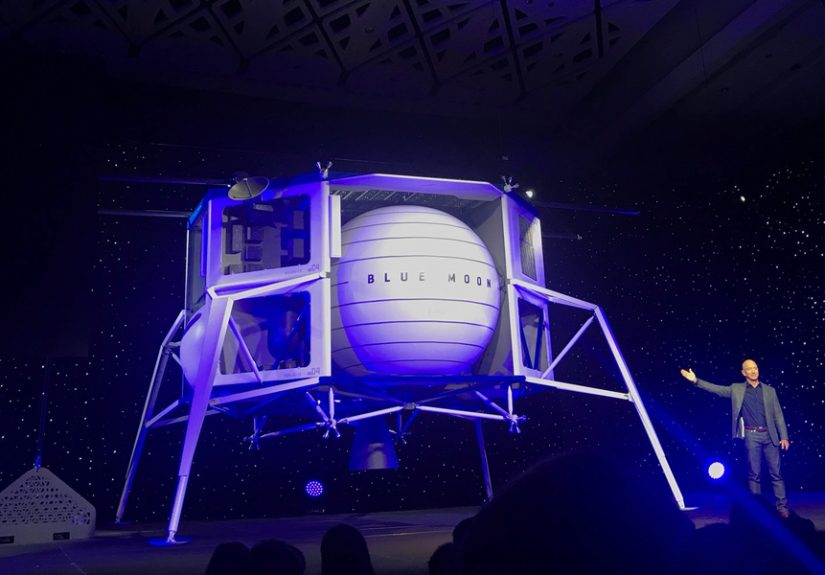
Blue Origin’s recent reveals have leaned into the last two categories: showing MK1 hardware and facilities, and talking more concretely about how Blue Moon fits NASA’s timeline. That shift matters because a lunar lander isn’t judged by its renderingit’s judged by whether it can land precisely, manage propellant for long mission timelines, and operate reliably in brutal temperature swings while communicating with Earth from the lunar south pole.
Why NASA Picked Blue Moon for Artemis V
NASA’s selection of Blue Origin as a second lunar lander provider wasn’t just a trophy. It’s a strategy:
- Redundancy: If one lander program slips, another can keep the overall campaign moving. Space is hard; scheduling should not depend on one hardware path.
- Competition: Two providers can drive innovation and cost discipline, and create options for future mission designs.
- Scalability: Sustainable exploration requires more mass delivered, longer surface stays, and systems that can evolveespecially near the lunar south pole.
NASA’s not shy about the operational concept either: astronauts launch on SLS, ride Orion to lunar orbit, dock with Gateway, and then two crew members transfer to Blue Origin’s human landing system for a surface mission around the south pole region. In NASA’s plan, Blue Origin must complete an uncrewed demonstration landing before a crewed Artemis V mission later in the decade.
The Technology Under the Hood: Why Blue Moon Isn’t “Just Another Lander”
BE-7: A lunar engine built for finesse, not fireworks
Blue Moon’s propulsion story centers on BE-7, an engine designed for deep throttling and restartabilityexactly what you want when your job is “do not crater the spacecraft in front of everyone on the internet.” Blue Origin describes BE-7 as a dual-expander cycle engine producing about 10,000 pounds of thrust in vacuum. It burns liquid oxygen and liquid hydrogen, a high-performance combination with one major catch: keeping it cold long enough to use it.
Liquid hydrogen and oxygen: Great performance, tricky storage
Using LOX/LH2 is like buying a sports car that also needs to live in a refrigerator. You get excellent efficiency (a big deal in deep space), but cryogenic propellant management is a constant battle against boil-off. Blue Origin has highlighted tech aimed at making LOX/LH2 more practical for long lunar mission timelines, including advanced thermal management approaches and cryogenic systems designed to keep propellants from slowly vanishing into the void.
Why fight this fight at all? Because performance matters. Higher efficiency can translate into more payload, more margin, and more capability at the south polewhere lighting conditions, terrain, and mission constraints are far from friendly.
Precision landing and the lunar dust problem
The south pole region is scientifically juicyespecially for potential water icebut it’s also topographically complex. Landing “somewhere near” is not a plan when your mission depends on power, terrain access, and safety margins. Blue Moon’s development has emphasized precision landing.
Then there’s dust: rocket plumes can blast regolith into a high-speed sandstorm, threatening nearby equipment and coating surfaces. That’s why NASA payloads like plume-and-surface interaction cameras matterdata from uncrewed landings can directly shape safer design choices for crewed missions later.
From Vision to Hardware: A Short Timeline That Explains the “Reveal”
Here’s a practical way to understand the progression of Blue Moon from concept to flight-ready systems:
- Early concepts and public positioning: Blue Origin frames the Moon as a stepping stone to a broader cislunar economy and, eventually, Mars.
- Prototype-era reveals: Blue Origin shows mockups and designs, signaling intent and building credibility with partners and policymakers.
- May 2023: NASA selects Blue Origin to develop Blue Moon as a second human landing system provider for Artemis V.
- 2024–2026: MK1 is positioned as a technology and cargo pathfinder, with NASA-linked payload and mission planning tied to south pole operations.
- Manufacturing expansion: Blue Origin publicly highlights new facilities in Florida dedicated to MK2 assembly, integration, and testingturning “we will build it” into “we are building it here.”
The point of this timeline isn’t nostalgiait’s accountability. Every “reveal” increases the number of things you can measure: hardware progress, facility readiness, integration maturity, test cadence, and how well the program’s schedule matches the reality of building a human-rated lander.
How a Blue Moon Artemis V Mission Could Work
NASA’s baseline story for Artemis V reads like a relay race with some of the highest-stakes baton passes in human spaceflight:
- Launch: Four astronauts launch on SLS in Orion.
- Lunar orbit: Orion docks with Gateway.
- Transfer: Two astronauts move from Gateway to the Blue Moon human landing system.
- Descent: Blue Moon lands near the lunar south pole for roughly a week of surface science and operations.
- Ascent: The crew returns to lunar orbit, rendezvous with Gateway/Orion, and heads home.
What’s unique about Blue Origin’s broader architecture is the emphasis on a transporter concept to move propellant and support recurring operations between Earth orbit and lunar orbit. In other words: not just one heroic mission, but the beginnings of a supply chainbecause sustained exploration is logistics wearing a space suit.
Blue Moon vs. Other Artemis Landers: Different Philosophies, Same Destination
NASA’s Artemis approach effectively embraces multiple lander philosophies. One design may lean toward massive capacity and complex orbital refueling; another may emphasize a different balance of reusability, staging, and propellant strategy. Blue Moon’s LOX/LH2 approach is high-performance but cryogenically demandingso it puts a premium on thermal control and long-duration propellant storage.
This isn’t a “which is better” story as much as it is a “why multiple options help” story. Two different approaches reduce program risk and create room for evolution: cargo-focused missions, crew-focused missions, and eventually infrastructure deployment that doesn’t fit neatly into a single architecture.
The Hard Parts (Because the Moon Doesn’t Care About Your PowerPoint)
To go from reveal to routine lunar operations, Blue Moon has to thread several difficult needles:
- Cryogenic endurance: Keeping LOX/LH2 viable through long mission timelines is non-negotiable for lander performance and safety.
- Precision landing: South pole terrain demands accurate navigation and hazard avoidanceno “we’ll aim for the flat-ish part.”
- Dust mitigation: Plume/regolith interaction can affect visibility, sensors, hardware longevity, and nearby assets.
- Launch and integration reality: The lander has to match the cadence of available launch vehicles, mission readiness, and NASA’s broader Artemis schedule.
- Human-rating: Every subsystem must satisfy NASA’s safety and verification standards, and that process is as demanding as it sounds.
The optimistic read is that Blue Origin is building a stepping-stone approach: prove with MK1, scale with MK2, and make the hard problems less mysterious before humans depend on the solutions.
Why Blue Moon Matters Beyond One Mission
A credible lander can change lunar exploration from “rare event” to “repeatable service.” That’s the real promise behind the Blue Moon program:
- More delivered mass enables more science, more power systems, more mobility, and more long-duration surface work.
- Commercial cargo pathways can bring universities, startups, and non-NASA players into the lunar ecosystem.
- Infrastructure delivery (habitats, rovers, power, comm relays) is the difference between a visit and a presence.
And if lunar ice can eventually be turned into propellant, the logic of a recurring transportation architecture gets even stronger. A lander family designed with high-performance propellants and long-term operations in mind is, at minimum, a bet that the Moon will become a place where supply chains matternot just launch windows.
FAQ: Quick Answers About Blue Origin’s Blue Moon Lander
Is Blue Moon a cargo lander or a crew lander?
Bothdepending on the version. MK1 is positioned as a cargo lander and technology demonstrator. MK2 is designed to meet NASA’s requirements for crewed Artemis missions.
How much can Blue Moon Mark 1 deliver?
Blue Origin says MK1 can deliver up to three metric tons anywhere on the lunar surface, using New Glenn’s large fairing for a single-launch approach.
Which Artemis mission uses Blue Moon for astronauts?
NASA selected Blue Origin’s Blue Moon for Artemis V, with an uncrewed demonstration mission required before a crewed landing later in the decade.
Why use liquid hydrogen and oxygen instead of storables?
LOX/LH2 offers higher performance, which can translate to more payload and capability. The tradeoff is that cryogenic propellants are harder to store without boil-offso the program must solve thermal management at a serious level.
Conclusion: The Reveal Is Really a Promise to Deliver
Blue Origin’s Blue Moon revealshardware glimpses, facility announcements, engine details, NASA integration milestonesadd up to something bigger than a single press moment. They’re a running promise: that Blue Moon will graduate from “we can” to “we did,” and that the Moon can become a destination with a repeatable transportation system instead of a once-in-a-generation spectacle.
The next proof points will be unglamorous but decisive: test results, mission readiness, precision landing performance, and cryogenic endurance. If Blue Moon nails those, it won’t just be a lander. It’ll be a cornerstone of how America gets serious about living and working on the Moonwithout relying on luck and heroics as the main propulsion system.
Experiences: What It Feels Like to Follow a Lunar Lander From “Reveal” to Reality (500+ Words)
There’s a special kind of whiplash that comes with following lunar landers. One day you’re looking at a gorgeous rendering with perfect lighting and a heroic astronaut silhouette. The next day you’re reading about cryocoolers, propellant boil-off, dust plumes, and an engine that needs to throttle smoothly enough to avoid turning the landing site into a regolith blender. It’s like going from watching a car commercial to sitting through the maintenance scheduleexcept the “oil change” happens at 20 Kelvin.
If you’ve ever watched a big aerospace program up closelaunch countdowns, facility tours, slow trickles of hardware photosyou know the reveals are rarely about drama. They’re about reassurance. A lander program “reveals” itself the way a house reveals itself during construction: first you see the blueprint, then the foundation, then framing, then wiring, and eventually someone hangs a door and you think, oh wow, a human could actually walk through that. The Blue Moon story has been moving through those phases, and each new peekan engine spec, a factory announcement, a prototype roll-outhits fans and skeptics differently.
For the fans, the experience is a mix of childlike wonder and adult-grade skepticism. You want to believe the Moon is back on the menu, but you also know the Moon doesn’t negotiate. It doesn’t care how good your branding is. It doesn’t care that you used the word “sustainable” in a press release. It cares whether your guidance system can thread a landing trajectory into a hazardous terrain zone, whether your comms hold steady, and whether your thruster plume kicks dust into something important. That’s why missions like MK1 feel so emotionally loaded: they’re not just cargo runs. They’re the first time the program has to “show its work” in the harshest classroom imaginable.
For engineers and space nerds (often the same person, just with different sleep schedules), the most relatable part is the obsession with the unsexy details. LOX/LH2 is a great example. On paper, it’s efficient and elegant. In practice, it’s a lifelong relationship with thermal management. Following Blue Moon means learning to appreciate the drama of insulation, radiators, and cryogenic plumbingthings that sound boring until you realize they decide whether the lander has enough propellant to descend, hover, and land with margin. It’s the kind of experience that makes you look at a household thermos with new respect. “Keeps coffee warm for six hours?” Cute. Try keeping liquid hydrogen where you want it while you’re cruising between orbits.
Then there’s the strange emotional payoff of facility news. A new plant or integration site doesn’t look like a rocket launch. It’s concrete, steel, and logistics. But if you care about real missions, those buildings are where confidence gets manufactured. Announcing dedicated assembly and test facilities for MK2 feels like the moment a band stops rehearsing in a garage and books a studio: you’re declaring that this isn’t a hobby project anymore. And when you hear about resources being shiftedlike pausing other flights to focus on lunar workit’s a reminder that spaceflight isn’t just about physics. It’s about priorities, budgets, and the willingness to say “not now” to one goal so another goal can survive.
Finally, following Blue Moon is a lesson in patience. “Reveals” are fun, but the real experience is the slow accumulation of evidence that a program is maturing. When Blue Moon eventually landson target, upright, communicating, and doing its jobpeople will celebrate the moment. But the deeper satisfaction will come from recognizing the long chain of small, disciplined steps that made the moment possible. In lunar exploration, the glamor is the landing. The victory is everything that happened quietly before it.