Table of Contents >> Show >> Hide
- What Makes a Horror Death “Over the Top”?
- The Ranking
- 10. Tatum and the Garage Door in Scream (1996)
- 9. Julius Loses a Boxing Match With Jason in Friday the 13th Part VIII: Jason Takes Manhattan (1989)
- 8. Debbie’s “Roach Motel” Fate in A Nightmare on Elm Street 4: The Dream Master (1988)
- 7. Kate Meets the Bread Slicer in Fear Street Part One: 1994 (2021)
- 6. The Pendulum Trap in Saw V (2008)
- 5. The Phone Booth Nightmare in The Blob (1988)
- 4. The Opening Cable Massacre in Ghost Ship (2002)
- 3. Allie’s Bedroom Scene in Terrifier 2 (2022)
- 2. Candice’s Gymnastics Disaster in Final Destination 5 (2011)
- 1. The Liquid Nitrogen Face Smash in Jason X (2001)
- Why These Deaths Stick in Pop Culture
- The Experience of Watching Over-the-Top Horror Deaths
- Final Thoughts
Horror movies have never been famous for restraint. This is the genre that looked at a normal, perfectly respectable death scene and said, “Nice start, but what if we added a bread slicer, a garage door, a steel cable, and maybe one deeply upset theater audience?” The best over-the-top horror deaths are not just bloody. They are theatrical. They are engineered. They are the cinematic equivalent of a haunted house designer getting access to a special-effects lab and absolutely refusing to behave.
That is why the most memorable horror movie deaths are often bigger than the movies around them. They stop the plot cold, grab the audience by the collar, and announce that subtlety has officially left the building. Some are shocking because they come out of nowhere. Others take their sweet time, winding up like a baseball pitcher before delivering the final absurd swing. Either way, they linger in pop culture because they are impossible to forget.
This ranking is not about the saddest horror deaths, the most realistic deaths, or even the most important deaths. It is about glorious excess: the kind of kill that makes viewers gasp, laugh nervously, and immediately text a friend, “You are never going to believe what this movie just did.” So, with affection for practical effects, shameless creativity, and the noble art of going way too far, here are the top 10 ridiculously over-the-top horror movie deaths.
What Makes a Horror Death “Over the Top”?
Usually, it comes down to three things: creativity, buildup, and payoff. A knife to the chest may get the job done, but a death becomes legendary when the movie turns it into a whole event. The setup is elaborate, the execution is wildly specific, and the result feels less like a murder and more like a deranged magic trick. Horror fans tend to remember these scenes not because they are tasteful, but because they are inventive, outrageous, and delivered with enough style to make the audience admire the nerve of it all.
The Ranking
10. Tatum and the Garage Door in Scream (1996)
Wes Craven’s Scream changed horror by being smart, self-aware, and brutally funny. It also gave the genre one of its most absurdly memorable kills when Tatum Riley tries to escape Ghostface through a pet door built into a garage door. That plan goes poorly. Very poorly.
What makes this death so over the top is that it takes an everyday suburban object and turns it into a murder machine. A garage door should not be this dangerous. It is a garage door, not a medieval torture device. Yet the scene sells the impossible with pure confidence. Tatum is witty, defiant, and resourceful right up until the moment the mechanism lifts her and crushes her in full view of the audience. It is nasty, weirdly creative, and exactly the kind of “you’ve got to be kidding me” kill that helped make Scream iconic.
9. Julius Loses a Boxing Match With Jason in Friday the 13th Part VIII: Jason Takes Manhattan (1989)
This kill is ridiculous in the best possible way because the movie practically turns it into a joke with a setup and punchline. Julius squares up against Jason, unloads every punch he has, exhausts himself completely, and then tells the masked slasher to take his best shot. Jason does. One punch later, Julius is decapitated.
That is not just a death scene. That is a mic drop with a body count. The absurdity is the point. The movie knows Jason has long since become more than a man, and instead of pretending otherwise, it leans into comic-book slasher logic. The head flies off, the audience’s jaw follows it, and the franchise earns one of its most gleefully impossible kills. It is dumb, funny, and weirdly elegant, which is a sentence that only makes sense in slasher cinema.
8. Debbie’s “Roach Motel” Fate in A Nightmare on Elm Street 4: The Dream Master (1988)
Freddy Krueger was always at his most dangerous when he treated death scenes like nightmare-themed performance art. Debbie’s death in The Dream Master is a perfect example. A fitness-loving teenager finds herself transformed into a giant cockroach, trapped inside a roach motel, and crushed by Freddy with a smug one-liner ready to go.
This scene is pure dream-logic mayhem. It is body horror, creature feature, and stand-up comedy with murder sprinkled on top. The transformation alone is grotesque enough to earn a place on this list, but what really seals it is the commitment to the bit. Freddy does not simply kill Debbie. He gives her a custom-designed nightmare death with props, symbolism, and enough visual imagination to make the entire scene feel like a music video directed by someone who had too much coffee and zero supervision. It is excessive, inventive, and unmistakably Elm Street.
7. Kate Meets the Bread Slicer in Fear Street Part One: 1994 (2021)
For much of its runtime, Fear Street Part One: 1994 feels like a clever, fast-moving tribute to slasher movies. Then it reaches for the bread slicer and politely informs the audience that nobody is safe. Kate’s death lands like a brick because it combines surprise, brutality, and a household object nobody wanted to fear before this movie came along.
The genius of the scene is that it weaponizes a grocery store in a way that feels both absurd and horribly direct. Horror has long loved turning ordinary places into death traps, but this one hits especially hard because it is so specific. There is no elegant symbolism here. There is just a horrifyingly simple machine, a terrible angle, and a moment that instantly became the movie’s most talked-about kill. It is shocking, mean, and so over the top that it practically arrives with its own exclamation point.
6. The Pendulum Trap in Saw V (2008)
The Saw franchise never met an excessive idea it could not make worse in the most elaborate way possible. The Pendulum Trap is a standout because it looks less like a murder method and more like something a villain in a gothic opera would unveil while twirling a mustache. A giant blade slowly swings lower and lower toward a man strapped to a table, demanding gruesome self-sacrifice for even a chance at survival.
What makes it perfect for this list is the sheer theatricality. This is not a quick kill. It is a production. It has pacing, mechanics, symbolism, dread, and a giant sharpened pendulum because apparently regular-sized nightmare devices were unavailable. The sequence reflects the franchise at its most baroque: all gears, cruelty, and dramatic flourish. Whether you love Saw or roll your eyes at it, the series undeniably understands how to stage death like a twisted showman.
5. The Phone Booth Nightmare in The Blob (1988)
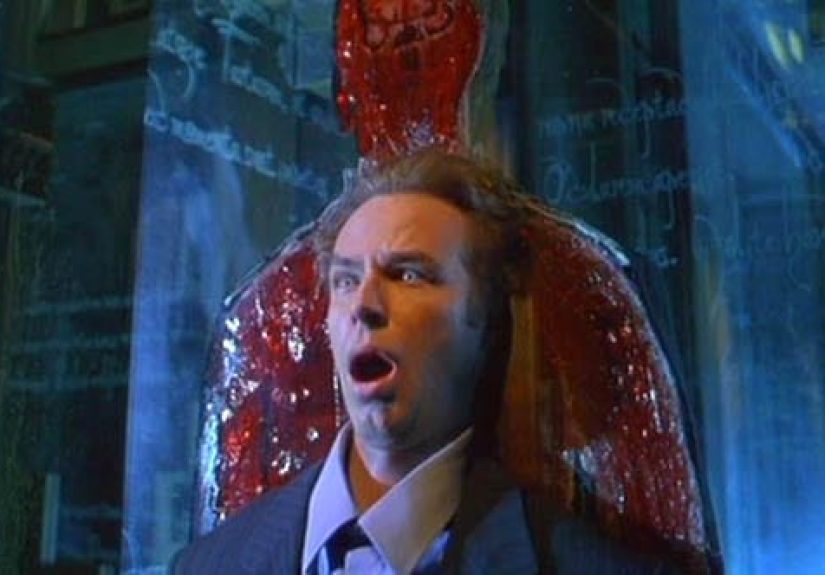
The 1988 remake of The Blob deserves more credit for turning goo into an elite nightmare fuel delivery system. One of its nastiest death scenes arrives when a terrified victim flees into a phone booth, only for the Blob to engulf the structure from the outside and crush it like a soda can. Just in case that were not upsetting enough, the scene adds the half-digested face of another victim as a final bit of emotional vandalism.
This death is wonderfully over the top because it relies on practical effects, timing, and total visual commitment. The booth becomes a transparent coffin. The Blob itself feels hungry, heavy, and malicious, not just like a special effect floating through a frame. The whole sequence is disgusting in a tactile, old-school way that modern CGI rarely matches. If horror is supposed to make viewers uncomfortable, this scene does its job with disgusting honors.
4. The Opening Cable Massacre in Ghost Ship (2002)
Let us be honest: Ghost Ship is famous for one thing above all else, and that one thing is absolutely earned. The opening sequence begins like an elegant dance party on a luxury liner. Then a steel cable snaps across the deck and slices through almost everyone in attendance in one swift, hideous sweep. One second, it is old-fashioned glamour. The next, it is industrial-strength nightmare confetti.
This death scene is the dictionary definition of over the top. It is extravagant, sudden, deeply mean, and staged with maximum shock value. What really makes it legendary is the contrast. The movie lulls viewers into a classy period mood before detonating that calm in a spectacular eruption of gore and disbelief. Even people who barely remember the rest of the film remember this sequence, and that is the mark of a true horror kill classic. It is outrageous enough to overshadow the movie that contains it.
3. Allie’s Bedroom Scene in Terrifier 2 (2022)
If this ranking were based on moderation, Terrifier 2 would have been disqualified on principle. Art the Clown’s bedroom scene is infamous because it does not just go too far. It builds a vacation home out there. What starts as a home invasion becomes an extended showcase in cruelty, makeup effects, and utter refusal to stop when common sense would suggest maybe, just maybe, enough has happened already.
That is precisely why it belongs here. The scene became notorious because it turns escalation into an art form. Every time the audience thinks the sequence has peaked, it finds a new hill to climb with muddy shoes and bad intentions. It is a modern example of horror excess that feels designed to test the limits of what viewers can stomach while also daring them to admire the craftsmanship. Love it or hate it, you do not forget it, and horror history has always had a special shelf reserved for that kind of scene.
2. Candice’s Gymnastics Disaster in Final Destination 5 (2011)
The Final Destination franchise has built an entire identity around deaths that play like malicious Rube Goldberg machines. Candice’s gymnastics scene may be the series at its most sadistic because the movie squeezes every ounce of tension from the setup. A loose screw, a wobbling bar, a stray nail, a slick surface: everything looks like the cause of death until the film reveals its final awful answer.
That is what makes it so magnificently over the top. The scene weaponizes anticipation. It drags the audience through a minefield of fake-outs and then lands on a payoff so brutal and so exaggerated that it instantly joins the franchise hall of fame. The death itself is not merely shocking; it is choreographed like a cruel punchline. No franchise understands the joy of dread-based engineering quite like Final Destination, and this scene is one of its nastiest masterpieces.
1. The Liquid Nitrogen Face Smash in Jason X (2001)
If the phrase “ridiculously over the top horror movie death” needed a mascot, Jason X would volunteer immediately and then somehow appear in space. The film takes Jason Voorhees off Crystal Lake, launches him into the future, and gives him a kill so ludicrously memorable that it has outlived almost every joke anyone has made about the movie. A victim’s face is plunged into liquid nitrogen and then shattered on a countertop.
Everything about this moment screams excess. The setting is absurd. The science is nonsense. The image is unforgettable. It is not scary in the traditional shadowy, creeping sense. It is scary the way a fireworks factory explosion is scary: you are mostly staring in astonishment at how committed everyone was to the bit. More importantly, the kill distills what “over the top” means in horror. It is imaginative, gleefully unserious, technically flashy, and impossible to confuse with any other death scene. It is the kind of moment that makes fans laugh, wince, and applaud at the same time. For sheer outrageous horror-movie audacity, nothing on this list tops it.
Why These Deaths Stick in Pop Culture
The best over-the-top horror deaths are not remembered because they are realistic. They are remembered because they are specific. A good horror kill tells you something about the movie delivering it. Scream gives you irony. Saw gives you mechanical dread. Final Destination gives you fate as a practical joke from hell. Jason X gives you the confidence of a franchise that looked at its own absurdity and decided to double it.
These scenes also survive because horror fans love craft. Whether the moment relies on practical effects, clever editing, patient buildup, or pure nerve, audiences can tell when filmmakers are fully committed. And in horror, commitment matters. If a movie is going to do something outrageous, it has to do it with a straight face and just enough style to make viewers believe they are witnessing something legendary instead of merely silly.
The Experience of Watching Over-the-Top Horror Deaths
There is a special kind of moviegoing experience that belongs almost entirely to horror, and it tends to happen right around the moment an outrageous death scene lands. The room changes. People gasp, then laugh, then look around as if to confirm that everyone else just saw the same insane thing. It is one of the few genres where shock and amusement can share the same seat, and that is a big reason scenes like these endure.
Watching an over-the-top horror death with other people is often half the fun. In a packed theater, a kill like the Ghost Ship cable massacre or the Final Destination 5 gymnastics scene does not just play on-screen. It ricochets through the audience. Someone screams. Someone mutters, “Nope.” Someone else starts laughing because the movie just crossed a line so aggressively that laughter becomes a survival mechanism. Horror fans know this rhythm well. It is part dread, part release, part admiration for the filmmakers’ sheer nerve.
These moments also become social currency. Long after the credits roll, viewers do not necessarily remember every subplot, but they absolutely remember “the garage door one,” “the bread slicer one,” or “the liquid nitrogen one.” The death scenes become shorthand. They are how fans recommend movies to each other, warn their friends, or test whether someone has really seen a particular cult favorite. In that sense, over-the-top horror deaths function almost like campfire stories inside the genre. You pass them around because the retelling is part of the fun.
There is also a nostalgia factor, especially with older practical-effects-heavy movies. Scenes from The Blob, A Nightmare on Elm Street 4, or the classic slasher era feel handmade in a way that still impresses viewers. You can sense the makeup work, the prosthetics, the mechanical rigs, and the physical mess of it all. Even when the effect is exaggerated, it has texture. Modern horror can absolutely deliver spectacular kills, but there is something uniquely charming about an old-school scene that looks like an entire effects workshop lost sleep bringing it to life.
Most of all, these deaths remind viewers that horror is not one thing. It can be terrifying, yes, but it can also be playful, mischievous, and wickedly inventive. The same genre that gives audiences grief, trauma, and existential dread also gives them a killer clown who refuses to quit, a slasher who decapitates a boxer with one punch, and a movie that thinks a garage door deserves its own place in horror history. That range is part of the magic. Over-the-top horror deaths are grotesque little celebrations of imagination, and for the right audience, they are not just carnage. They are cinema with a maniacal grin.
Final Thoughts
Horror has always understood that death scenes can be more than endings. In the right movie, they become set pieces, punchlines, nightmares, or grisly works of art. The most ridiculously over-the-top horror movie deaths endure because they are impossible to ignore. They are too weird, too ambitious, too mean, or too inventive to fade quietly into genre history.
And that is probably the secret. Great horror does not always ask for polite admiration. Sometimes it wants a horrified laugh, a shouted reaction, and a lifelong fear of everyday objects that really should have stayed harmless. After all, once horror has convinced you that bread slicers, garage doors, phone booths, and gymnastics equipment are all suspicious, it has done its job. Very rude of it, but impressive.