Table of Contents >> Show >> Hide
- What Are Pencil Pleat Curtains?
- Tools and Supplies You Will Need
- How to Hang Pencil Pleat Curtains: 9 Steps
- Step 1: Measure the Window and Check Curtain Width
- Step 2: Install or Inspect the Curtain Pole or Track
- Step 3: Lay the Curtains Face Down on a Clean Surface
- Step 4: Tie the Cords Securely at One End
- Step 5: Pull the Cords to Create Even Pleats
- Step 6: Adjust and Space the Pleats
- Step 7: Insert Curtain Hooks Into the Heading Tape
- Step 8: Hang the Curtains on the Pole or Track
- Step 9: Dress, Train, and Finish the Curtains
- Common Mistakes to Avoid
- Pencil Pleat Curtains on a Pole vs. Track
- How to Make Pencil Pleat Curtains Look More Expensive
- Extra Experience: What Actually Makes the Job Easier
- Conclusion
Pencil pleat curtains are the dependable jeans of window treatments: classic, flexible, flattering, and surprisingly easy to dress up. Their tightly gathered heading creates neat, vertical folds that look polished on both curtain poles and tracks. Even better, you do not need a professional installer, a degree in interior design, or the emotional stamina required to assemble flat-pack furniture at midnight.
Still, learning how to hang pencil pleat curtains correctly matters. A beautiful pair of curtains can look oddly droopy, uneven, or cramped if the cords are pulled too aggressively, the hooks are placed randomly, or the curtain pole is mounted too low. The good news is that pencil pleat curtains are forgiving. With the right measuring, spacing, and a little patient pleat-fluffing, you can make ready-made panels look custom.
This guide walks you through the full process in nine practical steps, from checking your hardware to shaping the final folds. Whether you are hanging pencil pleat curtains on a track, using a decorative pole and rings, or trying to rescue a bedroom window from “temporary blanket chic,” these steps will help you get a clean, balanced result.
What Are Pencil Pleat Curtains?
Pencil pleat curtains have a gathered heading that forms narrow, repeated pleats resembling a row of pencils. The back of the curtain includes a strip of heading tape with pull cords and multiple hook pockets. When you pull the cords, the fabric gathers into soft pleats. When you insert curtain hooks into the tape, the panel can be attached to track gliders or curtain rings.
This heading style is popular because it works in many rooms and with many fabrics. It can look casual in cotton, traditional in damask, airy in linen-look fabric, and cozy in thermal or blackout curtains. Pencil pleat curtains are also adjustable: you can control the gathered width, choose different hook pocket rows, and fine-tune how high or low the curtain sits.
Tools and Supplies You Will Need
Before you start, gather everything in one place. Curtain projects go much more smoothly when you are not balancing on a step stool while asking the universe where you left the last curtain hook.
- Pencil pleat curtains
- Curtain pole with rings or a curtain track with gliders
- Curtain hooks suitable for heading tape
- Tape measure
- Step ladder or sturdy stool
- Level
- Pencil for marking
- Drill, screws, brackets, and wall anchors if installing new hardware
- Steamer or iron, depending on the fabric care label
How to Hang Pencil Pleat Curtains: 9 Steps
Step 1: Measure the Window and Check Curtain Width
Start by measuring the width of your installed curtain pole or track, not just the glass or window frame. Pencil pleat curtains need fullness to look right. If the fabric is stretched flat across the window, the pleats disappear and the curtain starts to look like it has given up on life.
For a full look, the total flat curtain width is usually around two times the width of the pole or track. Some lightweight sheers may need more fullness, while heavy lined curtains may need slightly less. If you already own the curtains, lay them flat and check whether the combined width of both panels gives you enough fabric to gather attractively.
Also check the drop. Decide whether you want the curtains to hover just above the floor, lightly kiss the floor, stop at the sill, or fall below the sill. For most living rooms and bedrooms, floor-length curtains usually look the most finished. Sill-length curtains can work well in kitchens, bathrooms, or spaces where furniture sits directly below the window.
Step 2: Install or Inspect the Curtain Pole or Track
If your hardware is already installed, check that it is secure, level, and wide enough. A pole that extends several inches beyond the window frame on both sides lets the curtains stack away from the glass when open. This brings in more light and makes the window look larger.
If you are installing new hardware, position the curtain rod or track higher than the top of the window frame whenever possible. Mounting hardware several inches above the frame can create the illusion of taller walls. For a more dramatic designer look, you can place the rod closer to the ceiling, especially in rooms with standard ceiling height.
Use a level before drilling. Your eyes may forgive a slightly crooked picture frame, but curtains are long vertical fabric panels that will quietly announce every uneven bracket. If drilling into drywall and you cannot hit studs, use wall anchors rated for the weight of your curtains and hardware.
Step 3: Lay the Curtains Face Down on a Clean Surface
Place each curtain panel face down on a clean floor, bed, or large table so the heading tape is visible. Smooth the fabric gently. This gives you a clear look at the cords, pockets, seams, and top edge.
Do not pull the heading cords yet. First, make sure the cords are free and not stitched into the side seam. Many new curtains arrive with cords loosely tied or bundled. Identify all pull cords on the heading tape. Most pencil pleat curtains have three cords, though some styles may vary.
This is also a good time to check for wrinkles. If the curtains are badly creased from packaging, steam or iron them according to the care label before hanging. Trying to fix deep fold lines after the curtains are up is possible, but it can turn into an awkward dance involving a steamer, a ladder, and mild regret.
Step 4: Tie the Cords Securely at One End
Before gathering the curtain, tie the pull cords together at one end of the heading tape. This is an important step. If you skip it and start pulling from the other side, the cords may slide straight out of the tape. Once that happens, your curtain project becomes less “easy home upgrade” and more “tiny textile emergency.”
Use a firm knot at one end. Many people prefer a double knot on the outer edge of each curtain panel. The goal is to anchor the cords so you can gather from the opposite side without losing them inside the heading tape.
Never cut the cords after gathering. You may need them later if you wash the curtains, move them to another window, or adjust the width. Cutting the cords is tempting because the extra length looks messy, but there are better ways to hide them.
Step 5: Pull the Cords to Create Even Pleats
Now pull the loose cords from the opposite end to gather the curtain. Work slowly. Slide the fabric along the cords rather than yanking. Your goal is to reduce the curtain to the correct finished width while creating neat, even pencil pleats across the top.
Measure as you go. For a pair of curtains, each panel should usually gather to about half the width of the pole or track, with a small allowance for overlap in the center. For example, if your curtain pole is 80 inches wide, each curtain may need to gather to around 40 inches, depending on how you want them to meet and stack.
Once the panel is the right width, tie the loose cords in a slipknot or loose bow. Do not use a permanent knot so tight that future-you will need tweezers and a motivational speech to undo it. Tuck the bundled cords behind the heading tape or into a cord tidy if your curtains include one.
Step 6: Adjust and Space the Pleats
After pulling the cords, the pleats may look uneven at first. This is normal. Pencil pleat curtains often need a little grooming before they behave. Gently spread the gathers along the heading tape until the folds are evenly distributed from one side to the other.
Look for crowded sections, flat sections, and places where the fabric bunches awkwardly. Use your fingers to separate the pleats so they are similar in size. The top should look balanced before you add hooks.
This step is where the curtains start looking intentional. Even pleat spacing helps the curtains hang straight, open smoothly, and stack more neatly. It also prevents one side from looking fluffy while the other side looks like it missed the meeting.
Step 7: Insert Curtain Hooks Into the Heading Tape
Most pencil pleat heading tapes have several rows of pockets. The row you choose affects the final hanging height. For a curtain pole with rings, the upper row often works best because it lets the curtain sit just below the pole. For a curtain track, the middle or lower row is commonly used so the heading can help hide the track.
Insert one hook near each end of the curtain panel. Then space the remaining hooks evenly across the heading tape. A common spacing is about every 4 inches, or every few pockets, depending on the tape and the number of rings or gliders you have. The exact spacing matters less than consistency. Uneven hooks create uneven hanging.
Make sure every hook is inserted into the same pocket row across the whole panel. Mixing rows accidentally can make the top edge rise and dip like a tiny fabric roller coaster. Count your rings or gliders before you start so each curtain panel gets the right number of hooks.
Step 8: Hang the Curtains on the Pole or Track
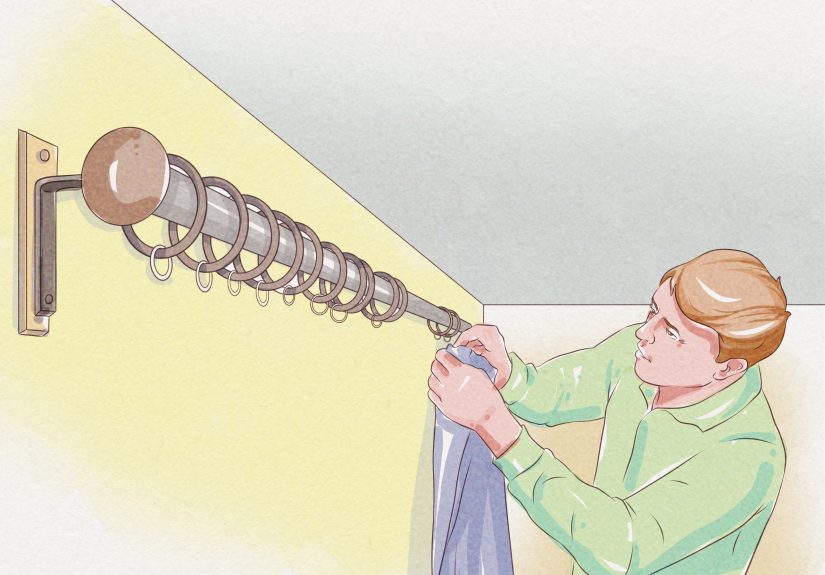
If you are using a curtain pole, attach each hook to a curtain ring. Many curtain rings have a small eyelet at the bottom for hooks. Place the last ring on each outside edge between the bracket and the finial if your pole design allows it. This helps anchor the curtain at the end so it does not slide inward every time you close it.
If you are using a curtain track, attach each hook to a glider. Start at one end and move across carefully. Make sure every hook is fully seated, especially on heavier curtains. A half-attached hook may hold for a few minutes, then pop loose with the theatrical timing of a sitcom prop.
Step back and check the length. If the curtains are too high or too low, remove them and change the hook pocket row rather than tugging on the fabric. The multiple rows exist for this exact reason.
Step 9: Dress, Train, and Finish the Curtains
Once the curtains are hanging, close them fully and shape the folds from top to bottom. Use your hands to guide each pleat so the fabric falls in long, vertical lines. This finishing process is often called dressing or training the curtains.
For a crisp look, gather the folds neatly and loosely tie the curtain panels with fabric strips, ribbon, or soft ties for a day or two. Do not tie them so tightly that you create dents. The goal is to encourage the fabric to remember the folds, not to put it in a wrestling hold.
Finish by steaming any remaining wrinkles, checking that the center edges meet evenly, and confirming that the panels open and close smoothly. Adjust individual hooks if needed. A few minutes of fine-tuning can make affordable curtains look much more expensive.
Common Mistakes to Avoid
Pulling the Cords Before Tying One End
This is the classic pencil pleat mistake. Always tie one end first so the cords do not disappear into the heading tape or pull out completely.
Cutting Off the Extra Cord
Do not cut the cord after gathering. Bundle it and tuck it behind the tape. If you ever need to wash, resize, or rehang the curtains, you will be glad the cords are still there.
Using Too Few Hooks
Too few hooks can cause sagging between attachment points. Use enough hooks to support the heading evenly, especially with lined, blackout, velvet, or heavy fabric curtains.
Ignoring the Hook Pocket Row
The wrong pocket row can make curtains sit awkwardly on a pole or fail to hide a track. Choose the row based on your hardware and desired curtain height.
Mounting the Rod Too Narrow
A narrow rod makes curtains block more of the window when open. Extending the hardware beyond the frame helps the panels stack back and makes the window feel wider.
Pencil Pleat Curtains on a Pole vs. Track
Pencil pleat curtains work well on both poles and tracks, but the setup changes slightly. On a pole, you usually use curtain rings with eyelets. The hooks connect the heading tape to the rings, and the rings slide along the pole. This is a decorative option because the pole, finials, and rings remain visible.
On a track, the hooks attach to gliders or carriers. Tracks are often more discreet and can be easier to operate, especially for wide windows. They are also useful when you want the curtain heading to hide most of the hardware.
For poles, the top hook pocket often gives the best drop. For tracks, the middle or lower pocket often helps conceal the mechanism. However, every curtain is slightly different, so test one panel before inserting every hook. One small test can save you from re-hooking an entire curtain while questioning your life choices.
How to Make Pencil Pleat Curtains Look More Expensive
The secret to expensive-looking curtains is not always expensive fabric. Often, it is proportion and finishing. Hang the pole high and wide when the room allows it. Choose panels with enough fullness. Steam wrinkles. Space hooks evenly. Shape the folds after hanging.
Another useful trick is to make sure the curtains reach the right length. Curtains that stop awkwardly above the floor can look accidental. Curtains that just skim or lightly touch the floor tend to look more tailored. If ready-made curtains are too long, hemming them is usually better than letting them puddle heavily unless that relaxed, romantic look truly fits the room.
Finally, match the hardware to the room. A simple black, brass, bronze, nickel, or wood-toned pole can instantly make pencil pleat curtains feel more intentional. Avoid flimsy rods for heavy fabric. A sagging rod can make even beautiful curtains look tired.
Extra Experience: What Actually Makes the Job Easier
After hanging pencil pleat curtains in real rooms, one lesson becomes obvious: the preparation takes longer than the hanging, and that is a good thing. The people who get the best results are not necessarily the handiest people. They are the ones who measure twice, count hooks before climbing the ladder, and resist the urge to rush the gathering cords like they are starting a lawn mower.
One helpful experience is to gather both curtain panels side by side before hanging either one. Lay them on the floor or across a bed and pull the cords until both panels are the same finished width. This makes the center meeting point much neater. If you gather one panel tightly and the other loosely, the curtains may technically cover the window, but the finished look will feel slightly off.
Another practical tip is to count your rings or gliders before inserting hooks. If your pole has 28 rings total, each curtain panel usually gets 14 rings. That means each panel needs 14 hooks. Insert the end hooks first, then distribute the remaining hooks evenly. This simple counting method prevents the common problem of reaching the end of the panel with three hooks left and a facial expression that says, “Well, that cannot be right.”
When working with heavy lined curtains, it is worth having a second person help lift the panels. Pencil pleat curtains can become surprisingly heavy once gathered because all that fabric is concentrated along the heading. A helper can support the curtain while you attach hooks to rings or gliders. This reduces strain on the fabric, the hardware, and your shoulders.
If the curtains do not hang perfectly at first, do not panic. New curtains often need a short settling period. Steam the fabric, shape the folds, and loosely tie the panels for 24 to 48 hours. This is especially useful for thicker fabrics that arrive with packaging creases. Think of it as curtain posture training. No whistle required.
For rental homes or apartments, always check what kind of hardware is already installed. Some existing tracks may have too few gliders, broken gliders, or old hooks left behind from previous curtains. Replacing missing gliders or buying fresh hooks is inexpensive and can make the curtains slide much better. If drilling is not allowed, tension rods may work for lightweight curtains, but they are usually not ideal for heavy pencil pleat panels.
Finally, take photos after hanging and look at the room from a distance. Curtains are part of the whole wall, not just the window. A photo can reveal uneven hems, crowded pleats, or a rod that feels too low. Small adjustments, such as moving hooks to a different pocket row or spreading pleats more evenly, can dramatically improve the result. The difference between “good enough” and “that looks professionally done” is often just fifteen extra minutes of fussing.
Conclusion
Hanging pencil pleat curtains is a beginner-friendly project with a high visual payoff. The basic process is simple: measure carefully, secure the hardware, tie the cords, gather the heading, insert hooks evenly, hang the panels, and dress the folds. The details matter, but none of them are difficult.
Once you understand how the heading tape works, pencil pleat curtains become one of the most flexible window treatment options. You can use them with poles or tracks, adjust their width, fine-tune their height, and create a soft, finished look in bedrooms, living rooms, dining rooms, and home offices.
The biggest tip? Do not rush the pleats. Give the fabric a little attention, and it will reward you with a window that looks taller, softer, and much more polished. Your room gets an instant upgrade, and you get the quiet satisfaction of knowing those tidy folds did not happen by accident.