Table of Contents >> Show >> Hide
- What counts as a “broken knuckle”?
- Common causes of a broken knuckle
- Broken knuckle symptoms (and why they happen)
- 1) Pain and tenderness
- 2) Swelling and bruising
- 3) A “sunken” or misshapen knuckle
- 4) Deformity or a new “bump”
- 5) Trouble moving fingers or making a fist
- 6) “Scissoring” (fingers crossing when you make a fist)
- 7) Numbness, tingling, coldness, or color changes
- 8) Cuts over the knuckle (especially after a fight)
- When to see a doctor for a broken knuckle
- How a broken knuckle is diagnosed
- Treatment: What happens after the diagnosis?
- Recovery timeline (and what healing actually feels like)
- Complications to know (so you take the injury seriously)
- FAQ: Quick answers to common broken knuckle questions
- Prevention (because your drywall did nothing wrong)
- Bottom line
- Experiences people commonly report after a broken knuckle (and what they wish they’d known)
Your knuckles are supposed to help you open jars, type angry emails, and occasionally lose a fair fight with a doorknob. They are not supposed to become a swollen, bruised “mystery lump” that makes your fingers point in three different directions.
The term “broken knuckle” isn’t a formal medical diagnosis, but people usually mean a fracture in the bones around the knuckle jointmost commonly a metacarpal fracture (the long bones in your hand) near where the fingers meet the hand. A classic example is the boxer’s fracture, which often involves the neck of the fifth metacarpal (near the pinky knuckle) after punching something hard (like a wall, or your pride).
This guide breaks down broken knuckle symptoms, how clinicians confirm the diagnosis, what treatment typically looks like, and when to see a doctorincluding the red flags that mean “go now, not later.”
What counts as a “broken knuckle”?
When people say “knuckle,” they might be talking about one of a few nearby structures:
- Metacarpals: Five long bones that form the framework of your hand. The “knuckles” you see when you make a fist are the ends (heads) of these bones.
- Phalanges: Finger bones. Fractures closer to the hand can also feel like “knuckle” injuries.
- Joint surfaces: If the fracture extends into the joint, it can increase the risk of stiffness and arthritis later on.
Because several bones and joints live in the knuckle neighborhood, symptoms can overlap. The key point is simple: if your knuckle hurts a lot after trauma, assume fracture until proven otherwise.
Common causes of a broken knuckle
A broken knuckle is usually a trauma story. Typical causes include:
- Punching a hard object (the classic boxer’s fracture)
- Falls onto an outstretched hand
- Sports impacts (basketball, football, martial arts, cycling crashes)
- Workplace crush injuries (doors, heavy tools, equipment)
- Car accidents (direct impact or twisting forces)
Sometimes the injury seems “minor” in the moment, and the swelling shows up later like it had an appointment. Delayed swelling doesn’t mean delayed seriousness.
Broken knuckle symptoms (and why they happen)
Most knuckle fractures share a familiar greatest-hits album of symptoms. Here’s what to watch for:
1) Pain and tenderness
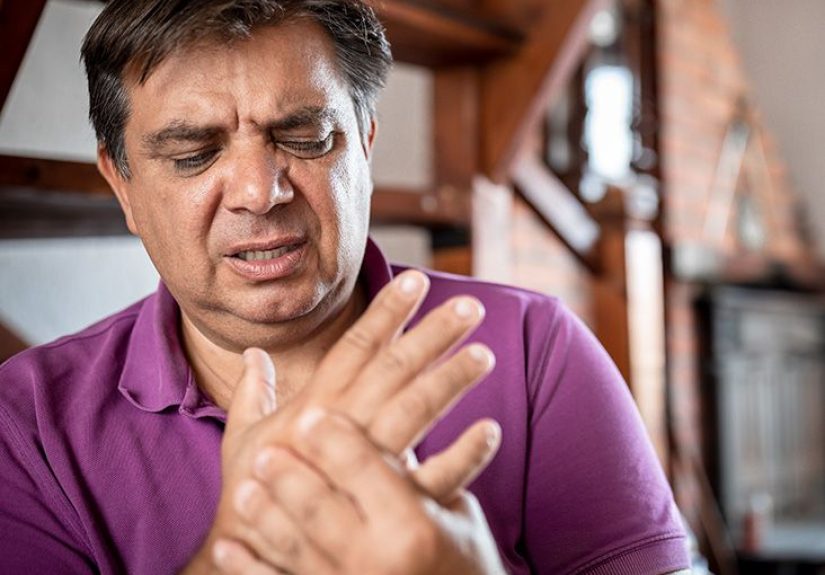
Expect localized pain that worsens with gripping, making a fist, or pressing on the area. Pain that’s sharp right over a boneespecially after a clear impactis suspicious for fracture.
2) Swelling and bruising
Swelling can be immediate or build over hours. Bruising may spread across the back of the hand or into the palm, because gravity loves drama.
3) A “sunken” or misshapen knuckle
With some metacarpal fractures (especially boxer’s fractures), the injured knuckle can look flattened or less prominent compared to the other hand.
4) Deformity or a new “bump”
Any obvious bend, crooked finger, or bump that wasn’t part of your original factory settings should be treated as urgent.
5) Trouble moving fingers or making a fist
You might not be able to fully straighten the finger, or making a fist may feel weak and painful. Limited motion can come from pain, swelling, tendon irritation, or the fracture itself.
6) “Scissoring” (fingers crossing when you make a fist)
This is a big deal. If you gently try to make a fist and one finger crosses over its neighbor instead of lining up, it may indicate rotational deformity. Rotation often needs prompt medical evaluation because it can heal “crooked” and affect function long-term.
7) Numbness, tingling, coldness, or color changes
These may signal nerve irritation or blood flow problems. Fingers that look pale/blue, feel cold, or have worsening numbness are an “urgent now” situation.
8) Cuts over the knuckle (especially after a fight)
If you have a cut over a knuckle after punching someone’s mouth, that can be a fight bite (a high-risk human bite wound). These injuries can look small but can cause serious infection because bacteria can be driven deep into the joint or tendon areas. This deserves medical care quicklyoften the same day.
When to see a doctor for a broken knuckle
Here’s the honest answer: if you think you might have a broken knuckle, get checked promptly. Hand bones are small, joints are finicky, and your future grip strength will not be impressed if you “walk it off.”
Go to the ER or urgent care immediately if you have:
- Severe deformity (crooked finger/hand, obvious angulation)
- Numbness or worsening tingling
- Finger is cold, blue, pale, or feels “dead”
- An open wound near the injury, especially if bone might be exposed
- Rapidly increasing swelling with severe pain
- Inability to move fingers (beyond what pain alone would explain)
- A cut over the knuckle after punching teeth (possible fight bite)
See a clinician the same day (or within 24 hours) if:
- Pain and swelling persist after an impact, even if it “doesn’t look that bad”
- You can’t make a fist normally or your grip feels weak
- You notice bruising spreading across the hand
- Your knuckle looks flatter than usual
- You have pain directly over a bone after trauma
Why the urgency? Delays can increase the odds of poor alignment, stiffness, reduced range of motion, and weaker grip strengthespecially if rotational deformity or joint involvement is present.
How a broken knuckle is diagnosed
Clinicians diagnose knuckle fractures with a mix of history, hands-on exam, and imaging. You don’t need to memorize the process, but it helps to know what they’re looking for (and why they keep asking you to make a fist).
1) Questions they’ll ask
- How did the injury happen? (Punching a wall vs. falling vs. crush injury matters.)
- When did it happen? Swelling timelines can help.
- Any numbness or tingling?
- Any cuts, especially over the knuckle?
- Can you move your fingers normally?
- Past hand injuries or bone conditions (like osteoporosis)?
2) Physical exam (the “is anything else broken?” tour)
Expect the clinician to check:
- Tenderness points along the metacarpals and fingers
- Finger alignment at rest and with gentle motion
- Rotation (including the “scissoring” sign)
- Tendon function (can you extend and flex each finger?)
- Skin integrity (cuts, punctures, signs of infection)
- Nerve and blood flow (sensation, capillary refill, warmth, color)
Pro tip: remove rings early if you can do so comfortably. Swelling can turn a ring into a tiny, sparkly tourniquet.
3) Imaging (yes, usually an X-ray)
X-rays are the standard first step and usually include multiple views of the hand. Imaging helps confirm:
- Which bone is fractured (metacarpal vs finger bone)
- Whether the fracture is displaced (bones moved out of alignment)
- Whether the fracture involves the joint surface
- Angulation/rotation concerns that affect function
If the X-ray is unclear but suspicion remains high, some settings may consider additional imaging (like CT for complex fractures) or other tools depending on resources and clinical judgment.
Treatment: What happens after the diagnosis?
Treatment depends on the fracture location, alignment, stability, and whether the joint is involved. The goal is not just “bone heals,” but “hand works.”
First aid while you’re waiting to be seen
- Rest: Stop using the hand.
- Ice: 10–20 minutes at a time, several times a day (use a cloth barrier).
- Elevation: Keep the hand above heart level to reduce swelling.
- Immobilize: A temporary splint can reduce pain and prevent more damage.
- Pain control: Use over-the-counter medication as directed on the label unless a clinician has told you to avoid it.
- Don’t “test it”: Repeatedly making a fist to see if it still hurts is like poking a wasp nest to confirm it’s angry.
Non-surgical treatment (very common)
Many metacarpal fracturesespecially stable onescan heal well without surgery. Treatment may include:
- Splinting or casting (often an ulnar gutter splint for 4th/5th metacarpal injuries)
- Buddy taping or less-restrictive immobilization in selected cases
- Follow-up X-rays to ensure alignment stays acceptable
- Hand therapy or guided exercises to reduce stiffness
A common theme in modern care: protect the fracture, but don’t freeze the whole hand longer than necessary. Stiffness is one of the most frequent frustrations after hand fractures, so clinicians balance stability with safe motion.
Reduction (re-aligning the bone)
If the bone is significantly angled or displaced, a clinician may recommend a closed reductionmanually guiding the bone back into better positionfollowed by splinting or casting. This is often done with pain control and careful technique.
When surgery may be needed
Surgery isn’t the default, but it’s important when the hand’s mechanics are at risk. Surgical repair may be considered for:
- Open fractures (skin broken over the fracture)
- Significant rotational deformity (fingers cross when making a fist)
- Unstable fractures that won’t stay aligned in a splint
- Intra-articular fractures (fracture extends into the joint)
- Multiple fractures or complex crush injuries
- Associated tendon/nerve injuries
If there’s a fight bite or other contaminated wound, treatment may also include antibiotics, wound care, and tetanus updatesbecause infection in the hand can become serious fast.
Recovery timeline (and what healing actually feels like)
Every fracture has its own personality, but many knuckle-area fractures take weeks to heal, with function improving over time. You might notice:
- Days 1–7: Swelling, bruising, and that annoying “throb” when your hand isn’t elevated.
- Weeks 2–6: Immobilization continues for many fractures; pain gradually improves; motion work may start depending on the injury.
- Weeks 6–12: Bone healing progresses; strength and dexterity slowly return with use and exercises.
- Months: Stiffness and grip strength may keep improving, especially if therapy is consistent.
If you’re cleared for exercises, the boring stuff matters: gentle range-of-motion, gradual strengthening, and doing it often enough to retrain the hand without irritating the fracture.
Complications to know (so you take the injury seriously)
Most people heal well, but complications can happenespecially with delayed care or poor alignment. These include:
- Malunion: Bone heals in a less-than-ideal position (can affect grip and finger alignment).
- Stiffness: Common after hand fractures, sometimes requiring therapy or prolonged rehab.
- Reduced grip strength: Often improves, but may persist if alignment or joint surface is affected.
- Arthritis: Risk increases if the fracture involves the joint.
- Infection: Higher risk with open wounds and fight bites.
- Nerve/tendon injury: Can cause persistent numbness or movement problems.
FAQ: Quick answers to common broken knuckle questions
How do I know if it’s a sprain or a fracture?
You can’t always tell without imaging. Severe point tenderness over a bone, visible deformity, knuckle flattening, scissoring, or inability to use the hand normally all raise suspicion for fracture. When in doubt: get evaluated.
Can I just tape it and keep going?
Sometimes a stable fracture can be managed with less restrictive supportbut that decision is safest after an exam and X-ray. Taping the wrong injury can lead to crooked healing and long-term problems.
Will my knuckle look normal again?
Many people recover excellent function. Some boxer’s fractures may leave a slightly flatter knuckle even after healing, but what matters most is alignment, finger tracking, and strength.
Prevention (because your drywall did nothing wrong)
- Use proper protection for combat sports (wraps and gloves) and learn correct technique.
- Wear sport-appropriate gear for high-fall activities (cycling gloves can help in crashes).
- Make your home safer if falls are a concern (good lighting, remove tripping hazards).
- Support bone health if you’re at risk for low bone densitytalk to a clinician about screening and prevention.
- Manage anger creatively: consider stress relief that doesn’t involve punching immovable objects. Your hand will thank you. Your wall, too.
Bottom line
A “broken knuckle” is usually a fracture near the knuckle jointoften a metacarpal fracture like a boxer’s fracture. The most common signs include pain, swelling, bruising, knuckle flattening, deformity, difficulty making a fist, and finger scissoring. Diagnosis typically involves an exam plus X-rays. Many fractures heal with splinting, but rotation, open wounds, fight bites, numbness, color change, or major deformity require urgent medical attention.
If you’re debating whether to get it checked, here’s a simple rule: hands are complicated, healing is picky, and “I’ll see how it feels tomorrow” is how stiffness earns a long-term lease. When in doubt, get evaluated.
Experiences people commonly report after a broken knuckle (and what they wish they’d known)
Note: The stories below are composite examples based on common patient experiencesmeant to illustrate patterns, not describe any specific individual.
1) “It didn’t hurt that much… until it did.”
A lot of people describe a moment of impactmaybe a fall during pickup basketball or a missed punch on a heavy bagfollowed by a weird mix of adrenaline and denial. They finish the game or keep working, then notice swelling later that evening. The next morning they wake up with a hand that looks like it borrowed someone else’s puffiness, and making a fist feels like squeezing a lemon full of nails. The takeaway: delayed swelling is still a real injury. If the pain is focal over a bone or your grip is suddenly unreliable, it’s worth getting an X-ray sooner rather than later.
2) The “flat knuckle” surprise.
With boxer’s fractures, people often notice the injured knuckle looks less prominent when they make a fist. Sometimes they think it’s just swelling “hiding” the knuckleuntil the swelling improves and the knuckle still looks flatter. Many are relieved to learn that mild cosmetic changes can happen even with good outcomes. What matters most is function and alignment: can the finger track normally, does the fist close without crossing fingers, and does strength return with healing and rehab?
3) “Scissoring” is the moment people stop joking.
People often try the “gentle fist test” at home. When the fingers line up, they feel reassured (even if it hurts). But when one finger crosses over anotherlike the hand is attempting interpretive dancemost realize it’s beyond a simple bruise. Clinicians take this seriously because rotational deformity can heal in a way that makes gripping awkward and frustrating long-term. The common regret here is waiting: rotation is easier to address early.
4) The fight-bite lesson: tiny cut, big problem.
Some of the most anxious experiences come from a small cut over the knuckle after a fight. People often clean it at home and assume it’s fine because the wound is small. But infections in the hand can escalate quickly, especially when bacteria are pushed deep near joints or tendons. The people who do best usually seek care early, get proper wound management, and follow instructions closely. The wish-they’d-known: any knuckle cut after punching teeth deserves urgent evaluation, even if it looks minor.
5) The rehab reality check.
Many people expect the cast or splint to be the hard part. Then the splint comes off and they realize the hand feels stiff, weak, and strangely uncoordinatedlike it forgot how to be a hand for a while. This is normal. The folks who recover fastest often do two unglamorous things: they follow immobilization rules (not removing support early “just to test it”), and they take hand therapy or exercises seriously once cleared. Small, consistent motion and strengthening work can make a dramatic difference in comfort and function.
6) The “I kept my ring on” near-miss.
A surprisingly common memory: swelling that made a ring painfully tight. Some people manage to remove rings early; others can’t, and it becomes a race against time. This experience tends to stick because it’s a simple fix that can prevent serious circulation issues. If your hand is swelling and you can remove rings safely, do it earlythen keep the hand elevated and supported until you’re evaluated.
Across these experiences, the pattern is clear: early evaluation, proper immobilization, and smart rehab are what separate “annoying but temporary” from “why does my finger do that forever?”