Table of Contents >> Show >> Hide
- Why the Cybertruck’s 2023 Arrival Mattered So Much
- From Wild Concept to Real Truck
- What Tesla Actually Delivered in 2023
- The Big Catch: The Cybertruck Didn’t Arrive Exactly as Promised
- Design: Bold, Weird, and Impossible to Ignore
- How It Stacked Up Against Other Electric Pickup Trucks
- Who the Cybertruck Was Really For
- The Real Experience of “Cybertruck Is Arriving in 2023”
- Final Thoughts
- SEO Metadata
Note: This article treats the headline as a historical launch story. Tesla did, in fact, begin first Cybertruck deliveries in late 2023.
For years, the Tesla Cybertruck felt less like a vehicle and more like a dare. It looked like someone asked a science-fiction prop designer to build a pickup truck using a ruler, a grudge against curves, and an industrial sheet of stainless steel. Then came the delays. And more delays. At some point, “Cybertruck is coming” started to sound like one of those phrases people repeat without fully believing itright up there with “the group chat will stay on topic” and “this meeting will be brief.”
But in 2023, the long wait finally ended. The Cybertruck arrived, not as a rumor, not as a stage prop, and not as a broken-window meme, but as a real production vehicle handed over to actual customers. That alone made it one of the most talked-about automotive launches of the year. Yet the bigger story was never just that Tesla shipped the truck. It was how it shipped it: with eye-popping performance, a radically unconventional design, headline-grabbing specs, and a few reality-check moments for buyers who remembered the original 2019 promises.
This is the real story of the Cybertruck’s 2023 arrivalwhat Tesla delivered, what changed from the early vision, why the truck mattered, and what the launch said about the future of electric pickups in America.
Why the Cybertruck’s 2023 Arrival Mattered So Much
The Cybertruck was never going to be just another electric truck. Tesla’s brand, Elon Musk’s showmanship, and the truck’s wildly unusual shape guaranteed that. But the 2023 launch mattered for more practical reasons, too. By the time Tesla began deliveries, the electric pickup race was already under way. Rivian had the R1T on the road. Ford had launched the F-150 Lightning. GM and other automakers were pushing deeper into the EV conversation. Tesla was no longer first to the electric pickup partyit was the dramatic guest arriving fashionably late, wearing stainless steel and demanding everyone look at it.
That delay made the 2023 debut especially important. Tesla had unveiled the Cybertruck back in 2019 with bold claims about pricing, towing, range, and performance. The company then spent years refining, retooling, and ramping up manufacturing. By late 2023, the big question was no longer, “Is the Cybertruck interesting?” It was, “Can Tesla actually build this thing at scale, price it competitively, and turn it into a real business?”
So when the first trucks finally reached customers in November 2023, the delivery event became more than a launch. It became a reality check.
From Wild Concept to Real Truck
When Tesla first revealed the Cybertruck in 2019, the truck instantly became one of the most polarizing designs in modern automotive history. Some people loved its brutalist, Blade Runner-meets-jobsite aesthetic. Others reacted like they had just seen a kitchen appliance escape into traffic. Either way, nobody ignored it.
The concept promised a lot: angular stainless-steel body panels, armored glass, impressive towing numbers, fast acceleration, and a base price that sounded aggressive for an EV truck. Tesla positioned it as both a utility vehicle and a tech statement. This wasn’t supposed to be a traditional pickup with an electric powertrain stuffed underneath. It was supposed to rewrite the category.
Then reality showed up with a clipboard. Manufacturing a vehicle with that shape and material choice was harder than it looked. Tesla repeatedly pushed back the timeline. By 2023, the Cybertruck had become a symbol of both Tesla’s ambition and its tendency to announce first and sort out the details later.
That is why the first deliveries in 2023 felt so significant. The Cybertruck had crossed the line from concept to product. Not fully mass-market product, not instantly everywhere, and certainly not “easy to spot at every suburban stoplight” productbut real enough to drive home.
What Tesla Actually Delivered in 2023
When Tesla officially launched the production Cybertruck in late 2023, buyers finally got confirmed pricing and specs. The lineup included a rear-wheel-drive model with an estimated starting price of $60,990, an all-wheel-drive version starting at $79,990, and the high-performance “Cyberbeast” at $99,990. Estimated range fell roughly between 250 and 340 miles depending on trim, while maximum towing capacity reached up to 11,000 pounds. Payload topped out at about 2,500 pounds.
Those numbers were still strong in many ways. A truck that can rocket from 0 to 60 mph in sports-car territory while towing serious weight is not exactly shy. Tesla also leaned hard into the Cybertruck’s tech identity. Features such as steer-by-wire, rear-wheel steering, adaptive air suspension, a large center touchscreen, and an enormous lockable bed helped position the truck as futuristic rather than merely functional.
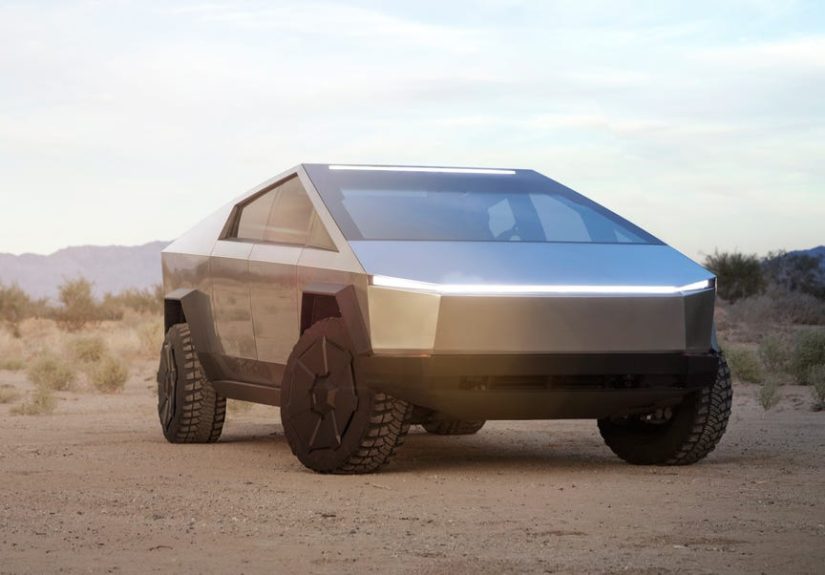
And let’s be honest: the truck’s biggest feature might have been the fact that it looked like absolutely nothing else on the road. In an era when many vehicles are aerodynamic cousins wearing different badges, the Cybertruck had all the subtlety of a steel triangle crashing a family barbecue.
Cybertruck Launch Specs That Grabbed Attention
- Estimated range: around 250 to 340 miles depending on trim
- Top towing capacity: up to 11,000 pounds
- Maximum payload: about 2,500 pounds
- Fast acceleration: the Cyberbeast pushed the truck deep into performance-car territory
- Distinctive construction: stainless-steel exterior and a radical geometric design
- Utility focus: large bed, high ground clearance, and adaptable suspension settings
In other words, Tesla did not deliver a timid compromise. It delivered a statement piece with real capability.
The Big Catch: The Cybertruck Didn’t Arrive Exactly as Promised
Now for the part where the launch hype met the accounting department.
The 2023 Cybertruck arrived, yesbut not quite in the form many early followers expected. Compared with the original 2019 presentation, the production truck came in at a much higher price. Tesla’s early base-price figure of $39,900 had helped create enormous buzz. By launch time, the entry price had moved far north of that. The towing and payload claims also landed lower than some of the earliest numbers people remembered from the reveal event, and the most affordable version was not the one most buyers were taking home first.
That gap between promise and production became one of the defining stories of the launch. The Cybertruck still looked futuristic and still offered serious performance, but it no longer felt like the shockingly affordable electric revolution many reservation holders had imagined years earlier.
To be fair, the auto market changed dramatically between 2019 and 2023. Inflation rose. Supply chains got weird. Battery materials did what battery materials often do when they sense optimismthey became more expensive. Engineering a vehicle this unconventional also added complexity. None of that makes higher pricing delightful, but it does make it understandable.
Still, if you were one of the people who heard “sub-$40,000 Cybertruck” and pictured yourself hauling plywood into the future on a semi-reasonable budget, the 2023 launch probably felt like opening a menu and discovering the sandwich now costs the same as a weekend getaway.
Design: Bold, Weird, and Impossible to Ignore
The Cybertruck’s design deserves its own section because, frankly, it demands one. Tesla did not build a conventional electric pickup with a few quirky details. It built a truck that looked like a low-poly render escaped from a video game before the textures loaded.
That unusual design had upsides. The stainless-steel body gave the truck a rugged, industrial identity. The wedge shape improved its instant recognizability. The vault-like bed and dramatic profile made it feel more like a machine from a future worksite than a polite neighborhood pickup.
But the design also raised practical questions. How easy would it be to repair? Would all buyers want a truck that draws this much attention? How would the unusual shape affect visibility, maneuverability, and day-to-day usefulness? These were fair concerns, and many reviewers treated the Cybertruck as both an engineering experiment and a real vehicle in need of real-world scrutiny.
That tension is part of what made the 2023 arrival so compelling. The Cybertruck was not trying to please everyone. It was daring the market to decide whether radical design could be a selling point in a category built on habit, loyalty, and practicality.
How It Stacked Up Against Other Electric Pickup Trucks
By the time Tesla delivered the Cybertruck, it no longer had the electric pickup lane to itself. Rivian’s R1T had already earned praise for blending adventure-truck style with thoughtful execution. Ford’s F-150 Lightning brought EV power to America’s best-known pickup nameplate. Other competitors were circling the space with their own takes on towing, work utility, and range.
That made Cybertruck’s launch less about inventing the category and more about redefining expectations inside it. Tesla still brought some clear strengths to the table. Performance was outrageous. The software-first experience was unmistakably Tesla. The charging ecosystem gave the brand an advantage for road-trip confidence. And the vehicle’s novelty factor was basically off the charts.
But rivals had their own advantages. Some looked more familiar. Some felt more conventionally useful. Some offered a gentler transition for truck buyers who wanted electric power without appearing to have stolen transport from a futuristic cement sculpture.
So the Cybertruck’s arrival in 2023 did not end the EV truck debate. It made it more interesting. Buyers suddenly had a new question to ask: do you want the electric truck that feels like the future, or the one that still feels like a truck first?
Who the Cybertruck Was Really For
Despite the broad media frenzy, the 2023 Cybertruck launch suggested a more targeted audience than the original hype may have implied. This was not a universal truck for every household, every work crew, or every budget-conscious driver. At least not at launch.
The ideal early buyer was probably someone who wanted several things at once: EV performance, Tesla technology, social-media magnetism, and a vehicle that could function as transportation and conversation starter in equal measure. This was a truck for people comfortable being noticed. Quiet understatement was not included in the options list.
It also appealed to Tesla loyalists who had been waiting years for the brand to enter the pickup segment. For them, the Cybertruck was not just another product. It was the fulfillment of a promise, even if that promise arrived later and cost more than expected.
For more traditional truck shoppers, the equation was trickier. The Cybertruck offered real utility, but its design and launch pricing meant it was not automatically the most obvious choice for every buyer who needed towing, hauling, or jobsite credibility. Its 2023 arrival was exciting, but it was also selective.
The Real Experience of “Cybertruck Is Arriving in 2023”
What did the Cybertruck’s arrival in 2023 actually feel like? It felt a little like the ending of a very long TV series where half the audience was thrilled, half the audience was suspicious, and everyone still showed up for the finale.
For reservation holders, the moment had a genuine emotional charge. Some people had put down deposits years earlier, watched countless prototype sightings, argued about specs online, and endured enough delay updates to qualify for a minor degree in automotive patience. When Tesla finally delivered the first trucks, that wait transformed from abstract hype into driveway reality. That matters. In the car world, long-promised vehicles often lose momentum before they arrive. The Cybertruck somehow kept public attention for years and still managed to create a real event when it finally launched.
For EV fans, the arrival felt like validation. Tesla had spent years teasing a pickup that looked nothing like the competition, and in 2023 it proved the company was willing to put something truly unconventional into production. Whether people loved or hated the design, the launch suggested that automakers did not have to treat electric trucks like slightly updated gasoline trucks. They could take bigger swings.
For skeptics, though, the experience was more complicated. Yes, the truck arrived. But it arrived with higher prices, lower headline numbers than some early fans remembered, and limited early deliveries. That created a strange split-screen effect. On one side, the Cybertruck was undeniably real. On the other, it still felt somewhat unfinished as a mass-market story. It was less “Tesla solves trucks forever” and more “Tesla has entered the truck chat with a steel folding chair.”
The public reaction matched that split. Some people saw the Cybertruck in stores or online and thought it was the coolest vehicle launch in years. Others saw it and immediately wondered how many paper cuts one could get from owning a pickup. Both reactions were part of the product’s power. The truck did not blend in. It disrupted the visual language of the segment, and that alone helped it dominate conversation.
Early real-world impressions also added texture. Reviewers and first drivers talked about the truck’s surreal presence, powerful acceleration, and advanced steering setup. Even when opinions differed, very few people seemed bored. That may sound like faint praise, but in a crowded market, being unforgettable is valuable. Plenty of vehicles are competent. Very few become cultural events.
In that sense, “Cybertruck is arriving in 2023” was bigger than a release date. It described a moment when a heavily memed, highly delayed, frequently doubted vehicle finally crossed into public life. The arrival felt like spectacle, experiment, product launch, and internet discourse all rolled into one giant stainless-steel wedge. And honestly? That may be the most Cybertruck experience possible.
Final Thoughts
The Cybertruck’s 2023 arrival was both a triumph and a correction. Tesla succeeded in doing something many people had stopped fully expecting: it delivered the truck. That alone gave the launch historic weight. But the final product also reminded buyers that reality has a way of editing ambition. Prices rose. Specs shifted. Availability stayed limited at first. The future, as always, arrived with terms and conditions.
Even so, the Cybertruck mattered. It pushed the electric pickup conversation forward. It forced competitors and consumers to think differently about what a truck could look like, how it could perform, and how much design risk a major automaker was willing to take. It was not a quiet debut. It was not a simple one. And it definitely was not a normal truck launch.
But normal was never the point. The point was to arriveand in 2023, after years of waiting, the Cybertruck finally did.