Table of Contents >> Show >> Hide
- What Is an Undermount Bathroom Sink?
- Why Homeowners Love Undermount Bathroom Sinks
- The Main Downsides to Know Before You Buy
- Best Countertops for Undermount Bathroom Sinks
- Common Undermount Bathroom Sink Materials
- Choosing the Right Size and Shape
- Faucets, Drain Assemblies, and Overflow: The Details That Matter
- Undermount Sink Reveal Options
- How Undermount Bathroom Sink Installation Works
- Maintenance and Cleaning Tips
- Best Places to Use an Undermount Bathroom Sink
- Real-World Experiences With Undermount Bathroom Sinks
- Final Thoughts
If bathroom design had a “quiet luxury” award, undermount bathroom sinks would already have the trophy polished and sitting on the vanity. They do not scream for attention. They do not arrive with a dramatic rim. They simply tuck under the countertop, look elegant, and make the whole room feel a little more expensive than it has any right to. That is the magic.
But there is more to an undermount sink than a clean silhouette. The right model can improve daily cleanup, free up visual space, and make a vanity top feel less cluttered. The wrong one can create faucet headaches, awkward splashing, cabinet-clearance problems, and an installation bill that lands like a tiny home-renovation jump scare.
This complete guide walks through everything homeowners, remodelers, and design-minded humans need to know about undermount bathroom sinks: what they are, why people love them, where they work best, how to choose the right size and shape, what materials make sense, how installation works, and what real-life ownership feels like after the glamorous renovation dust settles.
What Is an Undermount Bathroom Sink?
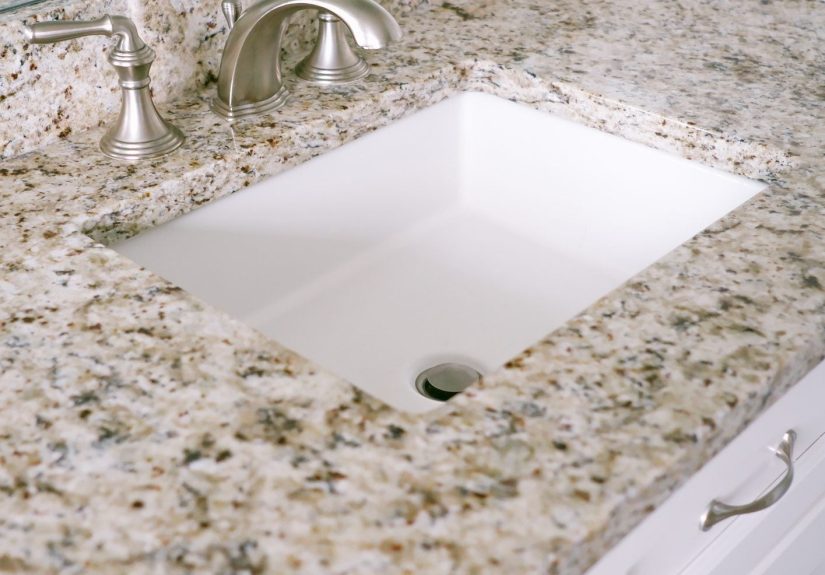
An undermount bathroom sink is a basin mounted beneath the countertop instead of dropping into a cutout from above. Because the sink rim sits below the counter, you do not see a raised lip around the opening. The result is a smooth transition from vanity top to basin.
That may sound like a small detail, but in bathroom design, small details are the whole game. An undermount vanity sink creates a cleaner visual line, especially when paired with stone, quartz, or solid-surface countertops. It also makes wiping toothpaste splatters and water spots into the sink much easier. No ridge means less grime collecting around the edge. Your sponge will thank you. Your future self will too.
Why Homeowners Love Undermount Bathroom Sinks
1. They look sleek and custom
Undermount bathroom sinks are popular because they create a built-in appearance. Whether the style is modern, transitional, classic, or quietly fancy, they make a vanity feel more refined. In smaller bathrooms, that seamless look can also help the room feel less visually crowded.
2. Cleanup is easier
A drop-in sink has a visible rim where soap residue, dust, and mysterious bathroom gunk love to settle in for a long stay. An undermount sink removes that ledge. You can sweep water, hair, and makeup powder straight into the bowl without playing edge archaeology.
3. They highlight the countertop
If you invested in quartz, granite, marble, or a handsome solid-surface vanity top, an undermount sink lets that material shine. The countertop edge becomes part of the design rather than something hidden under a self-rimming sink lip.
4. They work with many design styles
Oval undermount sinks feel traditional and soft. Rectangular undermount sinks read more tailored and contemporary. Narrow rectangular models can make a compact vanity feel sharper, while larger oval bowls suit timeless family bathrooms. In other words, the undermount format is flexible, not fussy.
The Main Downsides to Know Before You Buy
Undermount sinks are not perfect, because perfection is usually either expensive or fictional.
Installation is more demanding
Unlike drop-in sinks, undermount models need secure mounting below the countertop. That means clips, adhesive or silicone, careful alignment, and a watertight seal. If the countertop is already installed, access can be awkward. If the sink is heavy, support matters even more.
Countertop compatibility matters
Undermount bathroom sinks are best paired with durable countertop materials such as quartz, granite, marble, and many solid-surface options. Laminate is usually less ideal because the exposed cut edge can be vulnerable to moisture and swelling over time.
They can cost more overall
The sink itself is not always dramatically more expensive, but the full system often is. A nicer countertop edge, more exact fabrication, and more involved installation can push the total project cost upward.
Repairs are less casual
If a drop-in sink has an issue, replacement can be relatively straightforward. With undermount bathroom sink installation, the sink, cutout, seal, faucet placement, and countertop all need to stay in sync. Nothing here is impossible, but it is rarely a “Saturday morning and a cup of coffee” kind of swap.
Best Countertops for Undermount Bathroom Sinks
If the sink is the star, the countertop is the stage. Pick the wrong stage, and the performance gets weird.
Quartz
Quartz is one of the most popular pairings for undermount bathroom sinks because it is durable, low maintenance, and available in a huge range of colors and patterns. It offers the polished look many homeowners want without requiring the upkeep of some natural stones.
Granite
Granite remains a strong choice for undermount sinks. It is durable, water-resistant when properly sealed, and looks great in both traditional and upscale bathrooms. If you want a vanity top that says, “Yes, I do appreciate nice things,” granite gets the message across.
Marble
Marble pairs beautifully with undermount sinks and looks undeniably luxurious. It is also softer and more maintenance-heavy than quartz, so it is best for homeowners who understand that beauty sometimes arrives with a side of responsibility.
Solid surface
Solid-surface countertops can work very well with undermount bathroom sinks and often support a clean, modern look. They are also easier to repair than some stone surfaces if minor damage occurs.
Laminate
Laminate is where caution enters the chat. Some specialty sink systems are designed for use with certain laminate applications, but in general, standard undermount installations are less ideal with laminate because moisture can compromise the exposed substrate over time. If you are using laminate, confirm compatibility with both the sink manufacturer and countertop fabricator before spending a penny.
Common Undermount Bathroom Sink Materials
Vitreous china
This is the classic choice for a reason. Vitreous china is durable, easy to clean, stain-resistant, and usually bright white with a glossy finish that works in almost any bathroom. Many popular undermount bathroom sinks use this material because it balances price, longevity, and timeless style.
Ceramic and porcelain
These materials are also common in bathroom sinks and remain favorites for everyday use. They are durable, attractive, and generally easy to maintain. For most households, they hit the sweet spot between practical and pretty.
Enameled cast iron
Enameled cast iron offers a rich, substantial look and excellent durability. It is heavier than vitreous china, which can affect installation planning, but it brings a premium feel and long-term toughness.
Stainless steel
Less common in residential bathrooms than in kitchens, stainless steel can still be a smart choice, especially in modern, industrial, or utility-minded spaces. It is durable and easy to clean, though it delivers a more architectural vibe than a spa-like one.
Glass, stone, and specialty materials
These are more design-driven choices. They can look beautiful, but they are usually selected for style first and practicality second. That is not a crime. It just helps to be honest about it.
Choosing the Right Size and Shape
Sink shopping is part design exercise, part geometry test. The sink has to fit the vanity, leave enough counter space, work with the faucet, clear the backsplash, and still feel comfortable in daily use.
Popular shapes
- Oval: classic, softer-looking, and often great in smaller vanities.
- Rectangular: modern, clean, and often roomier side to side.
- Round: compact and simple, though less common for undermount bathroom applications.
- Narrow rectangular: useful when you want more remaining countertop space in a tight bathroom.
Typical sizing reality
Many undermount bathroom sink models fall in a practical range of about 18 to 21 inches long, roughly 12 to 15 inches wide, and around 5 to 8 inches deep. That does not mean every sink lives there, but it is a helpful zone for planning a standard single vanity.
Questions to ask before ordering
- How much counter space do you want on each side of the opening?
- Will the sink interfere with drawers or cabinet framing?
- How far is the sink cutout from the backsplash?
- Are you using a single-hole faucet, a 4-inch centerset, or an 8-inch widespread faucet?
- Will the bowl depth create splash issues or make handwashing awkward for kids?
One of the most common mistakes in vanity planning is falling in love with a sink shape before checking the faucet and countertop layout. A sink is not an island. It is part of a system.
Faucets, Drain Assemblies, and Overflow: The Details That Matter
Undermount bathroom sinks usually do not have deck-mounted faucet holes, because the faucet is installed in the countertop or wall. That sounds simple until someone orders a three-hole faucet for a one-hole top and suddenly everyone is speaking in tired contractor sighs.
Faucet spread basics
A centerset faucet commonly fits a 3-hole, 4-inch configuration. A widespread faucet usually fits a 3-hole setup with a wider spread, often in the 6- to 16-inch range. Single-hole faucets are another popular option for a cleaner look. Choose the sink and vanity top together so the hardware layout feels intentional instead of accidental.
Overflow or no overflow?
Many undermount bathroom sinks include an overflow opening, which helps prevent accidental overfilling. If your sink has an overflow, the drain assembly should match it. If the sink does not, use a drain intended for a sink without overflow. This is one of those glamorous little details that nobody posts on social media, yet it matters a lot when water is involved.
Water-saving faucets
A WaterSense-labeled bathroom faucet can help reduce water use while maintaining good performance. If you are already upgrading the vanity, this is an easy place to improve efficiency without changing your routine.
Undermount Sink Reveal Options
The reveal is how the countertop opening aligns with the sink rim below it. It sounds niche because it is niche, but it has a huge effect on the final look.
Positive reveal
The countertop opening is slightly larger than the sink opening, leaving a bit of the sink rim visible. This can make cleaning the sink edge easier and gives a more intentional framed look.
Negative reveal
The countertop slightly overhangs the sink rim. It looks crisp, but it can make edge cleaning a little fussier because debris may catch under the lip.
Zero reveal
The sink and countertop align flush. It is neat, modern, and very popular, though it requires precise fabrication. This is not the place for casual measuring or optimistic eyeballing.
How Undermount Bathroom Sink Installation Works
Installation generally involves cutting or confirming the countertop opening, dry-fitting the sink, applying sealant, securing the basin with hardware or clips, and connecting the drain and faucet components. Templates are commonly used, but professionals often prefer to verify everything against the actual sink before final cutting, especially since handmade sinks can vary slightly.
Because undermount sinks rely on the underside of the countertop for support, installation quality matters a lot. A great sink with sloppy mounting is like putting dress shoes on a folding chair. The effort is visible, but the foundation is not right.
DIY or hire a pro?
Confident DIYers can sometimes handle an undermount bathroom sink replacement, particularly if the countertop cutout already exists and the new sink matches closely. But for new countertops, stone fabrication, tricky plumbing alignment, or heavier materials, professional installation is often the smart move.
Maintenance and Cleaning Tips
- Wipe the countertop edge regularly so residue does not collect where the sink meets the stone.
- Use non-abrasive cleaners on vitreous china, porcelain, and glossy finishes.
- Check the silicone seal occasionally, especially in older installations.
- Do not ignore slow leaks at the drain or around the trap. Cabinets dislike surprise indoor weather.
- Use manufacturer-recommended cleaners for specialty materials such as natural stone or stainless steel.
In daily life, undermount bathroom sinks are usually easy to keep looking good. That is one of their best long-term advantages. They reward small, regular cleanup rather than heroic annual scrubbing sessions fueled by regret.
Best Places to Use an Undermount Bathroom Sink
Primary bathrooms
These sinks feel right at home in larger, more polished spaces where countertop design matters and storage is part of the plan.
Guest baths and powder rooms
A sleek undermount sink can elevate a small bathroom fast. Pair it with a narrow vanity and a clean faucet silhouette for maximum effect.
Family bathrooms
They also work well in busy bathrooms, especially when easy cleanup is a priority. Just choose a durable material, practical depth, and faucet that does not splash like it is auditioning for a fountain role.
Real-World Experiences With Undermount Bathroom Sinks
In real homes, the experience of living with undermount bathroom sinks is usually less about dramatic design speeches and more about little moments that add up. Homeowners often notice first how easy it is to wipe the vanity top. Toothpaste foam, hand soap drips, beard trimmings, and makeup dust do not get caught on a rim, so cleanup feels quicker and less annoying. It is the kind of benefit people underestimate before installation and then mention constantly after the remodel is finished.
Another common experience is that an undermount sink makes even a modest vanity feel more polished. A basic quartz top paired with a well-sized undermount bowl can look surprisingly upscale. This is especially true in guest bathrooms, where the sink becomes part of the first impression. People may not know the term “undermount,” but they definitely register that the vanity looks sleek and intentional.
There are practical lessons too. In smaller bathrooms, homeowners sometimes choose a sink that is too large because the showroom model looked dramatic and lovely under bright lights. Once installed, that oversized basin can eat up precious landing space for soap, skincare, or the random hair clip that somehow lives on every bathroom counter in America. The better experience usually comes from balancing bowl size with usable counter space, not maxing out the opening just because the sink looked stylish online.
Faucet selection is another area where real-life stories pile up fast. A beautiful faucet with the wrong reach can send water too close to the front of the bowl, which means more splashing on the counter and shirt cuffs. Homeowners who are happiest with their setup tend to choose the sink and faucet together, paying attention to spout height, reach, and how the water stream lands in the basin. It is not glamorous planning, but it prevents the kind of daily irritation that can make a pretty bathroom feel poorly designed.
Families often appreciate undermount sinks for a different reason: they simplify the visual mess. Bathrooms are busy spaces. There are toothbrushes, hand towels, dispensers, cups, lotions, and occasionally a toy dinosaur that wandered in from another room. Because undermount sinks have no visible lip, the vanity top feels calmer even when life is not. That clean line does a lot of visual heavy lifting.
On the installation side, the most successful projects usually come from patience. Experienced remodelers measure twice, confirm faucet clearance, check drawer depth, account for backsplash space, and verify the actual sink before final cutting. The horror stories almost always start with rushing. A template was trusted too much. The faucet holes were placed too close. The bowl sat lower than expected. The cabinet brace interfered with the drain. None of these problems are mysterious. They are just reminders that bathroom design rewards careful planning more than optimism.
Long-term ownership is where undermount bathroom sinks often prove their worth. Years after the renovation, homeowners may stop noticing the elegant reveal or the neat bowl shape, but they still enjoy how easy the vanity is to clean and how timeless the setup looks. Trends change. Tile colors come and go. Faucet finishes have their fashion moments. A well-chosen undermount sink tends to age gracefully, which is one of the smartest qualities any bathroom fixture can have.
Final Thoughts
A great undermount bathroom sink is not just a pretty basin tucked under a slab. It is a design choice that affects how your vanity looks, how your bathroom functions, and how much patience you need during installation. Choose the right material, match it to the right countertop, pay attention to faucet and drain details, and size it for the way the room is actually used. Do that, and an undermount sink will deliver exactly what homeowners want from a bathroom fixture: style, simplicity, and fewer places for grime to throw a party.