Table of Contents >> Show >> Hide
- What Is a Pilar Cyst?
- What Causes a Pilar Cyst?
- Who Is More Likely to Get One?
- Signs and Symptoms of a Pilar Cyst
- Pilar Cyst vs. Epidermoid Cyst
- How a Pilar Cyst Is Diagnosed
- Treatment Options for Pilar Cyst
- Can a Pilar Cyst Come Back?
- Can a Pilar Cyst Be Cancerous?
- When to See a Doctor
- What Recovery Is Like After Removal
- What People Often Experience in Real Life
- Final Thoughts
A pilar cyst is one of those medical issues that sounds dramatic but often shows up with very little fanfare. In many cases, it starts as a small, smooth bump on the scalp that you notice while shampooing, brushing your hair, or wondering why your head suddenly has its own topography. The lump may sit there quietly for months or even years, doing very little besides existing and being mildly annoying.
Still, “usually harmless” does not mean “always ignore it.” A pilar cyst can get inflamed, rupture, become tender, or grow large enough to make hair care awkward and your peace of mind disappear faster than a good hair day in August humidity. Because these cysts can look like other lumps, getting the diagnosis right matters.
This guide explains what a pilar cyst is, what causes it, how it is treated, when it may need medical attention, and what people commonly experience when dealing with one. The goal is simple: clear answers, no medical jargon gymnastics, and no internet folklore pretending to be dermatology.
What Is a Pilar Cyst?
A pilar cyst, also called a trichilemmal cyst, is a benign, keratin-filled cyst that forms from the outer root sheath of a hair follicle. Keratin is the same structural protein found in your hair, nails, and outer skin. When keratin and related cells become trapped and continue to build up beneath the skin, a cyst can form.
Pilar cysts are best known for appearing on the scalp. That location makes sense because the scalp has a high density of hair follicles. These cysts can also appear in other hair-bearing areas, but the scalp is the classic setting. They are often smooth, rounded, firm, and movable under the skin. Many are painless unless they become inflamed or rupture.
Another useful detail: pilar cysts are often confused with epidermoid cysts and so-called “sebaceous cysts.” In everyday conversation, people use those terms interchangeably. In medicine, though, they are not exactly the same thing. A true pilar cyst is a distinct type of follicular cyst.
What Causes a Pilar Cyst?
The short version is that a pilar cyst develops when cells associated with the hair follicle begin collecting under the skin instead of shedding or moving along normally. Those cells continue producing keratin, and the material builds up inside a cyst wall. Over time, that creates the lump you can feel.
Genetics can play a role. Some people seem to inherit a tendency to develop pilar cysts, and family history is a well-known clue. That is especially true when a person develops multiple cysts or gets them at a younger age than expected. In those cases, the pattern may look less like bad luck and more like a family tradition nobody asked for.
Pilar cysts are not a sign of poor hygiene. They are not caused by washing your hair too little, too often, or with a shampoo that sounds like a smoothie flavor. They are also not contagious. You cannot “catch” a pilar cyst from someone else, and you cannot pass yours around like a cold.
Who Is More Likely to Get One?
Pilar cysts can affect anyone, but they are often reported more often in women than in men. They are also frequently seen in adults and may be more common in people with a family history of similar scalp lumps. Some people have only one cyst. Others develop several over time, especially on the scalp.
If you have had one pilar cyst before, it does not guarantee you will keep getting them, but it does mean you are already familiar with the neighborhood. If several relatives have had scalp cysts removed, that family history is worth mentioning to a clinician.
Signs and Symptoms of a Pilar Cyst
What It Usually Feels Like
Most pilar cysts are:
- Round or dome-shaped
- Firm or rubbery to the touch
- Smooth beneath the skin
- Slow-growing
- Usually painless at first
- Most often found on the scalp
Many people first notice the bump while brushing their hair, getting a haircut, or scratching their head absentmindedly during a meeting that should have been an email.
When It Starts Causing Trouble
Symptoms can change if the cyst becomes inflamed, irritated, or ruptures. In that situation, a pilar cyst may become:
- Tender or painful
- Red or warm
- Swollen
- Larger over a shorter period
- Leaky, especially if it opens or drains
If the lump changes quickly, starts hurting, or begins draining, it is a sign to stop guessing and get it checked.
Pilar Cyst vs. Epidermoid Cyst
These two cysts can seem similar, but they are not identical. An epidermoid cyst often forms from surface skin cells and is more likely to have a visible central opening called a punctum. A pilar cyst comes from the hair follicle root sheath and typically does not have that central punctum.
Pilar cysts also tend to feel firmer and are especially common on the scalp. Epidermoid cysts are more commonly found on the face, neck, trunk, or back. That distinction matters because the diagnosis influences how a clinician thinks about treatment, recurrence, and pathology.
Translation: all bumps are not created equal, even when they are equally inconvenient.
How a Pilar Cyst Is Diagnosed
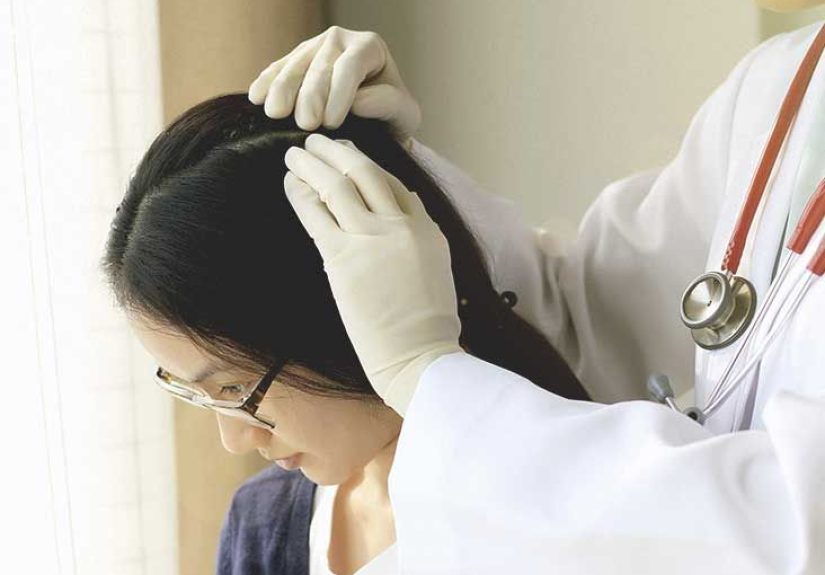
Diagnosis often starts with a physical exam. A clinician will look at the location, size, texture, mobility, and whether the lump shows signs of inflammation or infection. In many straightforward cases, the diagnosis is largely clinical.
Sometimes, though, a pilar cyst can mimic other skin lesions. Depending on the appearance, the differential diagnosis may include an epidermoid cyst, lipoma, dermoid cyst, pilomatrixoma, or another benign or less common scalp mass. If the lesion is unusual, very large, rapidly growing, or located in a concerning area, a clinician may order imaging or recommend removal with pathology review.
Pathology becomes especially important when a lesion behaves atypically. Most pilar cysts are benign, but fast growth, repeated inflammation, ulceration, or other unusual features can push a doctor to be more cautious.
Treatment Options for Pilar Cyst
Watchful Waiting
If a pilar cyst is small, painless, and not bothering you, observation may be reasonable. Not every cyst needs immediate treatment. Some people simply monitor the lump and leave it alone unless it changes.
That said, “leave it alone” is not the same thing as “attack it in your bathroom mirror.” Picking, squeezing, cutting, or trying a home-removal hack is a great way to turn a quiet cyst into an inflamed, angry one.
Surgical Removal
The most definitive treatment is complete surgical excision. In plain English, the doctor removes the cyst and its wall. That wall matters. If the cyst contents are emptied but the sac remains, the cyst has a better chance of coming back.
Removal is often done as an outpatient procedure under local anesthesia. On the scalp, the area may need a little hair trimming, and the incision is then closed with stitches. The cyst is often sent to pathology to confirm the diagnosis, especially if there is any uncertainty.
What About Drainage or Steroid Injection?
For inflamed skin cysts in general, clinicians sometimes use steroid injections to calm inflammation or perform incision and drainage to relieve pressure and discomfort. Those approaches can help symptoms, but they do not always remove the entire cyst wall. For that reason, they are not always the best final answer if the goal is to prevent recurrence.
With pilar cysts, complete excision is usually the treatment most likely to solve the problem for good. If the area is very inflamed, a doctor may decide to calm the inflammation first and remove the cyst later when the tissue is less irritated.
Can a Pilar Cyst Come Back?
Yes, it can. Recurrence is more likely if the cyst wall is not fully removed. That is one reason dermatologists and surgeons prefer complete excision when the cyst is treated surgically. Some people also develop new cysts over time, particularly when there is a hereditary tendency.
In other words, a removed cyst and a new cyst are not always the same thing. Sometimes the original lesion comes back. Sometimes a completely new one appears nearby or elsewhere on the scalp. Your hair may not appreciate the distinction, but your doctor probably will.
Can a Pilar Cyst Be Cancerous?
A typical pilar cyst is benign. That is the reassuring headline. However, there is a rare category of lesions called proliferating trichilemmal tumors, which are associated with more rapid growth and may need more aggressive management. These lesions are uncommon, and many remain benign, but atypical or fast-growing masses deserve medical evaluation and often pathology review after removal.
The practical takeaway is simple: most pilar cysts are not cancer. But if a scalp lump grows quickly, ulcerates, bleeds, keeps recurring, or looks unusual, it should not be brushed off as “just a cyst” without proper evaluation.
When to See a Doctor
It is smart to schedule an evaluation if you notice any new lump that:
- Grows quickly
- Becomes red, painful, or warm
- Starts draining or ruptures
- Bleeds or ulcerates
- Keeps coming back
- Gets bumped often because of its location
- Bothers you cosmetically or physically
- Makes you unsure whether it is really a cyst
You should also get prompt care if a cyst appears infected after removal or if you develop significant pain, swelling, or fever.
What Recovery Is Like After Removal
Recovery after minor excision is usually straightforward. The area may feel sore for a few days, and scalp incisions can be a little tender when washing your hair, sleeping on that side, or accidentally discovering every hairbrush bristle at once.
Most people are told to keep the area clean, follow wound-care instructions carefully, and return for a follow-up if stitches need removal. Scarring can occur, although many scalp scars are hidden by hair. If the cyst was inflamed before surgery, the tissue may be trickier to work with, which is one reason clinicians sometimes prefer to remove the cyst once inflammation has settled down.
What People Often Experience in Real Life
The following section describes common, generalized experiences people report when dealing with pilar cysts. These are not individual patient stories or a substitute for diagnosis, but they do reflect what the situation often feels like in everyday life.
A lot of people first notice a pilar cyst by accident. They are washing their hair, scratching their scalp, or getting a haircut when they feel a small, firm bump. At first, it often seems too minor to worry about. It does not hurt. It is easy to ignore. It may even feel oddly ordinary, like a random scalp quirk you assume has always been there.
Then comes the second stage: curiosity. People start checking the bump more often. Has it gotten bigger? Was it always this round? Why does it feel like a smooth marble under the skin? That is usually when internet searching begins, and the internet, being the internet, will calmly offer possibilities ranging from “harmless cyst” to “prepare your affairs.” This is why an actual medical exam is so helpful.
Another common experience is frustration rather than fear. The cyst may catch on a comb, get irritated by a hat, or become noticeable during haircuts or hair styling. Even when it is benign, it can still be annoying. Some people feel self-conscious if the cyst becomes visible through thinning hair or if they have multiple bumps on the scalp.
If the cyst becomes inflamed, the experience changes quickly. A previously quiet lump can become sore, swollen, and hard to ignore. People often describe it as the moment the cyst “woke up and chose chaos.” Sleeping on that side of the head can become uncomfortable. Brushing hair becomes a negotiation. Touching the spot goes from harmless to “absolutely not.”
People with a family history of pilar cysts sometimes have a different emotional response. Instead of surprise, they feel recognition. They have seen a parent, grandparent, or sibling deal with similar scalp lumps, so the discovery feels familiar. That can be reassuring, but it can also create the expectation that more cysts may show up later.
The appointment itself is often anticlimactic in the best possible way. A clinician examines the lump, explains what it likely is, and discusses whether to monitor it or remove it. Many people feel immediate relief just from hearing that the lesion looks benign and treatable. Uncertainty is often the hardest part.
After removal, people commonly say the biggest benefit is not just physical comfort but mental quiet. They stop thinking about the lump every time they wash their hair. They stop wondering whether it is growing. They stop checking it in the mirror using three angles and questionable bathroom lighting. In that sense, treatment is sometimes as much about peace of mind as it is about the cyst itself.
There is also a practical lesson many people learn the hard way: do not squeeze a scalp cyst at home. Trying to pop it can increase inflammation, create drainage, raise the risk of infection, and make later removal more difficult. In other words, this is not a DIY project. It is a “let the trained person with sterile instruments handle it” project.
Final Thoughts
A pilar cyst is usually a benign scalp cyst that forms from a hair follicle and fills with keratin. Most grow slowly, many do not hurt, and plenty are more annoying than dangerous. Still, any new or changing lump deserves proper attention, especially if it becomes painful, inflamed, drains, or grows quickly.
The good news is that pilar cysts are often straightforward to diagnose and treat. When a cyst needs to be removed, complete surgical excision offers the best chance of preventing it from coming back. The even better news is that once you understand what a pilar cyst is, it becomes much less mysterious and a lot less intimidating.
Bottom line: if your scalp suddenly feels like it is hiding a smooth little pebble, do not panic. Get it checked, get clear answers, and let science do the heavy lifting.