Table of Contents >> Show >> Hide
Note: The headline above reflects a popular phrase, but historians and forensic experts would word it more carefully. No scientist has produced a confirmed portrait of Jesus. What they have done is create an evidence-based reconstruction of what a first-century Jewish man from Roman Judea may have looked like. That distinction matters. A lot.
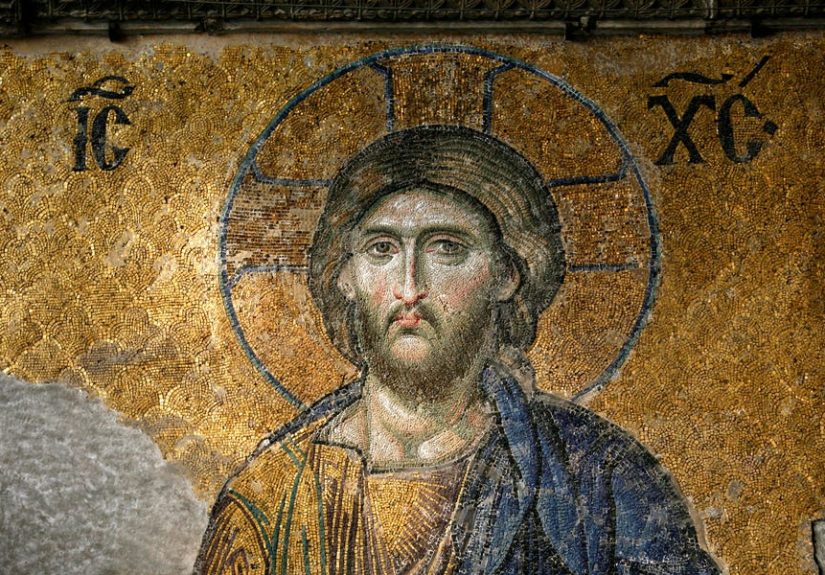
For centuries, the most familiar image of Jesus in the Western world has looked like it came from a Renaissance hair commercial: flowing light-brown hair, pale skin, delicate features, and enough soft lighting to make every church wall resemble a very holy movie poster. It is iconic, recognizable, and historically shaky.
Then science, archaeology, and forensic anthropology entered the chat.
Over the last few decades, researchers have tried to move the conversation away from inherited art and closer to historical probability. By studying skulls from the region, analyzing facial tissue depth, looking at ancient burial evidence, and comparing early depictions of Christ, experts have pieced together a far more grounded image. The result is not “the real face of Jesus” in the way a passport photo is real. It is something more modest and, in many ways, more interesting: a reconstruction rooted in the world Jesus actually lived in.
That world was first-century Roman Judea, not medieval Europe. And once you start there, the face changes.
What Scientists Actually Recreated
The most famous reconstruction tied to this topic came from work associated with medical artist Richard Neave and a team of forensic specialists. Instead of claiming access to Jesus’s actual remains, they used skulls from first-century men found near Jerusalem and combined that material with CT scans, tissue-depth markers, and computer modeling. In plain English, they did not reconstruct Jesus’s skull; they reconstructed a plausible face for a Jewish man living in Jesus’s place and time.
That may sound like a technical footnote, but it is really the whole story. This was never a miracle reveal. It was a probability exercise. Researchers asked a historically grounded question: if Jesus was a Galilean Jew living under Roman rule, what would someone like him most likely have looked like?
That question matters because the New Testament gives readers almost no physical description. The Gospels are far more interested in what Jesus said, did, and symbolized than in whether he had a broad nose, high cheekbones, or excellent beard maintenance habits. Archaeology, then, becomes the backup singer stepping into the spotlight. It helps fill in the world around the text: housing, diet, burial customs, fishing technology, regional movement, and everyday appearance.
When scholars combine that broader evidence with forensic methods, a general picture emerges. Jesus likely had darker skin than the pale-skinned European depictions made famous in later art. He likely had dark eyes, dark hair, and shorter or curlier hair than the long-haired, shampoo-commercial version many people grew up seeing. He was probably not especially tall, broad-shouldered, or visually distinct in a cinematic way. In fact, historical logic points the other direction: he likely looked fairly ordinary for a Jewish man of his region.
And that ordinariness is part of what makes the reconstruction so fascinating. It shrinks the distance between the sacred and the historical. Jesus stops looking like a floating symbol and starts looking like someone who could actually walk the roads of Galilee.
Why the Reconstructed Face Looks So Different From Traditional Art
Because traditional art was never trying to win a forensic anthropology award.
Religious art has always done more than document physical reality. It teaches, persuades, comforts, inspires, and reflects the communities that create it. Over time, Jesus was painted in ways that matched local beauty standards, political ideals, and theological messages. In some eras he appears youthful and beardless. In others he looks regal, stern, and enthroned. Later Western art leaned hard into the long-haired, bearded, fair-skinned version that many people now assume is ancient, even though it is really the result of centuries of visual evolution.
That is why the forensic reconstruction feels so disruptive. It does not just offer a different face; it challenges a familiar cultural inheritance. For many readers, the surprise is not that science found a darker-skinned, Middle Eastern-looking Jesus. The surprise is that this was surprising at all.
Historians of religion have long pointed out that images of Jesus often tell us as much about the people making the image as they do about the historical figure at the center of it. A blond Jesus in European painting, a Black Jesus in African American churches, an Asian Jesus in East Asian devotional art, and an Indigenous Jesus in Latin American communities all reveal something about how faith gets translated into culture. That is not necessarily a flaw. It is part of how religious imagination works.
Still, there is a difference between devotional art and historical reconstruction. One aims to speak to the soul. The other tries to stay honest about evidence. Problems arise when the two get mixed together and people start treating inherited art as if it were documentary fact.
The reconstruction associated with first-century Judea pulls the conversation back to earth. Literally. Dusty roads, sun exposure, short hair, darker complexion, and the plain features of a working-class man from the eastern Mediterranean. Less cathedral painting, more actual geography.
The Science Behind the Face
Skulls, Scans, and Soft Tissue
Facial reconstruction is part anatomy, part statistics, and part artistic discipline. Researchers begin with skeletal structure, then use known averages for soft-tissue thickness at specific points on the face. CT imaging helps reveal subtle contours, while digital models and clay layering help flesh out the skull. That process can produce a scientifically informed face, especially when the biological profile is reasonably clear.
In this case, the profile was regional rather than individual. The goal was not to say, “Here is Jesus exactly.” The goal was to say, “Here is a realistic face for a man from this place and time.” That makes the result valuable, but it also puts guardrails around the hype.
What Science Can Estimate
Science can make educated guesses about skull shape, likely nose structure, jawline, general head size, and the broad framework of the face. Combined with archaeology and population history, it can also make strong inferences about complexion, eye color range, hair texture, and likely height. Some scholars have suggested that Jesus may have stood around 5-foot-5, which would have been ordinary for the era rather than heroic by blockbuster standards.
Science can also correct bad assumptions. A first-century Jewish man from Galilee would not likely have had pale skin and flowing light hair. That does not require wild speculation. It requires a map, a timeline, and a basic respect for the eastern Mediterranean sun.
What Science Cannot Know
Now for the humility section. Science cannot tell us Jesus’s exact hairstyle on a random Tuesday, the precise shape of his beard, whether his nose had been broken in childhood, or whether his smile was lopsided. Facial reconstruction is not a time machine. It is an informed approximation with margins of error.
That is why responsible scholars avoid absolute language. They do not say, “This is Jesus, full stop.” They say, “This is likely closer than the traditional European image.” That may sound less dramatic, but it is far more credible.
What About the Shroud of Turin?
No conversation about the face of Jesus stays away from the Shroud of Turin for long. The cloth has fascinated believers, skeptics, artists, and scientists for generations because it appears to show the faint image of a wounded man’s face and body. For many people, it feels like the closest thing to a visual trace of Christ. For others, it is a medieval mystery with excellent public relations.
Here is the careful version: the shroud remains disputed. Carbon dating performed decades ago placed the cloth in the medieval period, and many experts continue to view it as a later artifact rather than a first-century burial cloth. More recent public discussion has not ended that debate. In fact, new modeling work has argued that the image aligns better with a low-relief artistic source than with cloth draped over a real three-dimensional body.
That does not mean the shroud has no cultural or religious importance. It clearly does. Museums still build exhibits around it. Visitors still line up to see replicas, interactive displays, and visual interpretations of the face on the cloth. But cultural importance and scientific certainty are not the same thing. The shroud may remain a powerful symbol without serving as a reliable headshot.
So when viral posts claim that “scientists finally revealed the true face of Jesus from the shroud,” it is smart to put one eyebrow up. Then maybe both eyebrows.
Why This Reconstruction Matters Beyond the Headline
The most valuable thing about this story is not the face itself. It is what the face forces people to reconsider.
It reminds readers that Jesus was a Jew rooted in a specific land, language environment, and political moment. He lived under Roman occupation. He moved through Galilean towns and Jerusalem streets shaped by local customs, class divisions, and religious tensions. Archaeology has helped clarify that world, from first-century synagogues and fishing boats to burial evidence and domestic structures. The closer we get to that setting, the harder it becomes to imagine Jesus as a generic Western icon floating above history.
That historical grounding matters for faith communities, too. A more realistic face does not shrink Jesus. If anything, it does the opposite. It makes the incarnation feel more concrete. Less abstract divinity in a gold frame, more embodied life in a real place among real people.
And for secular readers, the reconstruction offers something just as compelling: a case study in how culture edits memory. The face many people thought was ancient turns out to be, in large part, inherited visual tradition. Science did not “ruin” the image. It simply asked whether the image matched history. Sometimes the answer is no, and that is where the fun begins.
Experiences Related to “Scientists Have Recreated the Real Face of Jesus”
One reason this topic spreads so quickly is that people do not merely read about it. They experience it.
For many churchgoers, the first encounter with a reconstructed face of Jesus feels slightly disorienting. It can be like visiting your childhood home and realizing the hallway was never as wide as you remembered. The familiar image has been in prayer cards, stained glass, Sunday school booklets, and family Bibles for so long that anything different can feel emotionally loud. Even when the historical argument makes sense, the heart may need a minute to catch up with the brain.
For some readers, the reaction is relief. They see a darker-skinned, more regionally accurate face and think, finally, we are acknowledging the obvious. Jesus was from the Middle East, not a casting call for a European oil painting. In multicultural classrooms and churches, that correction can feel deeply meaningful. It invites a broader understanding of sacred history and pushes against the idea that holiness must wear one cultural costume.
For others, the experience is less about race and more about realism. The reconstructed face often looks ordinary, even rugged. That can be startling in its own way. People are used to idealized sacred art, where every cheekbone seems approved by heaven. A historically grounded Jesus may look tired, strong, weathered, practical, and intensely human. For some, that humanity makes him feel closer. For others, it strips away a layer of devotional familiarity.
Museum exhibits and documentaries intensify that experience. A face presented in three dimensions, under dramatic lighting, with archaeological narration in the background, has a way of landing differently than a textbook paragraph. Viewers do not just process the information; they project themselves into the scene. They imagine hearing sandals on stone, market noise in Galilee, sunlight on dust, and the social reality of Roman Judea. The face becomes a doorway into a world.
Social media, of course, turns all of this into a sprint. One image gets posted with a headline claiming “the real Jesus has been found,” and suddenly millions of people are arguing in comment sections with the confidence of people who have read half a caption and one determined meme. Yet even that noisy reaction says something important: people care. They care about what Jesus looked like because appearance is tied to identity, and identity is tied to meaning.
There is also a quieter experience many people report after the initial surprise wears off. Once the shock fades, the reconstruction can feel grounding. It places Jesus back among the people he actually lived with. He stops looking like a symbol imported from another continent and starts looking like someone native to his own history. That shift can deepen scholarship, challenge assumptions, and even enrich faith rather than weaken it.
In that sense, the real experience related to this topic is not simply “seeing a new face.” It is rethinking what familiarity has been teaching us all along. Sometimes the most powerful part of a reconstruction is not what it reveals about the past, but what it exposes about our habits in the present.
Conclusion
So, have scientists recreated the real face of Jesus? Not in the literal sense, no. They have not uncovered a lost portrait, found Jesus’s skull, or solved a two-thousand-year-old mystery with laboratory swagger. What they have done is more careful and more believable: they have used forensic reconstruction, archaeology, and historical context to build a face that is likely closer to the world Jesus inhabited than the familiar Western version repeated for centuries.
That may not give us certainty, but it gives us something valuable: perspective. The most responsible conclusion is that the “real face of Jesus” is not available to history in exact detail. Still, science has helped narrow the possibilities and push the conversation closer to reality. And sometimes that is more powerful than a neat answer. It reminds us that behind the paintings, icons, and viral headlines was a real human being from a real place, with a face shaped by the land, people, and time in which he lived.