Table of Contents >> Show >> Hide
- Why Henri Dejeant’s Lamps Keep Catching the Eye
- The Power of Creative Reuse in Lighting Design
- Henri Dejeant’s Design Language: Handmade, Organic, and Unapologetically Human
- What Makes Papier Mache So Effective as a Modern Material?
- How to Style Papier Mache Table Lamps in Real Homes
- Why These Lamps Matter Beyond Decor
- Potential Drawbacks, Because No Material Gets a Free Halo
- Experience Notes: What It Feels Like to Live with a Papier Mache Lamp
- Conclusion
Some lamps are polite. They sit in a corner, do their job, and ask for nothing more than a working bulb and maybe a dusting once a month. Henri Dejeant’s papier mache table lamps are not those lamps. They are mood-setters, conversation starters, and tiny acts of rebellion against the idea that beautiful design must begin with expensive, pristine materials. In Dejeant’s hands, recycled paper becomes something sculptural, tactile, and unexpectedly elegant. It is sustainability with a pulse, not sustainability wearing a stiff corporate blazer.
That is what makes Creative Reuse: Papier Mache Table Lamps by Henri Dejeant such an interesting story for design lovers, decorators, and anyone who gets a little thrill from seeing humble materials punch far above their weight class. These lamps do more than light a desk or console table. They challenge the old assumption that “eco-friendly” means visually worthy but emotionally dull. Instead, they prove that creative reuse can feel poetic, modern, and even a little bit otherworldly.
At a time when interior design is leaning hard into sculptural lighting, organic shapes, and materials with a visible human touch, Dejeant’s work lands in exactly the right spot. His lamps feel handmade because they are handmade. They feel natural because paper, plaster, flour, wax, and pigment still carry the memory of the hand. And they feel current because more homeowners now want pieces that tell a story, not just match a sofa and politely disappear into the beige beyond.
Why Henri Dejeant’s Lamps Keep Catching the Eye
The first thing people notice about these lamps is the shape. They do not look machine-perfect, and that is precisely the point. The silhouettes are soft, rounded, and biomorphic, with the kind of quiet irregularity that makes a room feel more alive. In a market full of slick metals, shiny acrylics, and lamp bases that look like they were designed by a spreadsheet, Dejeant’s forms feel refreshing. They are sculptural without becoming fussy and artistic without forgetting they still have to hold a lightbulb.
The second thing people notice is texture. Papier-mâché has a long reputation as the darling of school projects and craft tables, but in the world of high-end interiors, texture changes everything. Dejeant’s surfaces read as raw yet refined, matte yet rich, minimal yet warm. They invite the eye to come closer. They also invite the hand, which is always a good sign in home design. If an object makes you want to touch it, it usually means it has more personality than the average decorative accessory pretending to be important.
Then there is the glow. A table lamp is not just an object; it is an atmosphere machine. When a sculptural base and a soft wash of light come together, the result can shift the mood of a room from “functional” to “please stay another hour.” Dejeant’s lamps excel at that transition. They are strong enough to act as statement pieces, yet calm enough to support a room instead of hijacking it.
The Power of Creative Reuse in Lighting Design
Lighting is one of the smartest places to showcase reused materials because lamps already live at the intersection of function and feeling. A chair must support your body. A lamp must support your mood. That gives designers more room to experiment with form, finish, and texture. Recycled paper, when handled with skill, offers a rare combination of flexibility and character. It can be molded, layered, pigmented, and finished into shapes that look earthy, futuristic, or almost geological.
Creative reuse also changes the emotional value of an object. When a lamp starts life as discarded paper, it carries a narrative of transformation. That story matters. People increasingly want homes filled with pieces that feel intentional rather than generic. They want design that reflects taste, yes, but also values. A papier mache lamp made from reclaimed material signals an appreciation for craft, resourcefulness, and the kind of beauty that does not rely on wasteful excess.
There is also something wonderfully democratic about the material itself. Paper is familiar. It is ordinary. Almost too ordinary. And that is what gives the finished lamp its charm. Good design often works by taking a material we think we understand and showing us we never really did. Dejeant’s lamps perform that trick beautifully. They make paper look sophisticated without stripping it of its original humility.
Henri Dejeant’s Design Language: Handmade, Organic, and Unapologetically Human
Part of the appeal of Henri Dejeant’s papier mache table lamps is that they do not try to hide the human process behind them. In fact, they lean into it. In an age of automation, perfect replication, and digital polish, visible craftsmanship feels more valuable than ever. A hand-shaped object has tiny variances that no algorithm can fake. Those slight shifts in contour and finish are not flaws. They are proof of life.
That human quality helps explain why Dejeant’s lamps feel so compatible with current interior trends. Rooms today are moving away from icy perfection and toward layered warmth. Designers are mixing vintage pieces with contemporary art, rough textures with smooth surfaces, and practical items with expressive ones. A papier mache lamp sits comfortably in that world because it brings softness, soul, and a material honesty that can balance harder finishes like stone, glass, lacquer, or polished metal.
His work also taps into the continuing fascination with organic forms. Curves are having a long and happy moment in interiors, and for good reason. Rounded silhouettes feel easier on the eye. They relax a room. They create visual movement without chaos. Dejeant’s lamps embody that softness in a way that feels grounded rather than trendy. They do not scream for attention. They hum. And sometimes a good hum is more powerful than a shout.
What Makes Papier Mache So Effective as a Modern Material?
It is lightweight but visually substantial
Papier-mâché can look dense and sculptural while staying relatively light. That makes it especially useful for decorative objects that need presence without bulk. A table lamp should make an impression, not require a minor engineering permit before you move it six inches to the left.
It rewards experimentation
Paper pulp and layered paper mixtures can take on subtle curves, unusual bulges, and asymmetrical details more easily than many rigid materials. That freedom encourages originality. It is one reason recycled paper continues to attract designers interested in expressive forms rather than factory sameness.
It carries texture naturally
Some materials need to be fussed over for character. Papier-mâché arrives with character already baked in. The slight grain, the softened edges, and the almost chalky depth of the finish all help create an artisanal look that feels elevated without becoming precious.
It supports a smarter design story
When made from reclaimed paper and finished with a considered process, papier mache aligns with a broader shift toward reusable, renewable, and lower-waste materials in the home. That does not make every paper object automatically noble, of course. A sad, floppy craft-store mistake is still a sad, floppy craft-store mistake. But in skilled hands, the material becomes a design argument in itself.
How to Style Papier Mache Table Lamps in Real Homes
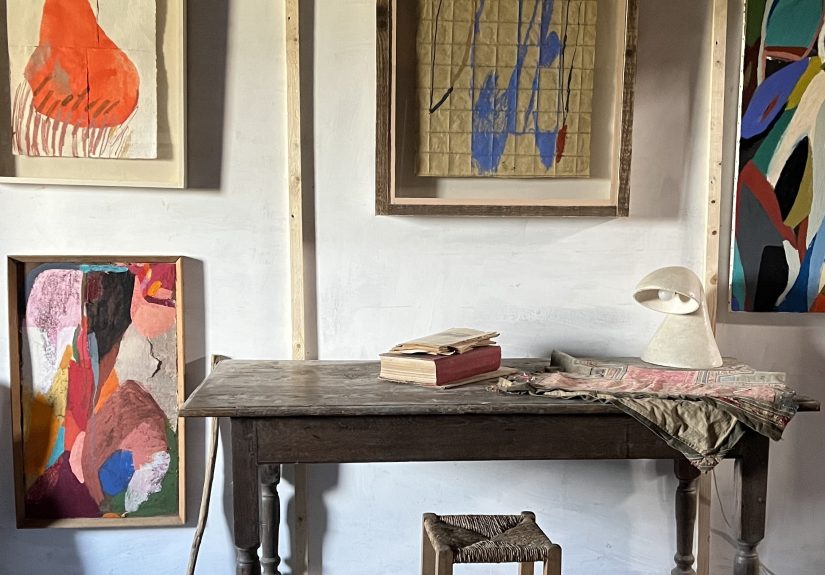
One reason these lamps are so versatile is that they behave like both lighting and sculpture. That means they can anchor a room even when they are turned off. On a console table in an entryway, they create a warm first impression and pair especially well with wood, plaster walls, vintage mirrors, or woven accents. On a bedside table, they soften the room instantly, especially when the rest of the furniture is clean-lined and understated.
They also work beautifully in home offices. A papier mache table lamp adds tactile richness to a space that might otherwise drift into a sea of screens, chargers, and general digital gloom. Place one beside stacked books, a ceramic catchall, and a single branch or stem, and suddenly the desk feels less like a productivity bunker and more like a place where actual thinking might happen.
Color matters too. Because these lamps often live in earthy or muted tones, they play well with many palettes: creamy whites, clay tones, olive, charcoal, walnut, faded black, dusty blue, and warm neutrals. If your room already has a lot of visual activity, a lamp like this can ground the chaos. If the room is minimal, it adds depth without clutter. It is a rare decorative object that can whisper and still be heard.
Why These Lamps Matter Beyond Decor
There is a larger lesson in Henri Dejeant’s work, and it goes beyond trends. Creative reuse is not just an environmental tactic; it is a design philosophy. It asks a useful question: what if the best material is not the newest one, but the one we almost overlooked? That idea has relevance far outside interiors. It applies to product development, branding, retail storytelling, and even business culture. Innovation does not always come from inventing a brand-new substance or process. Sometimes it comes from seeing neglected material with fresh eyes.
That is part of the magic here. A papier mache table lamp should not, on paper, be this chic. Yet it is. More than chic, actually. It feels thoughtful. It feels personal. It feels like the opposite of disposable culture. In a design market crowded with fast furniture and copycat accessories, that kind of authenticity is valuable. It gives people something better than novelty. It gives them attachment.
And attachment matters. When people love an object, they keep it longer. When they keep it longer, it becomes part of the life of a home rather than a short-lived purchase with a glamorous six-week career. That is one of the least flashy but most important ideas in sustainable design: durability is not only about material strength. It is also about emotional staying power.
Potential Drawbacks, Because No Material Gets a Free Halo
To be fair, papier mâché is not a miracle substance floating in on a cloud of moral superiority. Buyers still need to think about durability, care, and placement. A handmade lamp crafted from reused paper and natural ingredients should be treated with respect. It is not the right choice for a splash-prone bathroom counter, an outdoor patio, or any household where “decorating” means testing whether objects bounce.
But those limitations are not deal-breakers. They are simply reminders that materials have personalities. Stone is stoic. Glass is dramatic. Linen wrinkles like it has opinions. Papier mâché asks for a little thoughtfulness in return for warmth and character. That seems like a fair trade.
Experience Notes: What It Feels Like to Live with a Papier Mache Lamp
Imagine walking into a room at the end of a long day and switching on a lamp that does not look mass-manufactured, overly glossy, or determined to impress your guests with brute-force luxury. Instead, it offers something quieter. The base has a soft, hand-shaped presence. The surface catches light gently rather than reflecting it like a mirror ball with a graduate degree. The whole thing feels calm. That is the experience a papier mache table lamp can create, and it is a big reason these pieces leave such a lasting impression.
In real life, the appeal grows slowly, which is usually the best kind of appeal. At first you notice the form. Then you start noticing how it changes the room. Morning light reveals the subtle texture. Evening light makes the base look almost architectural. A bare corner suddenly seems deliberate. A stack of books looks curated instead of abandoned. Even the shadows feel softer. Good lighting does that, but great lighting with character does it in a more memorable way.
There is also a psychological comfort in living with an object made from reclaimed materials. It feels different from owning something that exists only to flaunt polish or price. A reused-paper lamp tells a more human story. It suggests patience, experimentation, and a willingness to find value where other people saw scrap. That story can subtly reshape how a room feels. Spaces become less about display and more about meaning. They feel more collected, less consumed.
These lamps also pair beautifully with everyday rituals. Turn one on while making tea, reading a chapter before bed, journaling at a desk, or easing into a quiet Sunday morning, and the room feels less transactional. The light is doing its practical job, of course, but the object itself adds emotional texture. It reminds you that usefulness and beauty do not have to compete. They can sit on the same side table and get along just fine.
For people who love interiors but are tired of spaces that feel overly staged, a papier mache lamp can be a small correction. It introduces imperfection in the best sense. Not mess. Not sloppiness. Just a break from the flat, factory-perfect sameness that can make rooms feel cold. Handmade texture gives the eye somewhere to rest and return. It creates familiarity. It feels lived with, even when it is new.
There is a practical pleasure here too. Because the lamp acts like a sculptural accent, it keeps working even in daylight. You do not need to wait until sunset for it to earn its keep. It can hold a bedside arrangement together, soften a clean-lined office, or give a neutral console table a focal point that feels subtle rather than shouty. It is useful in the broadest design sense: it adds light, yes, but it also adds atmosphere, identity, and rhythm.
And maybe that is the biggest takeaway from living with something like this. Creative reuse does not have to announce itself with a lecture. It can simply show up looking beautiful, do its job well, and make the room feel more thoughtful. Henri Dejeant’s papier mache table lamps embody that idea. They are proof that reused materials can feel elevated, that craft can feel contemporary, and that the most interesting objects in a home are often the ones that quietly turn ordinary evenings into better ones.
Conclusion
Henri Dejeant’s papier mache table lamps offer a compelling example of what happens when sustainability, craftsmanship, and sculptural design stop acting like distant relatives and finally sit at the same table. These pieces are not interesting just because they are made from reused paper. They are interesting because they transform reused paper into something emotionally resonant and visually refined. That is a harder trick than it sounds.
For homeowners, decorators, and design enthusiasts, the appeal is clear: the lamps bring texture, warmth, and personality into a room while supporting a broader move toward conscious, lasting interiors. For the design world more broadly, they point toward a future where creative reuse is not a niche virtue but a central source of innovation. In other words, trash-to-treasure is growing up, getting stylish, and finding a very flattering pool of lamplight.