Table of Contents >> Show >> Hide
- Quick Primer: What “The Most Dangerous Game” Actually Is
- How These Rankings Work (So You Can Argue Fairly)
- The Rankings: Best “Most Dangerous Game” Experiences (With Opinions)
- #1 “The Most Dangerous Game” (1924 short story) 9.6/10
- #2 “The Most Dangerous Game” (1932 film) 9.1/10
- #3 “Hard Target” (1993) 8.2/10
- #4 “Most Dangerous Game” (2020 short-form series; later Roku) 7.9/10
- #5 “Run for the Sun” (1956) 7.4/10
- #6 “A Game of Death” (1945) 7.1/10
- #7 “The Most Dangerous Game” (2022 remake) 4.8/10
- Opinions That Split the Room (And Why That’s the Point)
- How to Pick Your Best Entry Point
- Extended Experiences (Extra ): What It Feels Like to Live With This Story
- Conclusion
Some stories don’t just age wellthey evolve. “The Most Dangerous Game” is one of those: a lean, mean survival-thriller premise
that’s been remixed for a century, because it presses the same big red button in our brains every time:
What happens when the hunter becomes the hunted?
If you’ve ever watched a chase movie and thought, “Okay, but what if the villain had a spreadsheet and a dinner jacket?”
you’re already in the neighborhood. This article ranks the best “Most Dangerous Game” experiencesoriginal story and major screen descendantsusing
clear criteria, plenty of opinions, and just enough respectful shade to keep things fun.
(Disagreeing is encouraged. It means your critical thinking is alive and well.)
Quick Primer: What “The Most Dangerous Game” Actually Is
Richard Connell’s short story “The Most Dangerous Game” (first published in 1924) is the blueprint for a whole subgenre:
a skilled protagonist is lured into a situation where wealthy, powerful, or highly organized people turn survival into “sport.”
The story’s engine is simple: confidence, isolation, a clever antagonist, and a ticking-clock chase.
That blueprint became a classic because it’s not only suspensefulit’s also a moral trap. The premise forces the hero (and the audience)
to confront a question that’s uncomfortable even today: How do you justify domination when you’re the one holding the advantage?
How These Rankings Work (So You Can Argue Fairly)
Rankings without criteria are just vibes with numbers. Here’s the scoring rubric used in this listeach entry gets an overall score out of 10:
- Tension & pacing: Does it keep you turning pages or leaning forward?
- The villain factor: Is the antagonist memorable, strategic, and psychologically interesting?
- Theme & bite: Does it say something about power, class, morality, or survival beyond “run!”?
- Craft: Writing, performances, direction, atmospheredoes it feel built, not just assembled?
- Legacy & rewatch/read value: Does it stick in the culture or work well as a repeat experience?
One more note: “dangerous game” stories can get intense. This ranking focuses on suspense, ethics, and storytelling craftnot graphic detail.
The Rankings: Best “Most Dangerous Game” Experiences (With Opinions)
-
#1 “The Most Dangerous Game” (1924 short story) 9.6/10
The original is still the sharpest tool in the drawer. Connell’s story moves like it’s late for a train:
fast setup, clean escalation, and a villain who’s calm enough to be scary without needing a monologue every three minutes.
It’s also a masterclass in how to build dread using implication and choice.Why it ranks #1: the pacing is nearly perfect, the theme is evergreen, and the central reversal (predator → prey)
hits harder in prose because your imagination does half the work. It’s also endlessly teachable: you can analyze point of view,
foreshadowing, and moral irony without needing a whiteboard the size of a garage door.Hot take: the story’s biggest strength is also what makes some readers bounce offits efficiency.
If you want a long psychological spiral, you may prefer a modern series version. But as a blueprint? This is the original receipt. -
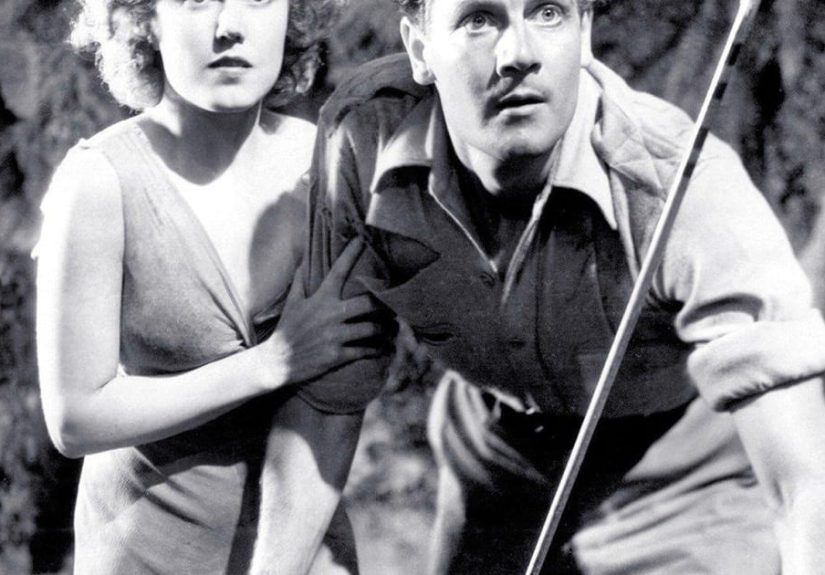
#2 “The Most Dangerous Game” (1932 film) 9.1/10
This is the classic screen translation: compact, intense, and surprisingly modern in how quickly it gets to the point.
It’s also a fascinating artifact of early 1930s Hollywoodoften labeled “pre-Code”where the film can feel a bit bolder
than you expect from something that’s been around since your great-grandparents’ great-grandparents were being dramatic.Why it ranks #2: it preserves the story’s essential DNA while delivering old-school atmosphere and momentum.
And film history nerds get a bonus: production documentation notes that some sets were shared with King Kong,
which is the kind of trivia that makes movie fans sit up like a dog hearing the word “treat.”Opinion: if you’ve never watched a black-and-white thriller and felt your brain go,
“Wait… this is basically a modern chase movie,” this is a great one to test that experience. -
#3 “Hard Target” (1993) 8.2/10
Here’s the premise in a modern action-thriller suit. This one is explicitly framed as a contemporary adaptation of Connell’s setup,
shifting the “hunt” concept into a different social setting and filmmaking style.Why it ranks #3: it’s a confident re-skin of the templatemore kinetic, more stylized, and built for audiences
who like momentum and attitude. Even if you don’t love every choice, it demonstrates how flexible the core concept is:
keep the imbalance of power, keep the chase, keep the moral discomfortand you can relocate the whole thing.Opinion: it’s not the “purest” Connell experience, but it might be the most accessible gateway for viewers
who want their suspense with extra velocity. -
#4 “Most Dangerous Game” (2020 short-form series; later Roku) 7.9/10
The phone-era version: short episodes, modern desperation, and a premise engineered for “just one more.”
It also earned major industry attention, including Emmy nominations (which is not nothing in a crowded content universe).Why it ranks #4: it adapts the core idea to a contemporary rhythmfaster beats, cliffhangers, and a structure
designed for short bursts. It’s also a useful case study in how the “hunt” trope changes when you add modern systems:
money, institutions, and the feeling that someone is always optimizing the rules.Opinion: the format can feel addictive in a good way… or a little mechanical, depending on your tolerance for
cliffhanger architecture. If you love bite-sized suspense, it’s a strong pick. -
#5 “Run for the Sun” (1956) 7.4/10
Think of this as a mid-century thriller reworking of the premise rather than a scene-for-scene translation.
The core enginedanger, pursuit, and the psychology of controlremains recognizable even as the context shifts.Why it ranks #5: it shows how quickly the “Most Dangerous Game” template became a shared language for suspense.
By the 1950s, storytellers could treat the premise like a standard tool: swap the setting, adjust the characters, keep the tension.Opinion: it’s an excellent “if you like classics” companion piece. Not the sharpest blade in the set,
but sturdy, watchable, and historically interesting. -
#6 “A Game of Death” (1945) 7.1/10
This entry is basically the concept wearing a different coat: a remake-era spin that proves the premise can survive
changes in tone and cultural context. Even the production history reflects that lineage: it was connected enough to the original
that the working title referenced “The Most Dangerous Game.”Why it ranks #6: it’s a clear example of the trope becoming a franchise without being a franchise.
You can watch it to see how the core scenario gets re-justified and reframed for a different era’s anxieties.Opinion: not essential if you only want the greatest hits, but genuinely worthwhile if you’re mapping how
the premise mutates over time. -
#7 “The Most Dangerous Game” (2022 remake) 4.8/10
This one is for completionists, curiosity-watchers, and people who enjoy comparing remakes like it’s a sport.
It positions itself as a modern remake anniversary nod, but critical reception has been rough.Why it ranks #7: the premise remains inherently compelling, but execution mattersand this version is widely
viewed as a weaker interpretation. Still, it can be useful as a “what changes when you modernize?” reference point.Opinion: if you’re using “The Most Dangerous Game” for a class, book club, or themed movie night,
you’ll probably get more value from the 1932 film or a well-reviewed modern descendant. This one is more of a footnote.
Opinions That Split the Room (And Why That’s the Point)
1) “Is it anti-hunting, or anti-arrogance?”
One of the most interesting debates is whether the story condemns hunting itself or condemns the mindset that treats other living beings as
objects for self-validation. Many readers walk away thinking the story’s real villain is not “hunting,” but entitlement:
the belief that skill equals moral permission.
2) “Is the antagonist a monster… or a mirror?”
The antagonist works because he’s not randomhe’s a distorted reflection of the hero’s confidence.
That’s why the best adaptations keep the villain articulate, strategic, and strangely polite.
The point isn’t just danger; it’s rationalized danger.
3) “Modern versions make it about systems, not islands.”
In 1924, isolation is geographic: the island is the trap. In modern retellings, isolation can be financial, social, or bureaucratic.
The “game” becomes a system with rules, incentives, and people who think consequences are for other people.
That shift is why the trope keeps returning: it’s flexible enough to criticize whatever kind of power feels most untouchable in the moment.
How to Pick Your Best Entry Point
If you want the purest, smartest version
Read the short story first. It’s quick, iconic, and you’ll recognize its fingerprints everywhere afterward.
If you want classic film suspense
Watch the 1932 film. It’s short, historically significant, and surprisingly brisk.
If you want modern pacing and cliffhangers
Try the 2020 short-form series version (and its Roku continuation). It’s built for momentum and “one more episode” energy.
If you want a modern action-thriller reinterpretation
“Hard Target” is the most straightforward “translate the trope into a different era” option in this list.
Extended Experiences (Extra ): What It Feels Like to Live With This Story
“The Most Dangerous Game” isn’t just something you read or watch onceit’s something you carry, because it creates a specific kind of
aftertaste: part adrenaline, part ethical discomfort, part “wow, that was efficient.” And the experience changes depending on where you meet it.
In a classroom or book club
This story often becomes a group sport: people start ranking decisions like they’re judges on a reality show.
Someone will argue that the protagonist’s confidence is earned, someone else will argue it’s arrogance, and a third person will quietly point out
that the story’s real magic trick is how it makes everyone reveal their values without realizing it.
Discussions tend to split into two lanes: craft (foreshadowing, pacing, point of view) and ethics (power, empathy, justification).
You can watch the room change as people realize the plot isn’t just “run,” it’s “run… and then think about why you’re running.”
On a late-night movie watch
Watching an older adaptationespecially the 1932 filmcan feel like discovering a secret passage in a familiar house.
You’ll notice how many modern suspense tricks already existed: tight scenes, escalating stakes, and the use of atmosphere to do heavy lifting.
There’s also a particular delight in seeing how quickly the film gets moving. Modern viewers sometimes brace for a slow “classic movie warm-up,”
and then the story basically says, “Nope. We’re doing this now.” That speed creates a surprisingly contemporary viewing experience:
you’re not watching a museum piece; you’re watching a machine that still works.
On your phone, episode by episode
The short-form series experience is different: it can feel like suspense in bite-size candy form.
Each segment ends with a tiny shove forwardanother complication, another decision, another reveal about how the “game” is structured.
For some viewers, that’s perfect: it mirrors the modern sense of life happening in fragments, with pressure arriving in notifications.
For others, the constant cliffhanger rhythm can feel like a treadmill. Either way, it’s a fascinating experiment:
the same premise, tuned to a different attention economy.
As a writer, gamer, or storyteller
If you build storiesor even just daydream plotlinesthis premise is basically a Swiss Army knife.
It teaches how to create tension without needing a hundred characters: isolate your protagonist, give the antagonist leverage,
define the rules (even if they’re unfair), and force choices that reveal personality.
You also start spotting the trope’s “tells” in other media: the invitation that’s too polite, the benefactor who offers “help” with strings,
the setting that feels like a sanctuary until it doesn’t. Once you see the skeleton, you can’t unsee itand that’s part of the fun.
Ultimately, the enduring experience of “The Most Dangerous Game” is the way it makes suspense feel earned.
It’s not just fear of what happens next; it’s the slow realization that the real danger is a worldviewone where power turns people into pieces
on a board. And whether you meet it in a 1924 story, a 1932 film, or a modern series, that chill of recognition is what keeps the premise alive.
Conclusion
If you’re ranking “The Most Dangerous Game” versions, you’re really ranking how each era interprets the same uncomfortable truth:
the scariest threats aren’t always monstersthey’re people who can justify anything.
Start with the short story for the pure blueprint, watch the 1932 film for classic craft, then pick a modern descendant that matches your taste:
action-forward, binge-friendly, or historically curious. And if you disagree with these rankings… congratulations.
You’re participating in the only sport that matters: thinking.