Table of Contents >> Show >> Hide
- What Is a Ground Source Heat Pump?
- How an Air Conditioner and a Heat Pump Are Related
- The Big Difference: Air Coil vs. Ground Loop
- Can You Convert an Air Conditioner Into a Ground Source Heat Pump?
- Key Components Needed for a Ground Source Conversion Concept
- Ground Loop Options Explained
- Why Efficiency Can Be So Good
- What About Using a Window AC Unit?
- Practical Design Example: The Conceptual Retrofit
- Safety and Legal Issues You Should Not Ignore
- When a Conversion Makes Senseand When It Does Not
- Cost Considerations
- Maintenance Expectations
- Experience Notes: Lessons From Thinking Through an AC-to-Ground-Source Project
- Conclusion
Turning an air conditioner into a ground source heat pump sounds like the sort of weekend project that begins with coffee, confidence, and a garage full of “perfectly useful parts.” In theory, the idea is not ridiculous. An air conditioner already moves heat from one place to another. A ground source heat pump does the same thing, except it uses the earth as the heat source in winter and the heat sink in summer. The difference is that the earth is not moody like outdoor air. A few feet below the surface, ground temperatures stay far steadier than the weather above, which is why geothermal heating and cooling systems can be so efficient.
But before anyone grabs a wrench and declares war on an old window AC unit, let’s be clear: this is not a simple “flip two hoses and become an energy genius” conversion. Air conditioners contain refrigerant, high-voltage components, pressurized tubing, oil, compressors, and controls that are designed for a specific operating range. In the United States, servicing equipment that could release refrigerants requires EPA Section 608 certification. Translation: the concept is fascinating, but the refrigerant-side work belongs to trained professionals, not brave homeowners armed with internet confidence and questionable safety goggles.
This guide explains how the idea works, what parts of an air conditioner resemble a ground source heat pump, what must change, why the ground loop matters more than most people expect, and whether converting an AC unit is actually practical. Think of it as a smart, grounded look at a clever projectminus the dangerous shortcuts.
What Is a Ground Source Heat Pump?
A ground source heat pump, also called a geothermal heat pump or GSHP, is a heating and cooling system that exchanges heat with the ground instead of the outdoor air. In summer, it moves heat out of the building and sends it into the ground. In winter, it pulls stored heat from the ground and moves it indoors. The magic is not magic at all; it is thermodynamics wearing work boots.
The U.S. Department of Energy notes that shallow ground temperatures remain relatively constant compared with outdoor air. That stable temperature lets a geothermal heat pump operate with less stress than an air-source system fighting freezing winter air or blazing summer heat. ENERGY STAR describes geothermal heat pumps as among the most efficient heating and cooling technologies available because they use the earth’s natural thermal storage for space conditioning and, in some systems, domestic water heating.
A typical ground source heat pump has three main parts: the indoor heat pump unit, the ground heat exchanger, and the building’s air or water distribution system. The ground heat exchanger may be a closed loop of buried piping filled with water or antifreeze solution, or it may be an open-loop system using groundwater where local codes and water quality allow it.
How an Air Conditioner and a Heat Pump Are Related
An air conditioner is already a heat-moving machine. It absorbs heat from indoor air and rejects that heat outdoors. A heat pump uses the same basic refrigeration cycle but can reverse the direction of heat movement, allowing it to heat as well as cool. That is why many air-source heat pumps look suspiciously like air conditioners with extra controls and a reversing valve.
The main components are familiar: compressor, evaporator coil, condenser coil, expansion device, refrigerant lines, blower, and controls. In cooling mode, the indoor coil absorbs heat, and the outdoor coil rejects heat. In heating mode, a heat pump reverses that process. A ground source heat pump also uses a compressor and refrigerant cycle, but instead of relying on outdoor air across an exposed coil, it exchanges heat with a water loop connected to the ground.
This is where the conversion idea comes from. If an air conditioner can move heat from inside to outside, could it be adapted to move heat between a house and a ground loop? Conceptually, yes. Practically, it becomes an engineering project with safety, sizing, controls, water flow, corrosion, freeze protection, and code compliance all sitting at the table like strict relatives during Thanksgiving dinner.
The Big Difference: Air Coil vs. Ground Loop
The most important difference between an air conditioner and a ground source heat pump is the heat exchanger on the “outside” side of the system. A normal AC rejects heat into outdoor air through a finned coil and fan. A ground source heat pump rejects or absorbs heat through a water-to-refrigerant heat exchanger connected to buried piping.
Air is easy to move but not great at carrying heat. Water is much better at transferring thermal energy, which is why ground source systems can be compact and efficient when designed correctly. Instead of blowing hot air across a coil outdoors, the system circulates fluid through underground piping. That loop may run horizontally in trenches, vertically in boreholes, or through a pond or lake when conditions allow.
In a conversion project, the outdoor air coil of the AC would not simply be buried in the yard. That would be a recipe for corrosion, poor heat transfer, leaks, and a future conversation beginning with, “Well, that didn’t go as planned.” A proper conversion would require a compatible water-to-refrigerant heat exchanger, a circulation pump, safe controls, and a correctly sized ground loop.
Can You Convert an Air Conditioner Into a Ground Source Heat Pump?
At a high level, an air conditioner can inspire a ground source heat pump conversion, but most standard AC units are not ideal candidates for a reliable, code-compliant home system. The compressor may not be designed for the pressures and temperatures expected in heating operation. The controls may not support reverse-cycle heating. The refrigerant metering device may be wrong for variable operating conditions. The heat exchanger may not match the required capacity. The cabinet, insulation, condensate management, and safety controls may also need redesign.
For experimental learning, a small, professionally supervised test bench can demonstrate the principle. For actual home heating and cooling, a purpose-built geothermal heat pump is usually safer, more efficient, easier to maintain, and more likely to pass inspection. The used AC unit may still be educational, but it is rarely the best foundation for a full residential geothermal system.
The honest answer is this: converting an air conditioner into a ground source heat pump is possible as an engineering concept, but it is not a plug-and-play DIY project. The safest approach is to treat the AC as a learning model and let licensed HVAC professionals handle any sealed refrigerant circuit work.
Key Components Needed for a Ground Source Conversion Concept
1. A Compressor Designed for the Job
The compressor is the heart of the system. In a standard AC unit, it is selected for cooling conditions. A heat pump may require operation across a wider range, including heating-mode pressures and temperatures. If the compressor is forced outside its design envelope, efficiency drops, reliability suffers, and the poor little machine begins making noises that sound expensive.
2. A Water-to-Refrigerant Heat Exchanger
A ground source system usually needs a heat exchanger that safely transfers heat between refrigerant and loop fluid. This component must be rated for the refrigerant, pressure, temperature, flow rate, and capacity of the system. Stainless steel or copper alloy construction may be used depending on water chemistry and design. Random plumbing parts do not count as engineering.
3. A Ground Loop or Water Source
The ground loop is not just pipe in dirt; it is the thermal battery of the system. It must be sized based on heating and cooling loads, soil conditions, moisture, climate, available land, and local rules. Closed-loop systems often use high-density polyethylene piping because it is durable, corrosion-resistant, and suitable for buried heat exchange applications.
4. A Circulation Pump
The loop fluid must move at the right rate. Too little flow reduces heat transfer and may cause safety shutdowns. Too much flow wastes pumping energy. In a well-designed GSHP, pump power matters because a system can lose much of its efficiency advantage if the pump is oversized or runs constantly without need.
5. Controls and Safety Devices
Controls must protect the compressor, monitor temperatures, manage flow, prevent freezing, and coordinate heating or cooling calls. A ground source heat pump also needs pressure safety controls and proper electrical protection. This is one reason professionally manufactured geothermal units are attractive: they already include tested controls instead of relying on a heroic collection of switches and optimism.
Ground Loop Options Explained
Horizontal Closed Loop
A horizontal closed loop is often used when enough land is available. Trenches are dug, pipe is laid in straight or coiled patterns, and the system circulates fluid through the buried loop. Horizontal systems can be cost-effective, especially in new construction, but they require yard space and soil disruption.
Vertical Closed Loop
A vertical loop uses boreholes drilled deep into the ground. It is common where land is limited or soil conditions make trenching difficult. Drilling costs more, but the footprint is smaller. Many residential and commercial geothermal systems use vertical bore fields because they deliver strong performance without turning the whole yard into a temporary archaeology site.
Pond or Lake Loop
If a suitable body of water is available, a closed loop may be placed underwater. This can offer excellent heat exchange, but it depends on depth, water temperature, permissions, environmental concerns, and protection from damage.
Open Loop
An open-loop system uses groundwater directly as the heat exchange medium. It can work well where water quality and flow are appropriate, but it requires careful permitting and design. Minerals, scaling, biological growth, and discharge rules can turn a promising idea into a maintenance headache if not evaluated properly.
Why Efficiency Can Be So Good
A ground source heat pump is efficient because it does not create heat by burning fuel or by using electric resistance. It moves heat. Since the ground stays warmer than winter air and cooler than summer air, the compressor works under easier conditions. That can mean lower energy use, quieter operation, longer equipment life, and more stable comfort.
ENERGY STAR reports that certified geothermal heat pumps can use substantially less energy than standard models. DOE guidance also points out that geothermal systems often cost more upfront but may recover that added cost over time through lower utility bills, depending on energy prices, incentives, system design, and local conditions.
However, efficiency is not automatic. A badly designed ground loop, poor ductwork, wrong pump sizing, low airflow, or mismatched equipment can drag performance down. Geothermal is not a magic sticker you slap on a machine. It is a system, and every part has to cooperate.
What About Using a Window AC Unit?
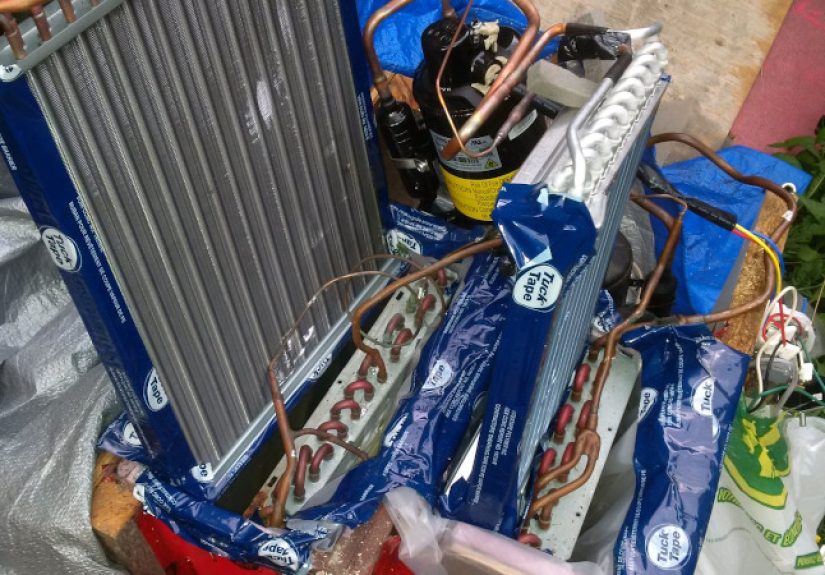
A window air conditioner is tempting because it is small, cheap, and easy to find. For educational demonstrations, it can show how the refrigeration cycle moves heat. But for a real ground source heat pump conversion, a window unit has major limitations. Its compressor is small, its controls are basic, its airflow design is fixed, and its refrigeration components are not meant for field redesign.
Some hobbyists imagine replacing the outdoor coil with a water heat exchanger. That idea may appear simple on a sketch, but it changes refrigerant charge, pressure relationships, oil return behavior, heat exchanger performance, and compressor operating conditions. It also involves opening the sealed refrigeration system, which requires proper recovery equipment and EPA-certified handling in the United States.
For a safe article-friendly answer: a window AC can be a teaching tool, not a recommended path to a home geothermal system. If the goal is real comfort, lower bills, and fewer “why is smoke coming from that?” moments, use certified equipment.
Practical Design Example: The Conceptual Retrofit
Imagine a small workshop that currently uses a 12,000 BTU air conditioner for cooling. The owner wants year-round heating and cooling using a ground loop. A practical design team would first calculate the workshop’s heating and cooling load, inspect insulation and air sealing, and determine whether the existing ductless or ducted distribution method makes sense.
Next, they would evaluate the site. Is there enough land for a horizontal loop? Is drilling possible? What is the soil type? Is groundwater protected by local rules? Is there room for indoor equipment? Then they would compare three paths: converting old equipment, installing a purpose-built water-source heat pump, or choosing a modern air-source heat pump.
In most cases, the purpose-built water-source heat pump wins if the owner is committed to a ground loop. It is designed for water-side operation, includes safety controls, and has published performance ratings. The old air conditioner may still donate lessons, sheet metal, or a funny story, but not necessarily the compressor that runs the building for the next decade.
Safety and Legal Issues You Should Not Ignore
Refrigerant is not just “cold gas.” It is a regulated working fluid, and releasing it into the atmosphere is illegal and environmentally harmful. EPA rules require certification for technicians who maintain, service, repair, or dispose of equipment that could release refrigerants. That includes attaching gauges, adding refrigerant, removing refrigerant, or opening the sealed system.
Electrical safety is another serious concern. Air conditioners and heat pumps may use line voltage, capacitors, motors, compressors, and controls that can injure or kill if handled incorrectly. Water and electricity also become very unfriendly when introduced without proper design. Any project involving refrigerant circuits, mains voltage, buried piping, pressure vessels, or building integration should be handled by qualified professionals.
The safe homeowner role is still valuable: research, planning, site preparation discussions, load reduction through insulation and air sealing, contractor selection, maintenance awareness, and energy monitoring. In other words, you can be the project brain without becoming the emergency room’s most interesting story of the day.
When a Conversion Makes Senseand When It Does Not
A conversion concept may make sense in a lab, classroom, maker space, or engineering experiment where trained supervision, proper tools, and safety procedures are available. It can help students understand heat exchangers, refrigerant cycles, water loops, compressor efficiency, and controls.
For an occupied home, conversion usually makes less sense. A certified geothermal unit offers tested performance, warranty support, safe controls, and compatibility with recognized installation practices. The ground loop is expensive, so connecting it to improvised equipment is like buying premium tires for a shopping cart. The loop deserves a heat pump that can use it properly.
Cost Considerations
Ground source systems usually cost more upfront than conventional air-source systems because of excavation, drilling, loop materials, pumps, and design work. The indoor unit may not be dramatically larger than other HVAC equipment, but the buried infrastructure is a serious investment.
The payoff can come through lower operating costs, better comfort, quieter equipment, reduced maintenance exposure, and long loop life. DOE resources often describe ground loops as long-lived assets, with buried loops potentially lasting decades when properly installed. Incentives, tax credits, utility rebates, and local programs may also improve the economics, though these change over time and should be checked before budgeting.
Maintenance Expectations
A properly installed ground source heat pump can be relatively low maintenance because much of the system is indoors or underground, protected from weather. Basic maintenance may include filter changes, coil cleaning, pump checks, thermostat verification, condensate inspection, and periodic professional service.
The ground loop itself has no fan sitting in rain, snow, leaves, pollen, and lawn clippings. That is one reason geothermal systems are often described as durable. Still, “low maintenance” does not mean “no maintenance.” Pumps, controls, filters, and air distribution still need attention.
Experience Notes: Lessons From Thinking Through an AC-to-Ground-Source Project
The first lesson is that the ground loop is the star of the show. Beginners often focus on the old air conditioner because it is visible, noisy, and sitting there like it wants a second career. But the buried loop determines how much heat the system can absorb or reject. If the loop is too small, too shallow, poorly grouted, badly flushed, or matched to the wrong flow rate, even a great compressor will struggle. In a geothermal project, the dirt is not just dirt. It is part of the machine.
The second lesson is that sizing matters more than enthusiasm. A small AC unit may cool a room on a mild day, but heating loads can be much larger, especially in colder climates. A building with leaky windows, thin insulation, and tired ductwork can swallow capacity like a teenager eating pizza after practice. Before anyone debates compressor models or loop layouts, the building envelope should be improved. Air sealing, insulation, duct sealing, and smart load calculations often save more money than heroic equipment improvisation.
The third lesson is that water-side heat exchange feels simple until details arrive. Flow rate, antifreeze concentration, pump head, pipe diameter, soil temperature, heat exchanger pressure drop, and freeze protection all matter. A loop pump that runs constantly can waste enough electricity to weaken the efficiency advantage. A poorly selected heat exchanger can create high refrigerant pressures or low suction temperatures. In other words, the “simple water loop” has a surprisingly long résumé.
The fourth lesson is that old equipment is not always cheap equipment. A salvaged air conditioner may cost little at the start, but adapting it safely can require custom heat exchangers, refrigerant recovery, new controls, pressure testing, electrical work, sensors, pumps, and professional labor. By the time the project is safe and functional, a purpose-built water-source heat pump may look much less expensive than it did on day one.
The fifth lesson is that comfort is the real goal. People do not install heat pumps to admire refrigerant charts at dinner. They want quiet rooms, steady temperatures, reasonable bills, and a system that does not need motivational speeches every Monday morning. A ground source heat pump can deliver that comfort beautifully when designed as a complete system. The best projects begin with load calculations, good contractors, realistic budgets, and equipment designed for the job.
The final lesson is humility. HVAC systems obey physics, not wishful thinking. The idea of building a ground source heat pump from an air conditioner is genuinely interesting, and it teaches a lot about how heat moves. But for real homes, the smartest version of the idea may be this: learn from the air conditioner, respect the refrigeration cycle, invest in the ground loop carefully, and use certified geothermal equipment where safety and reliability matter.
Conclusion
A ground source heat pump from an air conditioner is an exciting concept because both machines are built around the same basic purpose: moving heat. The difference is that a geothermal system uses the earth as a stable thermal partner, while a standard AC rejects heat to outdoor air. That one change creates big efficiency potential, but it also demands proper design, safe refrigerant handling, water-side heat exchange, correct controls, and a well-sized ground loop.
For learning, the conversion idea is brilliant. For whole-home comfort, a professionally designed geothermal system is usually the wiser path. The earth can be an excellent heating and cooling partnerbut only if the equipment is ready for the relationship.