Table of Contents >> Show >> Hide
- 1) It’s a clean-slate cast (and it actually commits to the bit)
- 2) The story structure is a three-part hunt: land, sea, and air
- 3) Dinosaurs aren’t everywhere anymoreand that changes everything
- 4) The primary stakes are medicaland the villainy is more “boardroom” than “mustache”
- 5) The tone leans harder into survival-thriller (with more fear baked into the set pieces)
- 6) The new “headline creatures” are openly mutatedand they’re designed to unsettle, not just impress
- 7) It resurrects old-school Jurassic suspense with water-based terror (and a long-lost set piece)
- 8) It’s chasing a “back-to-1993” feel in craft: real locations, film texture, and carefully managed nostalgia
- Conclusion: Why these differences matter
- Experiences: What it feels like to watch Rebirth as a longtime Jurassic fan (and how to enjoy the differences)
Every Jurassic era has its “Okay, hear me out…” moment. The original Jurassic Park gave us
theme-park hubris and a T. rex that basically invented modern blockbuster suspense. The first Jurassic World
trilogy went bigger, louder, and (at one point) so “dinosaurs-in-modern-life” that you half expected a raptor to ask
for your Netflix password.
Jurassic World Rebirth isn’t just “another sequel.” It’s a deliberate pivotnew faces, new rules, a new kind
of threat, and a story structure that feels more like a dangerous expedition than a corporate disaster clean-up.
If you’ve seen every film and still find yourself whispering “Life, uh… finds a way” when your phone battery hits 2%,
this one gives you plenty to compare.
Below are eight major ways Rebirth separates itself from the previous franchise filmswithout pretending
it’s not still a movie where humans do extremely questionable things near extremely uninsurable animals.
1) It’s a clean-slate cast (and it actually commits to the bit)
Most Jurassic entries rely on at least one familiar human anchor: returning scientists, legacy heroes,
or a “Remember THIS guy?” cameo that makes audiences clap like trained sea lions (affectionate).
Rebirth makes a bolder choice: it’s led by a fresh triocovert-ops specialist Zora Bennett, captain Duncan Kincaid,
and paleontologist Dr. Henry Loomisplus a separate civilian family caught in the blast radius of Bad Decisions Island.
That shift changes the vibe immediately. Instead of “we have to save the park” or “we have to fix what we broke,”
the characters arrive with a mission, competing agendas, and a professional skillset that’s less “I studied raptors”
and more “I’ve had worse days, but not by much.”
2) The story structure is a three-part hunt: land, sea, and air
Many past films revolve around one central threat or objectiveescape the island, stop the hybrid, rescue someone,
expose the company, survive the locust subplot you swear you didn’t hallucinate.
Rebirth gives the plot a clean, game-like structure: the team must secure genetic material tied to
the biggest surviving creatures across land, sea, and air.
The result is a different rhythm: multiple “boss levels,” each with its own terrain, tactics, and terror flavor.
It’s less like a single roller coaster and more like a theme park where every ride is labeled
“You Will Regret This, But It’ll Look Great in the Trailer.”
3) Dinosaurs aren’t everywhere anymoreand that changes everything
The last stretch of the franchise leaned hard into the “dinosaurs have entered our world” idea.
Rebirth pulls the series back toward a scarier concept: humans must go to their world again.
In-universe, Earth’s modern ecology proves largely inhospitable to dinosaurs, so the remaining populations cluster
in isolated equatorial environments with climates closer to what they once needed.
Practically, this refocus does two things. First, it restores the feeling that dinosaurs are rare, dangerous,
and geographically specificnot a background nuisance like traffic. Second, it lets suspense work again:
when characters are deep in a hostile biosphere, help is not a phone call away. It’s a prayer. A bad plan. A sprint.
4) The primary stakes are medicaland the villainy is more “boardroom” than “mustache”
The mission isn’t “reopen the park” or “weaponize the animals” (though let’s be honest, somebody always tries).
Here, dinosaur DNA is tied to a pharmaceutical goal: a drug with potentially life-saving benefits.
That gives the story a different kind of moral friction: the goal can sound noble while the methods look
increasingly indefensible.
That nuance matters. Older films often framed corporate greed as the obvious enemy, with villains who practically
wore neon signs reading “I will betray you before intermission.”
Rebirth keeps the exploitation theme, but it dresses it in clean suits, “for humanity” messaging,
and the kind of deadlines that make people do reckless thingslike extracting DNA from megafauna that can
remove a boat from existence.
5) The tone leans harder into survival-thriller (with more fear baked into the set pieces)
Yes, every Jurassic movie has chase scenes. But Rebirth is built to feel like a survival odyssey:
a hostile island, escalating constraints, and “moment-to-moment” escape-and-scare plotting where tension is the point,
not just the bridge between spectacle shots.
The franchise has always had horror DNAkitchen raptors, tall grass, the slow realization you are not the apex predator.
What’s different here is how consistently the film aims for that primal, hunted feeling, even when the action is huge.
It’s not trying to be a global event movie first; it wants you stuck in the mud with the characters,
thinking, “Cool cool cool… we’re definitely not making it to the credits.”
6) The new “headline creatures” are openly mutatedand they’re designed to unsettle, not just impress
The franchise has flirted with genetic monstrosities before (hello, Indominus; hello again, Indoraptor).
But Rebirth makes mutation feel like the island’s core curse. The film introduces grotesque new threats,
including the Distortus Rex (often shortened to “D-Rex”) and the Mutadonscreatures that look less like
museum exhibits and more like science’s worst apology letter.
In other words: the monsters aren’t “cool upgrades.” They’re the leftovers. The mistakes. The things that got
shoved somewhere remote because even greedy people have to admit, occasionally,
“Yeah, we probably shouldn’t show that one to families.”
That’s a tonal difference from earlier entries where hybrids were treated as attractions or weapons-in-waiting.
Here, mutation carries more body-horror energyfear mixed with a weird pinch of pity, because some of these animals
look like they hurt just existing.
7) It resurrects old-school Jurassic suspense with water-based terror (and a long-lost set piece)
One of Rebirth’s biggest flex is how it uses wateran arena that’s always been scary in this franchise
(the Mosasaurus says hi, from beneath your nightmares).
The film features major aquatic danger, including a sequence that’s intentionally “don’t go in the water” adjacent,
because some cinematic fears are evergreen.
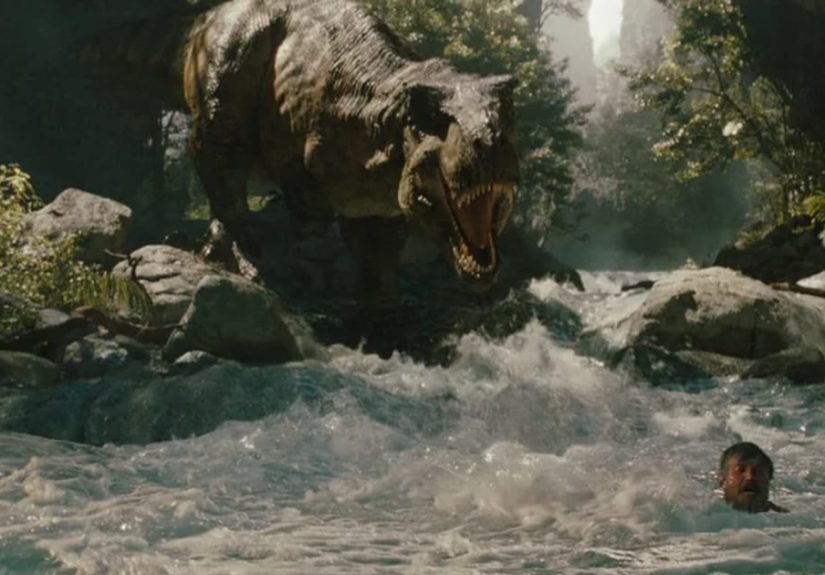
The coolest difference for longtime fans, though, is that Rebirth repurposes a sequence that didn’t make it
into the 1993 film: a T. rex pursuing people on a riveran idea with roots in Michael Crichton’s novel and one that
was once considered too technically risky to pull off convincingly.
That choice isn’t just nostalgia. It’s a mission statement:
Rebirth wants to deliver the kind of tactile, “oh no, it’s RIGHT THERE” suspense that made the franchise iconic,
then modernize it with today’s filmmaking tools.
8) It’s chasing a “back-to-1993” feel in craft: real locations, film texture, and carefully managed nostalgia
Here’s the sneaky difference that adds up the most: Rebirth doesn’t only change story ingredientsit changes
the presentation.
More real-world grit (and less “blue screen vibes”)
The production leaned into physically demanding location workjungles, rivers, mangrove swamps, and open-water shooting.
That matters because the franchise is at its best when environments feel lived-in, wet, and dangerous.
You can sense when characters are truly far from safety, not just far from Wi-Fi.
Shot on 35mm film for a richer, more organic look
In a modern blockbuster landscape that often looks squeaky-clean, Rebirth opted for 35mm capture and a widescreen
presentation. The point isn’t “film is better” (the internet will do that argument for free, forever).
The point is that this choice supports the movie’s primeval moodlush greens, harsh contrast, and a texture that
feels closer to a gritty adventure than a digital showroom.
A new musical voice that still tips its hat to John Williams
Another craft shift: a new composer steps in, aiming to honor the iconic themes while building new ones that fit
Rebirth’s identity. That balancefamiliar, but not copy-pasteis exactly what this film is trying to be as a whole.
Homage, but with guardrails (even when the guardrails argue back)
Finally, Rebirth plays a careful game with nostalgia. It includes Spielberg-era flavorsometimes overtly,
sometimes through wink-and-nod stagingwhile also resisting the urge to become a highlight reel of the past.
Even the behind-the-scenes conversation around references and Easter eggs reflects that push-pull:
reverence vs. repetition.
Conclusion: Why these differences matter
Jurassic World Rebirth doesn’t pretend it can erase franchise historynor should it. Instead, it changes the
franchise’s posture: away from sprawling “dinosaurs everywhere” spectacle and toward concentrated survival,
mission-driven tension, and creatures that feel dangerous again.
The biggest takeaway is simple: Rebirth is trying to make you feel hunted, not just entertained.
It’s a return to the idea that dinosaurs aren’t a backdrop. They’re the point. And if you leave the theater thinking,
“I would like to never go near an inflatable raft again,” congratulationsJurassic is working as designed.
Experiences: What it feels like to watch Rebirth as a longtime Jurassic fan (and how to enjoy the differences)
Watching Jurassic World Rebirth as a franchise veteran is a little like visiting a childhood theme park
and realizing they’ve replaced the kiddie train with an “extreme” zipline. The signs are familiar, the logo is the same,
but the ride operator is making eye contact like, “You sure about this?” That feelingrecognition mixed with surprise
is where the fun lives.
One of the first noticeable experiences is the shift in tension. In some past entries, the biggest thrills are
built around scale: crowds running, cities threatened, the sense that everything is happening everywhere all at once.
In Rebirth, the tension is more personal and immediate. Scenes often play like endurance tests: can they hide,
can they climb, can they stay quiet, can they not do the one thing every human does in these moviespanic loudly?
As a viewer, you may catch yourself leaning forward more, not because you’re trying to see the CGI better,
but because you’re bracing for the moment something moves in the background.
Another fan experience is the pleasure of the “hunt” structure. Because the mission is tied to multiple targets and
distinct environments, it can feel like a travelogue through dangereach segment with its own rules.
If you enjoy comparing set pieces, this movie invites it. Some sequences are all about open terrain and visibility,
where the dread comes from realizing there’s nowhere to hide. Others are tighter and nastiercorridors, tunnels,
and the kind of lighting that screams, “We’re about to learn what that sound means.” The fun is in noticing how the film
changes your expectations from one section to the next.
For longtime fans, the “old ideas made possible” moments can land especially well. Knowing that certain scenes echo
concepts from earlier drafts or the original novel adds a layer of appreciationlike watching the franchise finally
cash a check it wrote decades ago. Even if you don’t know the behind-the-scenes history, you can feel the intent:
this isn’t a random callback; it’s a suspense tool sharpened with modern technique.
The creature experience is different, too. Classic Jurassic dinosaurs often inspire awe first and fear second.
With Rebirth’s mutated additions, the reaction can be more complicated: shock, discomfort, and a strange
“that thing should not exist” sadness. As a viewer, you might find yourself reacting fasterbecause the designs are meant
to register emotionally before your brain starts labeling species. It’s less “Is that a raptor?” and more
“Why does it have extra limbs, and whose idea was that?”
If you want to get the most out of the “differences,” try a simple fan ritual: rewatch one earlier film (either
the 1993 original for suspense language or Dominion for the “dinosaurs in society” peak), then watch Rebirth.
You’ll notice contrasts immediatelythe way the movie stages reveals, the way it uses environment, and how it treats
dinosaurs as something you must approach rather than something that shows up in traffic.
It becomes less about ranking films and more about appreciating how the franchise evolves:
sometimes forward, sometimes backward, sometimes sideways into a swamp while everyone screams.
And finally: the best “experience tip” is practical. If you’re seeing it in a premium format, do it.
This movie’s pleasures are sensorywater dread, jungle noise, sudden impacts, and that signature Jurassic
low-frequency rumble that makes your ribs feel like they’re getting a tiny chiropractic adjustment.
If you’re watching at home, crank the sound (responsibly), dim the lights, and accept the truth:
you will glance at dark corners of your room like a raptor might be filing paperwork there.