Table of Contents >> Show >> Hide
- The Remodelista Philosophy: Simple, Stylish, and Real-Life Ready
- On-the-Go Starts at Home: The Power of a Good Launch Pad
- Car Organization: Turning Your Vehicle into a Mobile Command Center
- Bag Organization: A Portable “Organized Home”
- Small Travel Appliances and Tech: Mini but Mighty
- Rethinking the “Junk Drawer”: A Miscellaneous Zone That Actually Works
- Daily Habits That Keep You Organized on the Go
- Real-Life Experiences: What On-the-Go Organization Actually Feels Like
If your car floor is a graveyard of snack wrappers, rogue water bottles, and exactly three unmatched socks, welcome. You’re in the right place. Inspired by The Organized Home from the Remodelista team, this guide is all about on-the-go organizationhow to keep life tidy when you’re dashing from school drop-off to the office to weekend road trips, with half your belongings in tow.
Instead of aiming for perfection, the Remodelista approach focuses on simple, stylish solutions that fit into real life: smart car organization, clutter-free bags, compact travel tools, and small habits that keep chaos in check. We’ll borrow those principles and blend them with practical tips from car experts, home organizers, and storage pros across the US to help you turn “Where did I put that?!” into “Oh, of course it’s right here.”
The Remodelista Philosophy: Simple, Stylish, and Real-Life Ready
Remodelista’s The Organized Home emphasizes living with fewer, better things and creating systems that don’t get in the way of everyday life. The same mindset works beautifully for on-the-go organization: you want items that multitask, storage that looks good enough to leave out, and routines so simple that even the messiest family member can follow them.
The original Remodelista feature on on-the-go organization highlights a few key themes: compact travel appliances that work as hard as full-size versions, well-edited entryways that support busy comings and goings, and rethinking clutter magnets like the junk drawer (renamed the “miscellaneous drawer,” which instantly sounds more intentional).
Translated into everyday life, this means:
- Choosing compact, functional tools that store easily in a car, bag, or small cabinet.
- Setting up “launch pads” at home so getting out the door is fast and calm.
- Designating a home for everythingeven the random stuffso nothing lingers in limbo.
On-the-Go Starts at Home: The Power of a Good Launch Pad
On-the-go organization doesn’t begin in the car; it starts at your front door. A high-functioning entryway means you’re not scrambling to find keys, bags, or sports gear as the clock ticks. Remodelista’s editors often call out beautifully organized entry spaces: sturdy hooks, narrow benches with storage, trays for mail, and catchall bowls for keys and sunglasses.
Set Up a Daily “Out-the-Door” Zone
Create a compact station near your main door with:
- Wall hooks or a peg rail for grab-and-go bags, jackets, and dog leashes.
- A shallow tray or bowl for keys, sunglasses, and earbuds.
- A slim shelf or basket for daily essentials: reusable shopping bags, mail to send, library books, or kids’ permission slips.
- A small bin for items that need to go to the car (e.g., returns, sports gear).
Think of this zone as your “on-the-go staging area.” Instead of scattering essentials all over the house, let them pass through this space on their way inand out.
Pre-Pack Instead of Scramble-Pack
Inspired by The Organized Home’s “fewer, better” philosophy, pre-pack core bags so they’re always ready:
- Errand tote: reusable shopping bags, a small zipper pouch with pen, notepad, and tape measure, plus a few folded paper bags for returns.
- Kid kit: snacks, wipes, a small pack of crayons, and a notebookstored in a pouch that can move from kitchen to car to backpack.
- Gym or studio bag: shoes, deodorant, hair ties, and a refillable water bottle.
Instead of packing from scratch every time you leave, you top things off. It’s the difference between “I’ll be in the car in 2 minutes” and “Sorry, we’re going to be a little bit late.”
Car Organization: Turning Your Vehicle into a Mobile Command Center
Your car is often your second home: office, snack bar, locker room, and taxi all in one. That’s exactly why it can go from tidy to tornado in a single busy week. Many organizing pros recommend using dedicated trunk organizers, seat-back pockets, and small containers to create “zones” in your vehicle.
Create Simple Zones in the Trunk
Take a page from car-care and family-lifestyle sites and set up three or four basic categories in your trunk:
- Emergency zone: jumper cables, first-aid kit, flashlight, small blanket, and basic tools, often recommended by auto and safety organizations.
- Grocery & errands zone: a sturdy, collapsible trunk organizer with dividers to keep bags from tipping and produce from rolling.
- Kid or hobby zone: sports equipment, picnic blanket, or dog gear, sorted into bins or soft-sided crates.
- Cleaning & car-care zone: reusable towels, glass cleaner, and trash bags.
Most experts recommend collapsible organizers so you can fold them flat when you need the full cargo space for big hauls. Handles make it easy to bring a whole bin inside when you’re unloading groceries or gear.
Tame the Backseat with Vertical Storage
Seat-back organizers and hanging trunk systems are a favorite of parents because they keep items off the floor while still within reach. Many products feature pockets of different sizesperfect for snacks, water bottles, small toys, travel tissues, and extra wipes.
To keep things streamlined:
- Limit each child to one small pouch or caddy.
- Do a quick five-minute reset at home: kids empty their trash and return “house items” at the end of the day.
- Use a small, lidded car trash can to corral wrappers and receipts.
Glove Compartment and Console: The “Miscellaneous Drawer” of Your Car
Remember Remodelista’s rebrand of the junk drawer? The glove compartment is your car’s version of that. Instead of stuffing it with expired menus and mystery napkins, treat it like a mini command center.
Use slim pouches or envelopes to group:
- Registration, insurance, and roadside assistance info.
- Car-care receipts and maintenance records.
- Small essentials like a tire gauge, pen, and notepad.
For the center console, add a small tray or divider so coins, lip balm, and charging cables don’t sink into a black hole of crumbs and fast-food straws.
Bag Organization: A Portable “Organized Home”
If you’ve ever dumped your entire purse onto the passenger seat to find a ringing phone, it might be time to rethink your bag layout. Pro organizers and handbag experts often recommend breaking your bag into categories using pouches, inserts, or bag organizers.
Build a Simple System Inside Your Bag
Try this bag layout as a starting point:
- Everyday pouch: wallet, keys, phone (or at least a designated phone pocket).
- Care kit: hand sanitizer, tissues, medication, and lip balm.
- Work mini-kit: pen, small notebook, USB drive, and earbuds.
- Extras pouch: snacks, mints, hair ties, and a compact reusable bag.
You can move this system from tote to backpack in secondsno more accidentally leaving your wallet in yesterday’s bag.
Use Bag Inserts for Structure
Many bag enthusiasts swear by purse organizers or felt inserts that fit inside larger totes. They add structure, create compartments, and help protect the bag’s lining. DIY organizers and sewing tutorials online show how you can even make your own insert if you’re handy with a sewing machine.
For travel, apply the same logic to suitcases: use packing cubes and small zipper bags to separate clothing, toiletries, and electronics, so you’re not digging for essentials every night in the hotel room.
Small Travel Appliances and Tech: Mini but Mighty
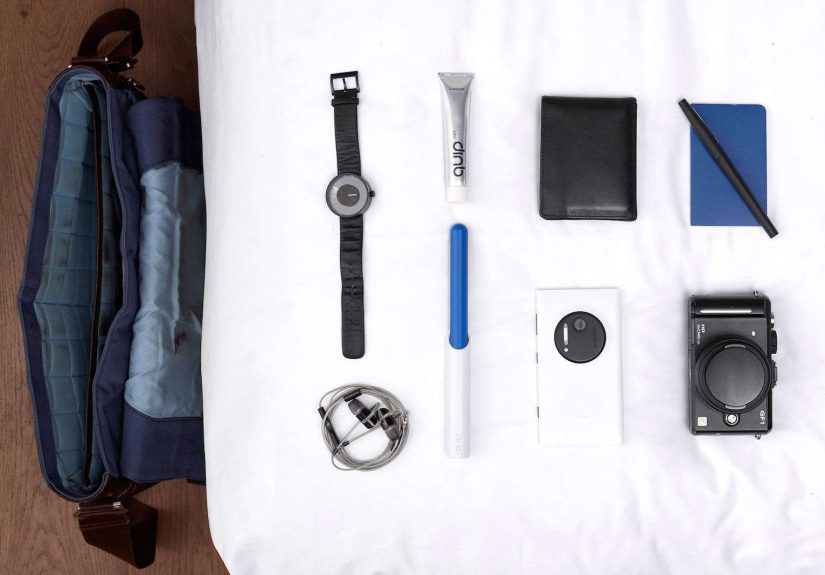
One of the clever ideas from The Organized Home’s on-the-go feature is relying on travel-size appliances and compact electronics that perform as well as their full-size counterparts.
Instead of bulky gear, consider:
- Travel electric toothbrushes and compact hair tools that fit in slim cases.
- Multi-port charging blocks to power several devices from a single outlet.
- Foldable keyboards or slim laptop stands for digital nomads and frequent travelers.
Store these in dedicated tech pouches so you can grab one case and know you’ve got everythingfrom adapters to charging cableswithout doing a last-minute scavenger hunt.
Rethinking the “Junk Drawer”: A Miscellaneous Zone That Actually Works
The Remodelista editors famously suggest renaming the “junk drawer” to “miscellaneous drawer,” nudging us to treat it as a curated category rather than a dumping ground.
Apply that same mindset to your on-the-go life:
- Have one small pouch or bin in your car for true miscellaneous items (ticket stubs, spare change, random hair clip).
- Do a quick empty-and-sort once a week; toss trash, rehome anything that belongs in the house.
- Limit the container size so it never becomes a bottomless pit.
You’re not outlawing randomnessyou’re just giving it boundaries.
Daily Habits That Keep You Organized on the Go
Even the best systems fall apart without simple routines. Remodelista’s “rules to live by” for organized homes often revolve around low-effort habits that become automatic over time.
Try These Tiny Habits
- One-minute car reset: Every time you arrive home, take 60 seconds to grab trash and anything that belongs inside.
- Sunday trunk check: Do a quick scan of your trunk organizers: replenish wipes, empty returns, restock reusable bags.
- Night-before staging: Use your entry launch pad to line up tomorrow’s bags, jackets, and any items that need to go with you.
- Strict “no loose items” rule: Everything that enters the car either goes into a bin, a pouch, or a cup holdernothing gets to free-range on the floor.
None of these habits take long, but together they turn your car and bags into a calm, predictable space instead of a moving lost-and-found.
Real-Life Experiences: What On-the-Go Organization Actually Feels Like
On paper, on-the-go organization sounds like a Pinterest board with cup holders. In real life, it’s a little messier, a lot more human, and often pretty funny. Here are some lived-in experiences and scenarios that bring these ideas to life.
The Day the Trunk Organizer Saved the Groceries
Imagine this: you do a full grocery run, then remember halfway home that you promised to swing by the post office and the pharmacy. Instead of driving like you’re smuggling eggs across a suspension bridge, your trunk organizer quietly does the heavy lifting. The milk carton doesn’t become a bowling ball, produce doesn’t roll under the seats, and that rogue yogurt container stays upright instead of redecorating the trunk lining.
Families who’ve tried quality trunk organizers often report that they immediately notice less “car stress.” Instead of opening the hatch and seeing visual chaos, they see clear zones: food, emergency items, sports gear. It’s a tiny mood boost every time the trunk opens.
The Bag Swap That No Longer Ends in Panic
We’ve all had that moment: you switch to a cute tote for the weekend, then Monday morning rolls around and you realize your work badge, wallet, and headphones are still in the other bag. A basic pouch system fixes this so elegantly it feels like a magic trick.
Once your essentials are grouped into a core pouch, “changing bags” is literally a two-second move: lift pouch, drop in new bag. People who adopt this system often find they carry less overall, because they stop packing “just in case” items they never actually use. Instead, they refine their essentials over time until their kit fits their real lifenot the life they imagine on a particularly ambitious Sunday night.
The Entryway That Makes Mornings Less Dramatic
A well-organized entryway can genuinely change the tone of your day. Picture this: kids know exactly which hook is theirs; backpacks live on a bench; shoes corral in a low bin. In the morning, you’re not shouting “Where are your sneakers?” while digging under the sofa with one shoe in your hand. Everything has a visible, logical home.
Parents often report that once they install a few hooks and baskets at kid height, arguments about “lost” items drop significantly. The system shifts responsibility from the grown-ups doing frantic last-minute searches to the kids learning, “My stuff goes on my hook.” It’s organization as a low-key life skill lesson.
Why It’s Worth the Effort
On-the-go organization isn’t about meeting a design ideal or impressing anyone on Instagram. It’s about reducing friction in the tiny moments that make up your day: finding your keys, grabbing a snack for a cranky toddler, reaching for a bandage when you need one right now, or spotting your sunglasses exactly where they’re supposed to be.
The beauty of the Remodelista-inspired approach is that it’s sustainable. You’re not micro-labeling every pencil; you’re creating a few smart zones, using well-designed tools, and building habits that feel natural. Over time, your car, bag, and entryway stop being clutter magnets and start feeling like part of a calm, considered homeeven when you’re halfway across town.
Start small: one trunk organizer, one purse insert, or one upgraded entry hook. You don’t need a full-scale makeover to feel the difference. And yes, you can keep the emergency chocolate in the glove compartment. Just maybe give it a designated pouch.