Table of Contents >> Show >> Hide
- What “Stay Awhile” Really Means in Garden Design
- The Building Blocks of a Garden That Makes People Linger
- 1. Start with a Destination, Not a Shopping List
- 2. Seating Is Not an Accessory; It Is the Whole Plot Twist
- 3. Shade Is Hospitality
- 4. Plant for the Senses, Not Just the Snapshot
- 5. Native Plants Make the Garden Feel Alive
- 6. Use Structure for Four-Season Appeal
- 7. Blur the Line Between Indoors and Out
- How to Get the “Stay Awhile” Look at Home
- Common Mistakes That Make a Garden Hard to Love
- Why the “Stay Awhile” Garden Matters Right Now
- Experience the Garden, Not Just the Design
- Conclusion
Some garden headlines tell you what to buy. Some tell you what to prune. And some, like Meanwhile, On Gardenista: Stay Awhile, quietly suggest something much more radical: stop fidgeting, put the phone down, and let the garden do its job. In an era when everyone is optimizing everything from their sleep score to their sourdough starter, the idea of simply lingering outdoors feels almost rebellious. Almost. The tomato plants are still judging you.
That is part of what makes the Gardenista point of view so appealing. It has long occupied a stylish middle ground between practical gardening advice and thoughtful outdoor design. It is not just about having pretty pots and a dramatic gravel path that makes your neighbors whisper, “Oh, so they’re curated now.” It is about creating places that are beautiful enough to draw you outside and comfortable enough to keep you there. A true stay-awhile garden is not a showroom. It is an invitation.
And that invitation matters. Across American gardening and design coverage, the strongest recent ideas are not about stuffing a yard with more stuff. They are about making outdoor spaces feel livable, ecological, and deeply personal. That means shade where you need it, seating that does not punish your spine, plants that support pollinators and birds, and layers of texture that still look interesting when the flowers take a day off. It means gardens with a pulse, not just a pose.
So let us treat “Stay Awhile” less like a headline and more like a design philosophy. What makes a garden feel like somewhere you want to linger with coffee, dinner, a dog-eared novel, or a dramatic stare into the middle distance? Quite a lot, actually.
What “Stay Awhile” Really Means in Garden Design
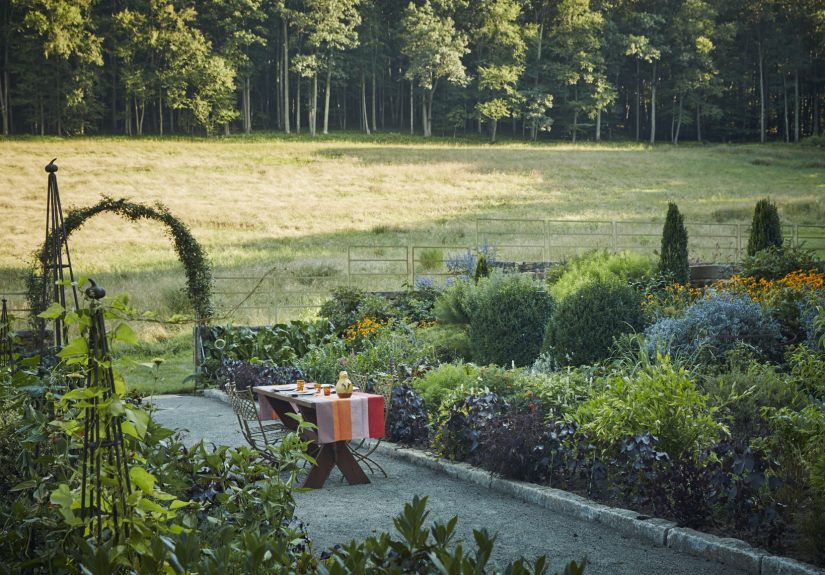
At its core, a stay-awhile garden is a space that slows you down on purpose. It does not rush you through the landscape like an airport walkway. It gives you reasons to pause. That might be a gravel terrace under a tree, a bench tucked into fragrant planting, a meandering path that reveals the yard in small chapters, or a dining table that turns a patch of backyard into an outdoor room.
This is where Gardenista’s wider worldview feels especially current. The best outdoor spaces today are not only attractive; they are humane. They account for how people actually live. You need circulation, but you also need destinations. You need plants, but you also need structure. You need style, but you also need a place to set down iced tea without balancing it on a distressed terracotta pot like a circus act.
That balance between beauty and use is what separates a memorable garden from a decorative blur. If a yard looks gorgeous in photos but no one sits there, eats there, reads there, or watches the evening light move across the leaves, it may be a fine composition, but it has missed the deeper point. A real garden earns your time.
The Building Blocks of a Garden That Makes People Linger
1. Start with a Destination, Not a Shopping List
A common mistake in outdoor design is beginning with plants and ending with confusion. You buy a hydrangea, then another hydrangea, then a charming rosemary topiary that looked better under nursery lighting, and suddenly your yard resembles a group project. A stay-awhile garden works in reverse. First decide where people will go, what they will do there, and how the space should feel. Then plant around that experience.
Think in terms of destinations: a morning coffee chair, a shady reading nook, a little table for lunch, a path that leads to a quiet bench, a corner where the scent is best in late afternoon. Even small gardens benefit from one clear focal point. In fact, tiny spaces may benefit the most, because intention keeps them from feeling cluttered. When every square foot has a job, a little garden can feel surprisingly generous.
2. Seating Is Not an Accessory; It Is the Whole Plot Twist
If you want people to stay awhile, give them a place to sit that looks inviting before they even test it. This sounds obvious, yet many gardens still behave like seating is an afterthought, as if guests are expected to hover politely like well-dressed herons. Comfortable chairs, benches with a view, dining furniture scaled to the space, and even a simple tree bench can turn a pass-through yard into a lived-in landscape.
The best garden seating also responds to the mood of the space. Deep lounge chairs near a fire feature encourage long evenings. A slim bistro set near herbs or container plants invites quick breakfasts that mysteriously become full-blown life reflections. A bench along a path creates a pause point. And a built-in seat wall can make a small patio feel architectural without swallowing precious square footage.
Good seating also quietly solves a design problem: it tells people how to use the space. Once the chair is there, the yard stops being abstract. It becomes a room with purpose.
3. Shade Is Hospitality
No one stays awhile in a garden that feels like a toaster oven. If there is one lesson repeated across outdoor living advice, it is that comfort extends time. Shade structures, pergolas, umbrellas, arbors, covered porches, and well-placed trees all help transform a hot, exposed yard into a place where people can actually exhale.
Shade is not just practical; it is atmospheric. Dappled light through branches softens everything. A pergola makes a seating area feel framed and intentional. Climbers can turn a simple structure into a cooling canopy over time. Even partial shade can make the difference between “Let’s go inside” and “Let’s order dessert.”
In design terms, shade creates enclosure. In emotional terms, it creates welcome. And in summer, welcome is a very good look.
4. Plant for the Senses, Not Just the Snapshot
One reason some gardens feel unforgettable is that they engage more than your eyes. A stay-awhile garden should have fragrance, movement, texture, and sound. Plant lavender, thyme, mock orange, or herbs where brushing past releases scent. Use ornamental grasses that sway and rustle. Add a small fountain if the budget allows. Let gravel crunch underfoot. Place soft foliage near paths or seating where people can touch it without trampling the whole bed like an overenthusiastic golden retriever.
Sensory planting creates depth. It makes a garden feel inhabited, not just arranged. This is especially important in an age of visual overload. We have all seen pretty outdoor spaces online. What we remember are the places that smelled like rosemary in the heat, sounded like bees in late summer, and felt cooler the minute we stepped under a vine-covered arbor.
If a garden can make you look up, breathe deeper, and forget to check your notifications for ten whole minutes, congratulations: it is doing excellent work.
5. Native Plants Make the Garden Feel Alive
A beautiful garden that supports no life beyond your own iced latte is missing a major opportunity. More American gardeners are embracing native plants, pollinator-friendly choices, and habitat-minded design because these plants often bring ecological value along with beauty. Native flowers, grasses, shrubs, and small trees can feed pollinators, shelter birds, and add seasonal richness without demanding the high-maintenance theatrics of fussier imports.
This does not mean every garden must become a prairie remake or a worthy-but-chaotic science project. It simply means choosing plants that belong in your region, grouping them thoughtfully, and letting ecology improve the composition. A bird-friendly thicket, a few nectar-rich perennials, shrubs with berries, and layered planting can make a space feel dynamic from spring through winter.
There is also a design upside: wildlife softens formality. A terrace framed by disciplined planting looks even better when butterflies visit the borders and birds treat a serviceberry like a tiny restaurant. A living garden is more than attractive. It is animated.
6. Use Structure for Four-Season Appeal
Stay-awhile gardens should not vanish when the flowers are finished. The strongest outdoor spaces rely on structure: hedges, shrubs, small trees, ornamental grasses, seed heads, evergreens, paths, walls, and repeated materials that carry the composition through every season. Summer bloom is wonderful, but shape and texture are what keep a garden interesting in October, January, and that strange muddy in-between when everything looks like it needs a nap.
Grasses are especially useful here. They screen, move, catch light, and hold their form beautifully. Shrubs and small trees provide anchors. Evergreens contribute stability and color in winter. Repetition helps the eye move calmly through the landscape. When structure is strong, the garden feels composed even on its off days. Frankly, many humans could learn from that.
7. Blur the Line Between Indoors and Out
The phrase “outdoor room” can sound suspiciously like a marketing department got loose near a patio, but the idea is genuinely useful. The more a garden borrows the comfort, scale, and rhythm of interior spaces, the more likely people are to spend time there. Rugs, lighting, side tables, planters with architectural presence, and consistent materials can help a porch, patio, or terrace feel like a continuation of the house rather than an afterthought tacked onto the back door.
Gardenista has always been strong on this crossover territory: outdoor spaces that feel edited but not stiff, relaxed but not messy. That is the sweet spot. You want a garden that says, “Come sit for a bit,” not one that says, “Please admire from a respectful distance while the cushions remain emotionally unavailable.”
How to Get the “Stay Awhile” Look at Home
You do not need a sprawling property, a landscape architect, or a budget that requires a family meeting. The stay-awhile approach works at every scale.
For a Small Backyard
Choose one destination and make it count. A bench at the end of a path, a café table under a compact tree, or two chairs with a small gravel pad can instantly create purpose. Use vertical elements such as trellises, grasses, or narrow shrubs to create enclosure without crowding the footprint.
For a Front Yard
Think hospitality. A porch swing, a pair of chairs, layered planting around the entry, and a few pollinator-friendly choices can make a front yard feel social rather than purely decorative. Front gardens are not just for curb appeal; they are for real life and accidental conversations that turn neighbors into actual neighbors.
For a Balcony or Patio
Go big on containers, not quantity. A few larger pots with herbs, grasses, and flowering perennials create more visual calm than twelve tiny containers having a panic attack. Add one comfortable chair, one source of shade, and one scent-forward plant near the seat. Suddenly your balcony has a storyline.
For a Low-Water Garden
Use drought-tolerant planting, gravel or permeable surfaces, and fewer, better furnishings. Many dry-climate gardens are naturally well suited to the stay-awhile ethos because they emphasize texture, shade, and sculptural planting over nonstop bloom. The mood can be serene, not sparse.
Common Mistakes That Make a Garden Hard to Love
- Too much patio, not enough planting: hardscape alone can feel exposed and flat.
- Too much planting, nowhere to sit: congratulations, you made a botanical traffic jam.
- No shade plan: beauty fades fast when everyone is roasting.
- Bloom-only thinking: if the garden peaks for three weeks and sulks for the rest of the year, it needs stronger bones.
- Ignoring wildlife value: a garden that supports pollinators and birds feels fuller, richer, and more alive.
- Copying trends without context: the internet does not know your soil, climate, or how much patience you have on a Saturday.
Why the “Stay Awhile” Garden Matters Right Now
The appeal of this approach is not just aesthetic. It reflects a broader shift in how Americans think about home landscapes. People want gardens that do more: support biodiversity, soften heat, reduce maintenance, stretch living space, and offer a little mental relief. That is why low-impact gardening, native planting, sensory design, and outdoor rooms keep surfacing across trusted gardening and design publications. These ideas are practical, but they are also quietly emotional. They answer a need.
We want places that restore us. We want beauty that does not demand perfection. We want our yards to feel less like chores and more like companions. A stay-awhile garden delivers exactly that. It invites you back outside, not for a task, but for a relationship.
And perhaps that is the secret hidden inside the title. “Stay awhile” is not only advice for the reader. It is advice for the gardener. Notice more. Rush less. Sit down before you start another project. Your garden may already be trying to tell you something. Usually it is, “Please stop moving the pots.”
Experience the Garden, Not Just the Design
There is a particular kind of outdoor moment that almost everyone recognizes, even if they have never had the words for it. You step outside intending to do one small thing. Water the containers. Snip a few herbs. Check whether the tomatoes are finally acting like tomatoes instead of moody green ornaments. But then the air feels softer than expected. The chair in the corner suddenly looks exactly right. The light hits the leaves in a way that seems almost staged, except nature is too confident to bother with staging. So you sit down “for a second,” and twenty minutes later you are still there, listening to the leaves, watching a bee do its very serious flower inspection, and thinking that maybe the garden knew what it was doing all along.
That experience is the real heart of a stay-awhile garden. It is not about perfection. In fact, perfect gardens are often the least relaxing because they make everyone feel like they should apologize for breathing near the peonies. The best gardens have warmth. They have rhythm. They have a little looseness around the edges, the sort that makes a place feel lived in rather than displayed.
Maybe it is the smell that gets you first. Mint warming in a pot near the path. Lavender releasing fragrance after a hot afternoon. The tomato vines smelling green and peppery when you brush past them. Maybe it is the sound: a fountain barely trickling, grasses whispering, plates clinking on an outdoor table, a bird making opinions known from the fence. Or maybe it is the visual softness of layered planting that keeps changing as the day moves on. Morning feels crisp. Noon feels bright and practical. Evening turns everything cinematic and suspiciously flattering.
There is also something deeply satisfying about the rituals that a good garden supports. The first cup of coffee outdoors when the house is still quiet. Lunch on the back steps because the weather is too good to waste. A late dinner under string lights where nobody wants to volunteer to clear the table because the whole point is to keep sitting there. These are not grand occasions. They are ordinary moments improved by good design and thoughtful planting, which is really the best kind of luxury.
Even the maintenance begins to feel different in a garden that invites you to linger. Deadheading becomes less of a chore and more of a slow walk with secateurs. Pulling a weed here and there feels strangely reasonable when you are already outside enjoying yourself. You notice what needs changing sooner because you are actually spending time in the space. The garden stops being something you manage from a distance and becomes somewhere you participate in daily.
That is why the Gardenista-style ideal lands so well. It understands that a garden is not successful merely because it photographs beautifully or follows every trend in outdoor living. It succeeds when it becomes part of your routine, your conversations, your meals, your pauses, and your memory. A stay-awhile garden is not asking for applause. It is asking you to come outside, settle in, and let the hours relax a little. Honestly, that may be the smartest design move of all.
Conclusion
Meanwhile, On Gardenista: Stay Awhile works as a title because it captures an entire design philosophy in three easy words. The best gardens are not only planted well; they are paced well. They give people a reason to linger through seating, shade, sensory planting, native habitat, and year-round structure. They blur indoors and out, honor the local climate, and feel personal rather than performative. Most of all, they make outdoor living feel effortless, which is probably why the idea continues to resonate so strongly across American garden and home design culture.
In other words, the garden of the moment is not shouting for attention. It is quietly pulling out a chair.