Table of Contents >> Show >> Hide
- What Was Actually Captured in the Scanner?
- What Lit Up? More Than a Single “Pleasure Center”
- Why This Research Was a Big Deal
- The Brain Story Is Still Complicated
- What fMRI Can Tell Us and What It Cannot
- Why the Findings Reach Beyond Curiosity
- The Big Takeaway
- Experiences Around the Research: What This Topic Feels Like in Real Life
There are romantic settings, and then there is an fMRI lab: a giant magnet, a cramped tube, mechanical thumping loud enough to ruin anyone’s playlist, and enough head-stabilizing gear to make a salon appointment sound thrilling. Yet that gloriously unsexy setup has helped scientists answer a surprisingly big question: what is the brain actually doing during female orgasm?
The short answer is that the brain is doing a lot. Not a little. Not one tidy “pleasure button” flashing on and off like a microwave timer. A broad network comes online, involving sensation, reward, movement, memory, emotion, and brainstem control. In other words, female orgasm does not look like a single switch being flipped. It looks more like an orchestra warming up, hitting a crescendo, and then settling back down.
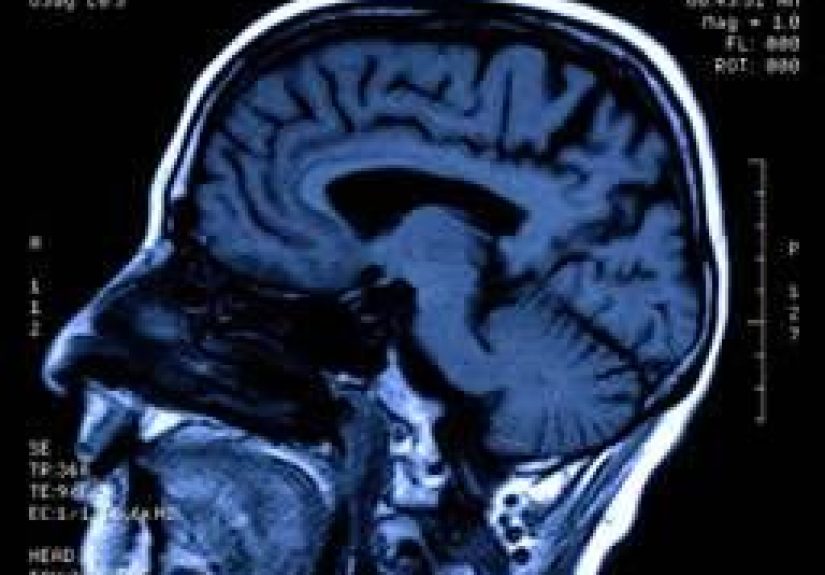
That is why the phrase female orgasm brain activity matters. For decades, women’s sexual response was misunderstood, under-researched, or reduced to myths that belonged in a dusty drawer labeled “bad takes.” Functional MRI, or fMRI imaging, changed the conversation by letting researchers observe real-time changes in blood oxygenation linked to neural activity. The result is not a perfect mind-reading machine, but it is a powerful way to watch the brain at work.
What Was Actually Captured in the Scanner?
The famous headlines began around 2011, when researchers associated with Rutgers presented striking visualizations of women’s brains during the buildup to orgasm, the peak itself, and the recovery period. Those early images grabbed attention because they turned a private, subjective experience into something measurable and visible. But the stronger scientific anchor came later, when a peer-reviewed paper in The Journal of Sexual Medicine laid out a more formal fMRI analysis of female orgasm.
In that study, researchers examined ten women who experienced orgasm in a 3-Tesla MRI scanner. To deal with the biggest technical problem in orgasm imaging, namely that people tend to move when something intense is happening, the team used a custom-fitted head and neck stabilizer and analyzed matched time windows before, during, and after orgasm. It sounds clinical because it was clinical. The miracle is not that the data are neat. The miracle is that the experiment worked at all.
That distinction matters. An fMRI scanner does not directly read emotions, thoughts, or pleasure like a futuristic lie detector from a superhero movie. It detects BOLD signals, short for blood-oxygen-level-dependent changes. When a brain region becomes more active, blood flow and oxygen use shift in ways the scanner can capture. So when people say scientists “saw orgasm in the brain,” what they really mean is that researchers observed a changing pattern of blood-oxygen activity linked to orgasm.
What Lit Up? More Than a Single “Pleasure Center”
One of the most important findings from the female orgasm research is that there is no lone “orgasm center” sitting in the brain like a red launch button under glass. Instead, orgasm appears to recruit a distributed network. Activity increased as orgasm approached, peaked at orgasm, and then declined afterward. That alone is fascinating, because it suggests a dynamic process rather than an isolated event.
The regions implicated included the genital sensory cortex, insula, anterior cingulate cortex, hippocampus, amygdala, nucleus accumbens, hypothalamus, orbitofrontal regions, cerebellum, and parts of the brainstem. That list may sound like a neuroscience roll call, but each area helps tell a story.
Sensation Comes First
The sensory cortex helps map bodily input. In plain English, it is part of the system that tells the brain, “Something is happening here.” Earlier Rutgers work showed that stimulation from different female genital regions, including the clitoris, vagina, and cervix, produced distinct but neighboring activations in the sensory cortex. That was a major contribution because it gave anatomical support to the idea that different kinds of genital stimulation are not imaginary distinctions or pop-culture inventions. The brain registers them differently.
Even more intriguing, nipple stimulation also activated an area associated with genital sensation. That finding did not prove that every person experiences nipple stimulation in the same way, but it did provide a neurological explanation for why some women report that it can feel deeply erotic. Science occasionally confirms what people have been saying all along, just with more scans and fewer awkward dinner-table debates.
Reward and Motivation Join the Party
The nucleus accumbens is a familiar character in discussions of pleasure and reward. Its activation during orgasm fits with the idea that orgasm is not merely a mechanical reflex. It is part of a reward network that helps the brain tag certain experiences as meaningful, motivating, and worth remembering. Dopamine-related reward processes are one reason sexual pleasure has such powerful psychological weight.
The hypothalamus also becomes important near orgasm. This region helps coordinate hormonal and autonomic responses. Researchers have linked it to processes involving oxytocin and other neurochemical changes associated with arousal, contraction, bonding, and physiological regulation. That makes sense because orgasm is not only a mental experience and not only a bodily one. It is a full brain-body event, with hormones, nerves, muscles, and perception all reading from the same complicated script.
Emotion, Memory, and Body Awareness Step In
The insula and anterior cingulate cortex are especially interesting because they are tied to internal body awareness, emotional salience, and the integration of feeling states. The amygdala and hippocampus bring emotion and memory into the mix. This may help explain why orgasm is not experienced as a bland sensory event. It is colored by context, mood, safety, memory, expectation, and relationship dynamics.
That is also why any oversimplified take on female orgasm falls apart quickly. The brain is not merely detecting stimulation. It is interpreting it. A sexual response exists in a web of attention, trust, emotion, and meaning. The scanner does not erase that complexity. If anything, it proves it.
Why This Research Was a Big Deal
The excitement around female orgasm fMRI imaging was not just about novelty. It mattered because women’s sexual physiology has historically received less scientific attention than men’s. For years, discussions of sexual function were distorted by myths, bad comparisons, and the assumption that women should fit into a male-centered model of arousal. Brain imaging helped expose how incomplete that model was.
These findings also challenged the idea that female orgasm is too vague, too subjective, or too psychologically messy to study in a serious scientific way. Yes, the experience is subjective. So are pain, grief, joy, fear, and music-induced goosebumps. Neuroscience still studies them. Subjective does not mean unreal. It means human.
Researchers further connected this work to conditions such as anorgasmia, or persistent difficulty reaching orgasm. The 2017 study explicitly suggested that understanding the normal neural sequence could help create a more rational basis for treating orgasmic disorders. That does not mean one brain scan will solve sexual dysfunction tomorrow morning before coffee. It does mean the field can move beyond guesswork.
The Brain Story Is Still Complicated
If you read widely on orgasm research, you will notice something delightfully inconvenient: not all studies say exactly the same thing. Some work associated with Dutch PET and perfusion imaging reported decreases in parts of the frontal cortex during orgasm, while the Rutgers fMRI work reported activation in frontal areas. That sounds like a contradiction, but it may be better understood as a clue.
Different imaging methods measure activity differently. Different studies use different timing windows. Some involve partner-induced stimulation, while others involve self-stimulation. Those variables matter because the brain is not only processing pleasure. It is also processing agency, attention, control, anticipation, and context. A woman actively managing her own pace inside a scanner may recruit the brain differently from someone responding to a partner. That does not invalidate either result. It reminds us that orgasm is not one-size-fits-all neuroscience.
The healthiest scientific takeaway is this: female orgasm is not a neat, uniform event with a universal neural blueprint. It is a patterned process with shared features and individual variation. Anyone promising a magic map with no ambiguity is selling certainty that the evidence does not fully support.
What fMRI Can Tell Us and What It Cannot
The modern fascination with brain scans sometimes creates the illusion that colorful images are the same thing as truth. They are not. fMRI is powerful, but it has limits.
First, it is an indirect measure. It tracks changes in oxygenated blood, not pure electrical thought or emotion. Second, orgasm studies are technically difficult because timing and movement are major problems. Third, sample sizes are often small, which makes broad claims risky. Fourth, an MRI scanner is hardly a normal environment for intimacy. It is loud, restrictive, and about as cozy as a vending machine repair tunnel.
So when scientists say that a study found a pattern of brain activity during female orgasm, the best interpretation is not, “Aha, the final answer.” The better interpretation is, “Here is a well-supported snapshot of one intensely complex human experience, captured under unusual but carefully controlled conditions.” That is still impressive. It is just not magic.
Why the Findings Reach Beyond Curiosity
This topic draws clicks because sex sells, but the science matters for reasons that go beyond sensational headlines. Understanding orgasm can contribute to research on sexual dysfunction, relationship health, chronic pain, mood regulation, and neurological injury. One Rutgers line of work even suggested an alternative sensory pathway through the vagus nerve in some women with complete spinal cord injury, helping explain how genital sensation and orgasm can still be experienced without a fully intact spinal route. That finding expanded the conversation from pleasure to neuroplasticity and human resilience.
There is also a broader cultural value here. Brain imaging does not “prove” women’s experiences are real in some philosophical sense; they were always real. But it does challenge lazy myths. It shows that female sexual response is biologically rich, neurologically complex, and worthy of serious study. Frankly, that should never have been a radical idea, but science sometimes has to drag common sense into the room by the lab coat.
The Big Takeaway
So what should readers remember from all this?
Female orgasm is not just local sensation, not just hormones, not just psychology, and not just anatomy. It is a coordinated event that recruits sensory mapping, emotional processing, reward circuits, hormonal regulation, motor systems, and brainstem networks. The 2017 fMRI paper strengthened that conclusion by showing a clear rise, peak, and decline in activity across multiple brain regions. Earlier mapping work added that different forms of genital and nipple stimulation reach the brain in distinct but related ways.
That means the old idea of orgasm as a simple reflex is too small. The better model is a network: brain, body, nerves, hormones, context, memory, attention, and meaning all weaving together in real time. The scanner did not reduce female orgasm to machinery. Surprisingly, it revealed just how layered and human the experience really is.
Experiences Around the Research: What This Topic Feels Like in Real Life
One of the most interesting experiences related to this research is that it often changes the emotional tone of the conversation. Before people hear about brain imaging, they may think of orgasm as either a mystery, a performance goal, or a topic wrapped in embarrassment. After they learn that scientists can trace coordinated activity across sensory, emotional, and reward systems, the topic starts to feel less like a taboo and more like what it actually is: a legitimate part of human physiology and psychology.
For some readers, the experience is relief. Learning that female orgasm involves a whole-brain process can take the pressure off simplistic expectations. It can help explain why stress, mood, distraction, discomfort, relationship tension, medication effects, or body image concerns can matter so much. If the brain is central to sexual response, then difficulty reaching orgasm is not a sign of failure or “not trying hard enough.” It may be a sign that multiple systems, mental and physical, are influencing the experience at once.
For researchers, the experience is often one of technical frustration mixed with scientific awe. Imagine trying to study one of the most intense and time-sensitive human experiences inside a machine that is noisy, restrictive, and famously bad at being relaxing. Then imagine still collecting meaningful data. That tension between awkward method and elegant result is part of what makes the field so fascinating. The lab setting is absurd on paper, but the brain patterns it reveals are deeply instructive.
For clinicians and therapists, the experience can be validating in a different way. Patients who struggle with orgasm are often carrying shame, confusion, or the feeling that something is “wrong” with them in a personal or moral sense. Brain research does not solve those struggles on its own, but it gives professionals better language. It supports the idea that sexual function is not merely mechanical and not merely emotional. It sits at the intersection of attention, sensation, safety, hormones, mood, memory, and health.
There is also a cultural experience attached to this topic. Many people first encounter the science through splashy headlines that promise a “brain movie” or a “map of orgasm.” That framing is catchy, but the deeper experience is more humbling. The more scientists study orgasm, the more they discover that there is no easy script. Individual variation is real. Context matters. The brain does not read pleasure off a checklist. It builds it from multiple inputs at once.
And finally, there is the experience of wonder. Not the giggly kind, although that is allowed too. The serious kind. The kind that comes from realizing that one human experience can activate systems involved in sensation, reward, memory, emotion, hormones, movement, and pain modulation all at once. That is not trivial. That is the brain showing off a little. And honestly, it has earned the right.