Table of Contents >> Show >> Hide
- Why This Tiny “Drive” Is Such a Great Idea
- What Makes It “Solid State,” Anyway?
- Real SSDs vs. the Four-Byte Wonder
- The Joke Is Funny Because Storage History Is Wild
- Why Makers Love Projects Like This
- Could a Project Like This Ever Be Practical?
- Conclusion
- Postscript: The Experience of Living With a Four-Byte “SSD”
There are tech projects that solve real problems, tech projects that create brand-new problems, and then there are tech projects so gloriously unnecessary that they become perfect. A DIY “solid state drive” that stores exactly four bytes belongs in that last category. It is tiny, clever, faintly ridiculous, and surprisingly educational. In a world where consumer SSDs casually offer terabytes of storage and get grumpy when you fill them past 80%, this little gadget strolls in carrying four bytes like it just reinvented modern computing. Honestly, the confidence is inspiring.
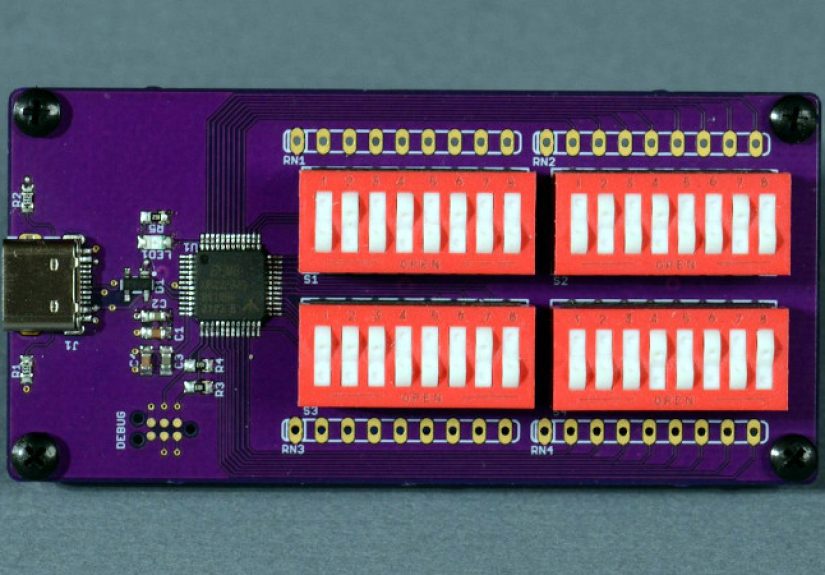
The joke works because it lands on two levels at once. First, it plays with the phrase solid state drive, a term we usually associate with high-speed NAND flash storage, sophisticated controllers, wear leveling, error correction, and all the other invisible wizardry that makes modern laptops feel snappy. Second, it turns storage into something physical again. Instead of hiding data deep inside silicon, the device lets you see every bit. Flip switches up and down, and there is your data in plain sight. No mystery. No abstraction. No “where did my file go?” panic. Just 32 bits sitting there like obedient little soldiers.
Why This Tiny “Drive” Is Such a Great Idea
The appeal of the four-byte SSD is not capacity. Let us be clear: nobody is editing 4K video on this thing unless the video is one frame long and filmed on a potato. The appeal is that it makes digital storage visible. Four bytes equal 32 bits, and 32 DIP switches make those bits tangible. That turns an ordinary concept from computer science class into a desk toy, conversation piece, and teaching tool all at once.
That is also why this project has spread so widely through maker circles. It is the kind of build that gets a laugh first and respect second. The laugh comes from the absurdity of calling a four-byte gadget an SSD. The respect comes a second later, when you realize the creator actually made the joke real. Hardware files exist. Firmware exists. The thing enumerates over USB. This is not just a meme wearing a printed circuit board as a costume. It is a real electronic object with a real interface and a real job, even if that job is hilariously small.
And that is the magic of good DIY electronics. A playful project does not have to be practical to be useful. Sometimes the best builds are the ones that force you to understand a system by shrinking it down until the moving parts become obvious. This one does exactly that. It turns storage into something you can literally count on your fingers.
What Makes It “Solid State,” Anyway?
The phrase solid state originally mattered because it distinguished electronic devices from mechanical ones. Traditional hard drives rely on spinning platters and moving read heads. SSDs do not. They use semiconductor-based memory, most often NAND flash, to hold data without moving parts. That is why SSDs are faster, quieter, more shock-resistant, and generally less dramatic than hard drives. They do their work without sounding like a tiny robot making popcorn.
The four-byte DIY version keeps the spirit of that definition. It is solid state in the literal sense that no spinning disk, motor, or head assembly is involved. Data is represented electronically. But it is also a deliberate parody of how far storage has come. Flash technology eventually enabled the SSDs and USB drives we know today, but this build strips all of that progress down to an almost prehistoric level. It is like building a sports car that can only roll downhill in first gear, just to prove you understand what a transmission does.
That contrast is what makes the title so sticky. The words sound modern and high-performance, but the reality is charmingly tiny. The result is not a replacement for a commercial SSD. It is more like a pocket-sized exhibit on how digital information works.
Real SSDs vs. the Four-Byte Wonder
Capacity
A real SSD stores data in NAND flash memory cells organized into pages and blocks. Depending on design, each cell may hold one bit, two bits, three bits, or four bits. Multiply that across billions of cells and you get the kind of capacity that lets people save operating systems, games, photos, school projects, and the 947 screenshots they swear they will organize later. The four-byte DIY drive stores exactly 32 bits. That is enough for a tiny integer, four ASCII characters, or a hex value that looks impressively hacker-ish on a T-shirt.
Controller Intelligence
Commercial SSDs rely on controllers that do far more than simply remember data. They manage where information is written, move it around, correct errors, reclaim invalid pages, and make sure one area of flash is not worn into early retirement while another area lounges around doing nothing. In many ways, the controller is the brains of the drive. Without it, NAND flash would be fast but awkward, like a genius with no calendar and terrible organizational skills.
The four-byte device deliberately skips most of that complexity. Its genius lies in visibility and simplicity, not scale. In fact, versions of the project documented by the creator use USB device logic in a way that emphasizes interaction over pretending to be mass storage. That is an important distinction. The project is “SSD” as art, joke, and educational hardware, not “SSD” as a drop-in replacement for the storage in your laptop.
Endurance and Wear
One of the most important facts about NAND flash is that it has a finite number of program and erase cycles. Real SSDs cope with this using wear leveling, overprovisioning, garbage collection, TRIM-aware behavior, and error correction. Those systems spread writes, preserve performance, and extend usable life. They are the reason modern SSDs can be both fast and durable enough for everyday computing.
The four-byte build sidesteps that entire drama by not pretending to be high-density flash storage in the first place. That makes it wonderfully honest. A commercial SSD has to hide a ton of complexity so users can drag files around without thinking about block erasures or write amplification. The four-byte DIY project does the opposite. It invites you to think about the meaning of a byte, the representation of bits, and the interface between hardware and humans.
The Joke Is Funny Because Storage History Is Wild
Modern storage feels normal now, but it took decades of advances in semiconductor memory, flash architecture, controllers, and interfaces to get here. Flash memory emerged as a major breakthrough because it could retain information without power. Later developments in NAND architecture pushed density high enough to make mass storage practical. By the 1990s, solid-state storage was already being demonstrated in ways that hinted at the future. By the 2000s, USB flash drives and laptop SSDs had turned that future into daily life.
That long history makes a four-byte “SSD” funny in the best possible way. It borrows the prestige of modern storage and then shrinks the result until it feels almost prehistoric again. It is a history lesson disguised as a prank. The project reminds us that all storage, no matter how advanced, ultimately comes down to bits, addresses, interfaces, and ways of preserving state. When those layers are peeled back, the glamorous terabyte monster and the humble DIP-switch gadget are cousins, not strangers.
Why Makers Love Projects Like This
There is a special joy in building something that is technically correct, obviously silly, and secretly insightful. The four-byte SSD hits all three. It is technically correct because it genuinely stores information in a non-mechanical device and communicates over USB. It is obviously silly because four bytes is barely enough space to store a decent shrug. And it is secretly insightful because it reveals how much of modern computing depends on abstraction.
Most people never see storage. They see filenames, folders, cloud sync icons, and the occasional terrifying “disk almost full” warning. A novelty project like this drags storage back into the physical world. It asks a simple question: what if your data were literally right there in front of you? Once you see 32 switches representing 32 bits, the distance between abstract software and physical hardware suddenly gets a lot smaller.
That is why this build works so well as a teaching object. In one tiny package, it can spark conversations about binary, bytes, USB devices, microcontrollers, flash memory, SSD architecture, and the weird poetry of naming. Plenty of classroom demonstrations struggle to be memorable. This one stores four bytes and 100 percent of the room’s attention.
Could a Project Like This Ever Be Practical?
In the ordinary sense, no. Absolutely not. If your backup strategy currently depends on four bytes, your real problem is not storage. It is optimism. But practical does not always mean “useful for daily workloads.” Practical can also mean “excellent for learning,” “great for demos,” “perfect for trade shows,” or “the exact desk ornament that causes three engineers and one curious intern to lose 20 minutes in delighted conversation.”
There are also real design lessons hiding inside the nonsense. The project shows that human-readable hardware interfaces are powerful. It shows that USB-connected custom devices can be approachable. It shows that good engineering humor usually rests on real engineering. Most importantly, it proves that miniature constraints can sharpen design. When you only have four bytes, every bit matters. There is no room for bloat, and frankly, most software could use that kind of tough love.
Conclusion
The DIY “Solid State Drive” that puts four bytes in your pocket is a joke, but it is a serious joke. It pokes fun at our storage vocabulary, celebrates the absurd scale of modern hardware, and teaches real lessons about bits, interfaces, and the hidden complexity inside actual SSDs. It also does something many polished products never manage: it makes people stop, smile, and ask how it works.
That may be the best measure of a successful maker project. Not whether it beats commercial hardware, but whether it turns invisible technology into something you can understand, hold, and enjoy. By that standard, the four-byte SSD is a tiny triumph. It stores almost nothing, yet somehow says quite a lot.
Postscript: The Experience of Living With a Four-Byte “SSD”
Spending time with a project like this changes the way you think about storage, and that might be its most valuable trick. At first glance, the device feels like pure comedy. You see a pocket-size board, a cluster of switches, a USB connection, and the kind of tiny capacity that makes a floppy disk look like a luxury penthouse. Then you start interacting with it, and the joke slowly grows layers. Four bytes are not much, but they are enough to make binary feel real. You stop thinking in vague digital terms and start thinking in actual states: on, off, one, zero, set, cleared. Computing gets physical again.
There is also something weirdly satisfying about manual data entry at that scale. Modern storage is invisible and effortless, which is wonderful until you realize it also makes information feel abstract. With a switch-based device, nothing is abstract. Every bit is a choice. Every byte is visible. If you encode a small value, a short identifier, or a set of flags, you feel the data under your fingertips. That tactile quality is hard to overstate. It turns a passive concept into an active experience, almost like the difference between reading sheet music and pressing piano keys yourself.
Makers often talk about “seeing the system,” and this project delivers that experience in a very direct way. You can imagine somebody building it on a workbench, plugging it in, flipping switches, watching a host application react, and laughing the first time the whole thing actually works. Not because it unlocks vast utility, but because it proves a delightful point: digital information does not have to stay hidden behind glossy interfaces. It can be exposed, dramatized, and made friendly. A four-byte drive is basically a tiny museum exhibit that also happens to be a USB gadget.
It is easy to imagine this kind of project showing up at a hackerspace, engineering lab, classroom, or conference booth and immediately drawing a crowd. One person laughs at the name. Another starts explaining bytes to a friend. A third begins asking whether it could be expanded, modified, or turned into a badge add-on. Before long, the object becomes social. That is another part of the experience: novelty hardware is often a conversation engine. It creates curiosity, and curiosity creates learning.
There is also a deeper emotional appeal in building something intentionally small in an age obsessed with scale. Tech culture usually celebrates more: more storage, more throughput, more cores, more bandwidth. This project chooses less, on purpose, and that gives it personality. It reminds us that engineering can be playful without being shallow. Sometimes shrinking an idea is the best way to understand it. Sometimes a four-byte gadget can teach more than a four-terabyte spec sheet because it strips away the marketing fog and leaves the core concept sitting right there on the board.
That is why the experience lingers. You do not walk away thinking, “I need this as my main drive.” You walk away thinking, “I finally understand why storage is interesting.” And that is a pretty impressive result for something that can hold about as much text as the word “cool.”