Table of Contents >> Show >> Hide
- When a Radio Telescope Shrinks to Desk Size
- What the “WiFi Universe” Actually Means
- How a Desktop Radio Telescope Works
- Why This Feels Like Real Radio Astronomy
- From WiFi Heat Map to Passive Radar
- The Problem With Human-Made Radio Light
- Why This Project Resonates So Strongly
- The Limits of the Tiny Telescope
- Conclusion
- Hands-On Experiences in the WiFi Universe
Note: This is body-only HTML for direct web publishing. Source links are intentionally omitted.
Most telescopes chase starlight. This one chases your router.
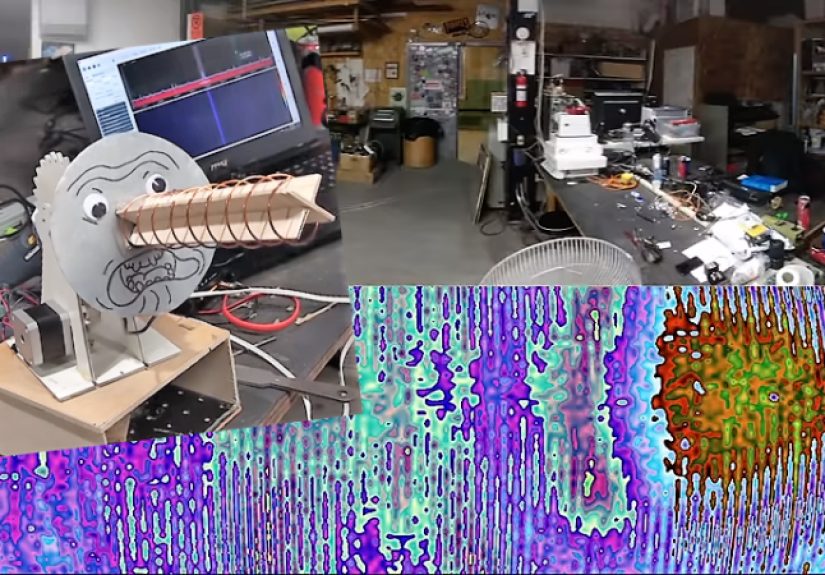
That is the delightfully weird promise behind the idea of a desktop radio telescope that can map the invisible world of WiFi signals. At first glance, it sounds like a science-fair prank dreamed up after too much coffee and not enough adult supervision. But the concept is real, technically grounded, and surprisingly educational. By combining a directional antenna, a scanning mount, a software-defined radio, and a pile of patient data collection, a small desk-sized instrument can turn the 2.4 GHz band into a visible landscape of hotspots, dead zones, reflections, and signal shadows.
In other words, it can make the WiFi universe visible.
That phrase is obviously playful. Your home office is not replacing the Very Large Array anytime soon, and your router is not a black hole with a warranty issue. But the underlying principle is the same one used in radio astronomy: collect radio waves, measure their intensity, and translate those measurements into an image humans can understand. Shrink the scale, change the target, and suddenly the vast logic of a radio observatory fits on a desk next to your keyboard and your questionable snack choices.
When a Radio Telescope Shrinks to Desk Size
The modern maker version of this idea caught attention when builders demonstrated a compact system that scanned the 2.4 GHz WiFi band with a helical antenna mounted on a stepper-driven azimuth-elevation rig. Instead of staring at distant galaxies, the instrument swept a room and recorded signal strength from nearby wireless devices. The result was not a photograph in the ordinary sense, but a map of radio intensity. Bright regions marked stronger emissions or reflections. Darker patches marked weak coverage, shielding, or simple absence.
That distinction matters. A desktop radio telescope does not “see” WiFi the way your phone camera sees a chair. It builds an image indirectly, one measurement at a time. Think of it as painting with numbers. The antenna points at one direction, samples the energy in a target frequency range, stores the value, and moves on. Repeat that process across enough angles and positions, and the invisible becomes legible.
It is part science, part engineering, and part stubborn refusal to accept that radio waves should get to remain mysterious.
What the “WiFi Universe” Actually Means
WiFi is light, just the invisible kind
WiFi is not magic. It is electromagnetic radiation, just like visible light, X-rays, infrared, and radio waves from distant galaxies. The difference is wavelength and frequency. In the familiar 2.4 GHz band, WiFi lives in the microwave region of the radio spectrum. A desktop radio telescope tuned to that band is therefore not inventing a new kind of perception. It is simply detecting a kind of light your eyes never evolved to notice.
That alone is enough to make the project fascinating. Suddenly, the room is no longer empty air. It is crowded with transmissions, reflections off walls, scattering around furniture, leakage through doorways, and interference from other devices that also live in nearby frequencies. Your apartment starts looking less like a quiet domestic space and more like a miniature radio city with terrible zoning.
A radio image is a map, not a snapshot
In radio astronomy, an image is typically a spatial map of signal intensity. That same logic applies here. A WiFi signal map is built by associating measured radio intensity with location or pointing direction. The colors are chosen later by software. So when people say a desktop radio telescope “images” WiFi, what they really mean is that it transforms signal measurements into a visual representation of a radio environment.
That is not cheating. Astronomy has done exactly this for decades. Radio images of galaxies, nebulae, and jets are not plain camera photos either. They are scientific reconstructions built from measured energy. The desktop version simply swaps quasars for routers and deep space for your living room.
How a Desktop Radio Telescope Works
The antenna does the listening
Every radio telescope starts with an antenna. In a desktop build, the antenna is usually directional, because direction is how you turn raw signal strength into a map. A helical antenna works well in the WiFi range because it can be compact while still offering useful directivity. Some builders use horns, cantennas, or other waveguide-style designs for microwave work, but the goal is the same: gather energy from a specific part of the radio spectrum while favoring one direction over others.
The more directional the antenna, the better the system can separate “signal over there” from “signal everywhere.” Without that selectivity, your map turns into mush. Plenty of energy, very little meaning.
The receiver turns waves into data
Next comes the receiver, and this is where software-defined radio, or SDR, changes the game. Traditional radios rely heavily on fixed hardware for tuning and processing. SDRs shift much of that work into software, which makes them flexible, affordable, and perfect for experiments. One moment the system can focus on WiFi energy. The next moment, with different hardware or software, it can be repurposed for satellite work, hydrogen-line experiments, or other radio projects.
That flexibility is why SDRs show up everywhere in modern maker radio culture. They let hobbyists and students work with real spectrum data instead of just reading about it. In a WiFi imaging setup, the SDR captures incoming radio energy, digitizes it, and feeds it to software that can filter, average, plot, and store the measurements.
The mount and software create the image
A radio telescope that never moves is just a fancy eavesdropper. To make a map, the antenna has to scan. Small stepper motors handle the pan and tilt motion, while a script coordinates the movement with each measurement. At every point in the scan, the software records signal strength in the chosen frequency range. Later, those values are assembled into a heat map.
That means the image quality depends on practical things that sound suspiciously unromantic: motor precision, scan spacing, integration time, filtering, gain settings, calibration, and whether your code is quietly normalizing away the very peaks you were hoping to measure. Radio astronomy has always involved a lot of glorious cosmic wonder balanced against a cruel number of settings menus.
Why This Feels Like Real Radio Astronomy
Same method, different target
The genius of the desktop radio telescope is not that it copies the appearance of a giant observatory. It copies the logic. Radio astronomy uses an antenna to collect radio waves, a receiver to amplify and filter them, and a recorder or computer to store the measurements for analysis. That same chain appears in the desktop build, just scaled down and pointed at human-made signals instead of cosmic ones.
This is why the project is more than a novelty. It is a working lesson in how radio science actually happens. Students can learn about antenna patterns, frequency bands, noise, gain, scanning geometry, interference, and data visualization in a hands-on way that textbooks rarely deliver. Suddenly, “electromagnetic spectrum” stops sounding like a phrase invented to terrify undergraduates and starts behaving like something you can test in your bedroom.
It also teaches humility
Radio astronomers use enormous dishes and arrays for a reason. Longer wavelengths make high-resolution imaging difficult. At 21 centimeters, for example, sharp radio imaging demands a huge effective aperture, which is why professional observatories rely so heavily on interferometry and aperture synthesis. A tiny desk instrument cannot compete on resolution, sensitivity, or calibration. What it can do is demonstrate the principles in a form that is affordable, tangible, and gloriously hackable.
MIT Haystack’s educational small radio telescope programs make the same point. Meaningful radio work does not always require a mountain-sized observatory. With the right frequency, the right expectations, and the right design, modest systems can teach serious science.
From WiFi Heat Map to Passive Radar
Here is where the story gets even juicier. Once you can detect and map ambient WiFi energy, the next temptation is to use that energy as illumination. That leads directly toward passive radar. Unlike conventional radar, passive radar does not transmit its own pulse. Instead, it uses existing signals in the environment and looks for reflections. In theory, that means wireless infrastructure could help detect objects, motion, or structure without the imaging system broadcasting anything itself.
That does not mean your desk telescope instantly becomes a sci-fi wall-peeking machine. Real passive radar is hard. It requires careful signal comparison, timing, geometry, and processing. Still, the desktop WiFi telescope acts as a proof of concept for the first step: treat ambient wireless energy as a field that can be measured spatially. Once you begin thinking that way, your home router stops being just a source of internet and starts looking like a local star in a man-made radio sky.
The Problem With Human-Made Radio Light
The same human-made signals that make desktop experiments fun are also a nightmare for serious science. Radio observatories are so sensitive that even everyday electronics can interfere with data. That is why places like Green Bank sit in protected radio quiet zones, and visitors are often asked to disable WiFi, Bluetooth, and cellular transmissions. Astronomers are chasing signals so faint that ordinary consumer electronics can stomp on them like a marching band in hiking boots.
This contrast gives the WiFi telescope project an extra layer of meaning. It reveals the spectrum as both opportunity and pollution. To a maker, a router can be a beacon, a target, and a classroom demonstration. To a radio astronomer studying faint cosmic sources, that same emission can be noise, contamination, or a ruined observation. The invisible world is useful, but it is crowded.
Weather radar offers another reminder. Interference from nearby wireless systems can create visible artifacts and blind spots in radar images. In other words, radio imaging is powerful, but it is never immune to the messy reality of other transmitters sharing the air.
Why This Project Resonates So Strongly
People love this idea because it turns abstraction into experience. Most of us know WiFi exists only when it fails. Then we wave the router around emotionally and pretend that counts as troubleshooting. A desktop radio telescope replaces that superstition with visualization. It shows that signal strength is not uniform, walls matter, antennas matter, position matters, and the “best spot” in a room is often a radio accident waiting to be measured.
It also scratches a deeper itch. Radio astronomy has always carried a strange romance because it reveals a universe hidden behind ordinary sight. A desktop WiFi imager borrows that romance and drags it into daily life. Suddenly the cosmic lesson becomes domestic: invisible worlds are everywhere, and with a little hardware and a lot of persistence, they can be mapped.
The Limits of the Tiny Telescope
Let us keep one foot on the ground. A desktop WiFi radio telescope does not replace lab-grade instrumentation. Its maps can be noisy, its resolution can be coarse, and its interpretation can be tricky. Multipath reflections can make one emitter look like several. Gain settings can distort comparisons. Different routers, channels, antennas, and traffic loads can change the apparent picture. And because WiFi is an active communication system, the source is not steady in the way many astronomical sources are modeled.
But those limitations are not failures. They are lessons. The system teaches that measurement is never just about hardware. It is about calibration, context, assumptions, and signal processing. That is exactly what makes it a worthy scientific build rather than a flashy toy.
Conclusion
Desktop radio telescope images the WiFi universe is a headline that sounds like a dare, but it captures something genuinely important. A small instrument on a desk can turn 2.4 GHz radiation into a map, borrowing the core methods of radio astronomy to make local wireless signals visible. In doing so, it connects hobby electronics with serious scientific ideas: antennas, radio frequency mapping, software-defined radio, interference, calibration, and even the beginnings of passive radar thinking.
The beauty of the project is not that it makes your apartment look like a galaxy. The beauty is that it reminds you the invisible world is measurable. Your router, your walls, your furniture, your devices, and your data are all participating in a radio environment you normally never see. Build the right tool, and the room changes shape. That is the magic of radio science: not fantasy, not guesswork, just hidden structure revealed one signal at a time.
Hands-On Experiences in the WiFi Universe
Anyone who has spent time around a build like this tends to describe the experience the same way at first: odd, funny, and then unexpectedly profound. You begin with what feels like a joke. You point a homemade antenna at the room. You run a scan. You wait. The motors click around like a determined little insect. Then the heat map appears, and suddenly the air has geography.
That is the moment the project stops being cute and starts being memorable. The router is no longer “somewhere over there.” It becomes a radio mountain. The hallway becomes a valley. A thick wall turns into a ridge line that blocks part of the view. A reflective surface creates a strange secondary glow that makes you realize radio waves do not just travel; they bounce, smear, and haunt a space. You are not merely checking signal bars anymore. You are discovering that your home has an invisible topography.
One of the most eye-opening experiences is how often your assumptions are wrong. The spot where your phone seems fast is not always the brightest part of the map. The dead zone you blamed on your provider may actually be a geometry problem caused by the router’s location, a metal shelf, or a doorway that turns into a signal bottleneck. Move the antenna a little, change the scan resolution, or rotate the router, and the “universe” changes shape again. It feels part laboratory, part treasure hunt, and part lesson in personal overconfidence.
There is also a very real engineering pleasure in the build itself. Mounting the antenna, getting the steppers aligned, managing cable drag, tuning the SDR, and persuading software to produce meaningful numbers can be wonderfully satisfying. Nothing makes you respect professional radio astronomy faster than trying to get clean data from a small homemade system while your environment is full of unpredictable emissions. The experience teaches patience because radio work does not reward drama. It rewards careful setup, repeated scans, and a willingness to ask whether the “amazing discovery” on the screen is actually a calibration mistake wearing a party hat.
For students and makers, that is the best part. The project creates a bridge between abstract science and lived experience. Frequency, wavelength, gain, noise floor, interference, and filtering stop being vocabulary words and start becoming practical realities. You can see why directional antennas matter. You can feel why integration time matters. You can watch bad assumptions become bad images. The learning sticks because the evidence is literally mapped in front of you.
And then there is the emotional side. Radio astronomy usually feels distant, noble, and just a little intimidating. A desktop WiFi telescope makes it personal. It says the same physics that maps hydrogen clouds in the Milky Way can also explain why your streaming video dies in the kitchen. That is hilarious, yes, but also deeply empowering. It turns a cosmic method into a kitchen-table experiment. It makes science feel less like a museum exhibit and more like a skill you can build with your own hands.
By the time you finish a few good scans, you start looking at every room differently. Not as empty space, but as a living field of invisible structure. That shift in perception is the real achievement. The hardware is clever. The maps are cool. But the lasting experience is learning that the world around you is much richer than your senses admit.