Table of Contents >> Show >> Hide
- The Big Idea: Preserve the Manor, Relax the Mood
- Why the English Manor Kitchen Still Works for Family Life
- Layout First, Drama Second
- Cabinetry That Looks Collected, Not Clinical
- Materials That Get Better With Time
- Storage for Real Families, Not Imaginary Ones
- Lighting That Makes the Room Feel Alive
- Modern Upgrades That Know When to Be Quiet
- The Mood: Formal Bones, Friendly Heart
- Living With It: The Everyday Experience in a Modernized English Manor Kitchen
- Conclusion
- SEO Tags
Some kitchens whisper. This one clears its throat like a duke entering dinner.
Set inside a grand English manor, this week’s standout kitchen is the kind of room that could have easily gone full museum piece: dramatic bones, old-world gravitas, and enough architectural presence to make a humble loaf of sandwich bread feel underdressed. Thankfully, the update doesn’t treat the room like a velvet-rope exhibit. Instead, it turns a stately, imposing shell into a hardworking, family-friendly kitchen that still knows how to behave at a candlelit supper.
That balancing act is what makes this style so irresistible right now. Homeowners love the warmth and timelessness of an English country kitchen, but they also need a space that can survive weekday breakfasts, school papers, charging cords, muddy dogs, and the eternal mystery of who left the butter out again. The smartest renovations are no longer about making a kitchen look perfect from 10 feet away. They’re about creating a room that feels layered, collected, useful, and deeply lived in.
In other words, this isn’t a fantasy kitchen. It’s a fantasy kitchen that can also pack lunches.
The Big Idea: Preserve the Manor, Relax the Mood
The secret to updating an imposing English manor kitchen is simple: keep the architecture serious, but let the living feel easy. That means respecting the room’s original scale, beams, brick, plaster, and proportions, while softening the overall atmosphere with texture, patina, color, and furniture-style details.
Rather than scrubbing out the past, the best remodels lean into it. Exposed beams, stone or soapstone counters, old brick, paneling, and aged metals bring the room’s history into the present. At the same time, modern conveniences such as induction cooking, better refrigeration, hidden storage, and improved ventilation quietly do the heavy lifting behind the scenes.
The result is a kitchen that still looks as though it belongs to the house, not a spaceship that crash-landed in the middle of a manor. That matters. In grand homes especially, a kitchen renovation can go sideways fast when the new pieces ignore the old architecture. Drop a slick, ultra-minimal slab kitchen into a room begging for warmth, and the whole space starts to feel like it’s suffering an identity crisis.
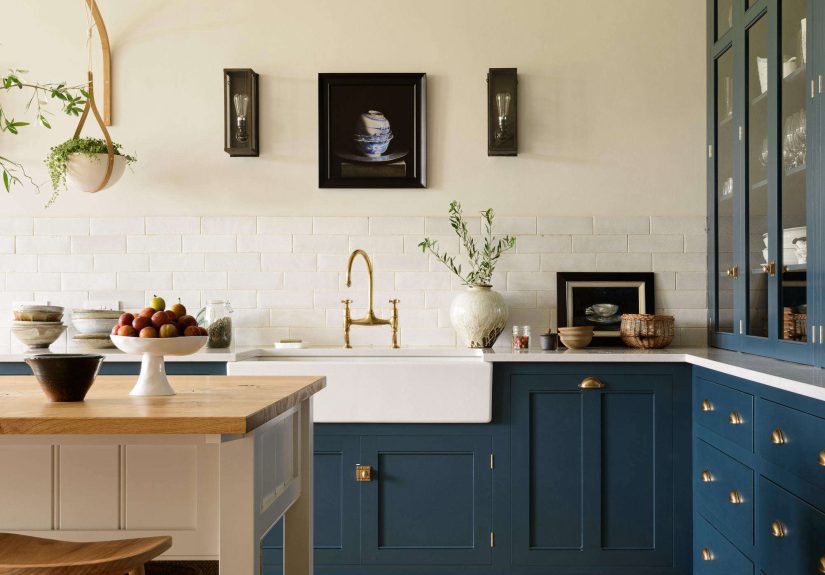
A better approach is contrast with manners. Clean-lined cabinetry, subtle paint colors, unlacquered brass, reclaimed wood, handmade tile, and softly veined stone let the room feel updated without becoming sterile. It’s polished, yes, but it still has elbows.
Why the English Manor Kitchen Still Works for Family Life
One reason this look endures is that it solves a modern problem with old-school charm: people want the kitchen to be the social center of the home. Over the last couple of decades, the family kitchen has evolved from a back-of-house utility zone into the place where everyone gathers, snacks, studies, scrolls, argues about homework, and asks what’s for dinner before lunch is even over.
That shift makes the English manor approach surprisingly practical. Traditional English-style kitchens are warm rather than flashy. They prioritize natural materials, honest textures, sturdy storage, and comfortable gathering spaces. They are designed to be used, not merely admired. That makes them a strong fit for family life, where durability and flow matter every bit as much as beauty.
And unlike trend-heavy kitchens that can feel dated the moment the algorithm finds a new obsession, this style has staying power. Shaker cabinetry, soapstone, marble, quartzite, wood floors, freestanding furniture, and classic pendants do not scream for attention. They simply age well. Which, in kitchen years, is about as close to immortality as a backsplash gets.
Layout First, Drama Second
For all its romance, a successful manor kitchen begins with pure practicality. The room has to work. In a large historic footprint, that often means using the generous size to create distinct but connected zones: a prep area, cooking area, cleanup zone, pantry or scullery support, and a place for people to gather without standing directly where the onions are being chopped.
A central island that earns its keep
In a family-focused renovation, the island usually becomes the star employee. It adds prep space, casual seating, extra storage, and a natural gathering point. In an English manor kitchen, the island should feel substantial enough to match the room’s scale, but not so oversized that it becomes a furniture-shaped traffic jam.
A furniture-style island works especially well here. Think turned legs, a walnut base, beadboard or inset detailing, and a top in soapstone or another natural surface that can handle real life. Seating on two or more sides makes the island more conversational, which is ideal for a room that doubles as breakfast bar, snack headquarters, and unofficial family boardroom.
When a table beats an island
Not every grand kitchen needs a built-in island. In some English-inspired rooms, a large farmhouse table or freestanding worktable is the smarter move. It softens the look, supports the “collected over time” character, and can make a formal space feel more human. A table also invites people to sit, linger, shell peas, roll pastry, do homework, or spread out birthday gift wrap while someone stirs the sauce nearby.
If the kitchen is truly huge, using both an island and a table can make sense. The island handles the heavy-duty prep, while the table becomes the social anchor. One works hard. The other looks charming while pretending not to notice that someone just left a soccer bag under it.
Cabinetry That Looks Collected, Not Clinical
One of the defining details of the modern English country kitchen is the move away from relentless wall-to-wall uniformity. Today’s most interesting kitchens mix fitted cabinetry with unfitted storage: hutches, step-back cupboards, freestanding pantry pieces, plate racks, glazed cabinets, or vintage furniture adapted for kitchen use.
That mix is pure magic in a manor setting. It breaks up long runs of cabinetry, adds personality, and keeps the room from feeling too slick or too “showroom on opening day.” The key is restraint. You want variation, not chaos. Cabinet doors should stay simple, often Shaker or beaded inset styles, while the freestanding pieces add soul.
Paint colors matter here too. Instead of bright white everything, the palette often leans into soft greens, muddy blues, buttery creams, warm taupes, charcoal, or earthy neutrals. Those shades feel gentler against old architecture and make brass, wood, and stone look richer. A manor kitchen should feel settled, not sprayed with high-gloss adrenaline.
Materials That Get Better With Time
If you want this kind of kitchen to feel authentic, materials do most of the storytelling. Natural stone countertops, reclaimed or richly toned wood, brick, handmade tile, unlacquered brass, and aged iron all bring texture and credibility. They also help bridge the gap between a formal historic shell and a modern renovation.
Soapstone is especially at home in an English manor kitchen. It has that lovely matte depth, enough visual weight to stand beside beams and brick, and a forgiving attitude toward wear. Marble and quartzite can also work beautifully when the veining is subtle and the overall palette stays grounded. These are the kinds of materials that do not panic when life happens. They expect it.
Wood flooring, especially in wider planks or reclaimed finishes, warms up the room instantly. It prevents all that stone, metal, and cabinetry from feeling too hard. Meanwhile, brass hardware in an unlacquered finish adds a touch of glow that only improves as it patinates. In a kitchen inspired by an old manor, a little aging is not a flaw. It’s the point.
Storage for Real Families, Not Imaginary Ones
A beautiful kitchen falls apart quickly if nobody knows where anything goes. Family life requires serious storage, and the best English-inspired kitchens hide their practicality inside all that charm.
Pantries, pullouts, and secret weapons
This is where the pantry earns a standing ovation. A walk-in pantry, hidden pantry, butler’s pantry, or even a cleverly repurposed recessed niche can keep the main kitchen calm and uncluttered. Small appliances, cereal boxes, lunch supplies, paper goods, snack baskets, and backup groceries can live outside the primary sightlines, allowing the kitchen itself to remain elegant.
Inside cabinets, pullout shelves, deep drawers, vertical dividers, tray storage, and recycling pullouts make a huge difference. Zoned organization is especially helpful in family homes. Breakfast items together. Baking gear together. Snacks together. Tea and coffee in one station. It sounds almost suspiciously sensible, but it works. When storage is divided into clear zones, everyone in the house can find what they need and, with a little luck, put it back in the same galaxy.
Glass-front cabinets and open cubbies can also lighten a large kitchen visually, especially when used to display pottery, cookbooks, or pantry staples in handsome containers. The trick is using open storage selectively. A manor kitchen should feel curated, not like your entire grocery list exploded onto floating shelves.
Lighting That Makes the Room Feel Alive
Lighting is often the difference between “grand” and “grim.” Large historic kitchens can skew gloomy if the lighting plan relies on a single overhead source or if the renovation assumes beauty alone will brighten the space. It won’t. Pretty pendants do many things, but they cannot personally defeat shadows in a prep corner.
The smartest solution is layered lighting. Use pendants over the island for visual focus. Add task lighting where real work happens. Bring in sconces near the sink or range wall for softness and symmetry. In some English-inspired kitchens, even small lamps on counters or sideboards help the room feel more like a lived-in furnished space than a pure work zone.
Texture matters here too. Recycled glass shades, ceramic sconces, woven pendants, or classic metal fixtures can reinforce the room’s warmth without turning it into a theme park. Good lighting in a family kitchen should flatter the room at 7 a.m., 3 p.m., and 9 p.m. That is a demanding audience, but a layered plan can handle it.
Modern Upgrades That Know When to Be Quiet
Here is where the renovation earns the “updated for modern family life” part of the title. The best upgrades are not always the loudest. In a room with historic character, modern appliances and conveniences work best when they improve the experience without hijacking the aesthetic.
An induction range or pro-style cooker can sit beautifully within a classic alcove or against paneled cabinetry. Panel-ready refrigeration keeps the room cohesive. Strong ventilation is essential, especially if the household cooks often or uses high-output appliances. Multiple sinks, generous prep space, and durable low-maintenance surfaces make daily life easier, particularly in homes where more than one person is cooking at once.
Electrical planning matters too. Modern family kitchens need charging points, appliance support, refrigeration flexibility, and task-oriented lighting circuits. Nobody dreams of outlets, but everybody notices when there are not enough of them. A well-designed manor kitchen hides this modern backbone behind beautiful finishes, like a stage actor wearing orthopedic shoes under a velvet costume.
The Mood: Formal Bones, Friendly Heart
What truly makes this kind of kitchen sing is emotional contrast. The architecture may be imposing, but the room itself feels welcoming. The cabinetry is elegant, but the stools invite people to flop down with toast. The stone is serious, but the paint colors are soft. The island is handsome, but it is also where someone will ice cupcakes badly and call it character.
That is the sweet spot. A kitchen inside a manor should feel elevated, yes, but not uptight. It should welcome both dinner guests and cereal spillers. It should be beautiful enough for a magazine feature and practical enough for a regular Tuesday.
Done right, the room becomes more than a renovation. It becomes the social engine of the house: a place where heritage and convenience, grandeur and comfort, refinement and chaos all somehow manage to coexist. Which, when you think about it, is exactly what family life looks like on its best days.
Living With It: The Everyday Experience in a Modernized English Manor Kitchen
What does it actually feel like to live in a kitchen like this? Surprisingly relaxed. That may sound odd for a room inspired by an imposing English manor, but the beauty of a well-planned renovation is that it changes the emotional temperature of the space. Instead of feeling stiff or ceremonial, the kitchen becomes reassuring. It feels grounded. You walk in early in the morning, the light catches the stone counters and the warm grain of the wood, and the room already looks awake before you are.
Morning is where this kind of kitchen proves its worth. One person can make coffee at the pantry station while someone else packs lunches at the island. A child can sit on a stool finishing homework that absolutely should have been finished the night before. The refrigerator drawers open, the toast pops, the dog circles for crumbs with the confidence of a seasoned professional, and somehow the room never feels chaotic. That is the hidden genius of good layout. It gives ordinary routines a little dignity.
By midday, the kitchen shifts gears. Sunlight softens the paint color, the brass starts to glow, and the room feels less like a utility zone and more like a proper living space. That is one reason English-inspired kitchens have such staying power: they do not feel separate from the rest of the home. With furniture-style pieces, layered lighting, and collected materials, they feel emotionally connected to the house around them. You are not stepping into a machine for food production. You are stepping into a room with a pulse.
Then evening arrives, and this is where the manor mood really earns its keep. Pendants create pools of light over the island, sconces warm the walls, and the darker corners recede just enough to make the room feel intimate. A pot simmers on the range. Someone sets plates on the table. Someone else leans against the island pretending to help while mostly offering commentary. The kitchen becomes a stage set for real family life, and the best part is that it does not need to be spotless to look good. A few cutting boards out, a cookbook open, a bowl of lemons, a tray of glasses waiting by the sink, all of it adds to the charm rather than ruining it.
That is the genius of natural materials and slightly unfitted design. Perfection is not required. In fact, the room looks better when it is being used. Soapstone gains character. Wood develops wear in all the right places. Brass deepens in tone. The kitchen records family life without looking battered by it. It ages like a favorite leather chair: gracefully, with stories attached.
There is also something deeply comforting about the scale of a manor kitchen when it is handled well. In lesser hands, a large room can feel cold. In the right hands, it feels generous. It gives everyone somewhere to be. One person cooks, another reads at the table, a teenager raids the pantry, a guest hovers near the island with a glass of wine, and no one feels like they are standing in the way. The room absorbs activity instead of amplifying stress.
And perhaps that is why this style resonates so strongly today. People want beauty, of course, but they also want steadiness. They want rooms that support everyday rituals, soften busy schedules, and feel meaningful rather than mass-produced. A modernized English manor kitchen does exactly that. It offers grandeur without coldness, order without rigidity, and elegance without making everybody nervous about touching the counters. Frankly, that may be the greatest luxury of all.
Conclusion
A kitchen like this proves that old houses do not need to choose between character and convenience. With the right mix of layout, storage, lighting, natural materials, and family-friendly functionality, an imposing English manor kitchen can feel every bit as practical as it is beautiful. It can honor history without living in it. And it can turn the grandest room in the house into the one everyone actually wants to use.