Table of Contents >> Show >> Hide
- The Headline Sounds Wild Because Rocket Nozzles Are Not Supposed to Be Cheap
- Why Copper Keeps Winning the Rocket Conversation
- How a Budget Metal Workflow Changes the Game
- From Garage Curiosity to NASA-Scale Confidence
- What “Under Two Grand” Really Means for Aerospace
- The Limitations Are Real, and They Are Not Small
- Why This Story Matters Right Now
- Experiences From the Low-Cost Copper Nozzle Frontier
- Conclusion
Rocket hardware usually sounds expensive because, well, it is. The phrase “rocket nozzle” normally brings to mind giant test stands, aerospace contractors, and invoices big enough to ruin a pleasant afternoon. That is exactly why the idea of a 3D printed copper rocket nozzle costing under two grand feels so oddly delightful. It sounds like somebody took a space-program headline and ran it through a garage-shop budget filter.
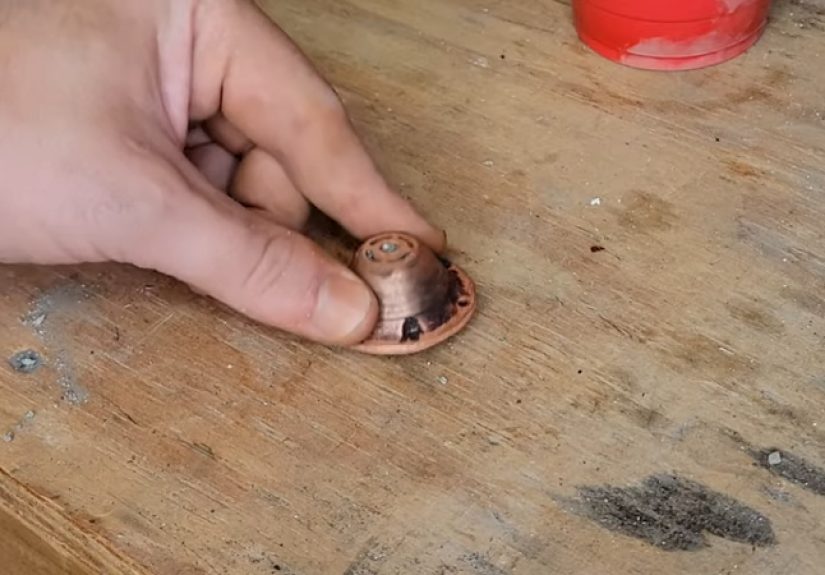
But the story is not fantasy. A maker-scale copper nozzle project showed that a real metal part with genuine rocket-engine geometry could be produced with a relatively accessible toolchain built around an ordinary-style filament printer, copper-filled material, and post-processing equipment. No, this does not mean a hobby printer has suddenly turned into a magic Starship factory. It does mean the barrier between “cool aerospace idea” and “I can physically prototype this” has gotten a lot lower.
That is the real story here. The headline is catchy, sure, but the deeper significance is much bigger than one budget-conscious nozzle. Low-cost metal additive manufacturing is changing how engineers, startups, student teams, and serious tinkerers think about rocket components. Copper, once seen as a difficult but desirable material for high-heat engine parts, is now showing up in workflows that look less like an elite industrial secret and more like a very determined weekend obsession with a materials-science side quest.
The Headline Sounds Wild Because Rocket Nozzles Are Not Supposed to Be Cheap
A copper rocket nozzle under $2,000 lands in that sweet spot between “ingenious” and “are you absolutely sure that is legal physics?” The fascination comes from the fact that rocket nozzles are brutal components. They are not decorative exhaust tips for science fiction cosplay. They shape and accelerate hot gases, live near absurd temperatures, and occupy one of the most punishing environments in propulsion hardware.
That is also why the low-cost angle matters. Traditional production methods for metal rocket parts usually involve machining, casting, specialty welding, or industrial metal additive systems that can make normal people blink twice at the price tag. In that world, “cheap” is not usually part of the sentence. “Certified,” “high-performance,” and “backordered for months” are much more common roommates.
The under-two-grand story flips that script. It suggests that metal 3D printing for aerospace-style geometry is no longer confined to massive powder-bed machines and companies with polished investor decks. A maker using copper-bearing filament and sintering can produce a real metal object that captures the shape, intent, and engineering logic of rocket hardware at a fraction of the normal cost of entry.
Why Copper Keeps Winning the Rocket Conversation
If you are wondering why this article is not about a 3D printed plastic nozzle, the answer is simple: plastic and rocket heat are not exactly lifelong friends. Copper, on the other hand, keeps showing up in propulsion because it is exceptionally good at moving heat away from where engineers do not want it to stay.
That matters enormously in combustion chambers and nozzle liners. Inside a liquid rocket engine, temperatures can soar to levels that would make most materials reconsider their career choices. In high-performance engines, designers often rely on cooling channels and thermally conductive liners to keep the engine alive long enough to do its job. Copper and copper alloys have become attractive because they combine thermal conductivity with performance characteristics that are useful in these hostile environments.
Heat Is the Villain, Copper Is the Overqualified Bouncer
NASA’s work over the past decade makes the case clearly. The agency has spent years developing and testing additively manufactured copper-alloy combustion hardware, including full-scale copper parts, channel-cooled chambers, and larger integrated propulsion assemblies. The message from that research is not subtle: copper is hard to process, but it is extremely valuable when the job is “please do not melt while containing controlled violence.”
That is why the 3D printed copper rocket nozzle story matters beyond hobbyist novelty. It touches the same material logic that major aerospace programs care about. The cheap version is not a replacement for flight-qualified NASA hardware, but it rhymes with it. And in engineering, rhyming with a successful concept is often the beginning of something important.
How a Budget Metal Workflow Changes the Game
The striking part of the original maker story was not that somebody snapped their fingers and printed a flawless space component on the first try. It was that the workflow was accessible enough to exist at all. The process used copper-rich filament, an FDM-style printer, and a furnace-based finishing path that removed the binder and sintered the remaining metal into a true copper part.
That sounds far less glamorous than laser powder bed fusion, and that is precisely the point. Affordable additive manufacturing does not always arrive wearing a tuxedo. Sometimes it arrives covered in trial runs, shrinkage calculations, material quirks, and the stubborn determination of a person who is willing to ruin several prints in the name of progress.
There is something almost charmingly democratic about that. Instead of asking, “Who can afford an industrial metal AM cell?” the better question becomes, “Who has enough patience to learn the limitations of a lower-cost route?” That is a very different kind of barrier. It is still a barrier, but it is not locked behind a venture round.
Cheap Does Not Mean Easy
This is the part where the engineering party politely takes away the confetti cannon. “Under two grand” does not mean effortless. Copper-filled filament has its own printing demands. Sintering introduces shrinkage, dimensional uncertainty, and process sensitivity. Surface finish, density, and repeatability can all become headaches. One slightly off assumption can turn a beautiful CAD model into a lumpy reminder that atoms are not obligated to respect your optimism.
So no, this is not the moment where every teenager with a desktop printer suddenly launches a propulsion startup by Tuesday. What it does mean is that concept validation and early-stage experimentation are moving closer to ordinary labs, student teams, and well-equipped makerspaces. That matters more than people think.
From Garage Curiosity to NASA-Scale Confidence
The most interesting part of this story is how neatly the small-scale and large-scale worlds overlap. On one end, you have a maker demonstrating that copper rocket geometry can be pursued with a surprisingly modest setup. On the other, you have NASA and industry proving that 3D printed copper propulsion hardware is not just cuteit is strategically important.
NASA printed the first full-scale copper rocket engine part years ago and has continued maturing copper-alloy additive manufacturing through projects involving hot-fire tests, regenerative cooling, composite overwrap structures, and large-format nozzle development. Auburn University and NASA partners have worked on enormous nozzle-liner demonstrations. Commercial companies have used printed copper chambers and alloys to reduce development time and speed up engine iteration.
That is the connective tissue. The budget nozzle is not important because it can outcompete those programs. It is important because it points in the same direction as the broader industry: faster iteration, more design freedom, lower lead times, and less manufacturing drama.
Additive Manufacturing Loves Complicated Geometry
Rocket parts are ideal candidates for additive manufacturing because they are annoyingly complex. Internal cooling channels, thin walls, strange contours, and integrated shapes all tend to make conventional fabrication expensive or slow. Additive manufacturing lets engineers collapse assemblies, reduce the number of separate pieces, and build geometry that would otherwise demand too many machining steps, too many welds, or too much caffeine.
That is a big reason printed copper matters. The value is not just “look, a metal part came out of a printer.” The value is “look, a thermally useful material with ugly-to-manufacture geometry is becoming more practical to produce.” That is a much more powerful sentence, even if it is less fun at parties.
What “Under Two Grand” Really Means for Aerospace
In aerospace manufacturing, cost is not just about the raw number on a receipt. It is about time, access, iteration speed, and how quickly a team can learn from failure. A part that costs less to make but takes six months to refine is not necessarily cheap. A part that can be redesigned, reprinted, and reevaluated quickly may be far more valuable, even if its material and post-processing are finicky.
That is why this story punches above its price class. It hints at a world where rocket-engine prototyping becomes more distributed. University groups can investigate nozzle concepts without waiting forever for machining. Startups can test form factors earlier. Research teams can explore thermal ideas before committing to premium production routes. Even large aerospace players benefit when early development becomes faster and less financially painful.
Meanwhile, the industrial side keeps proving that once copper additive workflows are dialed in, the payoff can be dramatic. NASA has shown that printed copper hardware can survive demanding hot-fire testing. Commercial firms have tied additive approaches to shorter development cycles. Manufacturing organizations in the U.S. have backed copper propulsion programs precisely because the combination of performance and production speed is too attractive to ignore.
The Limitations Are Real, and They Are Not Small
Every exciting additive-manufacturing story needs a reality check, so here it is: a low-cost 3D printed copper nozzle is not the same as a certified, flight-ready propulsion component. Not even close. Material density, porosity, thermal cycling performance, dimensional repeatability, and quality assurance remain enormous issues. A nozzle that looks fantastic on a bench can still fail spectacularly when exposed to real operating conditions.
That distinction matters because the internet sometimes hears “rocket part” and immediately assumes “Mars by Thursday.” In reality, the road from proof-of-concept to reliable engine hardware is paved with test campaigns, process controls, metrology, validation data, and the humble discovery that nature enjoys surprise quizzes.
Still, limitations do not erase significance. They define the stage of the technology. The inexpensive nozzle story should be read as a marker of accessibility, not a declaration that high-end propulsion manufacturing has been solved by one clever workshop. It says the door has opened wider. It does not say the building is finished.
Why This Story Matters Right Now
The bigger trend here is impossible to miss. Aerospace manufacturing is shifting from “make it the old way because that is how it has always been done” to “print it smarter, test it faster, and reduce the number of painful manufacturing steps.” Copper is part of that shift because it offers the thermal behavior propulsion systems need. Additive manufacturing is part of that shift because it offers the design freedom and speed modern programs crave.
Put those together, and you get a category that is only going to grow: 3D printed copper rocket hardware. Some of it will live in advanced government programs. Some will come from commercial engine developers. Some will show up in university labs and maker communities. The quality, scale, and ambition will vary wildly, but the underlying direction is the same.
That is why a copper nozzle under two grand feels bigger than a clever one-off. It is a signal. It tells us the culture of aerospace prototyping is changing. The tools are spreading. The material options are maturing. The once-ridiculous idea that a small team can meaningfully engage with serious propulsion geometry is becoming, if not ordinary, at least believable.
Experiences From the Low-Cost Copper Nozzle Frontier
One of the most interesting experiences around the whole “3D printed copper rocket nozzle under two grand” idea is how quickly it changes the mood in a room. The moment people hear the phrase, their reaction is almost always the same: first disbelief, then curiosity, then a very specific kind of engineering excitement that sounds like, “Okay, but how bad were the first few attempts?” That reaction says a lot. The appeal of this story is not just the low price. It is the fact that the project feels close enough to touch, yet advanced enough to still seem slightly unreal.
People who spend time around makerspaces, university labs, or prototype shops know this feeling well. A project like this creates a kind of gravitational pull. Everyone wants to look at the part. Everyone wants to ask whether it is really copper. Everyone wants to know how much it shrank, how smooth the throat ended up, and whether the printed geometry survived the furnace without turning into a sad metallic potato. It becomes a conversation starter, but also a reality check. Metal additive manufacturing at this scale is accessible, yes, but it is still full of messy details that no headline can completely capture.
There is also a very human experience built into these projects: the emotional roller coaster of iteration. The CAD model always looks heroic. The first printed version often looks less heroic. Then comes the post-processing stage, where confidence and anxiety become roommates. The part may distort. The surface may change. Tiny assumptions about tolerances suddenly become very important. In that sense, low-cost copper nozzle work is an almost perfect summary of engineering itself. It begins with ambition, continues through compromise, and survives on stubbornness.
Another common experience is the sudden respect people develop for industrial aerospace teams. A budget build can make the whole field feel more accessible, but it also teaches why NASA, commercial propulsion companies, and research groups invest so heavily in qualification, testing, and process control. It is one thing to print a geometry that resembles a nozzle. It is another to produce one that performs consistently under heat, pressure, and repeated cycles. Spending time around lower-cost experiments often makes people less arrogant, not more. They realize the distance between “possible” and “reliable” is where the real work lives.
At the same time, these projects are energizing because they prove that aerospace innovation does not only belong to giant institutions. There is something inspiring about seeing serious materials ideas filter down into smaller workshops and independent experiments. It creates a bridge between maker culture and aerospace culture. One side brings curiosity, improvisation, and budget discipline. The other brings rigor, testing logic, and deep materials knowledge. When those two worlds meet, even imperfect results can feel important.
That may be the best way to understand the experience surrounding this topic. It is not just about one copper nozzle. It is about the feeling that advanced manufacturing has become more participatory. The smartest reaction is neither blind hype nor cynical dismissal. It is a more interesting middle ground: respect for the difficulty, excitement about the access, and a growing sense that the future of rocket hardware will be shaped by more people, in more places, than ever before.
Conclusion
The story behind “3D Printed Copper Rocket Nozzle Costs Under Two Grand” is bigger than a flashy title. It captures a real shift in how advanced hardware gets imagined, prototyped, and eventually industrialized. Copper remains a serious material for rocket applications because heat management is brutally important. Additive manufacturing remains a serious manufacturing route because rocket geometry is brutally inconvenient. Put them together, and even small projects start to look like previews of much larger industrial changes.
No, a budget copper nozzle does not erase the need for industrial systems, material qualification, or extensive testing. But it does prove something valuable: the gap between elite aerospace hardware and accessible experimentation is narrowing. And once that gap narrows, innovation tends to get louder, faster, and a lot more interesting.