Table of Contents >> Show >> Hide
- Why This Lafayette Remodel Still Matters
- The Smartest Move: Saving the House Instead of Replacing It
- Indoor-Outdoor Living, Reclaimed
- Light, Air, and the Midcentury Mood
- Respecting Character Without Freezing the House in Time
- A Tight Budget, a Clear Point of View
- What the East Bay AIA Home Tour Added
- The Larger Lesson for Anyone Planning a Remodel
- Experience Section: What It Feels Like to Visit a House Like This
- Conclusion
Some houses whisper. Some houses shout. And then there are the really lucky ones: the houses that were seconds away from being flattened by a developer and instead got a second act with better light, better flow, and far better manners. The Lafayette remodel by Hart Wright Architects, featured on the East Bay AIA Home Tour, belongs firmly in that third category. It is the kind of renovation that makes architecture fans nod solemnly, homeowners get a little jealous, and real estate listings everywhere look faintly underdressed.
At first glance, this project sounds like a familiar Bay Area story: a midcentury house, a strong design team, a rescue mission, and a lesson in why “tear it down and build bigger” is not always the clever move people think it is. But what makes this Lafayette remodel memorable is not just that it preserved a 1959 home. It is that the renovation restored what midcentury architecture does best: openness, clarity, sunlight, and that glorious in-between zone where indoors and outdoors stop acting like strangers and start behaving like old friends.
Hart Wright Architects approached the house with a mix of discipline and affection. The project, completed with Alex Bergtraun of Studio Bergtraun Architects, took a potential teardown and turned it into a home that honored its original DNA while functioning for modern life. That balance is harder than it sounds. Many remodels claim to “respect the original architecture” right before burying it under trendy finishes, giant islands, and enough black hardware to sink a small boat. This one did something smarter. It asked what was already good, what had been lost, and what could be improved without draining the spirit out of the place.
Why This Lafayette Remodel Still Matters
The Lafayette house was originally built in 1959, part of that fertile period when midcentury homes embraced clean geometry, practical layouts, and a deep relationship with landscape. Those homes were not designed to be gloomy boxes. They were meant to breathe. They favored open, flowing spaces, generous glazing, honest materials, and a sunny, stripped-down clarity that still feels fresh today.
Over time, however, many midcentury houses suffer the same slow tragedy. Curtains get heavier. Additions get clumsier. Landscaping turns defensive. Rooms become boxed in. The connection between the house and the site gets muffled. In Lafayette, that drift away from the original intent became the central problem to solve. The home had good bones but had lost its rhythm.
That is where the remodel becomes so instructive. Rather than treating the house as a blank slate, the designers treated it as a conversation across decades. The core structure was preserved. The floor plan was reworked to create larger, more flowing spaces. The best of the 1950s character remained in place, while new colors, textures, and materials gave the house a more relaxed, contemporary ease. In other words, the house did not try to cosplay as a brand-new luxury build. It simply became a better version of itself.
The Smartest Move: Saving the House Instead of Replacing It
One of the most interesting parts of this story is the reason the architects took on the project in the first place. Hart Wright Architects saw potential in the house and worried that someone else would buy it, scrape it, and replace it with something larger but less interesting. That instinct now feels even more relevant. In an era when architecture increasingly has to answer for carbon, waste, and resource use, reusing an existing structure is not just sentimental. It is strategic.
That broader argument has only grown stronger with time. Across the architecture profession, building reuse is now widely recognized as an environmental and economic advantage. Renovating an existing building can preserve embodied resources, reduce construction waste, support local trades, and avoid the heavier material burden of starting from scratch. The greenest building line may be overquoted, but like many overquoted lines, it keeps surviving because it contains an uncomfortable amount of truth.
The Lafayette remodel illustrates that principle beautifully. This was not preservation in the museum sense. It was preservation with sleeves rolled up. The project kept what mattered, upgraded what did not work, and resisted the all-too-common urge to demolish first and rationalize later. That is not just good design ethics. It is good urban citizenship.
Indoor-Outdoor Living, Reclaimed
If there is one phrase that belongs to California midcentury architecture, it is indoor-outdoor living. Yes, the phrase gets tossed around so often it practically arrives with a bowl of lemons and a teak lounge chair. But in the best projects, it means something precise. It is not just having a patio. It is the visual and physical flow between the house and the site. It is how materials continue across thresholds, how openings frame views, how circulation feels unforced, and how daylight pulls you through the plan.
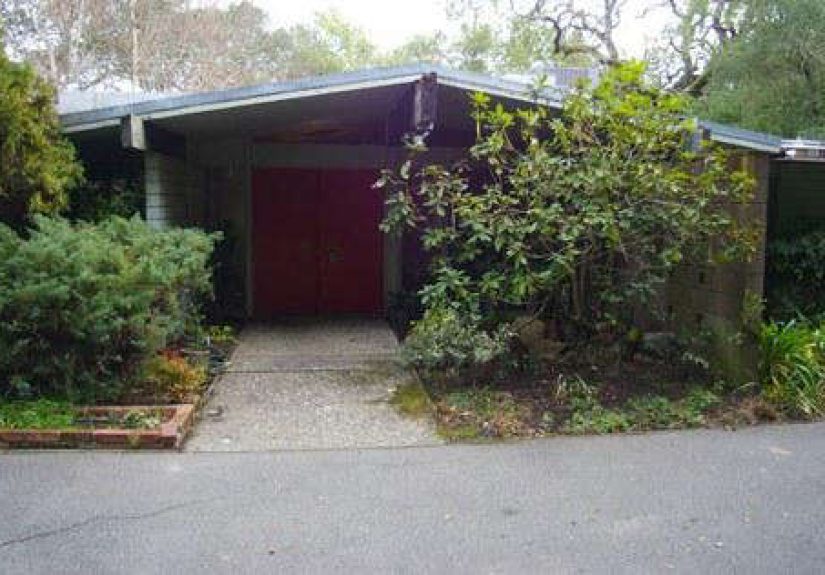
In Lafayette, the remodel deliberately restored that quality. According to the project coverage, the flow between interior and exterior had been weakened over the years. Hart Wright’s key moves re-established that relationship in tangible ways. Wood siding was extended from the outdoor entrance into the entryway, reinforcing continuity rather than interruption. Re-landscaping helped the exterior feel intentional again instead of decorative by default. Obstructive curtains were removed. Trough lighting made the house more welcoming after dark. These were not flashy gestures. They were calibrated ones.
That is part of the project’s charm. The remodel understands that continuity is often created by accumulation, not theatrics. The best houses do not scream “Look at my concept!” every five minutes. They quietly repeat good decisions until the whole place starts to feel inevitable.
Why These Moves Work
Design publications that consistently cover successful midcentury renovations keep returning to the same themes: open plans, stronger connections to the landscape, restored natural light, and respect for character-defining details. The Lafayette house checks all of those boxes without feeling formulaic. That is because the team was not chasing a trend board. They were solving architectural problems native to the house itself.
For example, natural light became a major character in the remodel. Hart Wright’s own project description for what appears to be this Lafayette work notes that deep overhangs had created interior gloom. Strategic skylights and fresher materials brought back lightness and airiness while still paying homage to the home’s midcentury roots. That is a classic renovation lesson: brightness is not merely decorative. It changes how space is read, how materials behave, and how people feel moving through a room.
Light, Air, and the Midcentury Mood
There is a reason skylights and carefully placed glazing keep appearing in thoughtful remodels. They are not magical by themselves, but they are powerful when used with restraint. They can pull daylight deep into the plan, make low or heavy spaces feel more breathable, and sharpen the sense that a house belongs to its climate rather than hiding from it.
That seems especially important in midcentury homes, where openness and sunlight are central to the original architectural language. Across modern renovation case studies, skylights, sliding glass doors, vaulted ceilings, and walls of glazing are often the tools that revive homes whose layouts have gone dim or stale. The Lafayette remodel fits squarely within that tradition, using light not as decoration but as a structural part of the experience.
And let us be honest: natural light is one of the few design upgrades that almost nobody argues with. No dinner guest has ever entered a beautifully lit room and said, “Terrible idea. I miss the cave.”
Respecting Character Without Freezing the House in Time
Another reason this remodel stands out is its refusal to confuse respect with rigidity. A good midcentury renovation does not trap a house in amber. It preserves the essential qualities while letting the home work for current patterns of living. That might mean reworking the floor plan, widening openings, improving performance, updating systems, or using new materials in ways that support the original spirit instead of competing with it.
That is exactly the balance architects and preservation-minded designers keep emphasizing today: maintain the architectural integrity, but make room for energy efficiency, comfort, and contemporary use. In Lafayette, the floor plan was reorganized to create larger, more fluid spaces. The result was not a fake period piece. It was a functioning home that still felt unmistakably midcentury.
This is where many remodels lose the plot. They either sterilize the past or sentimentalize it. Hart Wright’s approach avoided both traps. The house kept its identity, but it also became more livable, more luminous, and more coherent. That is not compromise. That is design maturity.
A Tight Budget, a Clear Point of View
One detail that deserves more applause is the project’s budget discipline. Remodelista described the Lafayette house as a tight-budget renovation, which makes the outcome even more impressive. Design culture sometimes acts as if quality comes only from unlimited spending, imported stone with three passports, and appliances that appear to have their own emotional support team. But many of the most convincing remodels work because the designers know where to spend, where to simplify, and where to let the architecture do the heavy lifting.
In this house, the intelligence seems to lie in targeted, high-impact decisions: opening the plan, refining the landscape, restoring the indoor-outdoor relationship, improving light, and using materials that reinforce rather than distract. Budget constraints, when handled well, can actually sharpen architecture. They force a project to figure out what matters most.
The result was strong enough that the remodeled spec house was reportedly snapped up quickly by another architect. That tells you something. Architects are not always easy to impress. They notice awkward joins, overworked details, and suspiciously trendy powder rooms with the focus of bloodhounds. If an architect wanted this house, the design clearly hit home.
What the East Bay AIA Home Tour Added
Being included in the East Bay AIA Home Tour also gave the project a public role beyond private residential success. Home tours matter because they translate architecture out of professional jargon and into lived experience. They let visitors see how design choices affect light, movement, privacy, comfort, and landscape in real time. You do not just hear that a floor plan “flows better.” You feel it in your knees, your eyes, and the way your body keeps drifting toward the next room.
The Lafayette remodel was a strong fit for that format because it demonstrates ideas ordinary homeowners wrestle with every day: Should we renovate or rebuild? How do we respect an older house without making it inconvenient? Can a modestly scaled home feel expansive? How much difference can light, landscaping, and layout really make? This project answers those questions with visible proof rather than marketing language.
The Larger Lesson for Anyone Planning a Remodel
So what should a reader take away from the Lafayette remodel, beyond the mild danger of suddenly wanting to re-landscape the front walk? Start with this: a good remodel is not an exercise in adding square footage until the house resembles a luxury conference center. It is an exercise in recovering intention.
That recovery often means reading the original structure closely. What did the house once do well? Where did it lose confidence? Which interventions can restore clarity? In midcentury homes especially, success often comes from amplifying existing strengths: natural light, exposed structure, clean circulation, material continuity, and outdoor connection. Additions and upgrades should reinforce those qualities, not drown them in noise.
The Lafayette project is persuasive because it never forgets that architecture is experienced as a sequence. Entry matters. Thresholds matter. Landscape matters. Light at dusk matters. The view from the inside out matters just as much as the curb appeal from the outside in. And when all of those elements begin working together again, the house stops feeling renovated and starts feeling right.
Experience Section: What It Feels Like to Visit a House Like This
To walk through a remodel like this on an architecture home tour is to understand, very quickly, that photographs only do half the job. In pictures, you notice the lines, the materials, the landscaping edits, the before-and-after drama. In person, you notice the choreography. You step toward the entrance and realize the exterior is not merely the wrapper for the interior; it is already part of the sequence. The path, the planting, the siding, the light, the threshold: they are all setting up the same sentence in different words.
The first real pleasure is scale. A successful midcentury remodel rarely needs to be enormous to feel generous. In a house like the Lafayette remodel, the spaces do not bully you with size. They persuade you with proportion. The entry feels clear instead of cramped. The public rooms open without becoming vague. Sightlines stretch just far enough to keep you curious. You start to sense how a family might live there on a Tuesday morning, not just during a polished Saturday tour.
Then there is the light. Not the Instagram kind that blasts everything flat and overexposed, but the more useful kind that reveals texture. Light landing on wood. Light sliding across a floor. Light touching a wall and making the room look awake. You notice how the skylights and glazing are doing quiet labor, pulling brightness deep into the house so the plan feels buoyant instead of boxed in. Even if you know nothing about architecture, your body understands that the space feels better. Your shoulders drop. You slow down. You stop scanning for the next room and start enjoying the one you are already in.
Outside, the effect continues. The landscaping does not feel separate from the architecture, like an afterthought applied by a person armed with gravel and panic. It feels composed. The outdoors belongs to the indoors, and vice versa. Standing near a doorway or looking back from the yard, you can see why this relationship matters so much in California houses. The design does not force you to choose between shelter and openness. It lets you have both, which is a deeply civilized idea.
What makes the experience especially memorable is how little of it depends on flashy excess. There is no need for decorative gymnastics. No desperate attempt to impress with novelty for novelty’s sake. The satisfaction comes from coherence. Everything seems to know why it is there. On a home tour, that kind of clarity is almost audible. Visitors may not phrase it in architectural language, but they feel it when they say things like, “This place just makes sense,” or, “I could actually live here,” or the timeless classic, “Why doesn’t my house do this?”
That is the emotional payoff of projects like the Lafayette remodel. They do more than restore a structure. They restore confidence in what residential architecture can be when it is thoughtful, restrained, and genuinely connected to the life around it. You leave with ideas, of course. Maybe you start daydreaming about opening up a wall, editing the front yard, or finally removing the curtains that have been committing low-grade crimes against daylight for years. But you also leave with a more useful impression: that good remodeling is not about making a home trendier. It is about making it truer to its best self.
Conclusion
The Lafayette remodel by Hart Wright Architects earns its place in the conversation not because it is loud, but because it is lucid. It rescued a 1959 midcentury home from the demolition path, preserved the structure that mattered, restored the indoor-outdoor flow that defines the type, improved light and livability, and proved that a tight-budget remodel can still deliver architectural generosity. Featured through the East Bay AIA Home Tour, it offered a public case study in how to remodel with intelligence, restraint, and affection.
For anyone interested in Bay Area architecture, midcentury renovation, or the art of making an older house feel newly alive without erasing its character, this project remains a terrific reference point. It reminds us that the best remodels are not about spectacle. They are about seeing what is already there, recognizing what has been lost, and bringing the house back into focus. Sometimes the most radical move in residential architecture is not building more. It is understanding better.