Table of Contents >> Show >> Hide
- Why This Question Is So Confusing in the First Place
- What Public Reporting Actually Shows
- What “Destroyed” Would Actually Mean
- Why Patriots Are Such High-Value Targets
- So, Did Russia Really Kill a Patriot?
- The Real Battlefield: Attrition, Adaptation, and Air Defense Survival
- How to Read the Next “Patriot Destroyed” Headline
- Conclusion: The Claim Is Bigger Than the Evidence
- Experiences Related to the Question: What It Means to Live, Fight, and Think Under a Patriot Shield
- SEO Tags
In war, every missile leaves two trails behind it: one in the sky and one on the internet. The first one burns out fast. The second one can live forever, especially if it comes with dramatic video, bold captions, and a lot of chest-thumping. That is exactly why the question “Did Russia really kill one of Ukraine’s Patriot missile systems?” deserves more than a yes-or-no answer. It deserves a flashlight, a magnifying glass, and maybe a mild distrust of victory laps taken before sunrise.
The short answer is this: Russia has repeatedly claimed that it destroyed or “killed” Patriot systems in Ukraine, but the strongest public evidence does not clearly prove that Moscow wiped out an entire Patriot battery in the clean, cinematic way propaganda suggests. What public reporting does support is more complicated and much more believable. Patriot elements may have been damaged in combat. Some Russian strikes appear to have hit something valuable. Other claimed hits were disputed as decoys. And because Patriot is a distributed air defense system made up of several components, damaging one launcher is not the same thing as erasing a whole battery from the battlefield.
That distinction matters. A lot.
Why This Question Is So Confusing in the First Place
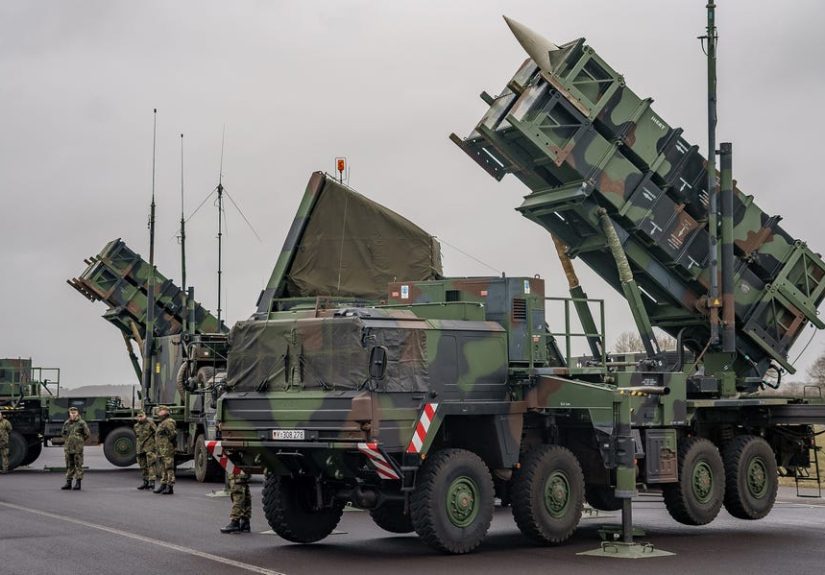
Part of the confusion comes from the way people use the word “Patriot.” In casual conversation, it sounds like one giant machine, as if someone parked a single superhero truck outside Kyiv and called it a day. In reality, a Patriot battery is a network. It generally includes radar, a command hub, launchers, and supporting gear working together as one air defense package. Knock out one piece and you may degrade the system. Destroy the radar and you create a much bigger problem. Hit a launcher and you damage capability, but you have not necessarily turned the whole battery into an expensive lawn ornament.
That means headlines can get dramatic very quickly. “Russia destroys Patriot” sounds bigger, scarier, and far more final than “Russia may have damaged a launcher or nearby component of a Patriot battery.” Unfortunately, war propaganda has never been accused of underselling itself.
What Public Reporting Actually Shows
The May 2023 Strike: Damage, Not a Clear Kill
One of the best-known episodes came in May 2023, when Russia claimed a Kinzhal missile struck a Patriot in Kyiv. That claim spread fast because it seemed to offer Moscow a symbolic win against one of the West’s most prized air defense systems. But later reporting from U.S. officials indicated the Patriot system was likely damaged, not destroyed. Even more important, the damage was described as repairable, and the system returned to operation.
That is not nothing. Damage to a Patriot is serious. But serious is not the same as fatal. If a quarterback sprains an ankle and returns next week, nobody says the entire football team was “killed.” The same logic applies here. A temporarily damaged Patriot component does not equal the permanent elimination of a full Patriot battery.
The July 2024 Claim: Real Strike or Decoy Theater?
Another major episode came in July 2024, when Russia said it destroyed two Patriot launchers and a radar station near Ukraine’s Black Sea coast. Ukraine pushed back and said the strike hit decoys. Public reporting at the time said the competing claims could not be independently verified.
That episode is a perfect example of how modern warfare has become part combat, part camouflage contest. Ukraine has every incentive to use decoys to waste expensive Russian missiles. Russia has every incentive to film explosions and call them strategic triumphs. When both sides are playing chess and posting about it at the same time, outside observers need to slow down and separate what is confirmed from what is merely loud.
What “Destroyed” Would Actually Mean
To say Russia truly “killed” one of Ukraine’s Patriot systems, you would want convincing evidence that an entire battery, or at least its critical core, was knocked out for a meaningful period and could not be restored quickly. That would usually mean one or more of the following:
- multiple essential components destroyed in the same strike,
- the radar or command unit rendered unusable,
- visual confirmation from reliable imagery or multiple independent outlets,
- follow-on reporting showing the system left the battlefield or stayed offline,
- and a lack of credible repair or replacement reporting afterward.
That level of proof has not been consistently available in the most cited Russian claims. Instead, public evidence has usually landed in the murkier middle ground: some damage seems plausible, some claims remain disputed, and some targets may not have been genuine systems at all.
Why Patriots Are Such High-Value Targets
Patriot systems matter because they are among Ukraine’s best tools for dealing with some of Russia’s most dangerous missile threats, especially ballistic missiles. Public reporting and defense analysis have repeatedly highlighted their importance in protecting cities, infrastructure, and command centers. Patriot is not cheap, not common, and not easy to replace. That makes it both militarily valuable and politically symbolic.
For Russia, damaging a Patriot system is useful in three ways. First, it can weaken local air defense coverage. Second, it forces Ukraine and its partners to spend time and resources on repair, dispersal, and protection. Third, it creates a propaganda opportunity. Even an unverified claim can be turned into a headline, a morale boost, and a message to Western audiences: “See? Your fancy gear can bleed too.”
For Ukraine, the opposite is true. Kyiv benefits from underplaying losses, preserving uncertainty around deployments, and using deception to complicate Russian targeting. In other words, both sides are heavily invested in the story around the strike, not just the strike itself.
So, Did Russia Really Kill a Patriot?
If by “kill” you mean prove it destroyed an entire Ukrainian Patriot battery beyond quick repair and beyond serious doubt, the public record is weak. Russia has made the claim more than once, but the strongest reporting available to the public does not firmly support a clean, confirmed, irreversible knockout.
If by “kill” you mean damage Patriot components, force repairs, threaten crews, and occasionally score a tactical hit, then the answer is far more believable. Patriot systems are not magical force fields. They operate in a war zone against a sophisticated opponent that studies launch patterns, searches for radar emissions, and uses ballistic missiles precisely because they are difficult to intercept. A Patriot battery can be hunted, pressured, and damaged. That part is real.
But war is full of partial truths dressed up like final verdicts. The public evidence points less toward “Russia wiped out a Patriot and ended the story” and more toward “Russia sometimes hit parts of a Patriot ecosystem, while Ukraine adapted, repaired, deceived, and kept fighting.” That version is less flashy. It is also more persuasive.
The Real Battlefield: Attrition, Adaptation, and Air Defense Survival
There is a bigger lesson here. The most important question is not whether one viral clip proves a Patriot died. The more important question is whether Ukraine can keep enough advanced air defense coverage alive over time. On that score, the story is one of attrition rather than instant annihilation.
Ukraine has continued asking for more Patriot systems, more launchers, more missiles, and more sustainment support because air defense is not a one-time purchase. It is a living, breathing chain of training, maintenance, mobility, camouflage, software, logistics, and repair. A Patriot battery that survives does not merely need interceptors. It needs crews, parts, relocation discipline, and constant operational adaptation.
Public reporting has shown that Western partners have continued to support Patriot operations in Ukraine, including additional systems, launchers, interceptors, maintenance help, and sustainment packages. That alone undercuts the simplistic narrative that Russia has already erased the Patriot threat. If the system had been decisively neutralized across the board, Ukraine would not keep fighting for more capacity built around the same platform.
How to Read the Next “Patriot Destroyed” Headline
The next time a headline screams that Russia obliterated another Patriot, ask five questions before you hand the internet your attention span:
1. What exactly was hit?
Was it a launcher, a radar, a command post, a support vehicle, or something merely claimed to be one of those?
2. Who verified it?
Official claims are not proof. Independent confirmation matters, especially in a war flooded with edited clips and selective angles.
3. Was the system actually removed from action?
Damage can be temporary. Destruction suggests lasting loss.
4. Could it have been a decoy?
Modern decoys are cheap compared with the missiles used to hunt real air defense assets. That is not a side note. It is central to the game.
5. What happened afterward?
If Patriot interceptions continue in that theater, then the claim of a total kill becomes much harder to sell.
Conclusion: The Claim Is Bigger Than the Evidence
Did Russia really kill one of Ukraine’s Patriot missile systems? Based on the strongest publicly available reporting, the most honest answer is: not in the simple, proven, slam-dunk way the claim is often presented. Russia has likely damaged Patriot-related equipment and has absolutely made these systems work for every mile they survive. But verified evidence for the outright destruction of an entire Patriot battery remains limited, disputed, or incomplete.
That is the uncomfortable truth about modern warfare. The battlefield produces wreckage, but the information war produces certainty long before certainty is earned. In this case, the evidence favors caution over bravado. Russia may have scored hits. Ukraine may have hidden losses. But the public record still suggests that “Patriot destroyed” has often been a bigger slogan than a proven final outcome.
And in wartime, slogans travel fast. Facts usually arrive wearing hiking boots.
Experiences Related to the Question: What It Means to Live, Fight, and Think Under a Patriot Shield
To understand why this question matters so much, it helps to step away from maps and military jargon and think about experience. For civilians in Ukrainian cities, a Patriot system is not just a line in a defense budget. It is the difference between a night of panic and a night of survival. People do not usually stand on balconies debating radar architecture at 3 a.m. They listen for the sequence: siren, distant boom, maybe another boom, then the awful pause where nobody is sure whether the danger is over. In that lived reality, whether a Patriot battery is active, damaged, moved, repaired, or short on interceptors becomes intensely personal.
There is also the experience of uncertainty. Residents may hear that Russia “destroyed” a Patriot and wonder whether the next ballistic missile will get through. Hours later, they may hear officials deny it. Then analysts weigh in, satellite images circulate, and social media turns into a contest between certainty and speculation. For ordinary people, that information fog becomes part of the war itself. The body stays in the shelter, but the mind gets trapped in a loop of rumors.
For Ukrainian operators and planners, the experience is different but no less intense. A Patriot crew knows it is protecting valuable ground and also painting a giant invisible target on itself. Radar emissions, launch signatures, movement routes, reload patterns, and timing all matter. Survival depends on discipline. Move too slowly and you become predictable. Fire too often from the same position and you invite retaliation. Hide well, disperse wisely, and maybe you live to intercept again tomorrow. This is not glamorous movie warfare. It is a brutal routine of mobility, pressure, maintenance, and nerves.
There is also a strategic experience for Western policymakers. Every new Russian claim about destroying a Patriot lands in allied capitals with a political question attached: Are these systems surviving well enough to justify sending more? So far, the answer has generally been yes, because the systems still provide high-end air defense capability that Ukraine badly needs. But each claim, each strike, and each repair cycle shapes debates over supply, training, sustainment, and industrial capacity.
And then there is the analyst’s experience, which is basically a permanent relationship with incomplete evidence. Defense analysts study video fragments, crater patterns, launch canisters, convoy layouts, and official statements that may be truthful, misleading, or both at the same time. Their job is not to be dramatic. Their job is to be annoying in the best possible way: cautious, skeptical, and unwilling to call a total kill without enough proof.
That is why the Patriot question keeps returning. It sits at the intersection of civilian fear, military adaptation, political signaling, and propaganda. Every claimed strike is about more than equipment. It is about confidence. Can cities still be defended? Can crews still operate? Can allies still believe their support matters? In that sense, the “experience” of the Patriot story is the experience of modern war itself: survival under pressure, truth buried under speed, and technology fighting not just missiles, but narratives.
So when people ask whether Russia really killed one of Ukraine’s Patriots, they are not only asking about metal and machinery. They are asking whether the shield still holds, whether the people behind it still endure, and whether reality is stronger than the headline trying to outrun it.