Table of Contents >> Show >> Hide
- 1. James Bond was named after a real American bird expert
- 2. Bond began on the page long before he became a movie legend
- 3. Dr. No was the first official Bond movie, but not Bond’s first story
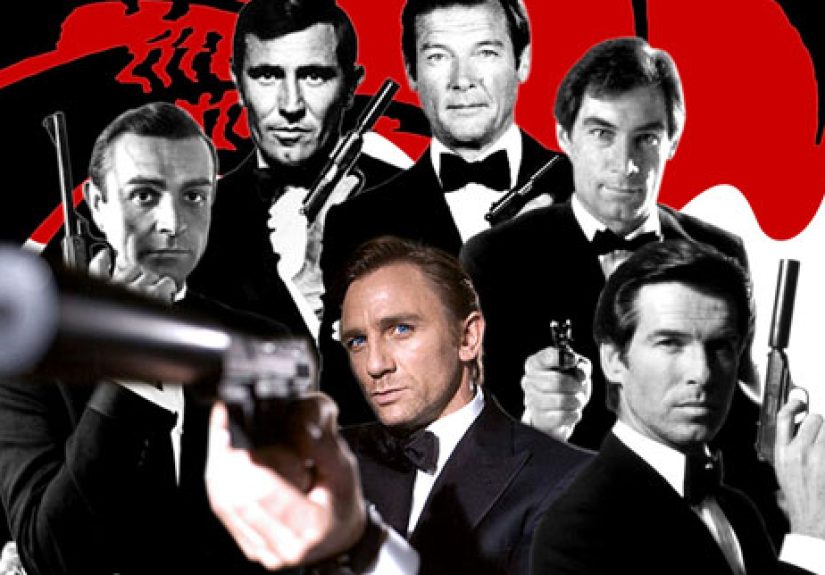
- 4. There have been only six official Bond actors in the Eon era
- 5. Roger Moore played Bond the most, but Daniel Craig held the role the longest in years
- 6. Bond got married only once, and the franchise never really got over it
- 7. The Aston Martin DB5 was not Bond’s original car in the novel
- 8. Judi Dench’s M reflected a real change in British intelligence culture
- 9. The famous Bond theme is basically a brilliant collaboration
- 10. Bond has a stronger awards history than people remember
- Why Bond Still Works
- Experiences With Bond: Why the Character Sticks With People
- Conclusion
- SEO Tags
James Bond is one of those rare pop-culture creatures who can walk into a casino, order a drink, steal a car, ruin a villain’s weekend, and still somehow look like he has dinner reservations. Most people know the tuxedo, the martini, the Aston Martin, and the eyebrow that says, “Yes, I did just survive that explosion.” But Bond’s history is packed with strange, clever, and surprisingly human details that often get buried under the gun barrels, gadgets, and theme songs.
This is where things get interesting. Behind the polished image of 007 is a character shaped by bird books, wartime intelligence, family-run film stewardship, accidental iconography, and enough reinvention to make a chameleon look lazy. So if you think you know Bond, James Bond, here are 10 things you probably don’t know about him.
1. James Bond was named after a real American bird expert
Yes, really. The world’s most famous spy got his name from a very real American ornithologist named James Bond, author of Birds of the West Indies. Ian Fleming, who was living in Jamaica and birdwatching when he wrote the early Bond novels, wanted a name that sounded plain, efficient, and unromantic. He did not want something flashy like “Peregrine Steelhawk” or “Max Dangerface,” which, let’s be honest, sounds like a Bond parody that never should have left the pitch meeting.
So Fleming borrowed “James Bond” because it felt crisp, masculine, and wonderfully ordinary. That choice turned out to be genius. The contrast is part of the magic: a completely normal name attached to a wildly abnormal man. It is one of the best branding decisions in literary history, and it happened because Fleming liked the cover of a bird book.
2. Bond began on the page long before he became a movie legend
Many casual fans think Bond was born in a movie theater, fully formed in a tuxedo with a pistol and a smirk. In reality, he began in Ian Fleming’s 1953 novel Casino Royale, the first of 12 Bond novels, plus short-story collections, written before Fleming died in 1964. The books were crucial because they established Bond as more than an action hero. On the page, he was colder, moodier, more brittle, and often more dangerous than his screen versions.
The literary Bond also carried strange little habits and preferences that gave him texture: fastidious routines, strong opinions about food and drink, and a taste for luxury that was half sophistication, half coping mechanism. In other words, Bond was never just a guy with a gun. He was a fantasy of control wrapped around a man who often lived in chaos.
Why this matters for the movies
The films changed Bond constantly, but they never completely escaped Fleming’s blueprint. Even when the franchise got campy, glossy, romantic, or brutally modern, it kept returning to the same foundation: a professional operative who is elegant on the surface and emotionally costly underneath.
3. Dr. No was the first official Bond movie, but not Bond’s first story
Bond’s first official Eon Productions film was Dr. No in 1962, starring Sean Connery. That movie launched one of the most successful franchises in movie history and made audiences fall in love with the whole package: the gun-barrel introduction, the music, the swagger, the exotic locations, and the sense that danger could somehow be stylish.
But here is the fun twist: Dr. No was not Fleming’s first Bond novel. That honor belongs to Casino Royale. So the Bond franchise did not begin at the literary beginning. It began where filmmakers believed the cinematic spark was strongest. That decision helped define the franchise from day one: Bond was never built as a rigid museum piece. He was built to be adapted.
And what an adaptation it was. Dr. No did not just introduce Bond to moviegoers. It introduced the idea that spy fiction could be glamorous, weird, and commercially explosive all at once.
4. There have been only six official Bond actors in the Eon era
Bond trivia gets messy because unofficial entries lurk in the shadows like henchmen in a volcano lair. But in the official Eon film series, only six actors have played Bond: Sean Connery, George Lazenby, Roger Moore, Timothy Dalton, Pierce Brosnan, and Daniel Craig.
That number feels surprisingly small when you consider how massive Bond is. The role has existed on film for decades, yet the franchise has been unusually selective. Bond is not recast like a superhero suit. He is treated more like a diplomatic appointment with better tailoring.
The unofficial wrinkle
Part of the confusion comes from movies outside the Eon canon, especially Never Say Never Again, which brought Connery back in 1983 in an unofficial Bond film. So depending on how a trivia question is phrased, people start arguing, facts get blurry, and somebody inevitably tries to sound confident while being wildly wrong. Bond would approve.
5. Roger Moore played Bond the most, but Daniel Craig held the role the longest in years
These are two different records, and they are easy to mix up. Roger Moore starred in the most official Bond films, with seven entries. He gave the role a breezier, winkier style and proved that Bond could lean into humor without losing his global box-office passport.
But Daniel Craig was Bond for the longest stretch of time, spanning 15 years from Casino Royale to No Time to Die. That long run, helped by production gaps and release delays, allowed Craig’s Bond to evolve more visibly than most previous versions. His era felt less like a rotating adventure serial and more like one long bruised character arc in expensive outerwear.
This says a lot about Bond’s flexibility. One actor can make him lighter, another harder, another more elegant, another more wounded. Yet he still reads as Bond. The tux changes shape, but the silhouette survives.
6. Bond got married only once, and the franchise never really got over it
For a character often associated with flirtation, seduction, and strategic eyebrow deployment, Bond has only one official marriage in the film canon. It happens in On Her Majesty’s Secret Service, when Bond marries Tracy di Vicenzo. The moment is not just unusual. It is seismic.
Why? Because it shows that Bond is not simply allergic to commitment. He is capable of deep attachment. The tragedy that follows is what matters. Tracy’s death becomes one of the franchise’s most important emotional scars, and later Bond stories keep echoing it in different ways. The character’s detachment starts to look less like coolness and more like damage management in a tuxedo.
It is one of the boldest things Bond ever did narratively: admit that beneath the fantasy machinery, there is grief. And grief, unlike a sports car, does not come with ejector seats.
7. The Aston Martin DB5 was not Bond’s original car in the novel
If you ask the average fan to picture Bond’s car, they will probably imagine the silver Aston Martin DB5 from Goldfinger. Fair enough. It is one of the most iconic movie cars ever built. It has gadgets, elegance, menace, and the kind of cool that makes regular traffic seem like a personal insult.
But in Fleming’s Goldfinger novel, Bond drove a different Aston Martin model. The film upgraded him to the DB5, and that choice changed pop culture. Suddenly Bond did not just have a vehicle. He had a mechanical co-star.
The gadget effect
Once the DB5 arrived with hidden weapons and defensive tricks, Bond’s relationship with technology transformed. Gadgets stopped being side accessories and became part of the ritual. The car was no longer just transportation. It was a moving expression of Bond’s identity: polished on the outside, dangerous underneath, and impossible to forget.
8. Judi Dench’s M reflected a real change in British intelligence culture
When Judi Dench appeared as M in GoldenEye, it felt sharp, modern, and slightly intimidating in the best possible way. Her M did not just supervise Bond. She challenged him, questioned him, and reminded him that the world had changed. The old boys’ club had entered a newer, stricter century.
That shift was not invented from thin air. Bond’s move toward a female M was influenced by the appointment of Stella Rimington as the first female head of MI5 in real life. The franchise was acknowledging that the intelligence world, or at least the public imagination of it, was evolving.
Dench’s M became one of the smartest upgrades Bond ever made. She grounded the films, sharpened Bond’s relevance, and gave the series a voice that could slice through 007’s ego like a laser in a villain’s industrial warehouse. Too soon? Bond would say no.
9. The famous Bond theme is basically a brilliant collaboration
The James Bond theme sounds so inevitable that people often assume it dropped from the heavens already wearing a dinner jacket. In fact, its history is more layered. Monty Norman composed the theme material, and John Barry arranged it into the electrifying sound that became Bond’s permanent musical fingerprint.
That arrangement mattered enormously. It gave Bond his audio identity: danger, sophistication, motion, and a little mischief all packed into a sound that can make a person feel cooler just by standing near it. The franchise has changed faces, tones, directors, and geopolitics, but that music still announces Bond with instant authority.
It is one of cinema’s great examples of branding through sound. Before Bond says a word, the music has already entered the room and stolen the oxygen.
10. Bond has a stronger awards history than people remember
Bond is often discussed as pure entertainment: action, spectacle, style, and crowd-pleasing bravado. But the franchise has real awards history. Goldfinger became the first Bond film to win an Academy Award, and later Bond movies turned theme songs into a prestige category all their own.
Skyfall was especially significant, becoming the first Bond film to win two Oscars. Bond songs have also become events in themselves, with major artists treating the assignment like a strange royal challenge: can you be dramatic, seductive, melancholy, and enormous at the same time? If yes, congratulations, you may now sing over silhouettes and smoke.
The awards matter because they reveal something important: Bond is not just durable. Bond is adaptable across craft categories. Music, sound, production design, performance style, and technical innovation have all helped keep the character alive. The secret is not that Bond never changes. The secret is that Bond changes just enough.
Why Bond Still Works
Bond survives because he is both fantasy and mirror. He offers viewers a dream of competence under pressure, but each era remakes that dream differently. Connery’s Bond was cold-war swagger. Moore’s Bond was a champagne-fizz escape artist. Dalton pushed toward danger. Brosnan blended polish with post-Cold War anxiety. Craig added bruises, regret, and the unsettling idea that saving the world might leave dents that do not buff out.
That is why Bond remains culturally useful. He is not static. He is a measuring stick for what audiences think power, masculinity, style, and heroism should look like in a particular moment. Bond movies may come with explosions, but they also come with cultural X-rays.
Experiences With Bond: Why the Character Sticks With People
Watching Bond across different stages of life is a surprisingly different experience. As a kid, Bond often feels like the coolest adult in the world. He has the car, the watch, the confidence, the jokes, and the impossible ability to escape things that should have turned him into a cautionary tale. The early experience of Bond is pure sensation: the music hits, the title sequence begins, and suddenly the ordinary world seems underdressed.
Then you revisit Bond later, and the experience changes. The travel fantasy becomes more obvious. So does the performance of control. Bond walks into chaos and behaves as though chaos has simply arrived early for his appointment. That can be thrilling, but it is also revealing. Part of the Bond fantasy is not violence or glamour by itself. It is composure. Bond sells the idea that no matter how absurd the stakes become, a person can remain capable, articulate, and nearly impossible to rattle. That may be the most unrealistic part of the entire franchise, including the invisible cars.
There is also a generational experience to Bond. Different viewers have a “first Bond,” and that first Bond often becomes their personal default setting. Some people think Bond should be suave and sly. Others think he should be emotionally sealed and dangerous. Others want him wounded, modern, and morally messy. The argument over the best Bond is really an argument about what people want from heroism. Do they want fantasy? Edge? elegance? vulnerability? A car that can eject unwanted passengers? All of the above?
Bond also works as a ritual experience. The pre-title stunt. The song. The reveal. The villain’s lair. The banter with Q. The location-hopping. The moment when a cufflink somehow feels tactical. Even when the films vary wildly in quality, the structure is comforting. It is cinematic comfort food with a silencer attached.
And yet the best Bond experiences usually arrive when the formula gets nudged, not copied. That is why so many fans remember their first viewing of films like Goldfinger, On Her Majesty’s Secret Service, GoldenEye, Casino Royale, or Skyfall. Those entries keep the ritual but add surprise. They remind viewers that Bond should not feel embalmed. He should feel alive, slightly dangerous, and just unstable enough to make the tuxedo interesting.
In the end, the Bond experience is really about tension between elegance and instability. He looks perfect, but the world around him is falling apart. He seems calm, but the emotional bill is always waiting somewhere off-screen. That mix is why Bond endures. He is not just wish fulfillment. He is wish fulfillment with a crack down the center, and that crack is where the fascination lives.
Conclusion
Bond has lasted this long not because he is frozen in time, but because he keeps slipping through time without losing his outline. He can be romantic, ruthless, funny, haunted, or absurdly well-dressed while a villain monologues near industrial equipment. He can be a bird-book accident, a Cold War invention, a global movie brand, and an emotional wreck in a tuxedo, sometimes all in the same franchise.
That is the real secret of 007. Bond is not just one thing. He is a series of reinventions pretending to be one man. And somehow, against all odds and probably several international laws, it still works.