Table of Contents >> Show >> Hide
- What Makes a Carpenter Bee Deterrent Actually Effective?
- The Best Carpenter Bee Deterrents of 2025, Ranked
- 1. Painted or Polyurethane-Coated Wood
- 2. Replacing Vulnerable Wood With Harder or Less Attractive Materials
- 3. Sealing and Repairing Old Holes the Right Way
- 4. Carpenter Bee Traps
- 5. Targeted Preventive Sprays, Dusts, or Foams Labeled for Carpenter Bees
- 6. Natural Repellents Such as Almond Oil, Citrus, or Other Scent-Based Options
- 7. Sacrificial Nesting Blocks or Redirected Habitat
- 8. Routine Spring Inspection and Fast Maintenance
- Deterrents That Sound Better Than They Perform
- How to Choose the Right Carpenter Bee Deterrent for Your Property
- Real-World Experiences With Carpenter Bee Deterrents in 2025
- Conclusion
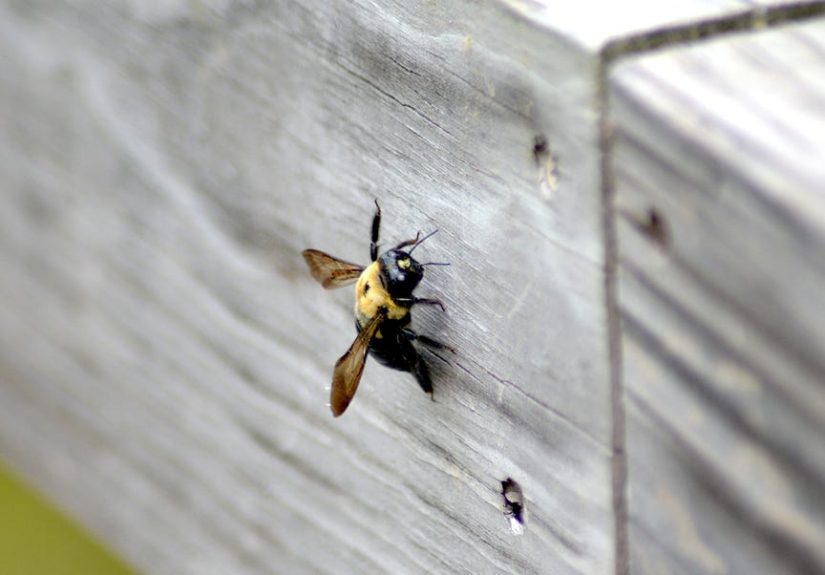
If carpenter bees have turned your porch into a buzzing construction site, welcome to the club nobody asked to join. One day your railing looks perfectly normal, and the next day you spot fresh sawdust, neat round holes, and a large bee hovering near your face like it pays property taxes. The good news is that the best carpenter bee deterrents of 2025 are not mystery gadgets or miracle sprays with superhero names. They are practical, proven, and mostly centered on making your wood less inviting in the first place.
That is the big theme this year: the strongest carpenter bee deterrents are preventive, not dramatic. A well-painted or sealed surface, repaired entry holes, tougher materials, and timely spring maintenance beat flashy gimmicks almost every time. Traps can help. Natural repellents may support your plan. But if you want results that last longer than a weekend, you need to think like a carpenter bee and make your house the least appealing option on the block.
This guide breaks down what actually works, what only sort of works, and how to build a smarter defense for decks, fascia boards, eaves, playsets, sheds, and other wooden structures.
What Makes a Carpenter Bee Deterrent Actually Effective?
Before ranking the best deterrents, it helps to understand why carpenter bees choose certain spots. They are drawn to dry, exposed, weathered wood, especially softer species like cedar, cypress, pine, and redwood. They do not eat wood, but females bore into it to make nesting tunnels. Those tunnels often get reused and expanded year after year, which is why a “small bee problem” has a rude habit of returning with sequels.
That means a good deterrent has to do at least one of three things: make the wood surface unattractive, block or eliminate access to old nesting sites, or reduce successful nesting during spring activity. If a product or method does none of those things, it probably belongs in the same category as late-night infomercial gadgets and gym memberships purchased in January.
The Best Carpenter Bee Deterrents of 2025, Ranked
1. Painted or Polyurethane-Coated Wood
This remains the gold standard. If you want the single best carpenter bee deterrent of 2025, it is a properly finished wood surface. Paint and durable clear finishes such as polyurethane or varnish make wood less attractive for drilling. This is why so many extension recommendations keep coming back to the same not-very-exciting answer: finish the wood well and keep it maintained.
There is a reason this method keeps winning. It does not just chase bees away for a few days. It changes the surface they are evaluating for nesting. That is far more useful than playing bee whack-a-mole every spring. If you have fascia boards, pergolas, porch rails, trim, or play equipment made from bare or weathered wood, finishing those surfaces is your smartest first move.
The catch is maintenance. A finish only works while it is still doing its job. If the coating is cracking, chalking, or peeling, carpenter bees may treat that like an open invitation. In other words, “I painted it five years ago” is not a deterrent plan. It is a memory.
2. Replacing Vulnerable Wood With Harder or Less Attractive Materials
The second-best deterrent is not really a spray or a trick. It is a material decision. If you keep battling carpenter bees on the same boards year after year, replace the worst offenders with hardwood, pressure-treated wood where appropriate, or even non-wood composite materials in high-risk areas.
This works especially well on trim, railings, fascia, spindles, and other repeated targets. In fact, one of the clearest lessons from recent guidance is that there are no true silver bullets for carpenter bees beyond making the surface fundamentally less drill-friendly. If a section of decorative cedar keeps becoming Bee Airbnb, stop negotiating with it. Upgrade it.
This option costs more up front, but it is often the best value for homeowners tired of springtime repeat damage.
3. Sealing and Repairing Old Holes the Right Way
Old carpenter bee tunnels are like favorite vacation rentals. If you leave them open, bees may reuse them. One of the best carpenter bee deterrents for repeat infestations is closing those tunnels properly after activity has stopped or after any labeled treatment has had time to work.
The important phrase here is properly. Homeowners often rush to fill holes immediately, then wonder why the bees chew right back out or simply shift a few inches over and start again. Better repairs usually involve confirming the hole is no longer active, then blocking the tunnel with a material such as a wooden dowel, steel wool, or copper mesh where appropriate, finishing with exterior wood filler, putty, glue, caulk, sanding, and repainting.
This is one of those boring fixes that quietly saves a lot of money. It not only reduces reuse, but also helps prevent water intrusion, rot, and the secondary damage that shows up when woodpeckers discover bee larvae hiding inside the wood. Yes, even your local birds may decide your fascia board is a snack bar.
4. Carpenter Bee Traps
Traps are popular in 2025 for a reason: they are simple, visible, and satisfying. You hang one up, and it feels like you are doing something. In fairness, traps can help reduce activity, especially when placed on the sunny side of a structure where females are already scouting nesting sites.
But traps work best as part of a layered plan, not as the whole plan. Their success varies. Some catch enough bees to make a noticeable difference. Others mostly catch hovering males or reduce local pressure without solving the underlying attraction problem. If your wood is still bare, cracked, and inviting, a trap is not fixing the root cause. It is more like putting a mop next to a leaking ceiling.
Still, a well-placed trap can be a very useful support tactic. If you already know where carpenter bees patrol each spring, hanging traps near those hot spots can reduce fresh drilling while you finish, repair, and protect the wood.
5. Targeted Preventive Sprays, Dusts, or Foams Labeled for Carpenter Bees
When carpenter bees are already active, a product labeled for carpenter bee control may be part of the plan. Surface sprays can reduce landing and boring activity on wood, while dusts or foaming products are commonly used for active nest holes. The key word is labeled. Do not improvise. Do not use random leftovers from the garage like you are starring in a home-improvement thriller.
Always read and follow the product label. That means using the product only where it is allowed, wearing the required protective gear, keeping children and pets away during application, and avoiding windy conditions for outdoor treatments. More is not better. In fact, overdoing a treatment can make it repellent in the wrong way, encouraging bees to avoid the treated hole and start a fresh tunnel nearby.
This category is effective, but it is not my top pick for most homeowners unless there is active damage. Why? Because it is a control tool more than a long-term deterrent. Without surface finishing and repairs, you may still be repeating the cycle next season.
6. Natural Repellents Such as Almond Oil, Citrus, or Other Scent-Based Options
Natural carpenter bee deterrents got a lot of attention in 2025, and for understandable reasons. Many homeowners want a lower-toxicity option, especially around patios, gardens, bird boxes, and play areas. Almond oil has been recommended in some educational resources as a spring coating for exterior wood, and citrus-based repellents remain popular because carpenter bees seem to dislike strong citrus scent.
These options are best thought of as supplemental deterrents, not your primary line of defense. They may help discourage new interest on vulnerable surfaces, but they typically need frequent reapplication and are not the strongest answer for established nesting sites. Newer non-lethal repellents, including compounds under study such as peppermint essential oil and methyl anthranilate, are promising, but they are still better treated as emerging tools rather than settled champions.
Translation: natural repellents can absolutely earn a place in your plan, especially if you are trying to reduce fresh scouting in spring. Just do not expect a few pleasant-smelling sprays to outperform good paint, good repairs, and smarter materials.
7. Sacrificial Nesting Blocks or Redirected Habitat
This is one of the more interesting strategies for 2025. Because carpenter bees are beneficial native pollinators, some homeowners prefer to redirect them instead of trying to eliminate them. A bundle or block of untreated softwood placed away from the house in a sunny location may attract nesting activity away from vulnerable structures.
This is not the right choice for every property, especially if you want zero bee activity nearby. But if your goal is deterrence rather than total removal, it can be a smart compromise. Think of it as giving the bees a better real-estate listing somewhere else. The key is distance. Do not install alternative nesting wood right next to the deck you are trying to protect.
8. Routine Spring Inspection and Fast Maintenance
This may be the least glamorous deterrent on the list, but it is one of the most effective. Every spring, check exposed wood for fresh sawdust, circular holes, weathered finishes, cracks, and old tunnels. Catching activity early gives you a much better chance of stopping expansion and repeat use.
In practical terms, spring inspection means looking at the underside of rails, eaves, fascia boards, pergolas, swing sets, sheds, and fence posts. Carpenter bees are fond of protected, sun-warmed spots. If you wait until midsummer, you are usually responding to a problem that already had time to settle in and start its paperwork.
Deterrents That Sound Better Than They Perform
Not every popular tip deserves equal respect. Some ideas are fine as small add-ons, but not as serious solutions.
Wood stain alone: It may improve appearance, but it is usually not as effective as paint or polyurethane for deterring carpenter bees.
Trap-only strategies: Helpful sometimes, but not enough when the wood itself is still attractive.
Random noise, vibrations, or hanging shiny objects: These are inconsistent at best. Carpenter bees are not tiny suburban vampires.
Fake predator decorations: Fun for Halloween. Not a reliable 2025 carpenter bee deterrent plan.
How to Choose the Right Carpenter Bee Deterrent for Your Property
If your problem is minor and mostly seasonal, start with finishing exposed wood, repairing old holes, and adding a trap near active scouting zones. If your problem is recurring on the same boards every year, move faster toward replacement materials and a more aggressive repair plan. If you have active drilling right now, a labeled dust, foam, or spray may need to be part of the process before you seal anything.
For playsets, garden structures, and bird boxes, many homeowners prefer a lower-toxicity approach: careful monitoring, surface maintenance, physical repairs, and supplemental natural repellents. For heavily affected fascia or deck components, the best carpenter bee deterrent is often a combination of repair plus upgraded material.
The strongest strategy is rarely one product. It is a system: finish the wood, remove old invitations, reduce active nesting, and stop giving the bees perfect conditions.
Real-World Experiences With Carpenter Bee Deterrents in 2025
The most useful thing about carpenter bee prevention is that the same real-world patterns keep showing up. Homeowners from different regions often describe nearly identical experiences. First comes the confusion: a loud hovering bee, a little sawdust, a tiny hole that looks too neat to be serious. Then comes the realization that the hole is not decorative, the bee is not just sightseeing, and the problem can get worse surprisingly fast if old tunnels are left open.
One of the most common experiences is the “trap-only phase.” People buy or build a carpenter bee trap, hang it near the porch, catch a few bees, and feel victorious for about three days. Then new holes appear in the same cedar trim, usually on the backside or underside where the finish has worn off. The lesson is not that traps are useless. It is that traps work best when the wood itself is no longer appealing. Homeowners who paired traps with paint, filler, and seasonal inspections usually reported better long-term results than those relying on traps alone.
Another familiar experience involves unfinished or partly finished wood. A deck may be stained and still get attacked, while the painted fascia nearby stays untouched. A shed may look protected from the front, but carpenter bees find the bare back edge, the cut end of a beam, or the underside of a rail. That is why so many people feel like the bees are “finding loopholes.” In a way, they are. The bees are not evaluating your project based on curb appeal. They are looking for soft, dry, exposed, drillable wood.
Then there is the woodpecker surprise, which many homeowners do not see coming. They notice the bee holes first, but later discover much larger ragged damage where birds have pecked into the wood to reach larvae. At that point, the problem shifts from annoyance to actual repair work. That experience often changes how people think about deterrence. What seemed like a harmless seasonal nuisance starts to look like a maintenance issue that deserves quick attention.
Natural repellents also generate a lot of mixed but interesting experiences. Some homeowners swear that annual almond oil coatings or repeated citrus applications reduce scouting on bird boxes, garden benches, or smaller wood features. Others say the effect is modest and temporary. The pattern here is pretty consistent: scent-based deterrents seem most useful on lightly targeted surfaces or as extra insurance layered on top of stronger prevention. They are rarely the hero when a structure already has an established history of nesting.
Perhaps the most successful homeowner stories share one thing in common: they stop treating carpenter bees as a one-time pest event and start treating them as a seasonal maintenance issue. Once that mindset changes, the solutions become clearer. Inspect in spring. Repair old holes correctly. Recoat vulnerable wood before it weathers too far. Upgrade the most heavily targeted boards. Use traps as support, not as wishful thinking. And when active nests are present, use only products labeled for the job and follow directions carefully.
That is really the big takeaway from 2025. The best carpenter bee deterrents are not flashy. They are methodical. They reward homeowners who stay a step ahead instead of reacting after the bees have already moved in, redecorated, and apparently invited the woodpeckers over for brunch.
Conclusion
The best carpenter bee deterrents of 2025 are the ones that change the environment, not just the mood. Paint or polyurethane remains the top long-term winner. Smarter materials, proper hole repair, and seasonal inspections come close behind. Traps and natural repellents can absolutely help, but they are supporting actors, not the lead. If you build your strategy around prevention first and reaction second, you can protect your wood, reduce repeat nesting, and avoid turning every warm spring afternoon into a buzzing homeowner support group.