Table of Contents >> Show >> Hide
- What Is PCI-X, and Why Is It Confused With PCI Express?
- Why a PCI-X Card Might Work in a PCI Slot
- The Cheap Hack: Riser, Clearance, and Careful Isolation
- Why Would Anyone Do This?
- What Can Go Wrong?
- How to Think About Compatibility Before Trying Anything
- PCI-X vs. PCI vs. PCIe: A Quick Practical Comparison
- Specific Example: A 3ware 9550SX-Style RAID Card
- SEO-Friendly Takeaway: The Hack Works Because the Standards Are Related
- Best Practices for Retro Hardware Experimenters
- Conclusion
- Additional Experience: What This Hack Teaches in the Real World
Note: This article is written for informational and editorial purposes. Hardware modification can damage old motherboards, cards, power supplies, and data. Always verify voltage compatibility, slot keying, physical clearance, and documentation before experimenting.
Old computer hardware has a special way of making smart people stare at plastic notches like they are ancient hieroglyphs. One minute you are holding a perfectly good PCI-X RAID card, dreaming of retro storage glory. The next minute you realize your vintage motherboard only has regular PCI slots, and the card refuses to fit like a sofa through a submarine hatch.
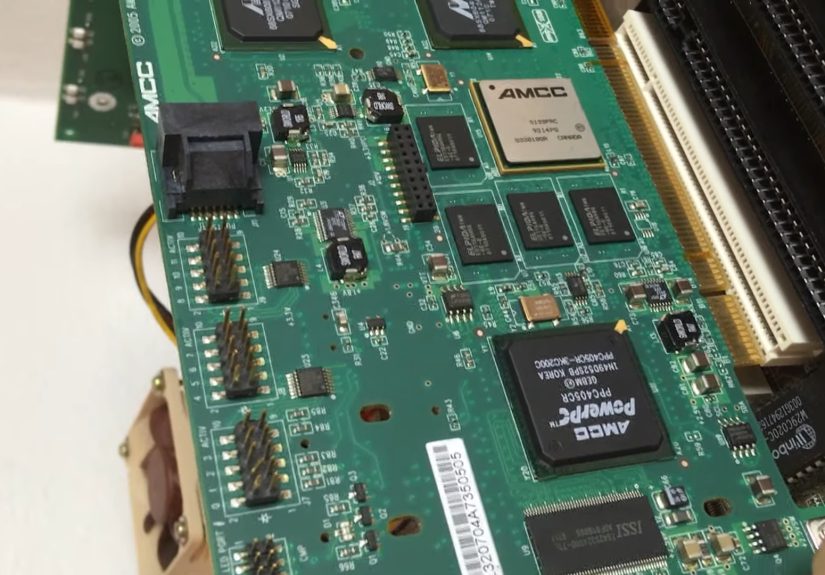
That is where the story behind “Cheap Hack Gets PCI-X Card Working In PCI Slot” becomes interesting. The hack is not magic. It is not a secret BIOS spell. It is a mix of old bus compatibility, voltage keying, mechanical clearance, and a little bit of “measure twice, risk once” hardware improvisation. In the right situation, a PCI-X card can operate in a conventional PCI environment, usually at lower speed. In the wrong situation, the experiment can turn into a smoky lesson in why connector keys exist.
This article explains what makes the hack possible, why PCI-X and PCI are often misunderstood, what the cheap riser trick actually solves, and why this kind of retro-computing workaround is both clever and slightly ridiculous in the best possible way.
What Is PCI-X, and Why Is It Confused With PCI Express?
First, let us rescue PCI-X from the identity crisis aisle. PCI-X stands for Peripheral Component Interconnect eXtended. It is an enhanced version of the original parallel PCI bus, designed mainly for servers, workstations, RAID controllers, SCSI adapters, Fibre Channel cards, and high-speed networking hardware.
PCI-X is not PCI Express. PCI Express, or PCIe, is the modern serial, lane-based interface used by graphics cards, NVMe adapters, Wi-Fi cards, capture cards, and nearly everything else in current PCs. PCI-X is older, wider, and physically more related to conventional PCI. If PCIe is a modern express train, PCI-X is a very serious-looking business bus from the early 2000s wearing a server-room badge.
Conventional PCI commonly appeared as a 32-bit, 33 MHz slot with a theoretical bandwidth of about 133 MB/s. PCI-X expanded the concept, commonly using a 64-bit bus and faster clock rates such as 66 MHz, 100 MHz, or 133 MHz. Later PCI-X 2.0 pushed the specification further, but most hobbyist encounters involve older 64-bit, 133 MHz PCI-X cards pulled from servers.
Why a PCI-X Card Might Work in a PCI Slot
The fun part is that PCI-X did not arrive as a completely alien interface. It was built from the same broad family as conventional PCI. Many PCI-X cards can fall back to slower PCI-style operation when installed in a compatible environment. That is why some 64-bit PCI-X storage controllers, especially older RAID and SCSI cards, may run in 32-bit PCI slots if the electrical and mechanical requirements are satisfied.
However, “may run” is doing a lot of heavy lifting. Compatibility depends on the specific card, the motherboard, the voltage signaling, the slot type, the BIOS, the driver, and whether nearby capacitors are physically blocking the longer card edge. Old hardware is not a democracy; every motherboard gets a vote, and some vote “absolutely not.”
The 32-Bit vs. 64-Bit Problem
A standard desktop PCI slot is usually shorter than a 64-bit PCI-X slot. A 64-bit PCI-X card has an extended connector area for extra data lines. If the card is placed into a 32-bit PCI slot, that extended portion may hang beyond the slot. Electrically, many cards are designed so the unused portion can simply remain disconnected. Mechanically, though, the motherboard may have capacitors, headers, chips, or other obstacles in the way.
This is one reason a riser card can help. A riser can move the card away from the motherboard surface, giving the long PCI-X connector somewhere to exist without crashing into components like an impatient shopping cart.
The Voltage Keying Problem
PCI cards and slots use physical notches to indicate supported signaling voltage. Common categories include 3.3V keyed, 5V keyed, and universal. A universal card has notches for both types and is intended to work with both signaling environments.
This is where many cheap hacks become dangerous. A card that is physically prevented from entering a slot is usually being protected from an incompatible electrical environment. Removing that protection without understanding the reason is like removing the “do not enter” sign from a crocodile exhibit because it ruined the view.
Some PCI-X cards are 3.3V-only. Many older desktop PCI slots are 5V keyed. If a card does not support the slot’s signaling voltage, forcing it in can damage the card, the motherboard, or both. The cheap hack described in the retro-hardware world often involves using a PCI-X riser and masking certain contacts to prevent unwanted voltage interaction, but that should not be treated as a universal recipe. It is a card-specific workaround, not a law of physics.
The Cheap Hack: Riser, Clearance, and Careful Isolation
The basic idea behind the famous cheap hack is simple: use a PCI-X riser to solve the mechanical mismatch, then prevent the dangerous electrical contact that would otherwise occur in the wrong slot. In one well-known example, a 3ware 9550SX PCI-X RAID card was made to operate in an old Socket 7-era computer by using a riser and masking contacts associated with the 5V rail. The reported throughput landed around 60–70 MB/s, which is not bad for a machine old enough to remember dial-up sounds without irony.
That speed is far below what a 64-bit, 133 MHz PCI-X RAID controller can theoretically achieve in a proper server slot. But in a conventional PCI environment, the bus becomes the bottleneck. A 32-bit, 33 MHz PCI slot has much less bandwidth than PCI-X, and real-world performance is always lower than the theoretical maximum because of bus overhead, controller behavior, drivers, disks, and the general mood of old chipsets.
Still, for retro computing, industrial recovery, old storage arrays, or “because I can” projects, 60–70 MB/s may be more than enough. On a vintage machine, that can feel like giving a tricycle a turbocharger.
Why Would Anyone Do This?
Modern readers may ask the obvious question: why not just buy a newer card? In a normal computer, that is the correct answer. But retro hardware projects are not normal. They live in a world where the operating system may only support certain chipsets, the motherboard may lack PCIe, and the goal may be preservation rather than raw convenience.
There are several reasons a person might try to get a PCI-X card working in a PCI slot:
1. Old RAID Cards Are Cheap
PCI-X RAID cards from brands such as 3ware, Adaptec, LSI, and others often appear on the used market for low prices. Many were once expensive enterprise parts. After servers were retired, these cards became surplus treasure for hobbyists. A card that used to manage business-critical storage may now be sitting in a parts bin, waiting for someone with a screwdriver and questionable confidence.
2. Vintage Machines Need Better Storage
Older PCs may have slow IDE controllers, limited BIOS support, or unreliable onboard storage. A hardware RAID card can sometimes provide better disk management, support for more drives, or improved transfer rates. Even when limited by PCI, a good controller can be useful for large file transfers, disk imaging, or building a more capable retro workstation.
3. Industrial Systems Often Stay Frozen in Time
Some factories, labs, medical systems, and embedded platforms keep old computers running because the software, interface cards, or control systems are tied to specific hardware. Replacing the whole system might be expensive or impossible. In that world, a cheap interface hack can be more than a hobby trick; it can be a bridge between “still working” and “production line panic.”
4. Retro Computing Is Half Engineering, Half Archaeology
Part of the joy is learning how standards evolved. PCI-X sits in a fascinating period between conventional PCI and PCI Express. It shows how the industry tried to stretch a parallel shared bus before finally moving to serial point-to-point links. Getting a card to work outside its expected habitat teaches more than a neat stack of spec sheets ever could.
What Can Go Wrong?
Plenty. The phrase “cheap hack” should always be read with one eyebrow raised. The same things that make this project interesting also make it risky.
Electrical Damage
The biggest risk is incompatible voltage signaling or power delivery. PCI keying exists to prevent unsupported combinations. A riser or physical modification can bypass that safeguard. If the card sees a voltage it cannot tolerate, it may fail immediately or behave unpredictably. Old cards do not always die dramatically; sometimes they simply become weird, which is worse for troubleshooting.
Mechanical Stress
A long 64-bit PCI-X card hanging from a short PCI slot can flex, tilt, or contact nearby components. Riser cards can reduce clearance problems, but they can also introduce wobble. A heavy RAID card with cables attached should be supported so it does not put stress on the slot.
Driver and BIOS Limitations
Even if the card powers up, the system still has to detect it. Older BIOS implementations may not initialize certain PCI devices properly. Some RAID cards require option ROM space, and vintage motherboards may have limited capacity. Operating system drivers are another issue. A card that works beautifully in Linux might be a nightmare in Windows 98, while another card may support Windows 2000 but not your favorite retro OS.
Performance Bottlenecks
A PCI-X card running in a conventional PCI slot is not operating at full capability. It is like hiring a professional race driver and handing them a lawn mower. The controller may be excellent, but the bus is the limit. For storage, this means the card can still be useful, but expectations must stay realistic.
How to Think About Compatibility Before Trying Anything
The smartest part of any old-hardware experiment happens before power is applied. Start with the card model. Search for its manual, interface type, voltage support, and user reports. Look for words such as universal PCI, 3.3V only, 5V tolerant, 32-bit compatible, and 64-bit PCI-X. These labels matter.
Next, inspect the motherboard slot. Is it 5V keyed, 3.3V keyed, or universal? Is the back of the slot open or blocked? Are there capacitors immediately behind it? Does the motherboard manual mention PCI 2.2, PCI 2.3, or 66 MHz support? Does the BIOS allow option ROMs for storage controllers?
Then consider the purpose. If the goal is to recover data from old disks, proceed conservatively and avoid unnecessary modifications. If the goal is learning, use spare parts and assume failure is possible. If the goal is reliable daily operation, a native compatible card is usually a better choice.
PCI-X vs. PCI vs. PCIe: A Quick Practical Comparison
Conventional PCI
Conventional PCI is the familiar desktop expansion bus from the 1990s and early 2000s. It is usually 32-bit and 33 MHz in consumer PCs, with shared bandwidth across devices on the same bus. It handled sound cards, network cards, modems, USB cards, TV tuners, and storage adapters for years.
PCI-X
PCI-X is the server/workstation evolution of PCI. It usually appears as a longer 64-bit slot and was built for higher-throughput devices such as RAID controllers and professional network adapters. It is backward-related to PCI but not automatically compatible with every PCI slot.
PCI Express
PCI Express is the modern successor. It uses serial lanes rather than a wide parallel shared bus. PCIe is not physically compatible with PCI or PCI-X. A PCI-X card will not fit into a PCIe slot, and a PCIe card will not fit into PCI-X. The names are similar enough to cause confusion, because apparently the computer industry enjoys naming standards like a family with six cousins named Chris.
Specific Example: A 3ware 9550SX-Style RAID Card
The 3ware 9550SX family is a good example of why this topic appears in retro-hardware discussions. These cards were SATA II RAID controllers designed for PCI-X environments, often with multiple ports and onboard cache. In the right server board, they could offer serious storage performance for their era.
Placed into a much older conventional PCI machine, however, the controller cannot perform like it would in a 64-bit, 133 MHz PCI-X slot. The bus width and speed drop. Still, if the card initializes and the driver cooperates, it can provide useful storage capability. For a Socket 7 or early Pentium-era system, even modest real-world throughput can feel surprisingly modern.
This is why the hack is charming. It does not unlock the card’s full enterprise potential. It repurposes a once-expensive server part in a machine that was never meant to host it. That is classic hardware hacking: not perfect, not elegant, but deeply satisfying when the BIOS screen finally notices the card.
SEO-Friendly Takeaway: The Hack Works Because the Standards Are Related
The main reason a PCI-X card in a PCI slot can sometimes work is that PCI-X was designed as an extension of PCI rather than a totally unrelated interface. The card may be able to negotiate or fall back to a slower mode. The mechanical problem can sometimes be solved with a riser. The electrical problem may sometimes be avoided when the card and slot are compatible or when careful isolation is used by an experienced hobbyist.
But the keyword is sometimes. A PCI-X to PCI hack is not like plugging in a USB adapter. It is more like convincing two retired office machines from different decades to share a desk. It can work. It can also refuse, complain, or destroy the furniture.
Best Practices for Retro Hardware Experimenters
If you are writing about, documenting, or attempting this kind of project, keep the tone realistic. Do not present it as a guaranteed upgrade. Present it as a compatibility experiment. Mention the exact card model, motherboard model, slot type, operating system, driver version, and observed performance. That information helps other hobbyists understand whether your result is reproducible or just one lucky handshake between old silicon.
Use spare hardware when possible. Keep backups of any data. Avoid forcing keyed connectors. Support the card mechanically. Watch for heat. Check whether the controller BIOS appears during boot. Test with non-critical disks first. And above all, remember that old hardware does not owe you cooperation. Sometimes the most valuable result is learning why it did not work.
Conclusion
The story of a cheap hack getting a PCI-X card working in a PCI slot is a perfect example of why retro computing remains so addictive. It combines standards knowledge, physical problem-solving, electrical caution, and just enough chaos to keep things entertaining. PCI-X and PCI are close enough relatives that certain cards can operate in slower conventional slots, but they are not interchangeable in every case. Voltage keying, bus width, BIOS support, driver availability, and physical clearance all matter.
The best version of this hack is not reckless. It is informed. It starts with documentation, continues with careful inspection, and ends with realistic expectations. When it works, you get the joy of seeing a serious old server card come alive in a machine that should probably be enjoying retirement. When it fails, you still get a lesson in computer bus history ideally without the smell of toasted fiberglass.
Additional Experience: What This Hack Teaches in the Real World
Anyone who has spent time with vintage PC hardware knows that the official answer and the real-world answer are often cousins, not twins. On paper, compatibility charts look clean. Slots have keys. Cards have specifications. Manuals describe supported configurations with the calm confidence of people who never had to troubleshoot a twenty-five-year-old motherboard at 1:00 a.m. In practice, working with a PCI-X card in a PCI slot is a reminder that old computers are full of edge cases.
One useful experience from projects like this is learning to separate three different questions: Will it fit? Will it survive? and Will it actually work? Beginners often focus only on the first question. If the card can be made to fit, they assume the problem is solved. But physical fit is only the doorway. The card still needs compatible signaling, safe power conditions, chipset support, BIOS initialization, and an operating system driver. A riser may solve clearance while doing absolutely nothing for firmware compatibility.
Another practical lesson is that slower does not mean useless. A PCI-X RAID card running through a conventional PCI slot will not deliver full server-class bandwidth, but it may still outperform or out-feature the onboard storage of an old system. For retro file servers, disk imaging stations, or period-correct workstation experiments, stable 60 MB/s-class throughput can be perfectly acceptable. The goal is not always to win a benchmark. Sometimes the goal is to move data reliably without asking an ancient IDE controller to perform miracles before breakfast.
There is also a documentation lesson. Before buying a random surplus PCI-X card, search for the exact model number and revision. Two cards that look almost identical can behave differently. Some are universal. Some are 3.3V-only. Some include option ROMs that old BIOSes dislike. Some require drivers that disappeared from manufacturer websites years ago. Save copies of manuals, firmware tools, and drivers when you find them. In retro computing, “I’ll download it later” is how people end up reading forum posts from 2006 through an archive mirror and questioning their life choices.
Physical setup matters more than people expect. A long card installed through a riser can become a lever. Cables attached to a RAID controller can pull the card sideways. A test bench setup may work fine on a desk but fail once the case is closed. Supporting the card with a bracket, standoff, or nonconductive brace can prevent intermittent contact problems. Many mysterious crashes in hardware experiments are not caused by deep electrical theory. They are caused by something wiggling.
Finally, this hack teaches humility. Standards are designed to prevent chaos, but they also leave room for clever compatibility. The trick is knowing which side of that line you are standing on. A cheap PCI-X riser and careful contact isolation can be brilliant in one setup and disastrous in another. That is why successful retro builders document their failures as well as their wins. A failed boot screen, a missing option ROM, or a card that works only in one motherboard still adds useful knowledge to the community.
The real charm of the PCI-X card in PCI slot hack is not that it saves money, although it can. The charm is that it turns forgotten enterprise hardware into a puzzle. It asks you to understand buses, voltages, drivers, and mechanical fit instead of treating computer parts like sealed mystery boxes. In a world of disposable devices and locked-down systems, that kind of hands-on learning feels refreshingly alive.