Table of Contents >> Show >> Hide
- Why Two Glass Kitchen Pendants Work So Well
- The Best Height for Hanging Two Glass Kitchen Pendants
- How Far Apart Should Two Glass Pendants Be?
- Choosing the Right Size Glass Pendants
- Clear, Frosted, Seeded, or Ribbed Glass: Which Is Best?
- Bulb Choice: Brightness, Color Temperature, and Dimmers
- Matching Pendants With Your Kitchen Style
- Installation Safety: When to DIY and When to Call an Electrician
- Step-by-Step Planning Before Hanging Two Glass Kitchen Pendants
- Common Mistakes to Avoid
- Real-Life Experience Notes: What You Learn After Hanging Two Glass Kitchen Pendants
- Conclusion
Hanging two glass kitchen pendants sounds simple until you are standing under the island with a tape measure in one hand, a step ladder wobbling nearby, and a second person saying, “Maybe a little to the left?” for the seventeenth time. The good news is that two pendants can be one of the easiest ways to make a kitchen feel polished, balanced, and intentionally designed. The not-so-good news is that if the height, spacing, bulb choice, or scale is off, those beautiful glass shades can quickly look like two confused fishbowls floating over your countertop.
Glass kitchen pendant lights are popular because they do several jobs at once. They brighten the island for chopping vegetables, reading recipes, helping with homework, or pretending the takeout boxes came from a “scratch kitchen.” They also add visual sparkle without blocking sightlines, which is especially useful in open-concept homes. Unlike heavy metal or opaque shades, glass pendants keep the room feeling airy while still giving the kitchen a decorative focal point.
This guide explains how to hang two glass kitchen pendants with the right height, spacing, size, finish, bulb temperature, and installation mindset. Whether you are refreshing a builder-grade kitchen, finishing a remodel, or finally replacing the lonely boob light that has been haunting your ceiling since 2004, the goal is the same: lighting that looks good, works hard, and does not bonk anyone in the forehead.
Why Two Glass Kitchen Pendants Work So Well
Two pendants are ideal for many kitchen islands because they create symmetry without overcrowding the ceiling. Three mini pendants can look lovely over a long island, but on a medium-size island, three fixtures may feel busy. One large pendant can be dramatic, but it may not spread light evenly across the work surface. Two glass pendants often hit the sweet spot: enough presence to look intentional, enough negative space to breathe.
Glass is especially flexible. Clear glass feels modern and open. Seeded glass adds texture and a little vintage charm. Frosted or opal glass softens glare and works beautifully in kitchens where the pendants are used often at night. Ribbed glass brings an architectural detail that feels classic but not fussy. Smoked glass can look sophisticated, though it usually needs brighter bulbs because the tint reduces visible light.
The best part? Glass pendants play nicely with many kitchen styles. A pair of clear globe pendants can make a white kitchen feel crisp and fresh. Bell-shaped seeded glass shades can warm up a farmhouse island. Slim cylindrical glass pendants can make a small kitchen feel taller. In other words, two glass pendants are like the jeans of kitchen lighting: choose the right fit, and they go with almost everything.
The Best Height for Hanging Two Glass Kitchen Pendants
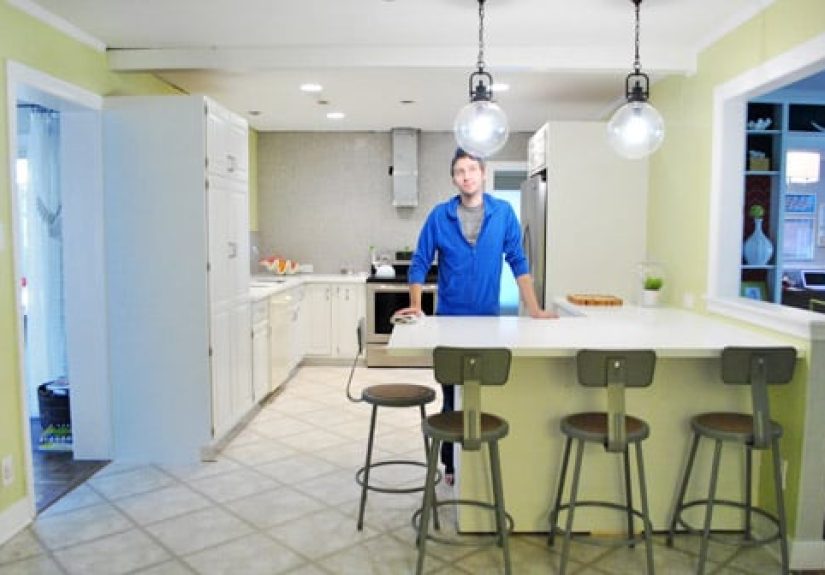
For most kitchens, the bottom of each pendant should hang about 30 to 36 inches above the island countertop. This range usually provides enough task lighting while keeping the pendants above normal sightlines. If the lights hang too low, they can interrupt conversation across the island. If they hang too high, they may look disconnected from the island and provide less useful light where you need it.
Start with 34 inches above the countertop as a practical middle point, then adjust based on your home. If your family is tall, raise the pendants slightly. If the glass shades are small or narrow, you may be able to hang them a little lower. If the pendants are wide, dark, or visually heavy, give them more breathing room.
Quick Height Formula
Measure from the countertop up, not from the ceiling down. This is important because the island is the surface the pendants are meant to serve. Mark 30, 34, and 36 inches above the counter using painter’s tape on a temporary stick, broom handle, or cardboard mockup. Step back, look from the kitchen entry, sit at the island, and check the view from the living area if the kitchen is open concept.
If your ceiling is higher than 8 feet, you may still keep the pendant bottom in the 30-to-36-inch range over the island, but the fixture’s cord, rod, or chain will be longer. The goal is not to fill the entire vertical space with hardware. The goal is to connect the ceiling, the pendants, and the island in a way that feels natural.
How Far Apart Should Two Glass Pendants Be?
Spacing is where many kitchens go from “designer-inspired” to “why does that one look like it is trying to escape?” As a general rule, two kitchen pendants should be spaced about 26 to 32 inches apart, measured from the center of one fixture to the center of the other. Larger pendants may need more space, while smaller mini pendants can sit closer together.
Also leave breathing room at both ends of the island. A good starting point is to keep each pendant at least 6 to 12 inches in from the edge of the countertop. This prevents the lights from looking like they are about to slide off the island, visually speaking. It also keeps the pendants from crowding the people seated at the ends.
Example: Spacing Two Pendants Over a 72-Inch Island
Imagine your island is 72 inches long. Leave about 12 inches from each end. That gives you a 48-inch central zone for the two fixtures. Place the center of the first pendant around 24 inches from the left end and the center of the second pendant around 48 inches from the left end. The two pendants will be about 24 inches apart center-to-center, which may work well for smaller glass shades. If your pendants are wider, shift them farther apart while keeping them balanced on the island.
Example: Spacing Two Pendants Over an 84-Inch Island
For an 84-inch island, try placing the centers at about 28 inches and 56 inches from one end. That creates a center-to-center distance of 28 inches and keeps each pendant comfortably inside the island edges. If the pendants are large, such as 14 to 16 inches wide, you might spread them closer to 32 or 36 inches apart.
Choosing the Right Size Glass Pendants
Scale matters. A tiny pendant over a large island can look timid, like it wandered into the wrong kitchen. A massive glass pendant over a narrow island can feel like a chandelier wearing platform shoes. For two glass kitchen pendants, many homeowners do well with shades in the 10-to-16-inch diameter range, depending on island size and ceiling height.
For a compact island, two pendants around 8 to 10 inches wide may be enough. For a medium island, 10 to 14 inches often looks balanced. For a long or wide island, 14 to 18 inches can work, especially if the glass is clear and does not feel visually heavy.
Do not judge size by the fixture alone. A clear glass shade looks lighter than an opaque metal shade of the same diameter. A ribbed or seeded glass shade has more visual texture. A black or brass frame around the glass can make the pendant feel larger. Always consider the whole fixture: shade, frame, canopy, cord, rod, and bulb.
Clear, Frosted, Seeded, or Ribbed Glass: Which Is Best?
Clear glass is the most open and modern option. It keeps sightlines clean and works well when you want the kitchen to feel bright and uncluttered. The catch is that clear glass exposes everything inside, including the bulb, dust, and the occasional fingerprint from installation day. Use attractive bulbs and clean the shades regularly.
Frosted glass is better when glare control matters. It softens the bulb and creates a more diffused glow, which is helpful over islands where people sit in the evening. Frosted glass also hides dust better than clear glass, and frankly, any material that politely hides household reality deserves applause.
Seeded glass adds tiny bubbles and texture that give the fixture a handcrafted feel. It works especially well in farmhouse, transitional, cottage, and vintage-inspired kitchens. Ribbed or fluted glass offers a more architectural look. It bends and softens light while adding vertical lines that can make the pendant feel elegant without being too formal.
Bulb Choice: Brightness, Color Temperature, and Dimmers
The right bulb can make glass pendants look expensive. The wrong bulb can make them feel like an interrogation room over a salad bar. For kitchens, LED bulbs are usually the most practical choice because they are efficient, long-lasting, and available in many color temperatures and shapes.
For color temperature, warm white bulbs around 2700K create a cozy glow, while 3000K offers a slightly cleaner white that many kitchens handle well. If your kitchen has white cabinets, marble-look counters, or cool finishes, 3000K may feel crisp without becoming harsh. If your kitchen has wood tones, creamy cabinets, or brass hardware, 2700K may feel warmer and more flattering.
Brightness depends on the fixture, shade, and other lighting in the room. Since glass pendants are often part of layered kitchen lighting, they do not need to do every job alone. Recessed lights, under-cabinet lights, sconces, and natural daylight all contribute. A dimmer switch is strongly recommended because the island changes roles throughout the day. Morning coffee needs gentle light. Vegetable chopping needs task light. Midnight snacking needs just enough glow to find the cookies without announcing the mission to the entire household.
Matching Pendants With Your Kitchen Style
Your two glass kitchen pendants should coordinate with the room, but they do not need to match every finish perfectly. In fact, a little contrast often makes the design more interesting. If your faucet and cabinet pulls are brushed nickel, black pendants can add definition. If your kitchen is mostly white and gray, brass or bronze hardware on the pendants can warm up the space.
Modern Kitchens
Choose simple globe, cylinder, or cone-shaped glass pendants with minimal hardware. Clear or opal glass works well. Keep the lines clean and avoid overly ornate cages or heavy chains.
Farmhouse Kitchens
Seeded glass, bell shapes, matte black finishes, and aged brass details are strong choices. The goal is charm without turning the island into a theme restaurant called “The Rustic Spoon.”
Transitional Kitchens
Look for glass pendants with classic shapes and refined finishes. Polished nickel, warm brass, or soft bronze can bridge traditional and modern details.
Small Kitchens
Use clear glass or slim shades to keep the room visually open. Avoid oversized pendants that block views or make the ceiling feel lower.
Installation Safety: When to DIY and When to Call an Electrician
Changing a pendant may look simple, but electrical work deserves respect. Before any fixture work begins, power should be turned off at the electrical panel, not just at the wall switch. A voltage tester should be used to confirm the wires are not live. If the wiring is old, confusing, ungrounded, damaged, or not where the new pendants need to go, hire a licensed electrician.
You should also call a professional if you need to add a second junction box, move an existing electrical box, patch ceiling holes, install new switches, add dimmers, or confirm whether the ceiling box is rated to support the fixture. Glass pendants are not usually extremely heavy, but the fixture still needs proper support. “It seems sturdy” is not an electrical standard; it is a phrase people say shortly before learning drywall is not magic.
If you are installing two pendants where there was one fixture before, the project may involve new wiring and ceiling repair. This is often worth doing correctly because the final result looks custom instead of improvised. Good pendant placement depends on the island, not simply on where the old ceiling box happens to be.
Step-by-Step Planning Before Hanging Two Glass Kitchen Pendants
1. Measure the Island
Write down the island length and width. Note whether seating is on one side, both sides, or at the ends. Seating affects where people’s heads and sightlines will be.
2. Choose Pendant Size
Select a diameter that fits the island. For two pendants, avoid choosing shades so wide that they crowd each other or the island edges.
3. Mark the Centers
Use painter’s tape on the countertop to mark where each pendant center should align. Then transfer those measurements to the ceiling. Double-check from multiple angles.
4. Test the Height Visually
Hang a balloon, paper lantern, or cardboard circle from painter’s tape and string. This low-tech trick can save you from high-cost regret.
5. Check the Electrical Layout
Confirm whether existing junction boxes line up with the planned locations. If not, decide whether the ceiling should be rewired or whether a linear canopy or track-style solution makes more sense.
6. Select Bulbs and Controls
Choose dimmable LED bulbs that fit the fixture and provide the look you want through glass. Make sure the dimmer is compatible with the bulbs.
7. Install, Level, and Adjust
After installation, check that both pendants hang at the same height. Rods are usually easier to keep straight than cords, but cords can work beautifully if carefully adjusted.
Common Mistakes to Avoid
The first mistake is hanging pendants too low. Low lights can look dramatic in photos, but real kitchens involve people talking, passing plates, and occasionally waving a spatula like they are conducting an orchestra. Keep the bottom of the pendant high enough for comfort.
The second mistake is spacing the pendants based only on the ceiling instead of the island. The island is the anchor. Center the pendants over the island’s usable surface, not over random ceiling joists or an old fixture location.
The third mistake is using bulbs that are too bright, too cool, or unattractive inside clear glass. Since clear shades show the bulb, decorative LED bulbs can make a big difference. Choose a bulb shape that complements the pendant: globe bulbs for globe shades, tubular bulbs for cylinder shades, and classic bulbs for bell shades.
The fourth mistake is forgetting maintenance. Glass pendants in a kitchen will collect dust, steam residue, and tiny airborne grease particles. Choose shades that are easy to remove or wipe. If the glass opening is too narrow for your hand, cleaning may become a tiny weekly tragedy.
Real-Life Experience Notes: What You Learn After Hanging Two Glass Kitchen Pendants
After helping plan and troubleshoot kitchen pendant layouts, one lesson shows up again and again: the tape measure is important, but the human eye gets the final vote. Two pendants can be mathematically centered and still feel slightly off if the island has an overhang, an unusual shape, or seating that changes how people use the space. That is why visual testing matters. A string, a paper template, and ten minutes of walking around the room can prevent a decision that annoys you every morning while you make coffee.
Another experience-based tip is to think about the pendants from the rooms around the kitchen. In many homes, the kitchen island is visible from the living room, dining area, hallway, or back door. The pendants may look perfect when you stand at the sink but uneven when viewed from the sofa. Before final installation, check the layout from every major sightline. Designers do this because lighting is not only functional; it is part of the room’s architecture.
Glass shade selection also feels different in real life than it does online. Clear glass looks clean and elegant in product photos, but in an active kitchen it shows fingerprints, dust, and bulb glare more easily. Seeded glass is more forgiving and adds character, but it can scatter light in a way that some people love and others find visually busy. Frosted glass is the calmest option for everyday use, especially if the pendants are close to eye level when people are seated at the island.
One practical experience: always buy the bulbs before judging the fixture. A pendant with the wrong bulb can look disappointing, while the same pendant with a warmer, dimmable, well-shaped LED bulb can suddenly look custom. For clear glass pendants, the bulb is part of the design. It is not just a light source hiding inside the shade; it is visible furniture for electricity.
Finally, do not rush the height adjustment. Many adjustable pendants can be shortened, but not all can be lengthened easily after trimming cords. Start slightly longer if the fixture allows temporary adjustment, then raise it as needed. When two pendants are side by side, even a half-inch difference can catch the eye. Use a level, measure from the countertop, and check both lights after the shades and bulbs are installed, because the final weight can change the way cords settle. The best result is not just two lights hanging from the ceiling. It is two pendants that make the whole kitchen feel calmer, brighter, and more finished.
Conclusion
Hanging two glass kitchen pendants is one of those upgrades that can make a kitchen feel instantly more intentional. The winning formula is simple: choose pendants that match the scale of your island, hang them about 30 to 36 inches above the countertop, space them evenly, leave room at the island edges, use flattering dimmable bulbs, and treat electrical work with real caution.
When done well, two glass pendants bring more than light. They add rhythm, shine, personality, and a finished focal point to the kitchen. They can make a basic island feel custom and a busy room feel balanced. And yes, they can make your cereal at 11 p.m. look slightly more sophisticated. That counts as design success.
Note: This article is written for web publication and general homeowner education. For electrical installation, local code compliance, new wiring, ceiling box relocation, or any uncertain wiring condition, consult a licensed electrician.