Table of Contents >> Show >> Hide
- What Is a Shotgun House, Exactly?
- Why Is It Called a Shotgun House?
- Where Did the Shotgun House Come From?
- What Are the Defining Features of a Shotgun House?
- Main Types of Shotgun Houses
- Who Lived in Shotgun Houses?
- What Are the Pros and Cons of a Shotgun House?
- Why Are Shotgun Houses Still Important Today?
- What Does It Feel Like to Experience a Shotgun House?
- Final Thoughts
If you have ever walked through an older Southern neighborhood and thought, “Why does that house look like it was built on a dare?” you may have spotted a shotgun house. Long, lean, and usually proud of it, the shotgun house is one of the most recognizable home styles in American architecture. It is narrow at the street, deep from front to back, and famous for lining up its rooms in a straight path like it has somewhere very important to be.
But a shotgun house is much more than a quirky floor plan. It is tied to New Orleans, to working- and middle-class history, to Black cultural heritage, to practical urban design, and to the stubborn brilliance of building well on small lots. In other words, this little house carries a lot of architectural weight for something that can look almost comically slim from the curb.
So, what is a shotgun house exactly? Why is it called that? Where did it come from, and why are people still obsessed with it today? Pull up a porch chair. We are going in through the front door and, true to form, heading straight to the back.
What Is a Shotgun House, Exactly?
A shotgun house is a narrow home that is typically one room wide and several rooms deep, with rooms arranged one behind the other. Traditionally, there is no central hallway, so you move from room to room in sequence. The classic version is usually a single-story structure, often around 12 feet wide, though dimensions vary depending on the city, era, and whether the house has been expanded or renovated.
The style became especially popular in New Orleans and across parts of the American South during the nineteenth and early twentieth centuries. It was efficient, relatively affordable to build, and a smart response to long, narrow urban lots. In plain English, it was the architectural equivalent of a suitcase packed by someone who knew exactly how to use every inch.
A typical shotgun house often includes:
- a front-facing entrance directly on the street
- a narrow rectangular footprint
- three to five rooms arranged in a line
- little or no hallway space
- a front porch, stoop, or deep overhang
- high ceilings, tall windows, and decorative trim in many historic examples
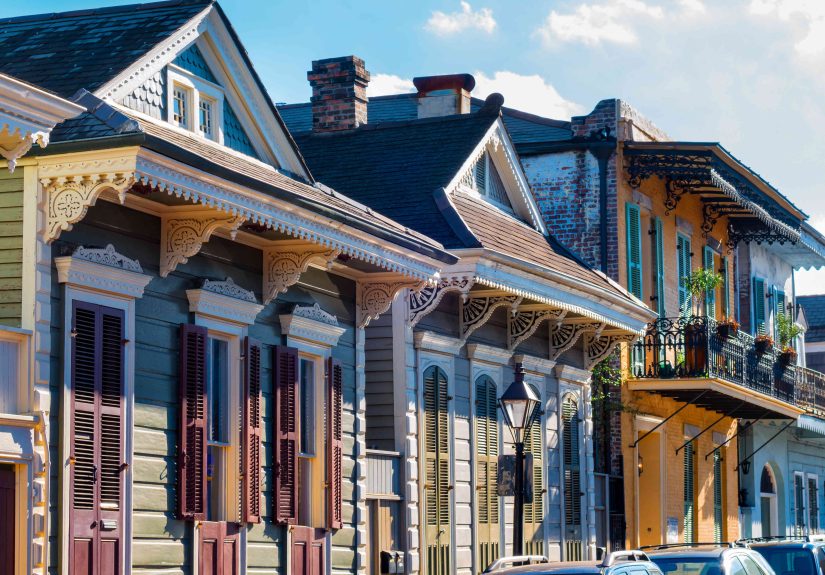
Some are plain and practical. Others wear brackets, columns, shutters, and millwork like they are dressed for Sunday service. That range is part of the charm. A shotgun house can be humble without being boring.
Why Is It Called a Shotgun House?
The most famous explanation is the old line that if you fired a shotgun through the front door, the pellets would fly straight out the back without hitting a wall. It is memorable, dramatic, and a little too eager to impress at parties. It is also not always literally true, since not every shotgun house has perfectly aligned openings.
Another theory links the name to the Yoruba term to-gun, often described as relating to a place of gathering or assembly. Scholars and preservationists have long debated both the house’s name and its deeper roots, and the full story is still discussed by historians. That debate is part of what makes the shotgun house so interesting: it is not just a building type, but also a conversation about migration, culture, adaptation, and memory.
So the safest answer is this: the name “shotgun house” likely reflects more than one tradition, and the colorful bullet story, while popular, is not the whole picture.
Where Did the Shotgun House Come From?
The origin of the shotgun house is one of the most discussed topics in American vernacular architecture. Many scholars trace its roots to West African and Caribbean building traditions, particularly through Haiti and migration into New Orleans in the early nineteenth century. That origin story matters because it places the shotgun house within a much bigger history of cultural exchange, displacement, and survival.
New Orleans became the style’s most iconic American home. The city’s standard lot sizes, growing population, and appetite for practical housing helped the type flourish. Early examples are associated with the 1830s, and the form spread widely in the second half of the nineteenth century. It eventually appeared in neighborhoods across Louisiana and in other Southern cities such as Louisville, Houston, and communities in Georgia and Kentucky.
There is also a persistent local legend that shotgun houses were shaped by a tax based on street frontage. It is a great story and sounds exactly like something a city would do, but preservation sources treat that idea more as a popular theory than a settled fact. The better-supported explanation is simpler: narrow lots, limited budgets, growing cities, and a highly efficient plan made the shotgun house a logical fit.
Why New Orleans Embraced It So Readily
New Orleans did not just adopt the shotgun house. It practically made it a civic celebrity. The house worked beautifully on long, narrow lots, and its straightforward wood-frame construction made it economical. Builders could also dress up the façade with decorative brackets, porch columns, shutters, and stylish trim, which meant even modest homes could have real street presence.
That combination of affordability and flair is very New Orleans. Why build a plain little house when you can build a plain little house with attitude?
What Are the Defining Features of a Shotgun House?
The first defining feature is the floor plan. A classic shotgun is one room wide and several rooms deep, with each room opening into the next. No hallway means less wasted square footage, which is ideal when the lot is narrow and every foot counts.
The second feature is its shape. From the street, a shotgun house looks slim and upright, often with a front door and one adjacent window. From the side, it stretches back farther than many first-time visitors expect. These houses can feel like architectural magic tricks: small outside, surprisingly generous inside.
The third feature is the façade. Many traditional shotgun houses include:
- a gabled or hipped roof facing the street
- a porch or overhang that shades the entrance
- tall doors and windows
- transoms, trim, shutters, and ornamental details
- raised foundations in some regions
Inside, historic examples often have high ceilings and tall openings that make the narrow footprint feel more open. Preservation guidance also points to the linear plan and sequence of spaces as character-defining features, which is a fancy way of saying the layout is not an accident. It is the whole identity of the house.
Main Types of Shotgun Houses
Not all shotgun houses are carbon copies. Over time, builders created several common variations.
Single Shotgun
This is the classic form: one unit, one room wide, and three to five rooms deep. If someone says “shotgun house” and you picture a narrow home with rooms lined up like dominoes, this is probably the one in your head.
Double Shotgun
A double shotgun is essentially two shotgun units side by side, often with a symmetrical front façade. Think duplex, but with Southern architectural manners. These were practical for dense neighborhoods and often appealed to speculative builders or owners who wanted rental income.
Camelback Shotgun
The camelback adds a partial second story at the rear. From the street, the front still reads like a traditional single-story shotgun, while the back rises up to create more living space. The result looks as though the house swallowed an extra bedroom and wore it proudly on its back.
Sidehall or Side Gallery Shotgun
These versions modify the straight-through plan by adding a side passage or open gallery. This creates more privacy and easier access to the rear without marching guests through every room like you are conducting a home tour they did not request.
Who Lived in Shotgun Houses?
Historically, shotgun houses were strongly associated with working- and middle-class life in Southern cities. They appear in both Black and white neighborhoods, but they are especially important in the history of African American communities. Preservation records and local histories connect them to laborers, renters, small property owners, and families building lives in rapidly changing urban areas.
That social history is a huge part of the house’s significance. The shotgun house was not a novelty style. It was everyday housing that anchored neighborhoods, shaped blocks, and reflected the lives of people who do not always get enough space in grand architectural histories.
In places like New Orleans, Louisville, and smaller Southern towns, these homes became part of the visual language of community. Rows of shotguns created rhythm along the street and gave neighborhoods a clear, recognizable identity. Even now, when people imagine old Southern streetscapes, shotgun houses are often part of the picture.
What Are the Pros and Cons of a Shotgun House?
The Advantages
The biggest advantage is efficiency. Shotgun houses make excellent use of limited land and materials. They are compact, practical, and well suited to dense neighborhoods. Their tall ceilings and long sightlines can also make the interior feel larger than the footprint suggests.
Another strength is character. Historic shotguns have curb appeal in a very specific, soulful way. They do not usually scream luxury, but they can absolutely whisper taste with devastating effectiveness.
They are also adaptable. Some have been restored as single-family homes. Others have become duplexes, rentals, offices, art spaces, or preservation centers. Modern architects continue to reinterpret the form for infill housing, climate resilience, and compact urban living.
The Challenges
The layout is not for everyone. Since rooms are arranged in sequence, privacy can be tricky in untouched historic plans. Walking through one bedroom to reach another is charming only until someone is trying to sleep, work, or pretend not to hear you reheating leftovers at midnight.
Storage can also be limited, and renovations require care. Opening walls, reworking circulation, or updating kitchens and baths in a narrow historic structure is possible, but it takes thoughtful design. Preservation experts also stress that the linear plan itself is a defining feature, so major changes can erase the very thing that makes the house a shotgun in the first place.
Why Are Shotgun Houses Still Important Today?
Shotgun houses matter because they tell several American stories at once. They speak to migration and Afro-Caribbean influence. They reflect working-class ingenuity. They show how architecture adapts to lot size, climate, economics, and neighborhood life. And they remind us that modest housing can still be beautiful, meaningful, and worth preserving.
They also remain relevant in the age of compact living. Long before “tiny home” became a lifestyle brand with excellent lighting and suspiciously clean countertops, the shotgun house was already proving that small spaces can work hard. Contemporary designers continue to borrow from the type, especially in cities where land is expensive and resilient infill housing matters.
Preservation movements have helped keep many of these houses standing, whether in New Orleans historic districts, Louisville neighborhoods, Santa Monica’s preserved example, or museum and community heritage projects tied to Black history. The fact that people still fight to save them says a lot. Nobody drags a forgettable building across town to preserve it.
What Does It Feel Like to Experience a Shotgun House?
Experiencing a shotgun house in person is different from simply reading the definition. On paper, it sounds almost too simple: narrow lot, straight layout, no hall. In real life, it feels surprisingly theatrical. You step through the front door and the house reveals itself in a sequence, not all at once. One room leads to another, then another, and before you know it you have traveled through a whole little world that looked tiny from the sidewalk.
The first thing many people notice is proportion. A shotgun house is usually narrow, yes, but it often does not feel cramped the way modern people imagine. High ceilings can lift the rooms. Tall windows and transoms can add brightness. When the light hits old floors just right and the front door is cracked open to the porch, the house can feel airy, intimate, and quietly dramatic all at once.
Then there is the rhythm of movement. In a typical suburban house, you drift down hallways and around corners without thinking much about it. In a shotgun house, every room matters because every room is part of the path. That creates a sense of order. It also creates a sense of ceremony. Going from the front room to the back is not just walking through space. It is moving through chapters.
There is also something deeply human about the way these homes connect daily life. Front porches meet the street. Parlors open into bedrooms or dining rooms. The back of the house often feels quieter, more private, more tucked away from neighborhood noise. The house teaches you its logic quickly. It says, “We are not wasting space here, and frankly, we never planned to.”
People who love shotgun houses often talk less about square footage and more about feeling. They mention the creak of old wood floors, the way morning light travels from room to room, the intimacy of compact living, and the pleasure of a house that still carries traces of the people who have passed through it over generations. Even renovated versions tend to keep that emotional spine. New paint, updated kitchens, and sleek bathrooms may come and go, but the procession of rooms still gives the house its personality.
Of course, living in one is not all romance and filtered sunlight. The layout can demand compromise. Privacy takes planning. Furniture placement becomes a strategic exercise. One awkwardly oversized sectional can throw the whole operation into chaos. But that challenge is part of the experience too. A shotgun house asks its occupants to be intentional. You do not just pile stuff into it and hope for the best. You learn to live with the space rather than against it.
That may be why so many people come away from a shotgun house with the same reaction: respect. It is not a flashy mansion. It is not a design gimmick. It is a compact, clever, culturally rich form of architecture that has survived because it works, because it adapts, and because it means something. For a house only one room wide, it leaves a remarkably big impression.
Final Thoughts
A shotgun house is a narrow, linear home style with deep roots in Southern and especially New Orleans architecture. It is practical, culturally significant, and far more sophisticated than its modest footprint suggests. Its story touches on African and Caribbean influence, urban development, working-class life, and the enduring appeal of smart design.
So the next time you see one, do not dismiss it as just a skinny old house. It is a lesson in efficiency, a piece of regional identity, and a reminder that some of America’s most meaningful architecture is found not in palaces, but in homes built to fit real people, real streets, and real lives.